We like to believe menus tell the truth. If a dish calls itself Hawaiian, Danish, Singaporean, or French, we assume the plate and the map line up neatly. In reality, food names often preserve marketing, migration, and misdirection far better than they preserve origin.
A surprising number of famous dishes were born not in the places their names suggest, but in border towns, immigrant kitchens, newsroom shorthand, and restaurant experiments designed to sound more glamorous than they really were.
Once we start tracing the true origins of these dishes, a pattern appears. Some were renamed to make them sound exotic. Some picked up geographic labels because of one ingredient, one immigrant baker, or one moment of cultural fashion.
Others became trapped by a misleading surname or a regional myth that proved catchier than the truth. The result is a culinary world full of foods that traveled farther in language than they ever did in their first kitchen.
Hawaiian Pizza
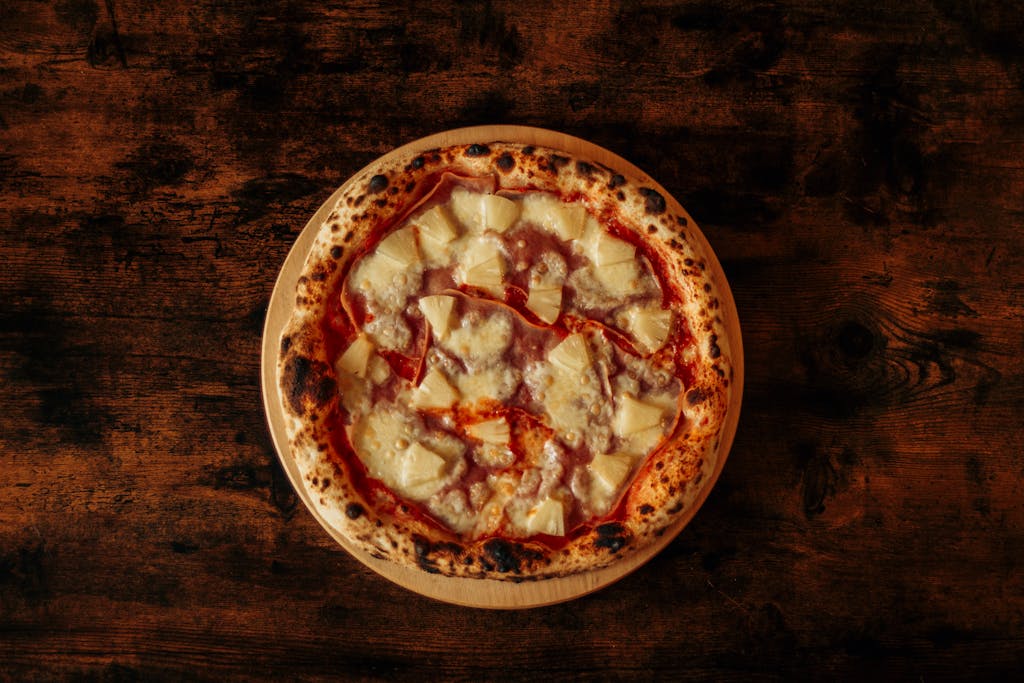
We have blamed Hawaii for a pizza it did not invent. Hawaiian pizza was created in Ontario, Canada, by Greek-born restaurateur Sam Panopoulos, who experimented with canned pineapple on pizza in 1962 at his restaurant in Chatham. The name did not come from the islands as a place of origin, but from the brand of canned pineapple he used, which gave the dish a tropical, memorable sound.
That detail matters because it shows how quickly a label can outrun the truth: a Canadian diner, a Greek immigrant, and a tin of pineapple created one of the most argued-over pizzas on earth, yet the name still points everyone to the wrong map. We do not merely eat Hawaiian pizza; we repeat a branding accident every time we say it out loud.
German Chocolate Cake
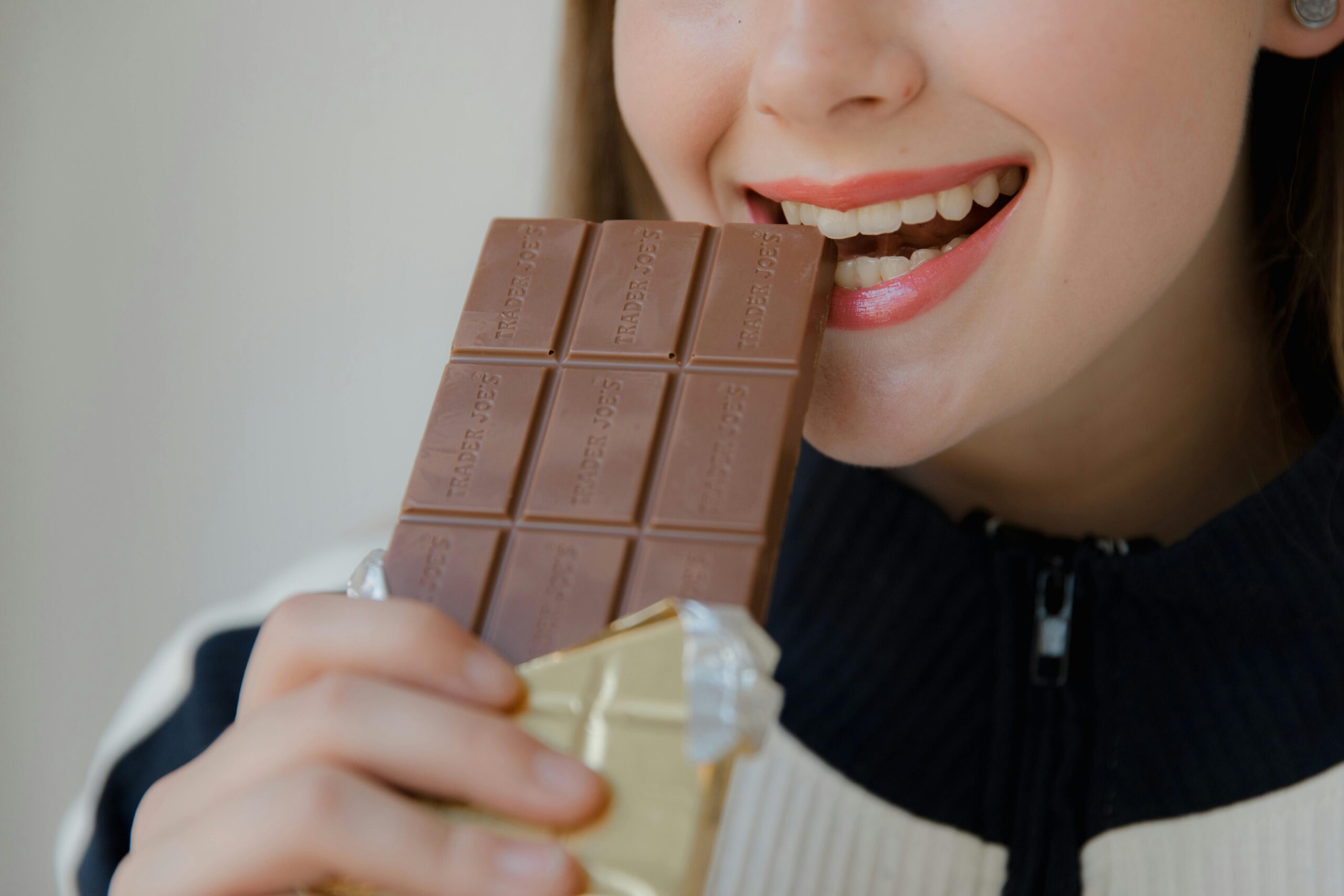
We hear “German chocolate cake” and imagine a European bakery window, but the dessert is American through and through. The “German” in the name refers to Samuel German, who developed Baker’s German’s Sweet Chocolate in 1852, not to the country of Germany. The cake itself took off after a 1957 Dallas newspaper recipe used that chocolate in a layered cake with coconut-pecan frosting, and over time, the possessive apostrophe in “German’s” disappeared. That tiny punctuation loss did enormous historical damage. It turned a cake named after a man into a cake people have spent generations wrongly assigning to a nation.
Danish Pastry
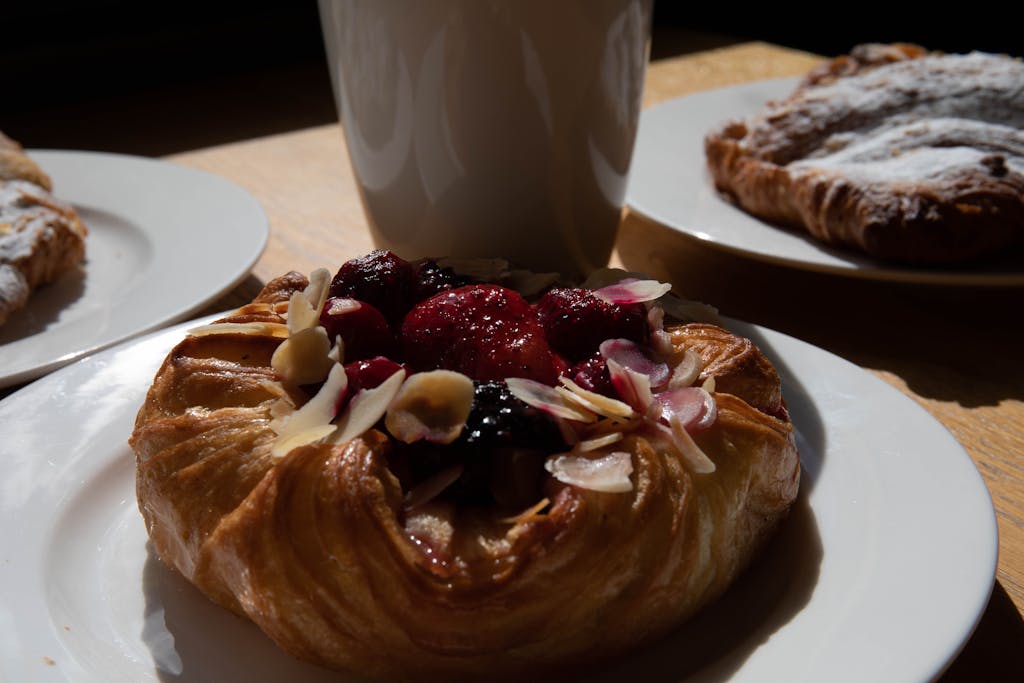
The Danish pastry story is less a clean national birth certificate than a case of culinary adoption. Britannica notes the pastry name originally referred to a laminated, butter-layered dough technique, while other historical accounts trace its rise in Denmark to Austrian bakers brought in during labor unrest, after which Danish bakers adapted the style to local tastes.
That is why the pastry is still tied to Vienna in its Scandinavian naming tradition, where wienerbrød literally means “Viennese bread.” What the world now calls a Danish is therefore a product of transfer, not pure origin. The pastry became unmistakably associated with Denmark, but its technical roots and early momentum came from Austria.
Singapore Noodles
Singapore noodles sound like a straightforward national dish, yet the trail points north to Hong Kong. Saveur reports that the curried rice vermicelli dish was created in the 1950s or 1960s by chefs in Hong Kong, who likely used the name “Singapore” to give their noodle dish more flair and cosmopolitan appeal. The curry-heavy profile also made sense in a British colonial port where Indian spice powders were circulating widely.
That explains why the dish appears on menus across the world while remaining oddly unimportant in Singapore itself. We are looking at a perfect example of culinary theater: a Hong Kong invention dressed in another city-state’s name because the borrowed identity sold better.
Mongolian Barbecue
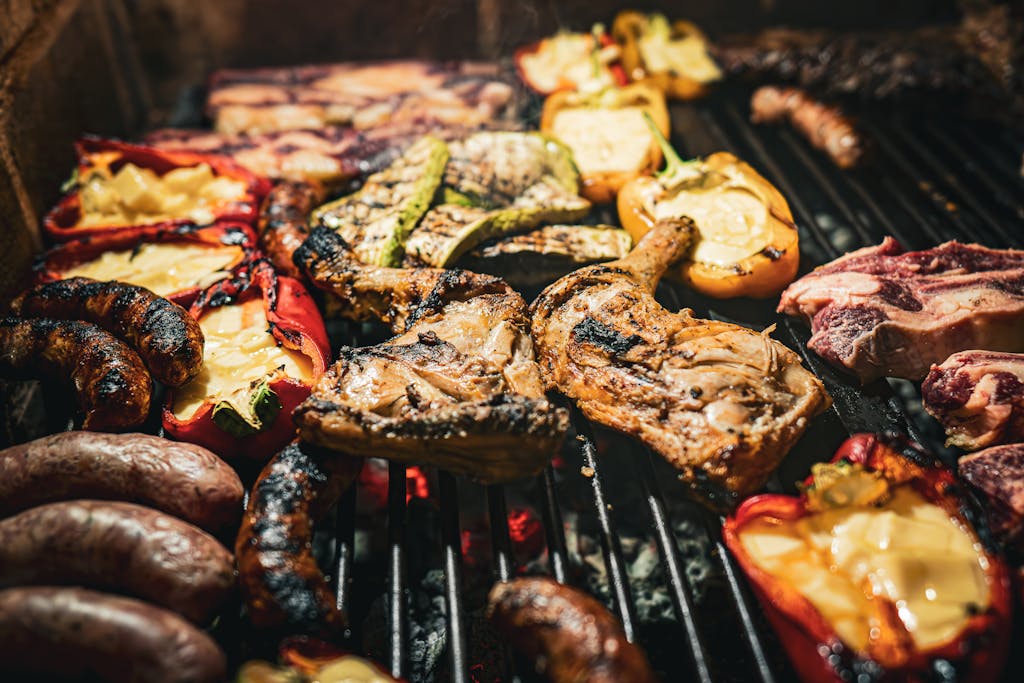
Few food names oversell geography as boldly as Mongolian barbecue. Taipei Times notes that the dish was developed in Taiwanese restaurants more than half a century ago and that the term was coined by Wu Zhao-nan in Taipei in 1951. It is not truly Mongolian cuisine, and it is not really barbecue in the classical sense either, since the cooking style relies on a hot flat surface rather than the smoke-heavy methods most people associate with barbecue traditions. The name worked because it sounded rugged, dramatic, and expansive. In other words, the dish succeeded for the same reason many false food maps survive: the fantasy was better for business than the truth.
Baked Alaska
Baked Alaska sounds like something dragged out of a frontier cabin and served against a snowstorm, but its roots are American restaurant culture, not Arctic wilderness. Britannica identifies it as a dessert of American origin, and historical references tie the name to the U.S. acquisition of Alaska, turning the dessert into a culinary celebration of expansion and novelty.
The contrast between hot browned meringue and cold ice cream made the dish feel theatrical, which only strengthened the appeal of the name. Alaska was less a birthplace than a symbol: cold, remote, dramatic, and therefore perfect for a dessert that looked impossible. We do not call it Baked New York because spectacle has always been more marketable than accuracy.
English Muffin
The English muffin is one of those foods that sounds ancient, obvious, and neatly British, yet the version most people in the United States know is not simply imported English tradition. Britannica describes the familiar English muffin as American-invented, firmer and more breadlike than a crumpet, and Tasting Table notes that Samuel Bath Thomas popularized his version in New York after arriving from England and initially calling them “toaster crumpets.”
That distinction matters because it shows how immigrant food often becomes a new object entirely once it crosses the Atlantic. The name kept the old-country prestige, but the product evolved into a specifically American staple. So when we butter an English muffin, we are often eating a New York reinvention wearing an English badge.
Hollandaise
Hollandaise sounds decisive. The very word means “from Holland,” which is why the truth feels so satisfying once we uncover it. Research has it that the sauce probably traces back not to the Netherlands but to Normandy, where it was first called sauce Isigny, after Isigny-sur-Mer, before later associations with Holland helped reshape the name. That makes hollandaise less a Dutch export than a French sauce with a detour through history and migration. The name stayed because it was repeated, not because it was exact. We often assume cuisine moves in straight lines, but hollandaise reminds us that even classic sauces can arrive at fame through a crooked linguistic route.
French Fries
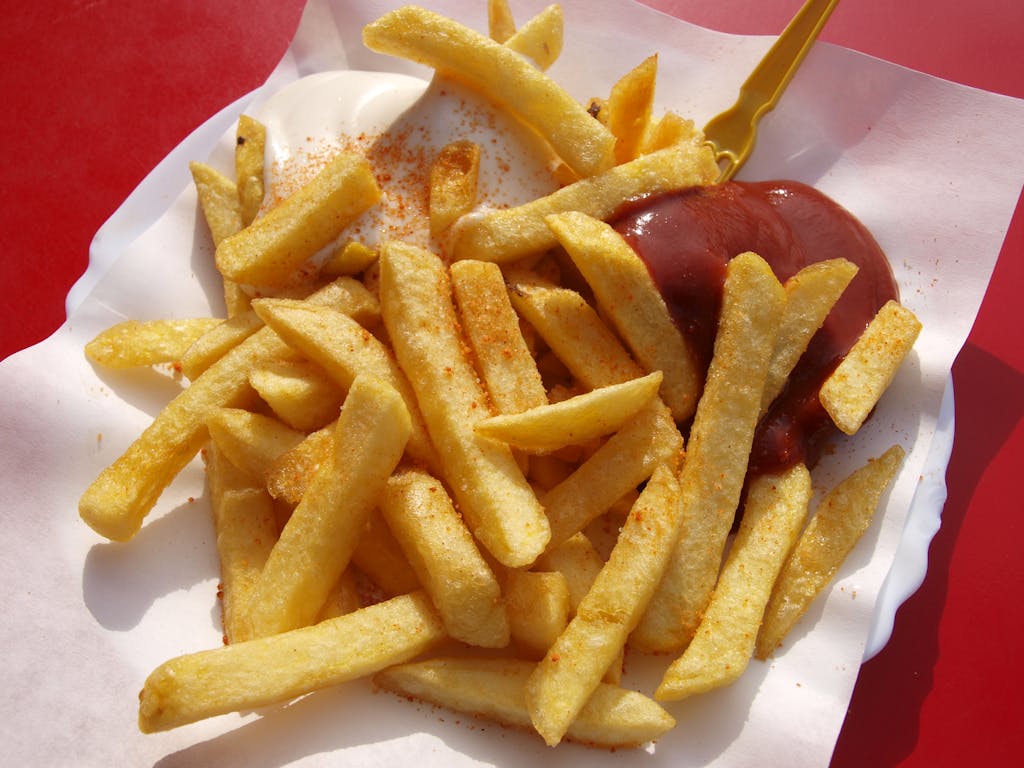
French fries are one of the most famous examples of a food name that pretends to settle an argument it never actually resolves. Britannica says the origin of fries is uncertain, with one tradition placing them in France and more recent claims pointing to Belgium as the birthplace; even the source of the term itself is disputed.
Reuters has also noted Belgium’s long-standing effort to link fries to Belgian culinary heritage, while National Geographic summarizes the persistent claim that American soldiers encountering fries in French-speaking Belgium helped cement the misleading name.
That does not give us a simple anti-French verdict. It gives us something better: proof that the label “French fries” sounds definitive even though the history underneath it is anything but.
Russian Dressing
Russian dressing sounds like it should arrive with a samovar and a winter coat, but the condiment’s story is rooted in the United States. Modern summaries trace it to James E. Colburn of Nashua, New Hampshire, in the early 20th century, and the “Russian” label appears to have come from the idea that earlier versions may have included caviar, not because the dressing itself was a Russian staple.
Over time, the condiment became associated with sandwiches, delis, and classic American menu culture rather than with Russian home cooking. That is what makes the name so effective and so deceptive at the same time. It borrows Russia’s mood while delivering a thoroughly American invention.