A tiny bathroom can feel like a daily test of patience. The room may be clean, stylish, and functional, yet still seem tight the moment you step inside. The good news is that you don’t need to knock down walls to change that feeling. A few visual design tricks can stretch the room in all the right ways, making it feel calmer, brighter, and more polished. These strategies will help you make the most of your space and transform your bathroom into a more comfortable, open retreat.
Replace a Heavy Shower Curtain with Glass
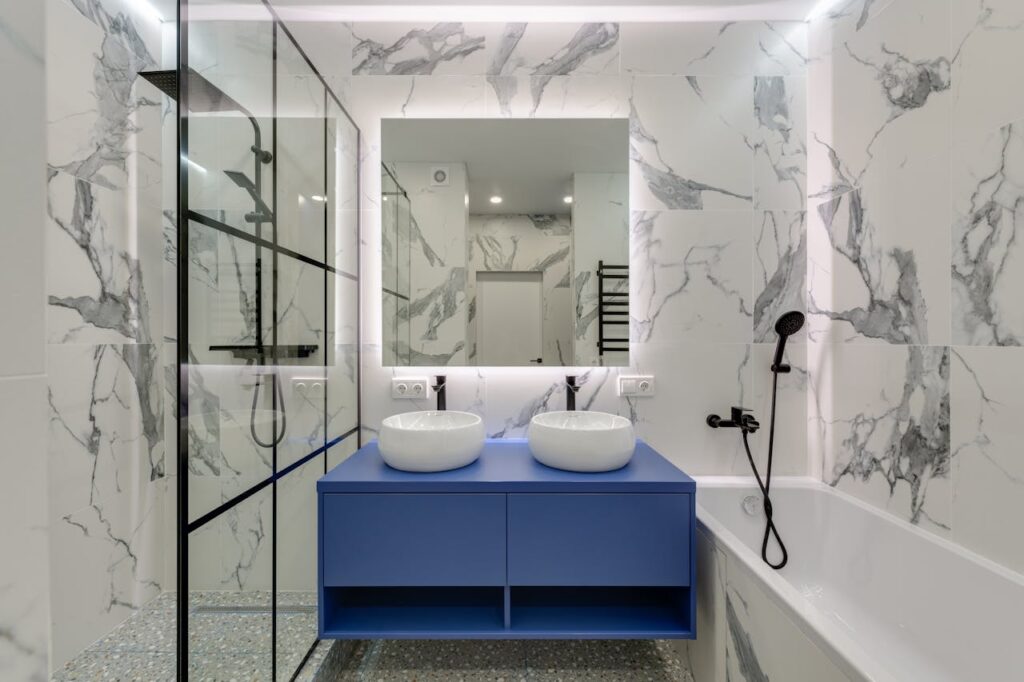
A bulky shower curtain cuts the room in half and makes the layout feel boxed in. Glass does the opposite, letting your eye travel through the full space rather than stopping at a fabric barrier. That simple shift can make the room feel wider and less crowded the second you walk in. Even a clear curtain liner can help if a full glass door is out of budget. The goal is to remove visual blocks and let the bathroom breathe.
Keep the Color Story Simple and Intentional
A chaotic mix of colors can make a small bathroom feel visually crowded. A more unified palette creates flow, and flow makes the room feel bigger. Soft ivories and creams create an airy look, while rich tones like navy or burgundy can add depth and drama, creating a feeling of expansiveness rather than enclosure. The secret is commitment— a clear color direction always looks more spacious than a scattered one.
Use Mirrors and Reflective Finishes to Bounce Light
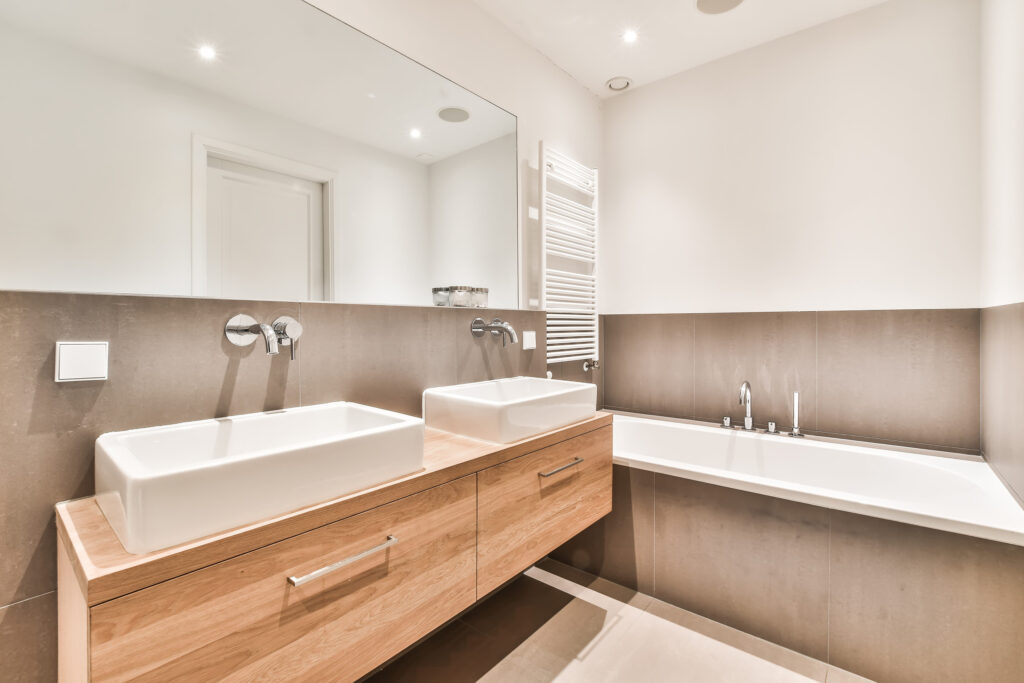
Light is one of the easiest ways to fake more square footage. A larger mirror reflects more of the room, creating depth and making the bathroom feel open rather than cramped. Reflective finishes, such as chrome fixtures or glossy accents, add another layer of brightness by reflecting and scattering light throughout the space. That sparkle may seem subtle, but in a small room, subtle choices often do the heaviest lifting. When light moves freely, the room instantly feels more alive.
Make Sure the Sink Fits the Room
Oversized sinks can dominate a compact bathroom and steal space from other elements. A smaller sink that matches the room’s scale creates better balance and prevents the layout from feeling overcrowded. This is one of those details people often miss because they focus on style before proportion. Yet proportion is what makes a room feel comfortable. When the fixtures fit the footprint, the whole bathroom looks more thoughtful and open.
Choose a Vanity That Shows More Floor
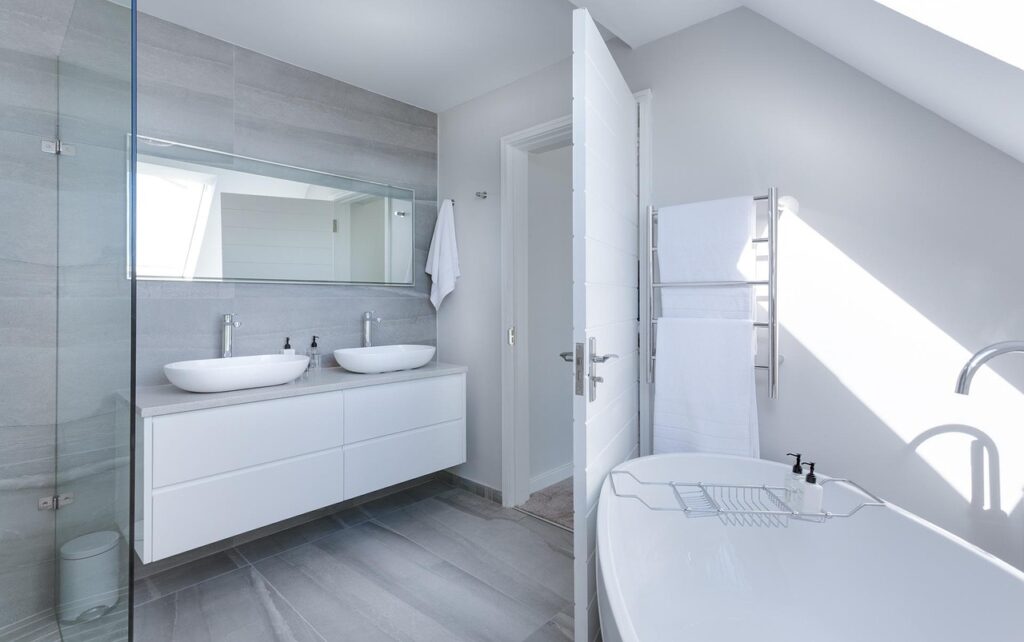
When a vanity sits too low to the ground, it can make the whole bathroom feel weighed down. A floating vanity changes that because it reveals more floor area, and visible floor makes the room seem larger than it is. That extra line of sight adds breathing room without adding a single inch. Pedestal sinks can also save space, though they sacrifice storage. In a small bathroom, furniture that feels lighter almost always works harder.
Let Wallpaper Create Height and Movement
Wallpaper can work beautifully in a small bathroom when the pattern is carefully chosen. Designs like vertical stripes, chevrons, or large repeating motifs with breathing room between them can pull the eye upward or outward. That visual movement helps the walls feel less confining. Instead of making the room feel busy, the right pattern adds energy and illusion simultaneously. A small bathroom does not always need less personality; it just needs smarter personality.
Add a Few Bold Details Instead of Many Small Ones
Small bathrooms often suffer from overdecorating. Too many tiny accessories can create clutter, even when each piece looks pretty on its own. A better move is to choose one or two standout features, such as a fluted vanity, a dramatic accent wall, or eye-catching lighting. Strong focal points guide the eye around the room, making the design feel layered rather than stuffed. Bold done well gives a small space confidence, and confidence always reads bigger.
Keep Finishes Consistent from Surface to Surface
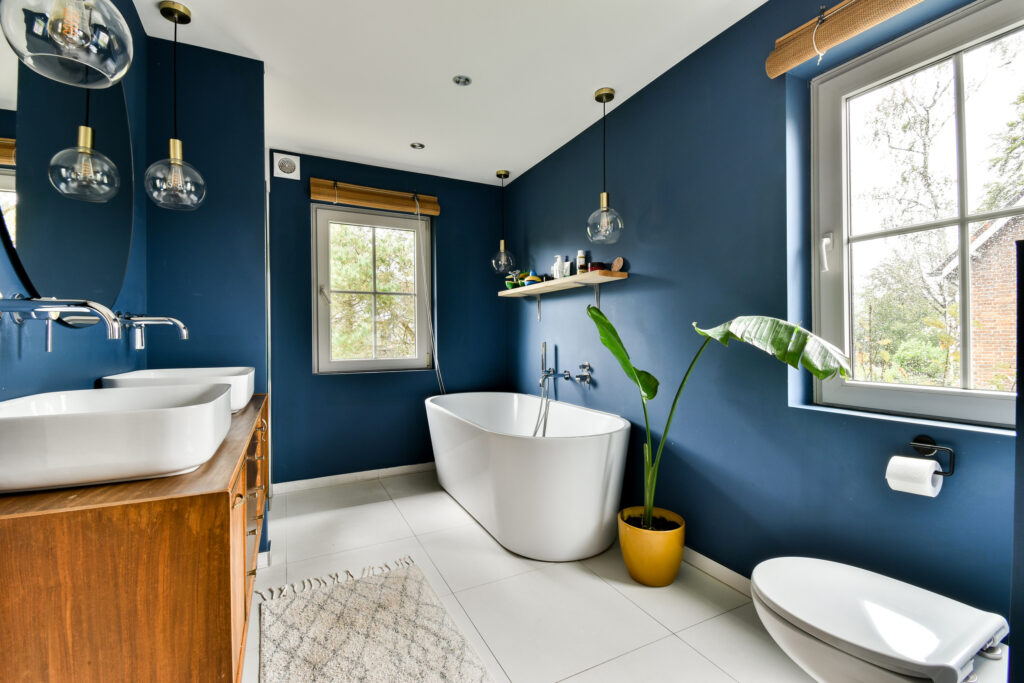
A bathroom feels larger when the eye can move smoothly across it. Matching or repeating materials helps create that seamless effect. You can carry floor tile up the wall, use the same color on the ceiling and walls, or extend countertop stone behind the mirror. These decisions reduce visual interruptions, which makes the room feel more unified. When every surface speaks the same design language, the space feels calmer and far more expansive.
Cut the Clutter You Have Learned to Ignore
No design trick can do its job if every surface is crowded. Bottles on the counter, tools on the floor, and random extras in plain view instantly shrink a bathroom. Even a beautiful room can feel cramped when it is visually noisy. Keeping only the essentials out and storing the rest away gives the room space to breathe. Sometimes the fastest way to make a bathroom feel larger is simply to let it look lighter.
Conclusion
A small bathroom does not need a miracle to feel better. It needs smart lighting, cleaner lines, and fewer visual interruptions. Glass, mirrors, scale, color, and clutter control can completely change the mood of the room without a full renovation. When each choice helps the eye move more freely, the bathroom begins to feel less like a tight corner and more like a polished retreat. That is the real magic of good design: it changes the feeling of a space before it changes the size.