Natural disasters are sudden, destructive, and often unpredictable events that leave devastation and chaos in their wake. They strike without warning, leaving people grappling with the loss of lives, homes, and communities. In the aftermath, when logic fails to explain these occurrences, humans often turn to the search for meaning. While science may offer explanations, there is a deep human tendency to seek out scapegoats for these catastrophic events.
The need to assign blame becomes even stronger when the events seem random or unjust, creating a void that must be filled with reasoning. In some cultures, ancient beliefs and superstitions have led to the adoption of strange theories, often tying natural disasters to human actions, divine punishment, or mythical creatures. These bizarre scapegoats, while sometimes entertaining, reflect the human desire to control and understand what we cannot, especially when confronted with nature’s power. Here are some of the strangest things that people have blamed for natural disasters throughout history.
Lightning Rods and Divine Anger
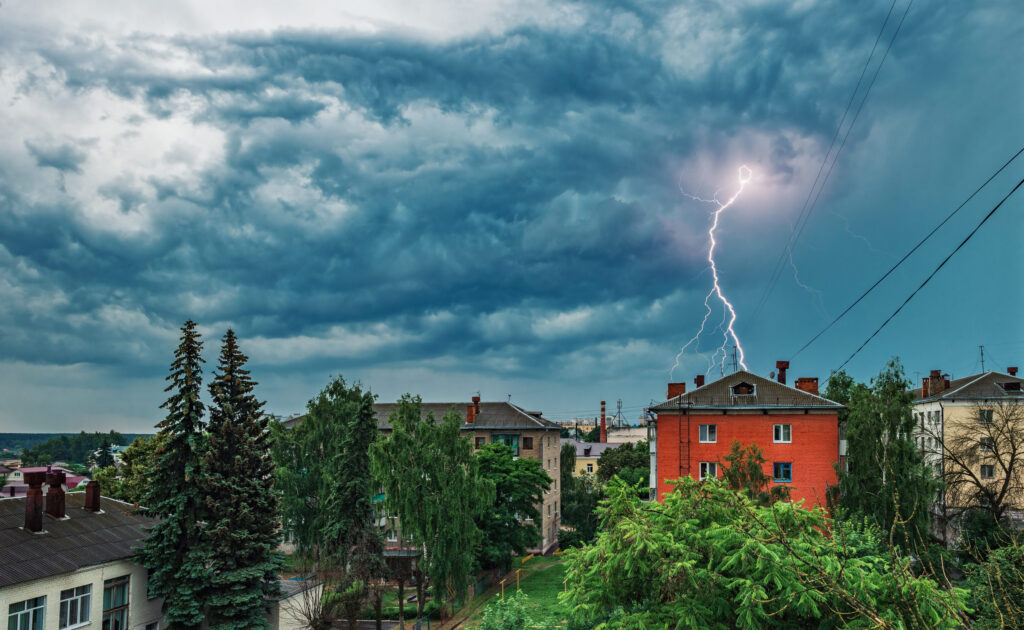
Benjamin Franklin’s invention of the lightning rod in the 18th century sparked both innovation and fear. While the device was designed to protect buildings from lightning strikes, not everyone was convinced it was a good idea. In Cape Ann, Massachusetts, after a powerful earthquake in 1755, some residents believed the lightning rod had angered God. Reverend Thomas Prince argued that the device interfered with God’s natural way of punishing humanity, redirecting divine wrath from lightning to earthquakes.
The belief was rooted in the idea that lightning was a divine tool of punishment, and by preventing lightning from striking, the lightning rod had caused divine retribution in the form of earthquakes. Some people, so convinced by this theory, removed the lightning rods from their homes in an attempt to appease God. This highlights how fear and misunderstanding of new technology during a crisis can lead to strange, illogical scapegoating.
The Subterranean Catfish of Japan
In Japan, a massive catfish named Namazu became one of the most famous scapegoats for earthquakes. According to folklore, the catfish lived deep beneath the Earth’s surface, and whenever it moved, it would cause tremors above ground. Namazu’s movements were thought to be restrained only by the thunder god Takemikazuchi, who kept a massive stone on the catfish’s head to prevent it from causing harm. However, when the god became distracted, the catfish would thrash about, creating earthquakes.
Following the Great Edo Earthquake of 1855, the belief in Namazu became even more prominent. Woodblock prints known as Namazu-e portrayed the catfish in a variety of ways, from a symbol of destruction to a hero forcing the wealthy to spend money on rebuilding efforts. These prints reflected both social commentary and a way for the public to cope with the tragedy. People used the legend to make sense of the earthquake and its aftermath, showing how folklore can offer explanations in times of crisis.
5G Towers and Natural Disasters
Since the introduction of 5G technology, it has become the target of many conspiracy theories. Among these theories, some claim that electromagnetic signals from 5G towers trigger natural disasters, from hurricanes to wildfires. During the Australian bushfires of 2019–2020, fringe groups argued that 5G radiation was drying out vegetation, thereby making forests more susceptible to fire. These theories gained popularity despite the fact that 5G radiation is non-ionizing and not strong enough to cause such effects.
The spread of misinformation surrounding 5G has only intensified over the years, with some conspiracy theorists claiming that 5G towers could cause earthquakes or even interfere with the planet’s tectonic activity. However, scientific research has consistently shown that 5G technology operates at frequencies far below those required to affect the environment in such drastic ways. Yet the rumors continue to circulate, especially during global crises, when people are more likely to seek explanations.
Women’s Fashion and Earthquakes

In 2010, an Iranian cleric made a controversial statement linking women’s clothing to earthquakes. He suggested that women who failed to dress modestly were directly responsible for natural disasters, as their immodesty caused moral imbalance in society, provoking divine retribution. This claim, while widely criticized, reflected a deeper cultural belief that natural events could be linked to human behavior, particularly in moral contexts. His comments resurfaced after a powerful earthquake struck the Hindu Kush region in 2015.
The theory was not isolated to Iran. Some voices in Pakistan and India echoed similar sentiments, particularly criticizing Western fashion trends like skinny jeans, which they claimed symbolized moral decline. These beliefs are rooted in the idea that human behavior, particularly perceived immorality, could trigger natural disasters as a form of divine punishment. Though the scientific community rejects such claims, they continue to persist in some religious and conservative circles.
Mount Merapi’s Spiritual Reactions
Mount Merapi in Indonesia is one of the world’s most active volcanoes, and for the people living near it, the mountain is more than just a geographical feature. It is considered sacred, home to powerful spirits that control the eruptions. According to local beliefs, eruptions are not simply natural occurrences but reactions to human disrespect toward the mountain. The Sultan of Yogyakarta, for example, was expected to maintain a spiritual relationship with the volcano through rituals and offerings.
In 2010, when Merapi erupted and killed hundreds of people, the volcano’s spiritual gatekeeper, Mbah Maridjan, refused to evacuate. He believed he had not received a sign from the mountain’s spirits to leave. His death, along with the many others who stayed behind, highlighted the dangerous intersection of cultural beliefs and real-world consequences. This tragedy serves as a reminder of how deeply ingrained spiritual beliefs can influence life-and-death decisions in the face of a natural disaster.
The CERN Large Hadron Collider and Earthquakes
The CERN Large Hadron Collider (LHC) is the world’s most powerful particle accelerator, designed to explore the fundamental particles of matter. However, after a 2015 earthquake in Nepal, some conspiracy theorists suggested that the experiments at CERN were responsible for destabilizing the Earth’s crust. They speculated that the LHC’s high-energy particle collisions or its powerful magnetic fields triggered seismic activity. In reality, the energy involved in these experiments is minuscule and cannot affect geological processes.
Despite repeated assurances from the scientific community, these conspiracy theories continue to circulate. The LHC’s complexity and scale make it an easy target for misinformation, especially in the wake of disasters. The persistence of these claims reflects a broader tendency for people to blame unfamiliar technology during moments of crisis, even when scientific explanations have already debunked such theories.
Witchcraft and the Weather

During the 17th century in Würzburg, Germany, a series of violent storms and crop failures led people to blame witchcraft for their misfortunes. The belief was that witches had the power to summon storms and disrupt the weather out of malice. As a result, the Würzburg Witch Trials began, and many innocent people were accused of causing these natural events. This widespread fear led to brutal torture and executions, including the deaths of children and clergy members, illustrating how fear of the unknown can be exacerbated by superstition.
The witch trials in Würzburg became one of the largest and most notorious in Europe. The fear of witches grew during times of crisis, as people sought someone to blame for natural disasters. This chapter in history underscores how desperate times can lead to mass hysteria, with entire communities falling victim to baseless accusations.
The Three Gorges Dam and Earth’s Rotation
The Three Gorges Dam in China, the world’s largest hydroelectric power station, has frequently been linked to natural disasters due to its massive reservoir. In the late 2000s, a NASA analysis found that the dam’s reservoir could slightly affect Earth’s rotation by around 0.06 microseconds. While this change is negligible, some people seized on this information, claiming that the dam’s weight had triggered nearby fault lines and caused earthquakes. These theories gained traction after the 2008 Sichuan earthquake, despite the lack of evidence to support the claims.
Although the mass of the dam’s water could influence the Earth’s rotation by a tiny amount, there is no scientific evidence linking the dam to large earthquakes. The confusion surrounding the dam’s impact on natural disasters highlights how complex scientific data can be misinterpreted and sensationalized, especially in times of crisis when people are looking for answers.
Skyquakes
Skyquakes are strange, unexplained noises reported in various parts of the world, often described as metallic booms or trumpet-like blasts. These eerie sounds have sparked a range of theories, from atmospheric phenomena to seismic activity, with some even linking them to earthquakes. In many cases, the sounds remain difficult to trace to a single source, fueling speculation about their origin. Some have even suggested that they are caused by secret military experiments or weather manipulation.
Despite these theories, scientists propose more mundane explanations for skyquakes, such as gas escaping from lakes or minor seismic activity. The phenomenon remains largely natural, although its unexplained nature continues to spark curiosity and fear. Skyquakes are a reminder that humans often look for meaning in the unexplained, especially when faced with unusual events.
Foul Language and Weather
In medieval Europe, people believed that foul language could cause bad weather. Swearing and blasphemy were thought to “pollute” the atmosphere, creating a moral miasma that could disrupt the weather. In some towns, people were fined for using profane language, especially if the weather turned bad shortly afterward. This strange connection between moral behavior and environmental events highlights how deeply people once believed in the power of their words to influence nature.
During times like the Little Ice Age, when the weather was particularly harsh and unpredictable, communities sought ways to control the chaos. Some believed that banning swearing would prevent bad weather, showing just how intertwined moral beliefs and the natural world were in people’s understanding of their surroundings. This superstition underscores how, in times of hardship, society has often looked for a cause behind environmental catastrophes.