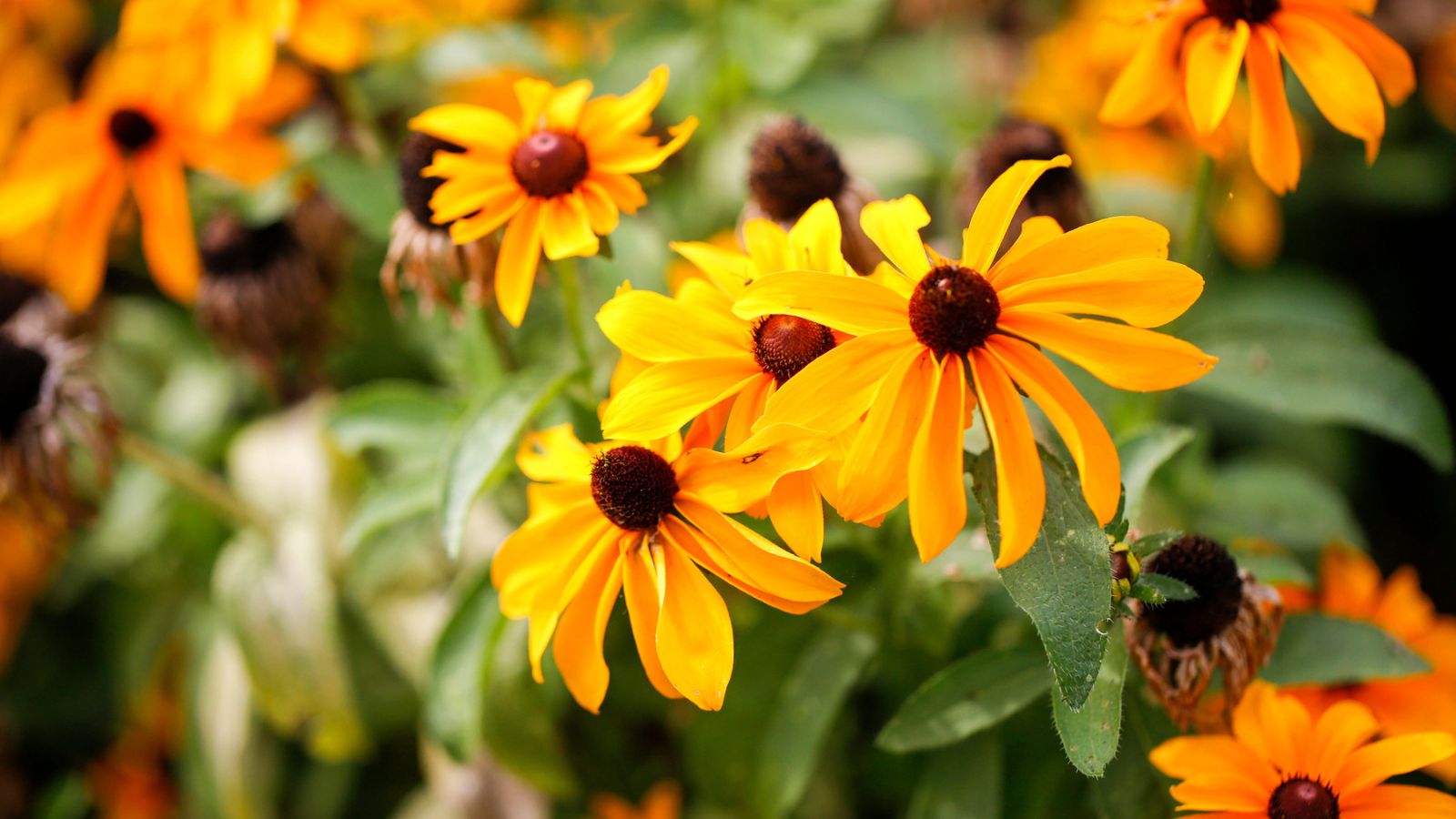
White flowers have a simple, quiet beauty that fits into almost any garden. Their soft color pairs well with brighter blooms and helps create a smooth, balanced look across your space.
Whether you’re starting a new bed or adding to an existing one, white flowers can brighten shady spots, soften edges, and tie different areas together. Here are 36 white flowers that bring steady blooms and a clean, classic look from spring through fall.
Cleome
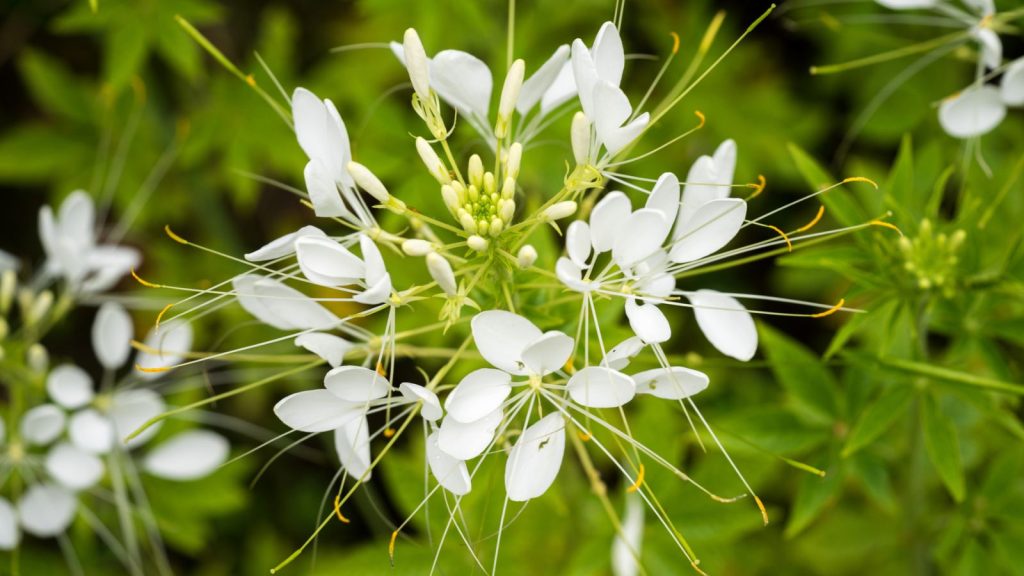
Cleome, also known as the spider flower, brings a touch of wild elegance to any garden. Growing cleome from seed is incredibly easy, and its distinctive seedlings are easy to spot, making it simple to manage where they grow.
White Begonia

White begonia features beautiful white flowers and attractive foliage, with a subtle fragrance. They grow well in partial shade with moist, well-drained soil that prevents drying out and wilting. Suitable for containers, hanging baskets, or in flower bed plantings.
Ranunculus (Ranunculus asiaticus)

Ranunculus produces layers of paper-thin petals in a wide range of colors, including pure white. Best planted in early spring or late fall, they prefer full sun and well-drained soil. Their blooms make excellent cut flowers.
Petunia (Petunia × hybrida)
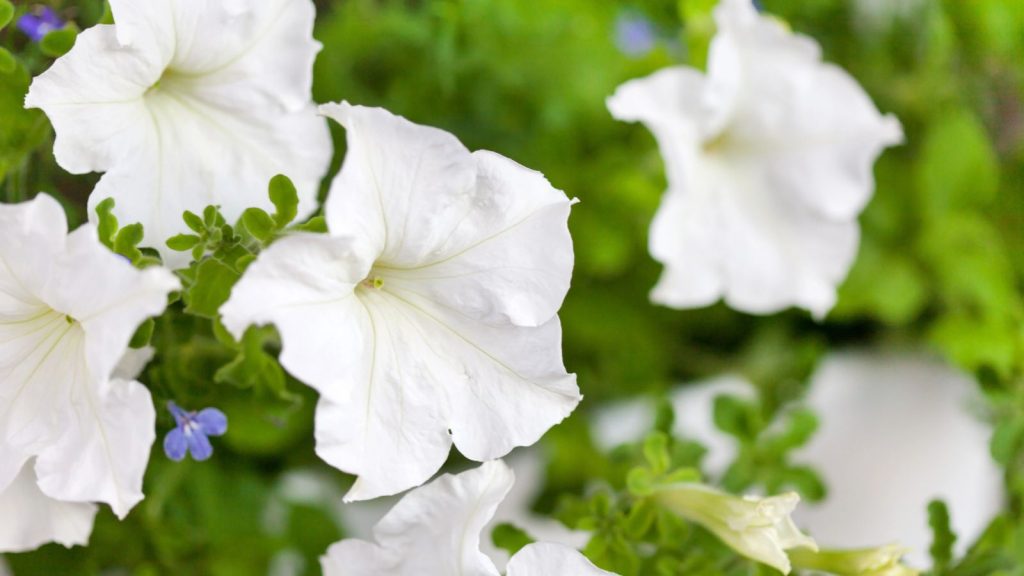
Petunias are fast-growing, low-maintenance sun lovers that thrive in garden beds and containers. Petunias thrive in fertile soil and require moderate watering. They bloom best in mild weather.
Cosmos (Cosmos Bipinnatus)
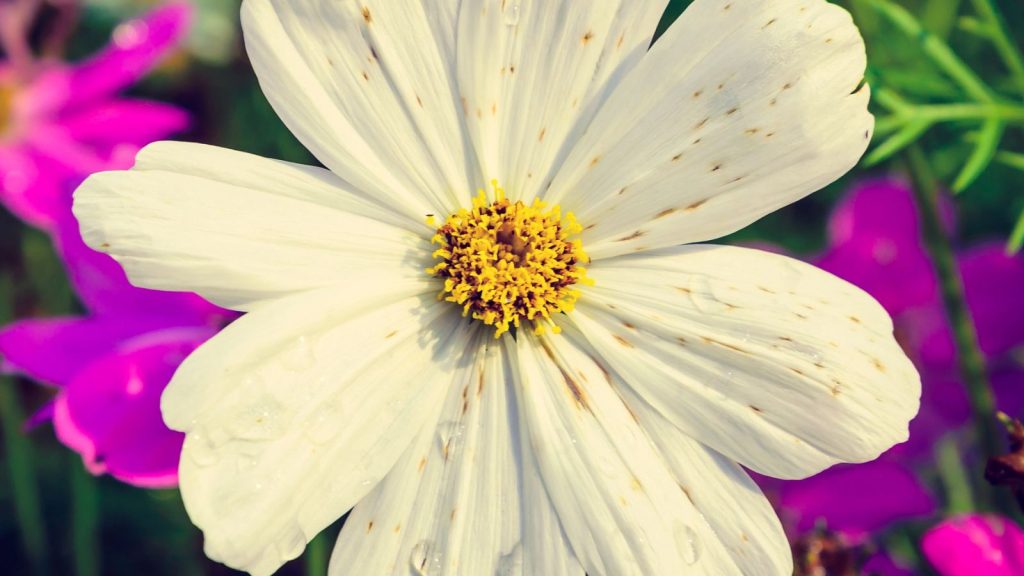
Cosmos is a favorite among pollinators, attracting butterflies with their nectar-rich blooms. These easy-care flowers thrive in full sun and need consistent moisture until they’re well established.
Once mature, they become drought-tolerant and require little upkeep. This annual will effortlessly fill the garden with its delicate, daisy-like flowers.
Shasta Daisy (Leucanthemum × superbum)
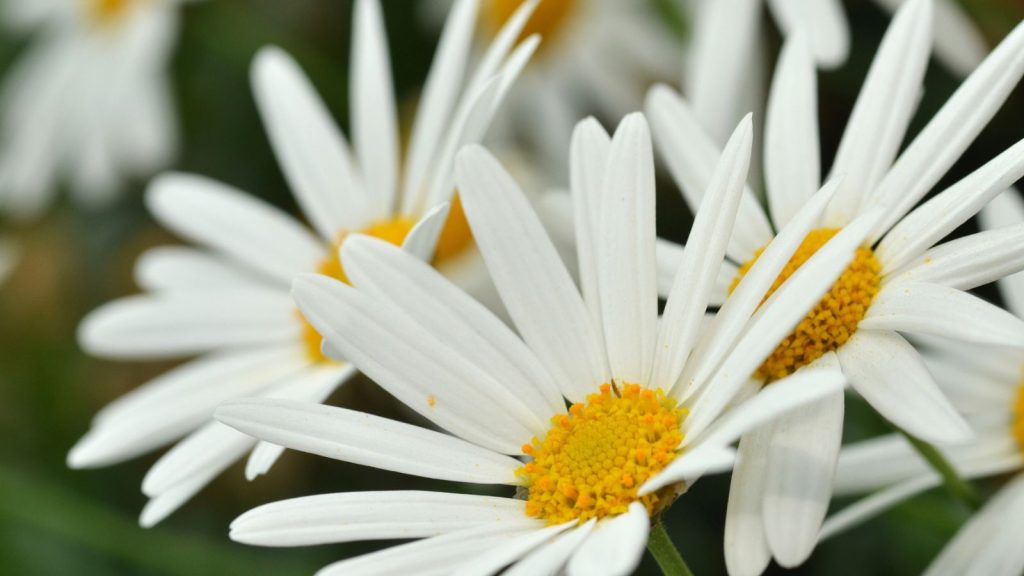
Shasta daisies are known for their crisp white petals and cheerful yellow centers. These classic white perennials thrive in full sun to partial shade and do best in well-draining soil. Regular deadheading helps extend the blooming season through late summer.
White Roses
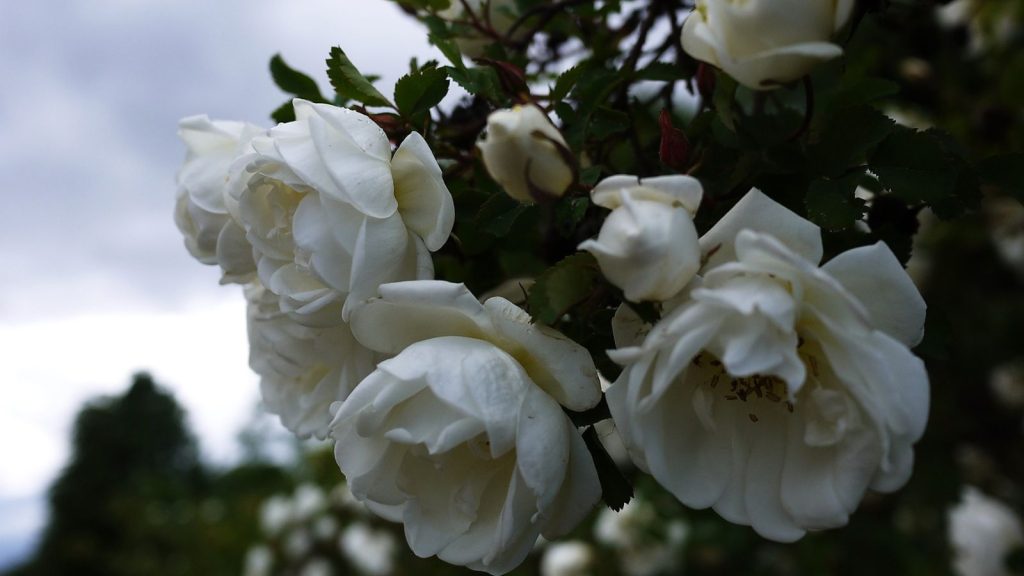
White roses are loved for their fragrant white blooms and romantic presence. Plant in a sunny spot with moist, well-drained soil. Prune in early spring and fertilize during the growing season to promote healthy growth and beautiful blossoms.
Sweet Alyssum (Lobularia maritima)
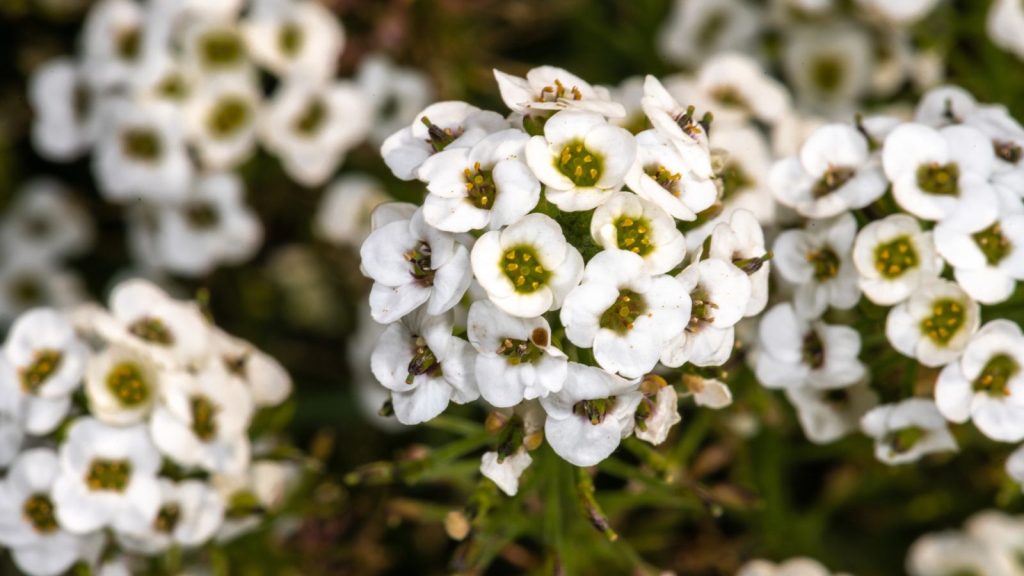
This low-growing plant is perfect for ground cover. It produces clusters of small white flowers from early spring to fall and can grow in full sun or partial shade. Sweet Alyssum tolerates a range of soil types and adds a delicate touch to flower beds and borders.
Moonflower (Ipomoea alba)

Moonflower vines produce large, white trumpet-shaped flowers that open at dusk and fill the garden with a sweet scent. These are excellent for moon gardens or trellises in full sun. Water consistently and provide support for climbing.
Calla Lily (Zantedeschia aethiopica)

Known for their elegant white spathes, Calla Lilies are a striking addition to part shade gardens. They do best in moist, rich, well-drained soil and may need protection in cooler growing zones during winter.
Gardenia (Gardenia jasminoides)

Known for its large, creamy white flowers and intoxicating fragrance. These evergreen shrubs prefer partial shade and acidic, moist, well-drained soil. High humidity and consistent watering help maintain their dark green foliage and flower production.
Lily of the Valley (Convallaria majalis)
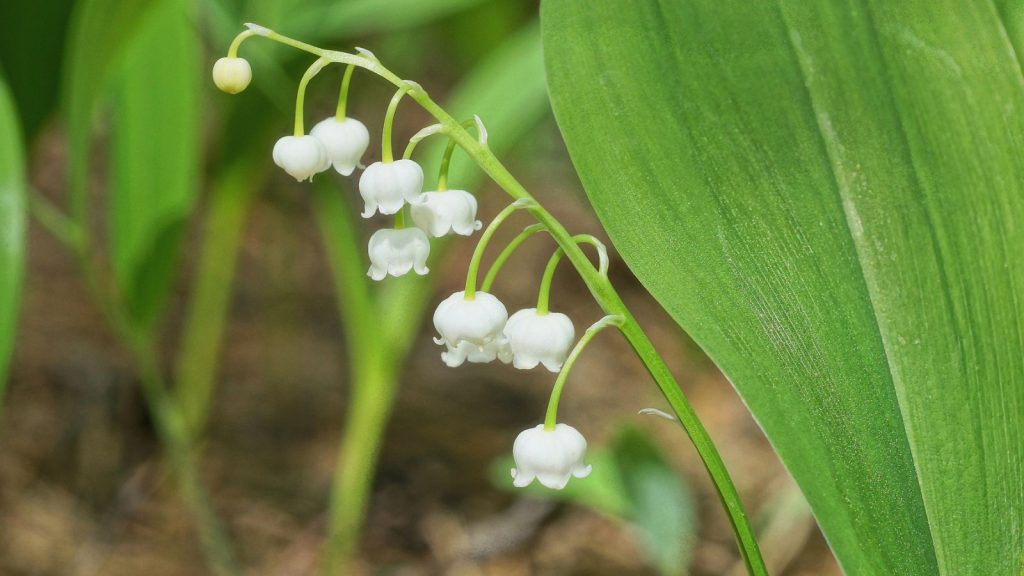
Lily of the Valley is a shade-loving perennial with arching stems of dainty, bell-shaped white flowers. This plant spreads quickly and prefers moist, well-drained soil. It’s a great choice for shady spots under trees.
White Hydrangea (Hydrangea arborescens ‘Annabelle’)

With its large, globe-like clusters of big and full white flowers, hydrangea exhibits a natural beauty in its white form. It thrives in partial shade but can handle some sun if grown in rich, moist soil. Water deeply, especially in dry periods, to avoid wilting. Prune in late winter or early spring.
Peony (Paeonia spp.)
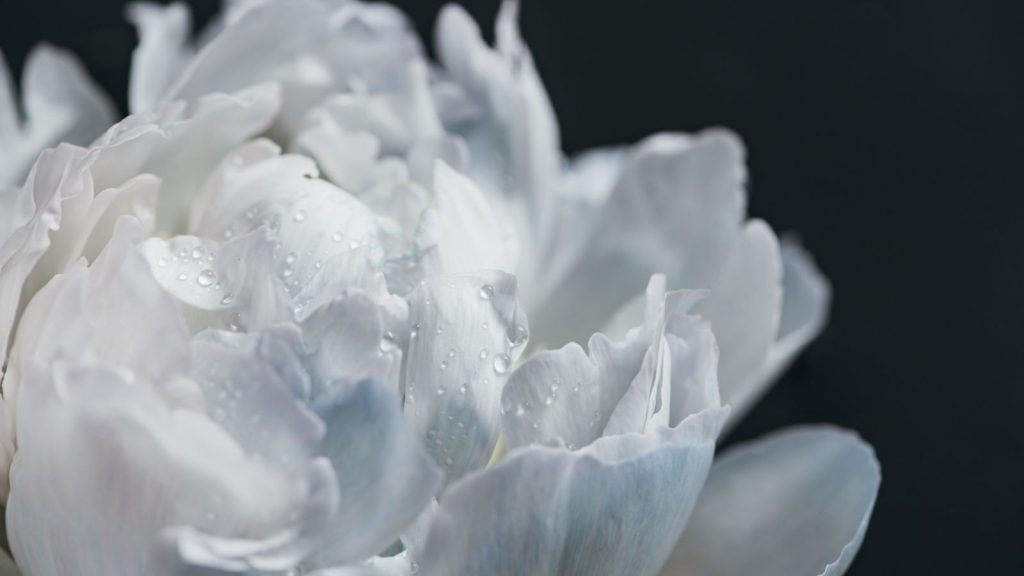
Peonies with white double flowers bring show-stopping blooms to late spring and early summer gardens. Plant them in full sun and well-draining soil, and avoid moving them once established.
White Bleeding Heart (Dicentra spectabilis ‘Alba’)

The white variety of
Camellia (Camellia japonica)

Camellias offer stunning white flowers in late winter to early spring. Their glossy evergreen leaves make them an excellent year-round shrub. Plant in partial shade with acidic, moist soil and protect from high heat and drying winds.
Snowdrop (Galanthus nivalis)

One of the earliest bloomers, Snowdrops emerge in late winter with nodding, white bell-like flowers. Plant in part shade in moist, well-drained soil. Great for naturalizing in grassy areas or shady woodland borders.
Zinnias
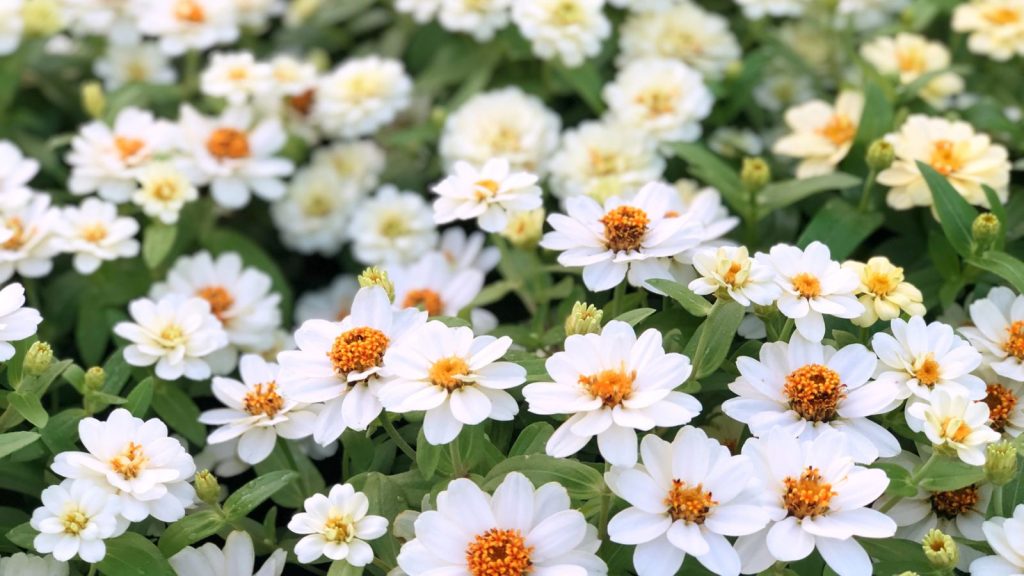
With their wide range of colors and easy-to-grow nature,
are truly gorgeous. This annual plant is a butterfly favorite that will bloom all summer long.
Impatiens

White Impatiens are shade-loving plants that thrive in shade with moist, well-drained soil. It should not be grown in full sun to prevent the plant from burning. It is ideal for filling in dark garden corners where other flowers may not thrive.
Snapdragon (Antirrhinum Majus)
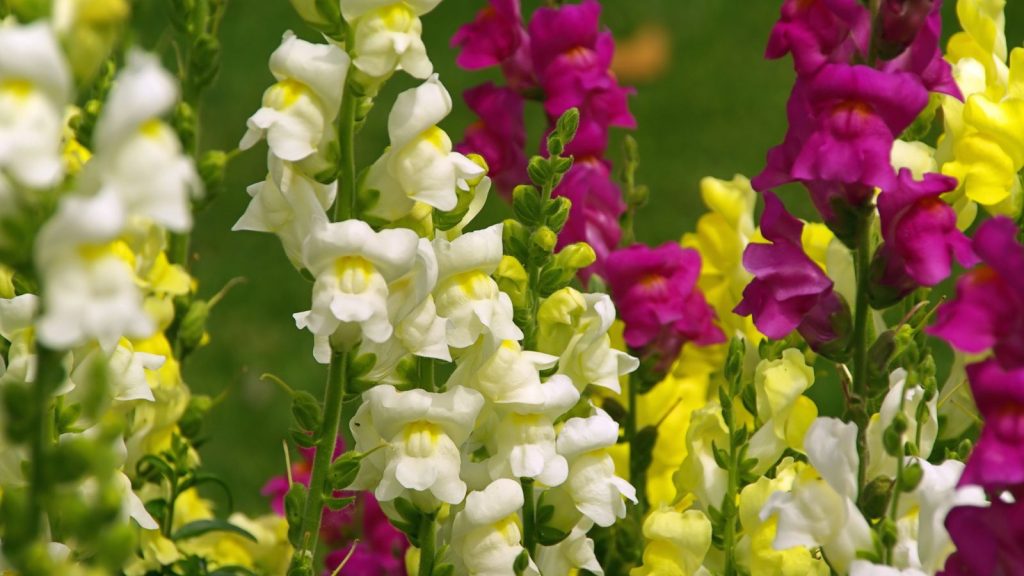
Snapdragons get their name from how their blooms open and close like little dragon mouths. They come in various colors and grow upright, making them a fun choice for borders. They thrive in full sun, rich, well-drained soil, and USDA zones 7 to 11, although they’re often grown as annuals in cooler areas.
White Tulip (Tulipa spp.)

White tulips bloom in early to mid-spring and bring a crisp, clean look to flower beds and borders. Plant bulbs in the fall in full sun and well-draining soil. Allow foliage to die back naturally after blooming.
Jasmine (Jasminum officinale)

This climbing vine produces intensely fragrant white blooms in summer. Jasmine prefers full sun to partial shade and needs support to climb. Water regularly and prune after flowering to maintain shape.
White Phlox (Phlox paniculata)

A favorite summer perennial, White Phlox produces full clusters of fragrant blooms in mid to late summer. Plant in full sun or part shade with moist, well-drained soil. Deadhead to prevent self-seeding and extend the bloom period.
Candytuft (Iberis sempervirens)

Candytuft is an evergreen perennial often used in rock gardens. Its white blooms appear in early spring, and it prefers full sun and well-drained soil. Prune after flowering to maintain a compact shape.
White Begonia (Begonia spp.)
With their dainty white flowers and lush foliage, white begonias are a pretty addition to containers or shaded flower beds. They grow well in part shade with consistently moist soil.
Japanese Anemone

Japanese Anemones bloom in late summer to early fall with elegant white flowers that sway on tall stems. They do best in partial shade with moist, well-drained soil and are a lovely choice for cottage gardens.
White Columbine (Aquilegia spp.)

Columbines bloom in early to mid-spring with delicate white flowers often marked by yellow centers. These perennial plants prefer partial shade and moist soil and may self-seed under the right conditions.
White Delphinium (Delphinium elatum)

White delphiniums make a dramatic statement with their tall spikes of white flowers. Best in full sun and well-drained, fertile soil. Provide staking to prevent wind damage and deadhead for a second bloom in early fall.
Globe Amaranth (Gomphrena Globose)
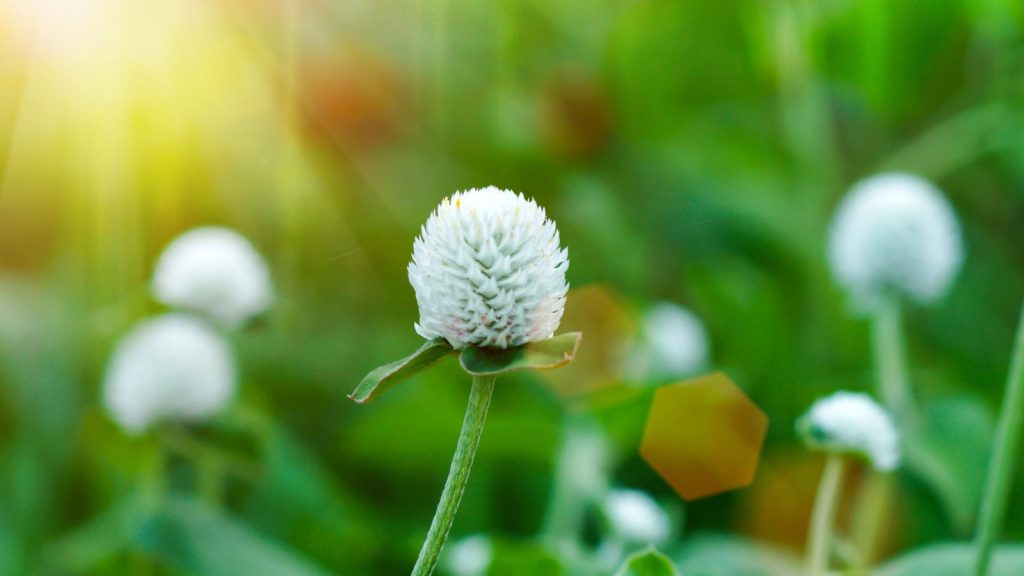
Globe Amaranth’s unique, pompom-like blooms in vibrant shades of pink, purple, and red make it a standout in containers and ornamental gardens. This fast-growing annual thrives in full sun and well-drained soil, attracting butterflies and requiring little maintenance.
Pansies

Pansies were a regular in grandma’s cool-season beds, with their sweet little blooms and rainbow colors. They’re cold-hardy and great for tucking into pots or borders in early spring or fall.
Pansies grow well in USDA zones 4 to 9, preferring cooler temps, moist soil, and partial to full sun.
Dianthus (a.k.a. Pinks)
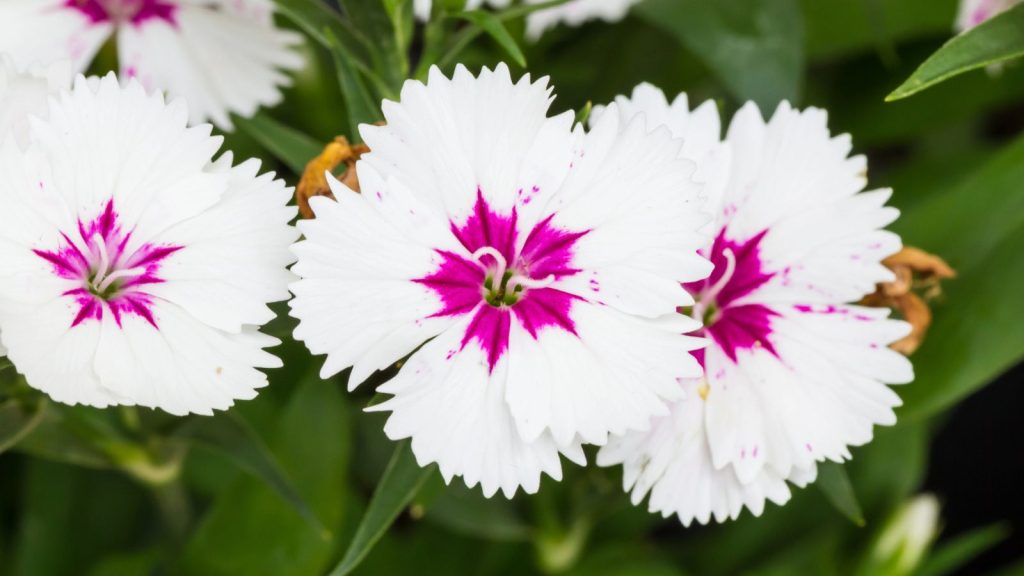
Dianthus are charming little flowers that smell faintly of cloves. They’re often pink, red, or white, and are popular in flower beds and borders. They like full sun and well-drained soil in USDA zones 3 to 9, and bloom best when deadheaded regularly.
White Astilbe

Feathery white plumes bloom above bright green leaves in part to full shade.
Snow-in-Summer (Cerastium tomentosum)

This silver-foliaged ground cover produces small white flowers in late spring to early summer. It thrives in full sun and well-drained soil and is perfect for hot, dry areas and rock gardens.
Foamflower

Foamflower is a charming ground cover with white or pinkish flowers rising above variegated foliage, perfect for a woodland garden. It is a tough plant that requires little care to grow and flower. Zones 3-9
Hellebore (Helleborus spp.)

Often called Lenten rose, hellebores are among the first flowers to bloom when winter is just starting to ease its grip. Their nodding blooms appear in soft shades of white, pink, and deep purple, adding quiet beauty to shaded areas. These hardy perennials grow well in USDA Zones 4–10 and bring life to the garden from late winter into early spring.
Yarrow (Achillea millefolium)

Yarrow is a rugged, sun-loving perennial known for its flat-topped clusters of tiny flowers, which come in a range of colors including white, yellow, pink, and red. Its fern-like foliage adds texture, and its ability to handle drought makes it a reliable choice for hot, dry spots. Pollinators like bees and butterflies flock to its blooms. Suitable for Zones 3–9.