Growing tomatoes successfully in containers can be a rewarding experience, even if you’re limited on space or gardening conditions.
Whether you’re a seasoned gardener or a beginner, cultivating vibrant, flavorful tomatoes in a container requires a bit of know-how, but it’s well worth the effort. Here’s your ultimate guide to achieving a bountiful harvest right on your balcony or patio.
Choose the Right Container

The first step to success is selecting an appropriate container. Tomatoes need room for their roots to spread, so aim for a container that’s at least 18-24 inches deep and wide. A larger pot encourages healthy growth and prevents root crowding.
Make sure your container has drainage holes to avoid waterlogging, which can lead to root rot. For optimal growth, consider using a large plastic or ceramic pot, or even a fabric grow bag for excellent airflow around the roots.
Pick the Best Tomato Variety
Not all tomato plants are created equal when it comes to container gardening. Opt for determinate (bushy) varieties or dwarf types, as these are better suited to smaller spaces. Varieties like ‘Tiny Tim,’ ‘Patio Princess,’ or ‘Bush Early Girl’ thrive in containers.
Indeterminate types, which grow taller and require more space, may struggle in a confined pot. Your choice will depend on the amount of space you have and whether you prefer small, medium, or large tomatoes.
Use Quality Potting Mix

Tomatoes thrive in a loose, well-draining potting mix that retains moisture without becoming soggy. Avoid using regular garden soil, as it can be too dense and may contain pests or diseases.
A high-quality, peat-based potting mix, or one specifically designed for vegetables, will work best. You can also mix in perlite or vermiculite to improve drainage and root health.
Positioning and Sunlight
Tomatoes are sun lovers, so make sure your container is placed in a spot that gets at least 6-8 hours of direct sunlight each day. A south-facing balcony or patio is ideal.
Without adequate sunlight, your plants will become leggy, and the fruits will lack flavor. Be mindful of the climate, too—if you live in an area with scorching temperatures, consider some afternoon shade to prevent scorching and dehydration.
Watering Wisely

Tomatoes in containers require regular watering because the soil in pots dries out faster than in the ground. Water consistently, but don’t overdo it—tomatoes prefer evenly moist soil, not soggy roots. Water the base of the plant, not the leaves, to prevent disease.
A good rule of thumb is to check the soil’s moisture level by sticking your finger into it. If it feels dry an inch down, it’s time to water. Also, consider using a self-watering container to reduce the need for daily watering.
Fertilizing for Success
Tomatoes are heavy feeders, meaning they need plenty of nutrients to grow and produce fruit. Fertilize your container tomatoes every two weeks with a balanced, water-soluble fertilizer that’s high in potassium and phosphorus.
These nutrients support strong flowering and fruit production. You can also apply slow-release granular fertilizers at the beginning of the season to reduce the frequency of feeding.
Support Your Plants
As your tomato plants grow, they’ll need support to keep them upright and prevent the fruit from touching the ground. Use stakes, cages, or trellises to support the plant and its growing branches. For compact varieties, a simple tomato cage will usually suffice.
For larger indeterminate types, taller trellises or multiple stakes may be necessary. This not only keeps the plant healthy but also improves airflow around the foliage, reducing the risk of fungal diseases.
Pruning and Maintenance
Pruning is essential for growing tomatoes in containers, especially with indeterminate varieties. Regularly pinch off suckers—the small shoots that grow between the main stem and branches.
This helps direct the plant’s energy into producing fruit rather than excess foliage. Also, remove any yellowing or dead leaves to prevent disease and improve air circulation.
Watch for Pests and Diseases
While container-grown tomatoes are generally less susceptible to soil-borne diseases, they can still be affected by pests such as aphids, whiteflies, and spider mites.
Check your plants regularly for signs of infestation and treat them promptly with organic pest control methods such as neem oil or insecticidal soap. Additionally, prevent fungal diseases by watering the base of the plant and not wetting the leaves.
Harvesting Your Tomatoes
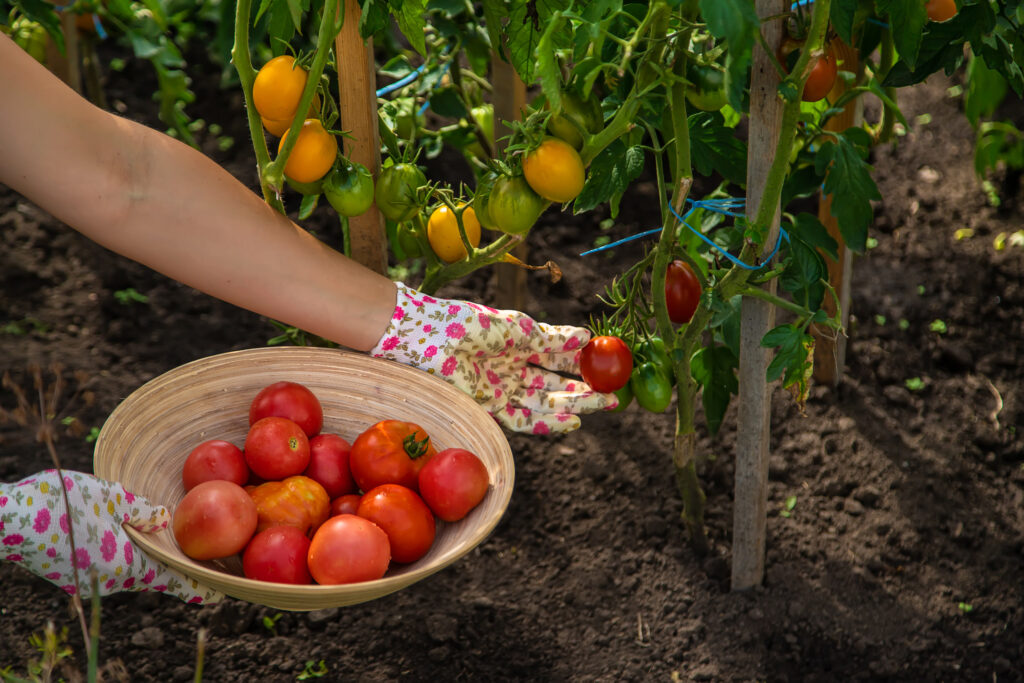
The best part of growing tomatoes is, of course, harvesting them! Depending on the variety, your tomatoes should be ready to pick in 50-90 days after planting.
For most types, tomatoes are ready when they’ve reached full color (red, yellow, orange, or even purple, depending on the variety). Gently twist or cut the fruit from the vine to avoid damaging the