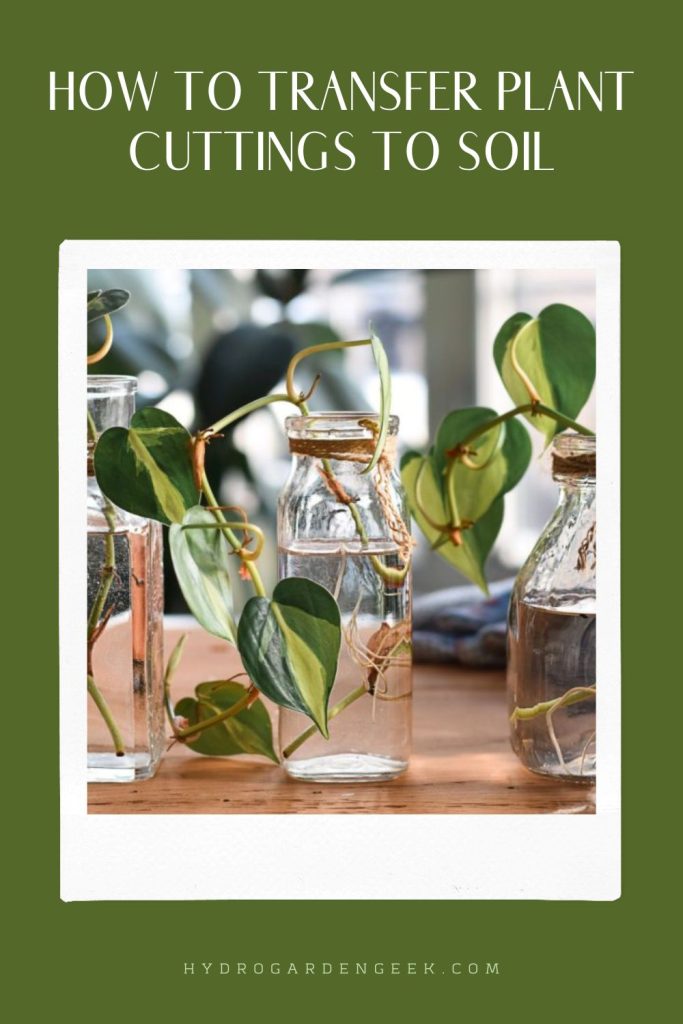
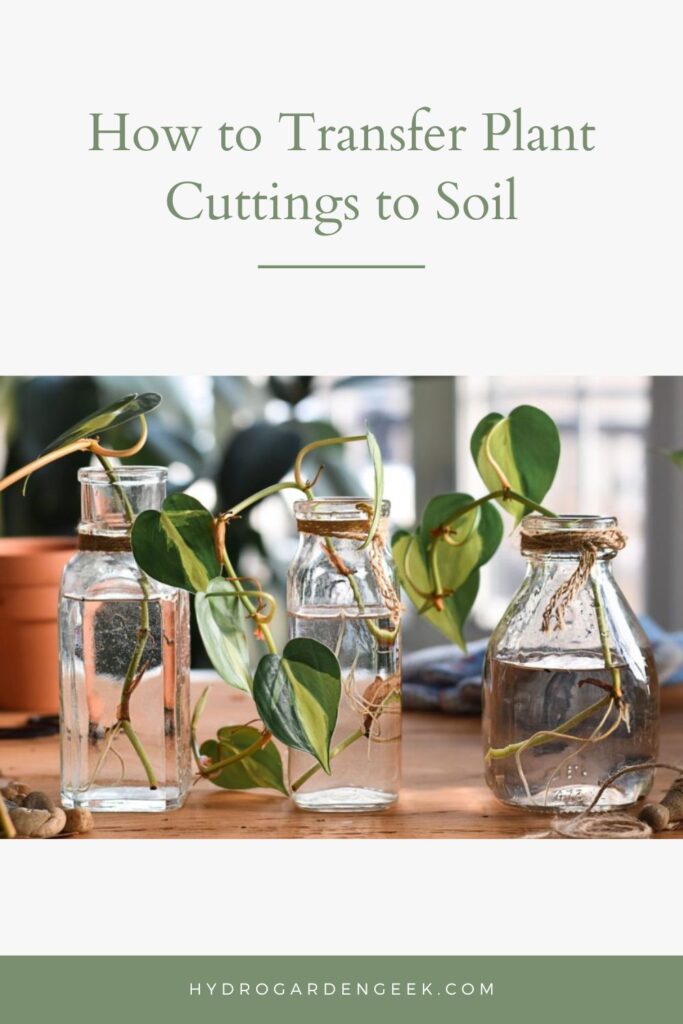
One of my favorite parts of plant propagation is that moment when roots finally appear on a cutting. And I’m not afraid to admit that I check mine almost daily. When I spot those little white roots curling in the water, I can’t help but celebrate. But at some point, those cuttings need more than just water. That’s when it’s time to transfer them into soil so they can grow into strong, healthy plants.

When Are Cuttings Ready to Move?
I usually wait until the roots are at least a couple of inches long before moving cuttings into soil. Tiny nubs are exciting, but they’re still too fragile to handle the stress of transplanting. Once the roots look well-formed and strong, I know the cutting is ready for its next home. Depending on the plant, this can take anywhere from a couple of weeks to over a month.
How to Transfer Cuttings Into Soil
When it’s time to make the move, I start by choosing a small pot with good drainage. I fill it with fresh, well-draining potting mix—something light and airy so the new roots can spread easily.
Then, I carefully make a little hole in the soil with my finger or a pencil, gently place the rooted cutting in, and cover the roots with soil. The trick is to handle the cutting gently so those delicate roots don’t break. After that, I water just enough to settle the soil around the roots.

Helping Your Cuttings Adjust
I’ve noticed that cuttings can take a little while to adjust after being moved to soil—it’s a significant change! To make the transition easier, I keep the pot in a bright but indirect light spot and maintain even moisture without overwatering.
Sometimes I’ll even cover the pot loosely with a clear plastic bag to create a mini greenhouse effect, helping the cutting hold onto humidity while it adjusts. Within a couple of weeks, the plant usually perks up and starts sending out new growth.
Why Soil is the End Goal
Water propagation is fun because you get to watch the roots grow. However, some plants are meant to live in soil. Soil provides nutrients and stability that water alone can’t offer. Once my cuttings are settled into their pots, I know they’re on their way to becoming long-term, thriving plants rather than just temporary science experiments in a jar.