Some islands look peaceful from a distance, but they turn darker the closer we get. A quiet shoreline can hide quarantine wards, empty hospitals, military ruins, forgotten cemeteries, collapsed prisons, snake-filled forests, and buildings that nature has started eating room by room. That is why abandoned islands feel different from ordinary ruins. They do not just look deserted; they feel sealed off from the world.
The creepiest abandoned islands are not scary just because of ghost stories. They unsettle us because people once lived, suffered, worked, prayed, healed, fought, or died there, only to leave almost everything behind. We can still see the proof in cracked staircases, roofless churches, rusted hospital beds, stone forts, and docks that no longer welcome anyone.
North Brother Island, New York
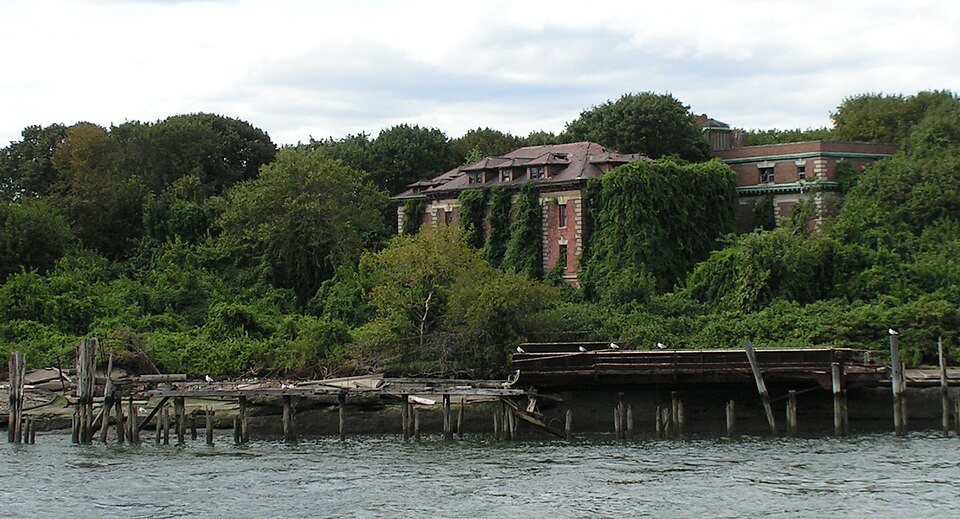
North Brother Island sits in New York’s East River, close enough to the city that its abandonment feels almost unbelievable. It was once used for infectious-disease quarantine and later became associated with Mary Mallon, widely known as “Typhoid Mary.” The island was abandoned in 1963 after being used as a drug rehabilitation center, and public access is restricted because of hazardous ruins and its value as a bird sanctuary. That combination gives it a strange double identity: part medical history, part urban ruin, part wildlife refuge.
The island’s buildings make it feel like New York forgot an entire chapter of itself in the river. Old hospital structures, dormitories, and institutional spaces now sit under vines, weather, birds, and decay. City environmental materials also describe abandoned waterfront structures and ruins, including North Brother Island, as habitat for bats, snakes, heron colonies, and other wildlife. That detail makes the island even more unsettling. The people left, the hospital system vanished, and nature moved into the rooms.
Poveglia Island, Italy
Poveglia sits in the Venetian Lagoon, with a beauty that makes its history feel even stranger. From the water, it looks like another quiet patch of green near Venice, but the island’s past is tied to quarantine, sickness, abandonment, and legends that refuse to stay buried. Its buildings once served health and institutional purposes, and its ruins now sit behind layers of vegetation, unsafe structures, and public-access restrictions. The island has been linked to plague-isolation stories, with local lore claiming that human remains and ash became part of the soil, though the more extreme claims remain part of legend rather than a proven record.
What makes Poveglia so disturbing is the clash between its postcard setting and its reputation. Venice is usually sold as romance, canals, and golden evening light, yet Poveglia feels like the lagoon’s locked room. The old hospital complex, bell tower, and overgrown paths create the perfect anatomy of a haunted island story. We do not need to believe every rumor about tortured patients or ghostly bells to understand why people find it creepy. A place used for quarantine, later left to crumble, will always carry a heavier silence than an ordinary ruin.
Hashima Island, Japan
Hashima Island, also called Gunkanjima or Battleship Island, may be the most cinematic abandoned island in the world. Off Nagasaki, its seawalls and concrete towers make it look like a rusting warship at sea. The island grew around coal mining, reached a dense urban peak, then emptied after the mine closed in 1974. The official Japanese tourism site notes that the island is only 480 meters long and 160 meters wide, yet it once housed schools, shops, a hospital, and religious buildings within its concrete maze.
Hashima’s creepiness goes deeper than its skyline. Its industrial story is tied to Japan’s rapid modernization, but the island also carries a painful wartime labor history. UNESCO materials acknowledge that the Hashima Coal Mine is deteriorating and poses major conservation challenges, and Japan’s reporting to UNESCO discusses ongoing interpretation work on Koreans and others brought against their will and forced to work under harsh conditions during World War II. The result is an island that feels like a concrete warning. It is not just abandoned; it is contested memory, hard labor, industrial pride, and human suffering pressed into one small place.
Ilha da Queimada Grande, Brasil
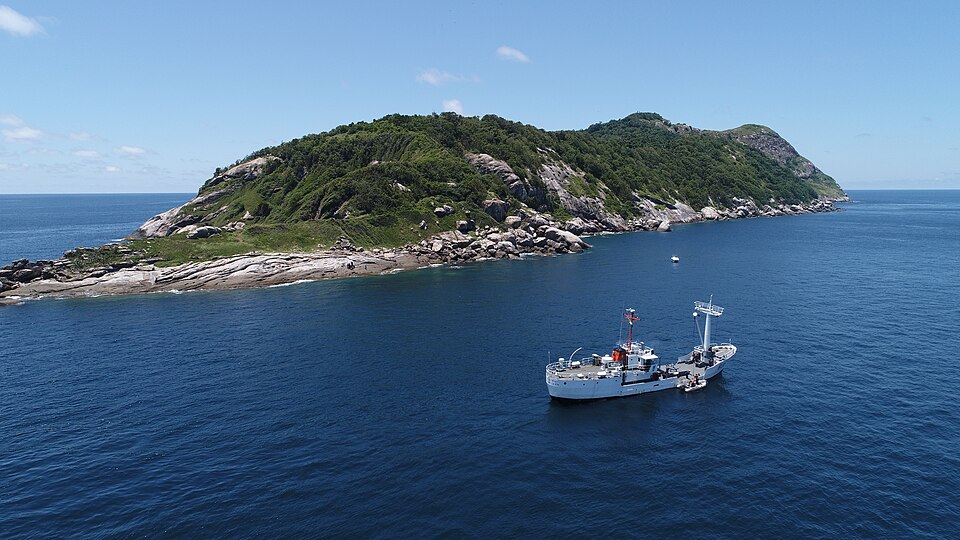
Ilha da Queimada Grande, better known as Snake Island, is one of the rare abandoned islands where the danger is not just history. Located off the coast of São Paulo, it is famous for the golden lancehead viper, a venomous snake found only on this island. Estimates often place the population at 2,000 to 4,000 snakes, enough to turn a green tropical island into a place almost no one casually visits. Brazil tightly controls access, and scientific visits require serious precautions because this is not a ruin where the main threat is a weak floorboard.
The island’s horror comes from evolution, not architecture. Rising seas separated the island from the mainland thousands of years ago, and the trapped snakes adapted to a world without normal ground prey. Birds became the target, and the island’s isolated ecosystem produced one of the most infamous reptile habitats on Earth. Snake Island looks like paradise from the water, but that is exactly the trick. It is a beach day from a nightmare, where the trees, rocks, and grass all seem to belong to something venomous.
Spinalonga, Greece
Spinalonga, off Crete, is not abandoned in the simple sense because it now receives visitors as an archaeological site. Its old residential and institutional life, however, belongs to the past. The island was fortified by the Venetians in the late 16th century and later became a leprosy hospital in the early 20th century. UNESCO’s tentative listing describes Spinalonga as a place where fortification, settlement, isolation, and human pain overlap, noting that after the leprosy hospital closed in 1957, the island was left deserted and uninhabited.
Spinalonga is creepy because its beauty refuses to soften its history. Blue water surrounds stone walls, narrow passages, former homes, hospital spaces, and traces of lives lived under forced separation. People affected by leprosy did not simply disappear into a medical footnote; they built routines, relationships, and a community under conditions shaped by fear and stigma. The island’s quiet streets still carry that contradiction. It is beautiful, but not gentle.
Discovery Island, Florida
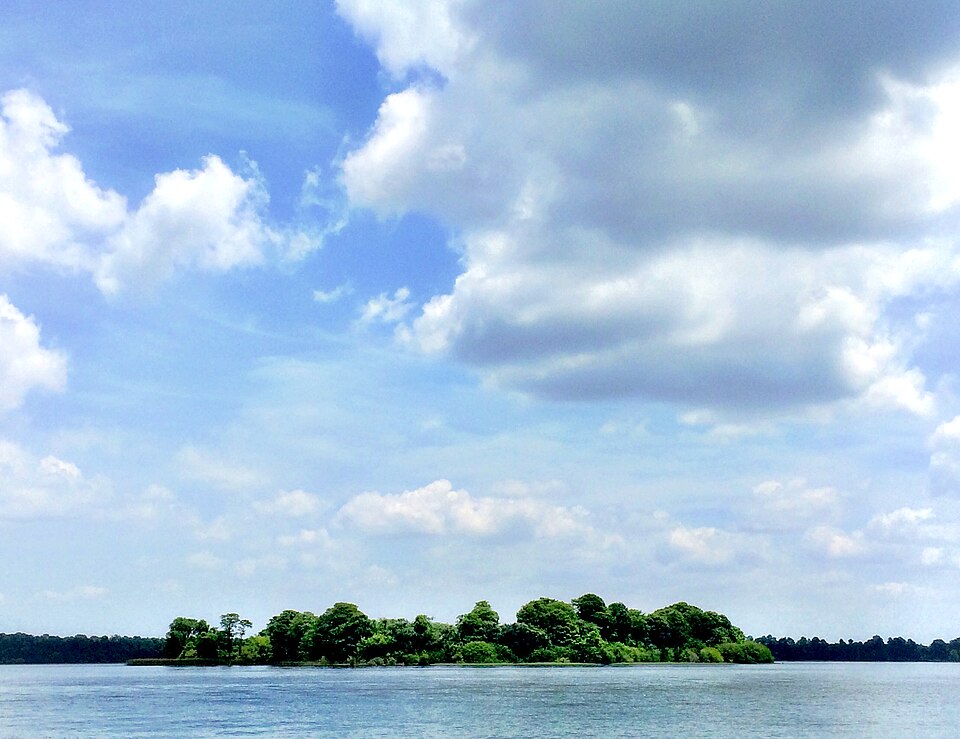
Discovery Island sounds harmless until we remember it is an abandoned Disney attraction sitting inside one of America’s most controlled entertainment worlds. The island opened as Treasure Island in 1974, later became Discovery Island, and operated as a wildlife-viewing attraction. It closed in 1999 after Disney’s Animal Kingdom shifted its attention, and the animals were moved elsewhere. Since then, the island has remained off-limits, a blank green mystery in Bay Lake.
What makes Discovery Island so strange is not old-world tragedy, but corporate silence and decay behind a cheerful brand. Disney is built on polish, music, color, and crowd control. An abandoned island in that universe feels like discovering a locked basement beneath a candy store. Reports describe empty paths, leftover structures, and a place that guests can see from a distance but cannot enter. That is the creep factor: a forgotten park inside a fantasy machine that rarely allows anything to look forgotten.
Netaji Subhas Chandra Bose Island, India
Formerly known as Ross Island, Netaji Subhas Chandra Bose Island lies near Sri Vijaya Puram in the Andaman and Nicobar Islands. It once served as an administrative hub under British colonial rule, and its surviving ruins include reminders of churches, a bakery, tennis courts, swimming pools, official buildings, and other colonial-era structures. The island later suffered through earthquake damage and World War II occupation, adding another layer to its already heavy history. Today, it is promoted as a heritage site where visitors can walk through the remains of colonial power and wartime trauma.
The unsettling part is how elegant the ruins still look. Banyan roots crawl over old walls. Deer move through spaces once shaped by empire. A church shell stands where British officials once tried to recreate mainland comfort in a penal-colony world. The island shows how quickly power can become scenery after people leave. We see the architecture of authority, but the island no longer obeys it. Nature has taken the final vote.
McNabs Island, Canada
McNabs Island sits in Halifax Harbor and carries a layered history of settlement, defense, disease, and neglect. Unlike some islands on this list, it is not completely forbidden, but its abandoned structures and burial history give it an eerie reputation. The island has military remains, old homes, shipwreck associations, and a connection to the 1866 cholera outbreak involving the S.S. England, a steamship carrying 1,202 passengers that sought refuge at Halifax during the epidemic.
The island feels creepy because its ruins do not fit into a single story. It is not just a fort island, a quarantine island, or a deserted settlement. It is all of them at once. A visitor can move from military remnants to cemetery history to traces of former domestic life, which makes the island feel like a scrapbook with half the pages soaked through. Its silence is not empty. It is crowded with different versions of abandonment.
Fort Carroll, Maryland
Fort Carroll is a 3.4-acre artificial island in the Patapsco River near Baltimore, resembling an abandoned military project. Construction started in 1848 under the supervision of Robert E. Lee, and the fort was named for Charles Carroll of Carrollton. It was designed to protect Baltimore, but it never became the fully useful defensive site planners had imagined. Later, it served different military-adjacent purposes before decay took over.
The United States Coast Guard notes that Fort Carroll was built to protect the approach to Baltimore, became obsolete, was abandoned after World War I, and briefly saw use again during World War II before both the fort and lighthouse were left to deteriorate. That history gives the island a special kind of American eeriness. It is not hidden in a remote ocean. It sits in plain sight near a major city, slowly crumbling in the middle of the water like a warning that even massive brick defenses can become bird habitat and broken masonry.
Chacachacare, Trinidad and Tobago
Chacachacare is one of the most haunting quarantine islands in the Caribbean. In 1921, colonial authorities moved toward establishing a leper colony there, a decision that forced existing residents from ancestral lands and holiday homes. The National Trust of Trinidad and Tobago describes deep resistance to the plan and notes that the first transfer was carried out in secret. By 1926, people affected by leprosy had been transferred to Chacachacare, where Dominican Sisters followed to serve them.
This island feels disturbing because its abandonment stemmed from an isolationist policy. People were not just living far away from society; they were placed there because society wanted to distance itself from them. Ruins on islands like Chacachacare remind us that public health history is often marked by fear, stigma, and forced separation. The old buildings do not need ghost stories to feel haunted. The system that created them is haunting enough.
Pollepel Island, New York
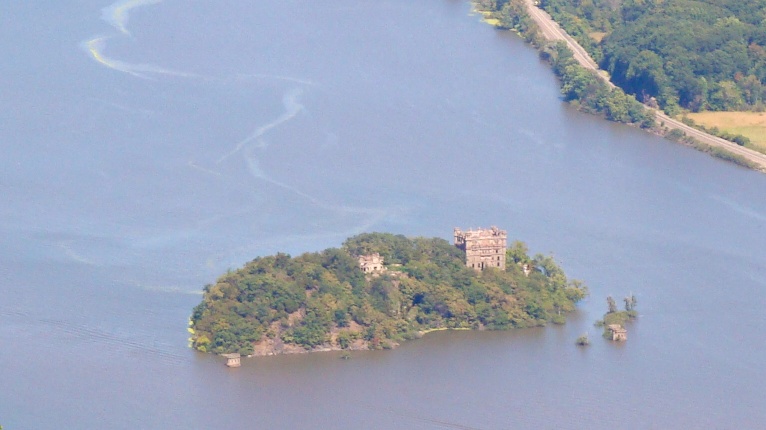
Pollepel Island, better known as Bannerman Island, sits in the Hudson River with castle ruins that look almost too theatrical to be real. Francis Bannerman used the island as a military surplus storage complex, and the castle-like structures became one of the strangest sights in the Hudson Highlands. The Bannerman Castle Trust describes the island as once uninhabited and accessible only by boat, with old stories of haunting and superstition attached to it long before the arsenal ruins became the main attraction.
The island’s creepiness comes from the mismatch between fantasy architecture and dangerous purpose. From a distance, it looks like a ruined European castle dropped into New York. Up close, it is tied to ammunition, industrial storage, collapse, and structural fragility. The walls seem romantic until we remember they were never built for fairy tales. They were built around weapons, business, and risk. That makes Pollepel one of America’s most dramatic abandoned-island ruins.
Why Abandoned Islands Stay in Our Imagination
Abandoned islands scare us because they remove the comfort of escape. A ruined hospital on a city street is unsettling, but one surrounded by water feels trapped in its own memory. The shoreline becomes a boundary between ordinary life and the things people once tried to hide, control, punish, quarantine, or forget.
That is why these islands continue to attract attention. Some are dangerous because of snakes, unstable buildings, or restricted access. Others are disturbing because their history involves disease, labor, exile, war, or institutional cruelty. Together, they prove that the world’s creepiest abandoned islands are not just empty places. They are places where silence has learned to speak.