Science is supposed to be the antidote to nonsense. And yet, some of the most persistent myths floating around out there wear the costume of scientific fact, repeated so often by so many people, that questioning them feels almost rude.
Here are ten science myths that refuse to die, and the actual truth behind each one.
Yoga Can Absolutely Hurt You

Yoga has excellent PR. It’s peaceful, it’s mindful, it comes with soothing music and the implicit promise that nothing bad can happen while you’re breathing this intentionally.
The reality is that yoga produces injuries at rates comparable to more vigorous sports, and roughly one in five yoga injuries makes a pre-existing condition worse rather than better.
The poses that look serene in photographs can place serious strain on joints, ligaments, and the spine, particularly when performed without proper instruction or when pushed beyond a body’s actual range of motion.
Advanced poses have sent experienced practitioners to physical therapists. “Low impact” does not mean “no impact,” and the meditative atmosphere of a yoga studio can create a false sense of invincibility. Take a class. Hire a teacher. Just don’t assume gentleness is guaranteed.
Cracking Your Knuckles Does Not Cause Arthritis
Few parental warnings have been repeated with more conviction and less evidence than this one.
The sound, which is genuinely unpleasant, to be fair, comes from gas bubbles forming and collapsing in the synovial fluid that cushions your joints. It is not bone grinding on cartilage. It is not damage being done. It is a bubble.
The most committed debunking of this myth belongs to Dr. Donald Unger, who spent 60 years cracking the knuckles on one hand every day while leaving the other hand alone, then compared the results. No arthritis. No difference whatsoever.
He won an Ig Nobel Prize for this dedication, which feels right. Habitual cracking may occasionally cause mild temporary swelling, but it does not cause arthritis. The myth survives solely on how much the sound annoys people.
Sports Drinks Are Not What Your Body Needs
The marketing around sports drinks is a masterpiece of association. Put them in the hands of enough elite athletes, surround them with enough imagery of peak performance, and people start reaching for them after a 30-minute walk.
The science, however, is considerably less exciting: for most exercise at most intensities, plain water is entirely sufficient.
Sports drinks deliver electrolytes and carbohydrates that genuinely matter in prolonged endurance events, multi-hour efforts where the body’s glycogen stores are actually being depleted.
For a gym session, a morning jog, or really anything under about 90 minutes of moderate activity, they’re primarily delivering sugar and calories you didn’t need. Drink water. Eat a banana if you like. Save the neon beverages for when you’ve actually earned them.
Waking a Sleepwalker Will Not Kill Them

This myth follows the structure of a horror-movie rule: if you break it, someone dies. The truth is considerably less cinematic. Waking a sleepwalker is safe. It happens millions of times a year without fatal consequences.
The sleepwalker will likely be confused, disoriented, and possibly startled, but they will not have a heart attack. Their hearts do not know or care that they were sleepwalking.
The guidance against waking sleepwalkers exists because disorientation can make them briefly uncooperative or distressed, not because waking them is medically dangerous. If someone is sleepwalking toward a staircase, wake them. The embarrassment is recoverable. The alternative is not.
NASA Did Not Blow Millions on a Space Pen
This one is practically a folk tale about government waste: NASA, faced with the problem of writing in zero gravity, spent millions developing a special pen. The Soviets, displaying superior common sense, just used pencils. Hilarious, right? Also completely false.
The Fisher Space Pen was developed entirely with private funding by Paul Fisher, who invested his own money in solving the problem. NASA purchased the pens for around six dollars each, a figure sometimes cited as two dollars depending on the contract, which is not an outrage by any measure.
The Soviets, incidentally, eventually switched to Fisher pens too, because pencils in spacecraft are actually a genuine safety concern: broken graphite tips float, get into eyes, and can short-circuit equipment.
The story survives because it’s a perfect parable of bureaucratic absurdity. It just has the inconvenience of not being true.
Alfred Nobel Did Not Create His Prize Out of Guilt
The popular version of this story is irresistible: Alfred Nobel, inventor of dynamite, reads his own premature obituary, “The Merchant of Death Is Dead,” is horrified by his legacy, and immediately establishes the Nobel Prizes to rehabilitate his image. It’s a great narrative arc. It is also a significant oversimplification.
Nobel had been thinking about his legacy and the responsible use of his fortune for years before any obituary incident. His will, which established the prizes, reflected a long-held philosophy of rewarding contributions to humanity rather than a panicked rebranding exercise.
The obituary may have sharpened his thinking, but the prizes were not a PR stunt by a man in a hurry to seem good. History tends to prefer the dramatic version. The real one is quieter but arguably more interesting.
Stretching Before Exercise May Actually Make Things Worse
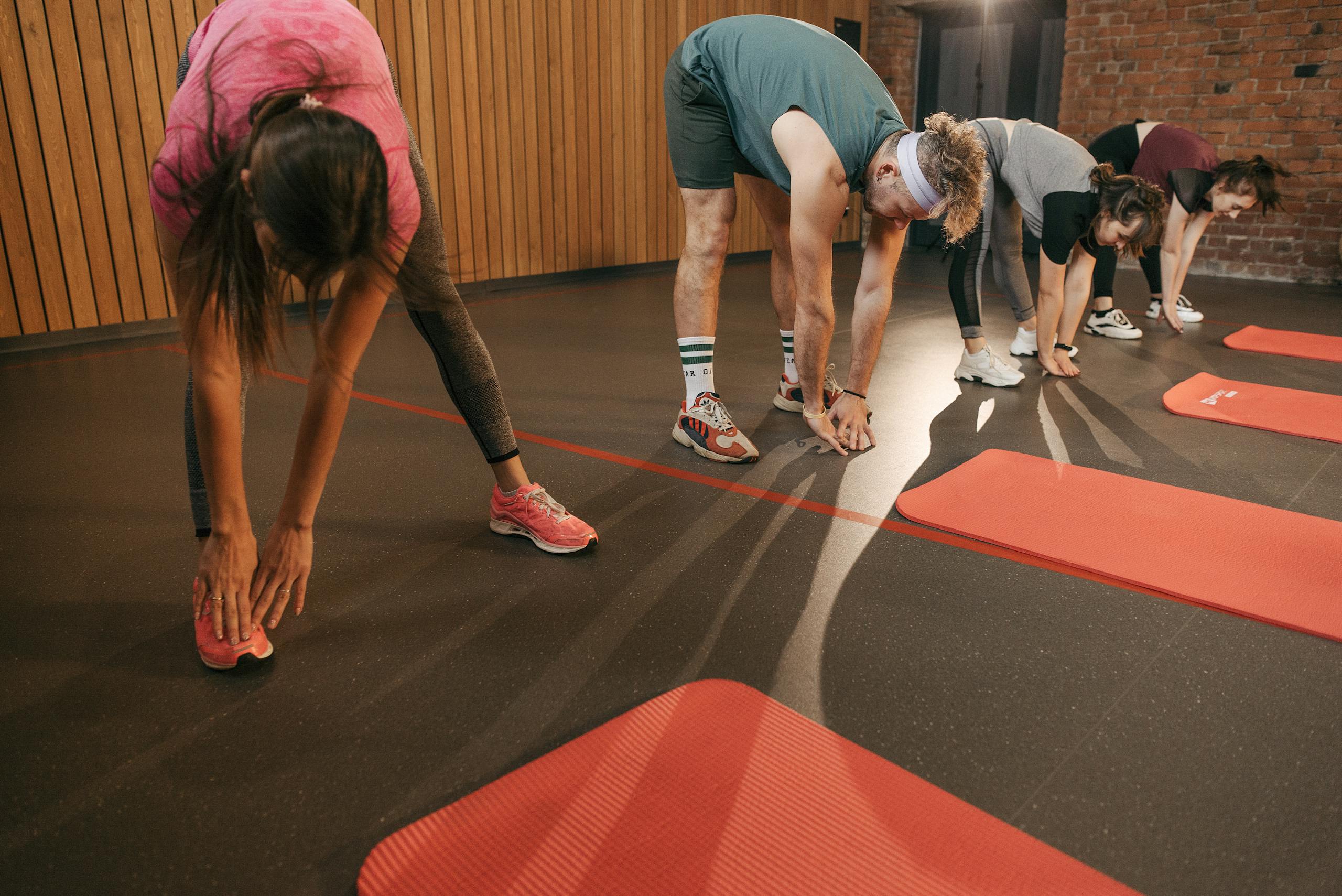
The pre-workout stretch is one of fitness culture’s most cherished rituals, built on a foundation of good intentions and questionable evidence.
Static stretching, the kind where you hold a position for 20-30 seconds, performed on cold muscles before exercise has been shown in multiple studies to temporarily reduce muscle strength and power output, potentially increasing rather than decreasing injury risk.
What actually works is a dynamic warm-up: gradually increasing movement that raises your heart rate and takes joints through their range of motion in ways that mimic what you’re about to do.
This is less photogenic than touching your toes in a parking lot, but it prepares your body more effectively. Post-exercise stretching, when muscles are warm, is where static holds earn their place.
You Can Balance an Egg on Any Day of the Year
Every year around the spring equinox, someone on social media rediscovers that you can balance an egg on its end and attributes this to the precise gravitational alignment of Earth’s orbit.
Every year, this is wrong. You can balance an egg on its end on any day of the year, given a flat surface and enough patience. It has nothing to do with the equinox.
The physics involved is purely about the egg’s center of gravity and the roughness of its shell, factors that are equally indifferent to the calendar in March, July, and November.
The equinox version persists because it gives people something to do outside in spring, which is understandable, even if the science is invented.
You Use Virtually All of Your Brain
The 10% brain myth is one of the most durable in popular science, propped up by self-help books, motivational speakers, and at least one film in which accessing the other 90% gives Scarlett Johansson superpowers.
Neuroscience has a clear answer: essentially all regions of the brain have identified functions, and brain imaging shows activity distributed widely across neural networks during virtually any task.
Different regions are more or less active at different times; you don’t need your motor cortex firing at full capacity while you’re sleeping, but the idea of vast dormant territories waiting to be unlocked has no basis in neurology.
The myth survives because it’s flattering. It implies you are secretly much more capable than you currently appear. You are, probably, just not for this reason.
Lightning Strikes the Same Place All the Time
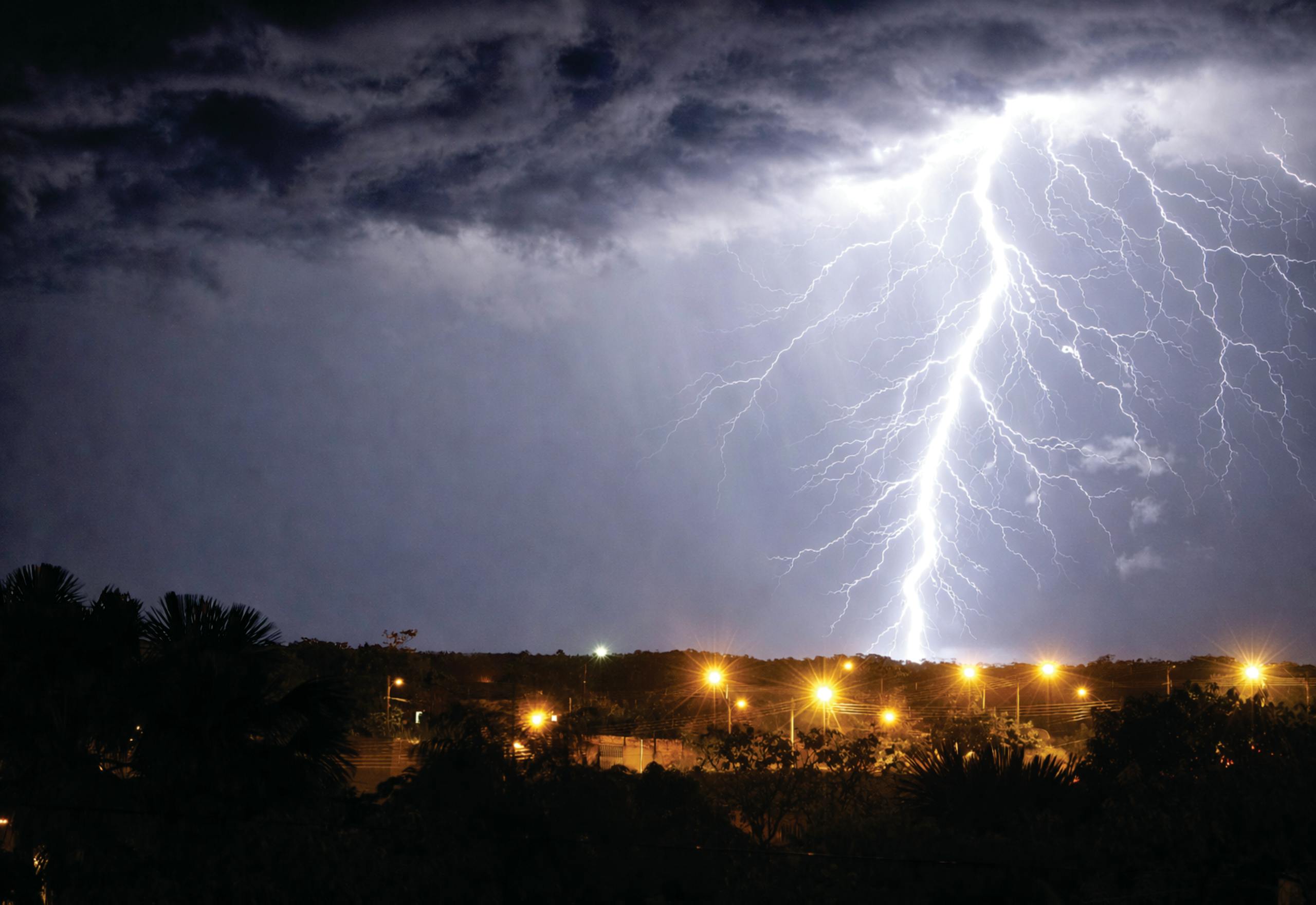
“Lightning never strikes the same place twice” is so wrong that it’s almost its own myth about myths. Tall structures, skyscrapers, radio towers, and the Empire State Building are struck by lightning repeatedly, routinely, sometimes hundreds of times per year.
Lightning is not making choices. It is following the path of least resistance to the ground, and if that path ran through a metal tower yesterday, it will likely run through it again tomorrow.
The saying endures because it functions as a metaphor for luck, the idea that bad fortune, once spent, has moved on.
As meteorology, it is nonsense. The Empire State Building gets hit around 20 to 25 times annually and has never once gotten the message.
Conclusion
What all ten of these myths share is a quality that has nothing to do with truth: they are easy. Easy to remember, easy to repeat, easy to believe because you’ve heard them a hundred times from people who heard them a hundred times before.
Science myths don’t survive because people are foolish; they survive because a good story almost always beats a careful study. The fix is simple, if not easy: stay curious, check the source, and be willing to be wrong. Even about the things you were absolutely certain of.