Buying kitchen items secondhand is one of the easiest ways to cut household costs without making the kitchen feel cheap, cluttered, or outdated.
In fact, some of the best-performing kitchen pieces were built years ago, back when manufacturers focused more on durability, thicker materials, and long-term use than fast turnover and trend-driven design. When we shop carefully, the secondhand market gives us access to sturdier cookware, more distinctive serveware, and far better value than many new products on big-box shelves.
The smartest approach is not to buy used simply because it is cheaper. The real win comes when we buy kitchen items that have already proved they can survive heat, washing, storage, and daily use.
If something has lasted for years and still works beautifully, that says more about its quality than a polished product page ever could. That is why the secondhand aisle often holds the real bargains, especially for practical kitchen tools that do not need fancy features to do their job well.
Vintage Pyrex and older glass baking dishes
Glass bakeware is one of the clearest secondhand wins in any kitchen. When we find older Pyrex or other thick glass baking dishes in good condition, we are often getting a sturdier piece than many lower-priced new alternatives.
These dishes are useful year-round, from casseroles and baked pasta to brownies, roasted vegetables, and chilled desserts. They move easily from prep to oven to table, which means fewer dishes and a cleaner presentation.
The best part is longevity. Good glass bakeware does not go out of style, and it rarely loses function unless it is chipped, cracked, or deeply scratched.
Vintage pieces often have more character, too, with old patterns, deeper colors, and shapes that feel more substantial in the hand. When we inspect the edges carefully and avoid damaged pieces, secondhand glass bakeware becomes one of the safest, smartest kitchen purchases we can make.
Cast iron skillets and Dutch ovens
Few kitchen items reward secondhand shopping as much as cast iron. A used cast-iron skillet may look rough at first glance, but surface rust, dull seasoning, and baked-on residue are usually repairable with a little effort.
Once restored and seasoned, cast iron becomes one of the hardest-working pieces in the kitchen, capable of frying eggs, crisping potatoes, baking cornbread, and searing meat with the kind of heat retention lighter pans simply cannot match.
Older cast iron often feels smoother and heavier than many modern mass-market pieces, which is exactly why experienced cooks keep hunting for it at estate sales, thrift stores, and flea markets. We are not just buying a pan.
We are buying a tool that can last for decades more with basic care. That kind of lifespan makes the secondhand price look even better, especially when a new premium skillet can cost far more and still need seasoning before it performs at its best.
Stainless steel mixing bowls
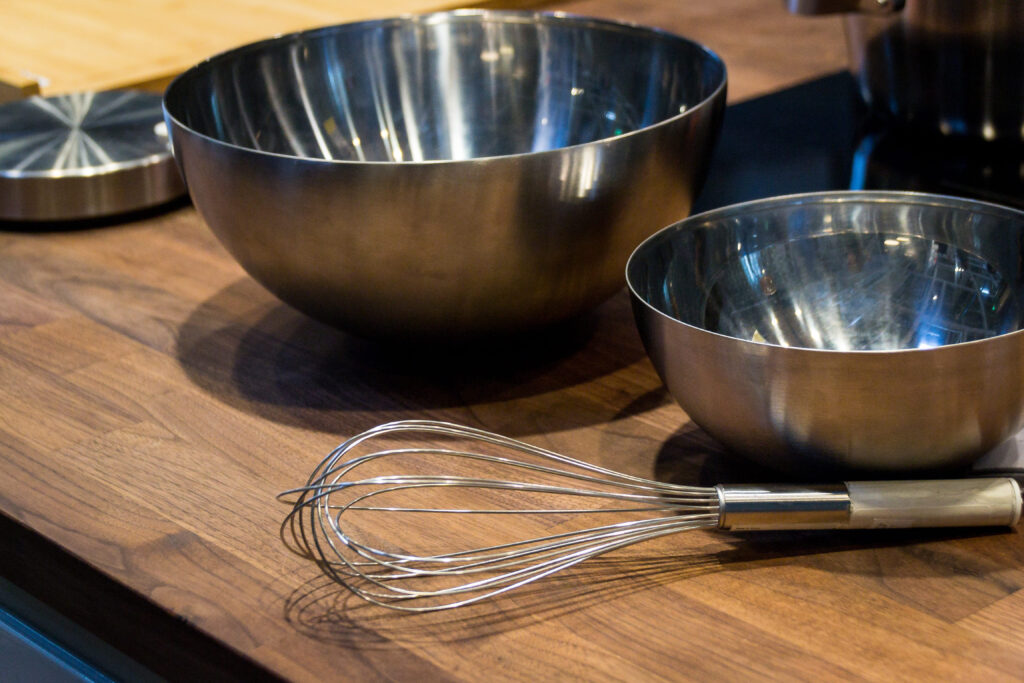
Mixing bowls are one of those kitchen essentials we reach for constantly, yet they are one of the easiest items to buy secondhand without risk. Stainless steel bowls do not become less useful with age. They are light enough to handle comfortably, sturdy enough for daily use, and versatile enough for mixing batter, tossing salads, marinating proteins, whisking dressings, and holding chopped ingredients during meal prep.
Secondhand shops often price them far below retail because they look ordinary, which works in our favor. A good stainless steel bowl does not need a brand name to perform well. We simply need to check for dents that affect stability and sharp edges that make handling uncomfortable. Once those basics pass inspection, used mixing bowls become an easy bargain that saves money and adds immediate practical function.
Metal measuring cups and measuring spoons
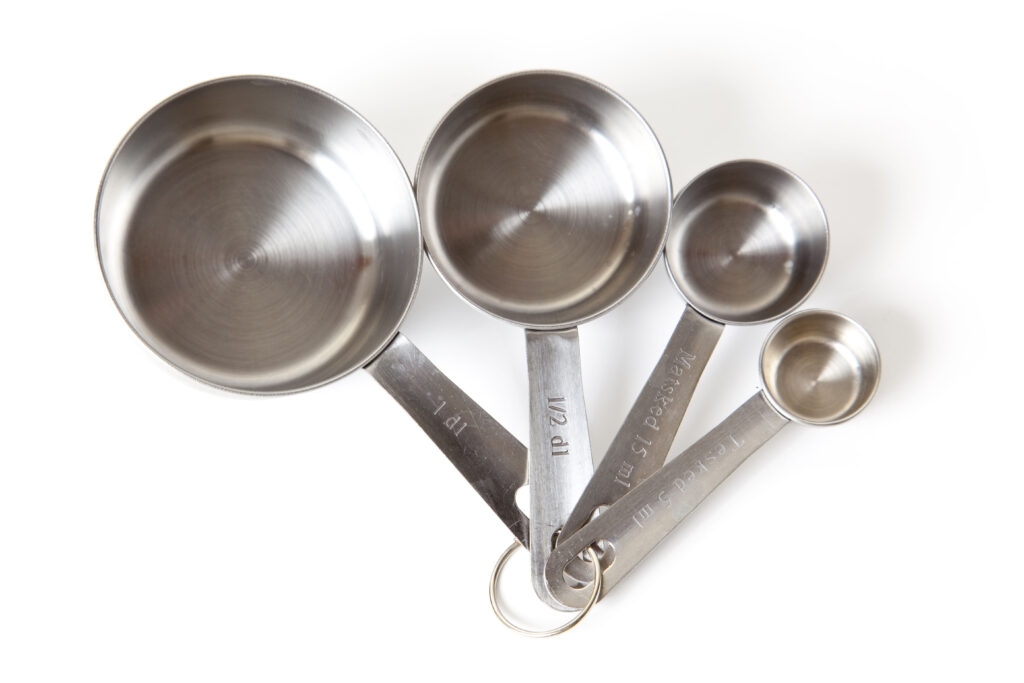
There is no reason to overpay for measuring cups and spoons when secondhand shelves are often full of them. Metal sets hold up far better than flimsy plastic versions, especially in busy kitchens where tools get dropped into drawers, knocked around in dish racks, and used multiple times a day. They do not melt as easily, do not stain as quickly, and keep their shape longer.
This is one of those categories where simple beats new. We do not need trend-driven colors, collapsible gimmicks, or oversized handles to measure flour, sugar, oil, and spices accurately. We need clearly marked sizes, solid construction, and a complete set, if possible. When we find those basics at thrift-store prices, buying new starts to feel unnecessary.
Glass drink pitchers and carafes.
A glass pitcher always looks more expensive than it really is when bought secondhand. It can serve iced tea, lemon water, sangria, cold brew, or a simple table setup for guests, yet it often costs a fraction of the price of new decorative drinkware. The shape is timeless, the function is obvious, and the visual appeal works in every kind of kitchen, from minimalist to farmhouse to vintage eclectic.
Secondhand glass pitchers also offer flexibility beyond beverages. We can use them as flower vessels, countertop utensil holders, or simple serving pieces for weekend brunch.
The key is to inspect the rim, handle, and base for chips or hairline cracks. If those areas are clean and the glass feels balanced, a used pitcher can become one of the most attractive low-cost finds in the kitchen.
Solid wood cutting boards and butcher blocks
Many people overlook secondhand wood cutting boards because they focus too much on surface marks. In reality, a quality wood board is supposed to show use.
Knife marks are part of the story, and with proper sanding, oiling, and sanitation, many older boards can be refreshed beautifully. In fact, thick wooden boards often improve with age because they have already dried, settled, and proven their resistance to warping.
The trick is being selective. We should skip boards with deep cracks, mold, strong odors, or signs of contamination that cannot be cleaned thoroughly. But when we find solid hardwood boards with only cosmetic wear, the value is excellent. A good board adds warmth to the kitchen, doubles as a serving piece, and often costs far less secondhand than a comparable new butcher block-style board.
Baking pans, loaf tins, and roasting dishes
Secondhand bakeware is one of the quiet heroes of thrift shopping. Loaf pans, muffin tins, cake pans, pie dishes, roasting trays, and sheet pans often end up donated simply because someone moved, upgraded, or cleared a cabinet.
That leaves us with a chance to build out a baking setup for very little money. These pieces are especially worth buying used because their function is straightforward and their wear is usually easy to judge.
We should look for flat bottoms, solid corners, and materials that still feel firm rather than flimsy. Cosmetic discoloration is usually not a deal-breaker, especially on metal bakeware that has already been used in the oven. In many kitchens, secondhand baking pans outperform cheap new sets because they are thicker, more stable, and less prone to warping when heated.
Aprons, tablecloths, and reusable kitchen linens
Textiles are one of the easiest places to save money in the kitchen. A secondhand apron, a cloth napkin set, a tea towel bundle, or a tablecloth can give the space more personality without adding much cost. These items are highly washable, easy to inspect, and often far more charming in vintage prints and older fabrics than the generic designs dominating modern discount stores.
This is also where we can add character without committing to expensive decor. A bold apron, embroidered linen, or classic checked tablecloth can instantly make a dining setup feel warmer and more intentional. As long as the fabric is in good condition and free from permanent stains or damage, secondhand kitchen linens are one of the simplest ways to bring style and function together on a budget.
Ceramic canisters and storage jars
Kitchen storage does not need to come from a matching retail collection to look polished. In fact, secondhand ceramic canisters and glass jars often create a more layered, lived-in kitchen than a boxed set ever could. They work beautifully for sugar, coffee, tea, flour, cookies, rice, and even pet treats, and they often come with features such as tighter lids, hand-painted finishes, or shapes that feel more distinctive.
These containers also help us reduce visual clutter. Instead of leaving ingredients in crinkled bags and mismatched packaging, we can integrate storage into the design. A row of secondhand jars or vintage canisters adds texture, warmth, and a sense of permanence to the kitchen. The only real checks are cleanliness, odor, and lid fit. If those are right, the value is hard to beat.
Mortar and pestle sets
A solid mortar and pestle is one of the most satisfying tools in any kitchen, yet it is often overpriced when bought new in decorative cookware stores. Secondhand options can be far better value, especially in heavy stone, marble, granite, or thick ceramic. These sets excel at grinding spices, crushing garlic, making chili pastes, and blending herbs, creating deeper texture and more control than many electric gadgets.
Because the tool itself is so simple, age is rarely a problem unless there are cracks or unstable edges.
In fact, older mortar and pestle sets often feel more substantial than lightweight decorative versions sold primarily for display. This is the kind of secondhand purchase that delivers both function and visual presence, which makes it ideal for cooks who want tools that earn their counter space.
Small countertop appliances with simple mechanics
Not every used appliance is worth the risk, but simple countertop machines can be excellent secondhand buys when we inspect them properly. Sandwich presses, waffle makers, mini grills, slow cookers, and basic toasters often show up in near-new condition because people buy them with good intentions, use them twice, and then donate them during a cleanup. That gives us access to useful equipment at a dramatic discount.
The rule here is caution, not fear. We should check cords, plugs, hinges, heating plates, and obvious signs of neglect. If the appliance is clean, straightforward, and testable, it can be a great purchase. What makes these items worth considering is their limited complexity. A basic grill with sound wiring and intact plates may serve us just as well as a new one, especially when the price difference is large.
Serving bowls, platters, and cake stands
Entertaining pieces are often wildly overpriced when bought new, which is why secondhand shopping makes so much sense for them. Serving bowls, platters, cake stands, gravy boats, and salad sets are built for special occasions, which means many used pieces have seen very light wear. We can often find elegant ceramic or glass pieces that make a table feel finished without paying department store prices.
These are also ideal secondhand purchases because style matters as much as function. New retail stock can feel repetitive, but thrifted serveware often has more personality.
A scalloped platter, a heavy glass cake stand, or a hand-finished bowl can become the piece guests notice first. When we choose items with classic shapes and inspect for chips, these finds become the affordable details that elevate the entire kitchen.
Coffee mugs and everyday dishware
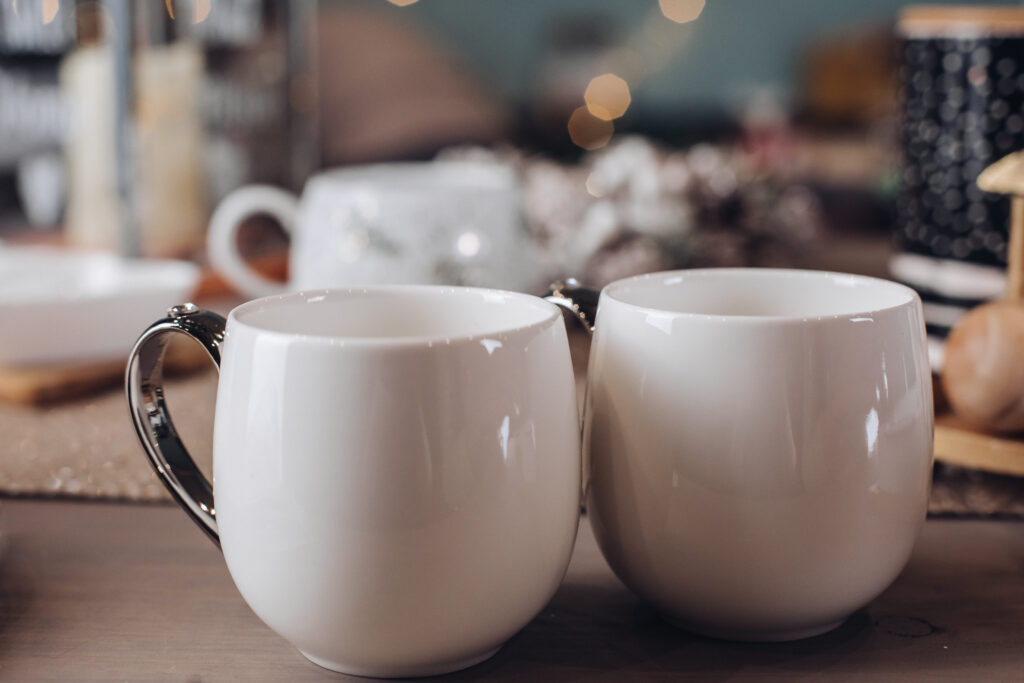
Mugs and dishware are among the most obvious secondhand purchases, yet many shoppers still overlook how much money they can save here. A single new mug can cost more than a whole thrifted set, and many secondhand options are sturdier than current budget lines.
Every day, plates, bowls, mugs, and saucers often come from older sets made to survive years of real use, not just look good under store lighting.
This category also lets us avoid the sameness of mass market shelves. We can build a kitchen that feels collected rather than copied. Matching sets are great when we find them, but even a gently mixed look can feel intentional with the right color palette or material. As long as we inspect for chips, crazing, and rough edges, secondhand dishware remains one of the easiest and most satisfying kitchen upgrades available.