Imagine cultivating vibrant, healthy plants without ever touching soil. This is the beauty of hydroponics, a modern agricultural technique that’s reshaping the future of gardening and farming.
Hydroponic systems are an efficient, eco-friendly way to grow plants in a soil-free environment, relying on a nutrient-rich water solution to directly nourish crops.
With the ability to produce higher yields, save water, and reduce environmental impact, hydroponics is quickly becoming a go-to method for growers around the world.
Faster Growth Rates and Higher Yields

Hydroponic systems significantly reduce the time it takes for plants to grow. Leafy greens can mature in 28-35 days, compared to the typical 45-60 days in traditional soil.
Herbs and other fast-growing crops also thrive in hydroponic environments, growing 25-40% faster than in soil. This rapid growth translates into higher yields, with hydroponic systems often producing 4-6 times as many crops per square foot as traditional methods.
Water Efficiency and Conservation

Despite being water-based, hydroponics is highly water-efficient. These systems use up to 90-95%less water than traditional farming, making them ideal for areas with limited water resources. A closed-loop system recycles water, minimizing waste, while targeted delivery directly to the roots eliminates excess evaporation and runoff.
Year-Round Growing Capability
One of the biggest advantages of hydroponics is the ability to grow plants year-round, regardless of the weather. By setting up hydroponic systems indoors or in greenhouses, growers can ensure consistent harvests year-round. This continuous growth cycle allows multiple harvests per year without being constrained by seasonal changes or unpredictable weather patterns.
Disease and Pest Control
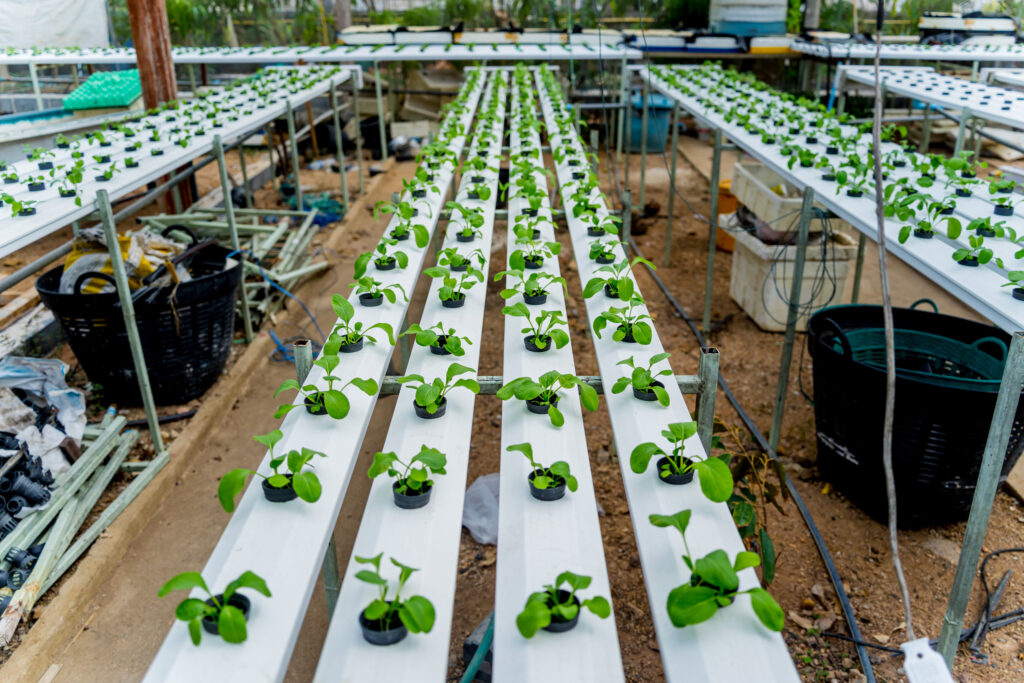
Since hydroponic systems don’t rely on soil, they reduce the risk of soil-borne pests and diseases that often plague traditional gardens. The controlled environment enables precise control of temperature, humidity, and water levels, further minimizing the risk of pest infestations and disease. This clean, sterile setup makes hydroponics an ideal solution for those looking to grow healthy, disease-free plants.
Precise Nutrient Delivery
In a hydroponic system, plants receive nutrients directly from a water-based solution, allowing precise control over their diet. Unlike soil, which can have variable nutrient content, hydroponics allows growers to ensure plants get the exact nutrients they need for optimal growth. This results in faster growth, higher yields, and healthier plants.
Space Efficiency and Vertical Growing

Hydroponic systems, especially vertical farming systems, allow growers to maximize space. By growing plants in stacked layers, hydroponic setups can increase plant density while taking up minimal floor space. This makes hydroponics ideal for urban environments with limited land, enabling individuals and communities to grow large amounts of food in small spaces.
Easy to Scale and Customize
Whether you’re a beginner or an experienced gardener, hydroponics can be easily adapted to your needs. Starting with a simple system like Deep Water Culture (DWC) or expanding to more advanced setups like Aeroponics, hydroponics offers flexibility in both design and scale. You can customize your system to suit the plants you’re growing, your available space, and your level of expertise.