The world of animal communication is far more complex and intriguing than we often realize. While we may be accustomed to hearing animal sounds as mere noises or signals, many species have developed advanced and surprisingly intricate ways to convey messages, express emotions, and coordinate actions.
From the complex warning systems of prairie dogs to dolphins’ mimicry of whale songs, animals employ diverse methods of communication, many of which rival human language in sophistication.
Let’s take a closer look at some of the most mind-boggling facts about animal communication that will surely change the way you perceive the animal kingdom.
Cats Communicate Exclusively with Humans Through Meowing
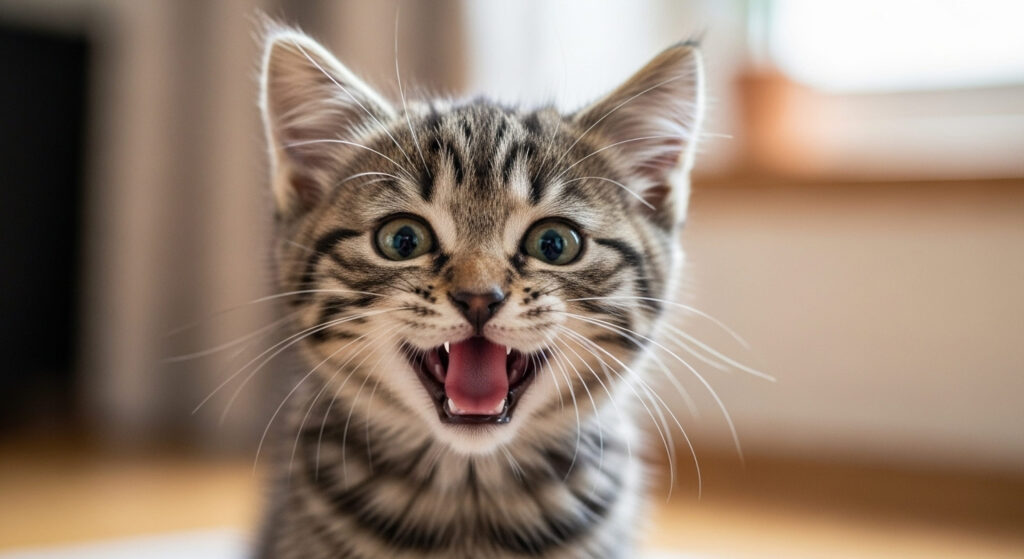
Cats have a reputation for being independent and mysterious, but what’s even more curious is their unique way of communicating. Unlike most animals, domestic cats have developed the habit of meowing specifically to interact with humans.
Wild cats never meow at each other; this behavior is an exclusive feature designed for their human companions. From asking for food to expressing dissatisfaction or affection, cats have honed this vocalization into an effective tool for manipulating their environment. Whether it’s an urgent request for food or a simple hello, cats are experts at using their meows to get what they want.
What’s even more fascinating is that cats tailor their meowing to the individual human. If you live with more than one cat, you may notice that each cat develops its own “meow dialect” suited to your particular voice, habits, and moods. In other words, when your cat meows at you, it’s likely speaking in a way that is uniquely attuned to your personality. Cats don’t just ask for food; they ask for your food, and they know exactly how to get it.
Prairie Dogs Have a Shockingly Complex Language
Prairie dogs are often dismissed as simple rodents, but in reality, they have one of the most advanced communication systems in the animal kingdom.
Researchers have uncovered that prairie dogs possess a language that includes specific calls for various predators, which describe not just the type of predator but also its size, shape, and even the color of its clothing. Imagine a simple chirp containing all of this detailed information in a fraction of a second!
To top it off, prairie dogs have even been observed distinguishing between humans carrying weapons and those without, through the nuances of their vocalizations. Their highly developed language might not be expressed in words, but it’s a rich and meaningful system that provides invaluable survival information to the colony. The next time you spot one of these adorable creatures popping out of the ground, know that it’s potentially discussing everything from the looming threat of a hawk to the color of your jacket.
Beetles Use Morse Code to Communicate in the Dark
The death-watch beetle may have earned its ominous name for its habit of tapping its head against the wood it inhabits, but this sound serves a far more significant purpose than just creating an eerie atmosphere.
These beetles communicate through a unique system resembling Morse code, using rhythmic tapping to send messages to others in their colony. This tapping sound echoes through the tunnels they’ve burrowed in the wood, serving as a signal to other beetles, particularly during foraging and mating activities.
Interestingly, the beetle’s tapping was once so distinctive that it became associated with the sound of a ticking clock, leading to its name “death-watch” after it was commonly heard in houses where the beetles had taken up residence.
While it might sound simple, this communication system is crucial for the survival of beetle colonies living in the dark, isolated spaces of wooden trees. The next time you hear a strange tapping sound in an old house, remember that it could very well be a tiny beetle tapping out a message in its own form of Morse code.
Elephants Have Unique Voices, Just Like Humans
For most people, the sound of elephants is synonymous with trumpeting calls and rumbles. However, few are aware that elephants, like humans, have individual “voices.” Biologist Andrea Turkalo studied forest elephants for nearly two decades and discovered that every elephant has a distinct vocalization.
Turkalo can identify individual elephants by the tone and quality of their calls, much like we can distinguish people by their voices. This revelation has profound implications for understanding how elephants communicate within their herds and maintain social bonds.
Turkalo’s work aims to create a comprehensive “elephant dictionary” by interpreting their calls and building a better understanding of their communication system. Imagine a world where elephants have names, where their voices carry meaning and identity. This research could lead to a more profound understanding of elephant behavior and social structure, ultimately helping us protect these incredible creatures.
Hens and Their Eggs
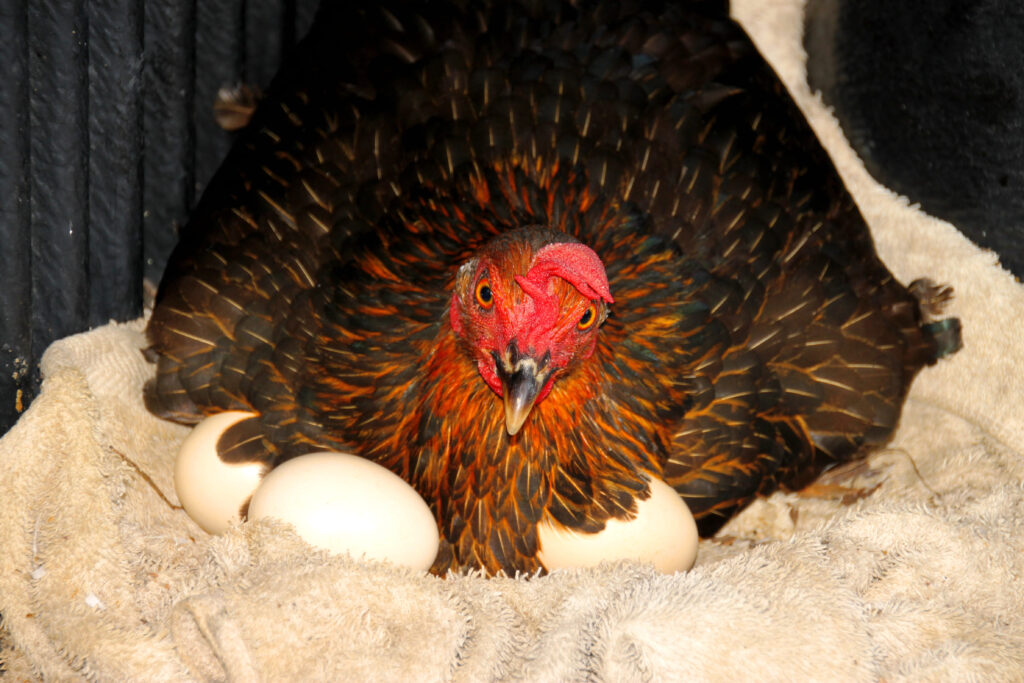
Animal mothers aren’t the only ones who communicate with their offspring before birth; hens do it too. About 24 hours before a chick hatches, it begins making peeping sounds from inside its egg, signaling its presence to the mother.
In turn, the mother hen responds with a series of reassuring clucks, providing comfort and encouraging her unborn chick. This early interaction is not only heartwarming but also a fascinating display of pre-hatching communication.
What’s truly remarkable is that the chicks are able to recognize their mother’s voice before they even hatch. This early bonding helps ensure the chick’s safety and makes the transition to life outside the egg much smoother. It’s an example of how deeply embedded communication is in the animal kingdom, extending far beyond the typical post-birth interactions we’re familiar with.
Baboons Have a Keen Sense of Language, Rejecting Nonsense Words
Baboons are not just skilled at recognizing sounds; they can also identify the difference between meaningful words and pure gibberish.
Researchers conducted experiments with baboons using touch-screen computers, in which the baboons had to distinguish between real words and pseudo-words that appeared to have meaning but didn’t. The baboons performed impressively, correctly identifying made-up words 75% of the time. They weren’t just listening to sounds; they were actively discerning patterns and meaning.
This experiment reveals that baboons have an advanced understanding of language structure and meaning. They’re capable of processing not just familiar words, but also distinguishing between sensible words and those that don’t belong. The results challenge the perception that language comprehension is limited to humans and a few other species, showing that baboons possess cognitive skills far beyond simple recognition.
Some Fish Use Sign Language to Coordinate Hunting
Imagine a group of fish coordinating their efforts to hunt, using body movements and “dances” to communicate. This isn’t just a whimsical idea; coral groupers do exactly that.
These fish use a unique form of signaling: they shake their bodies in a specific pattern to alert others to prey in their vicinity. It’s a dance that involves both precision and timing, where each fish understands the movements as a call to action.
What makes this communication even more impressive is the fact that it’s a form of cooperation. These fish don’t just move in random patterns; they’re orchestrating a hunt as a team. The communication involved is not only functional but is a sophisticated form of cooperation, showing that even animals in the sea can have a complex language of their own.
Dolphins Can Learn New Sounds, Mimicking Whale Songs
Dolphins are already famous for their ability to communicate through a variety of clicks, whistles, and body language. However, recent studies have revealed that dolphins possess an astonishing ability to learn new sounds, even those from other species.
In one striking example, dolphins exposed to whale songs while asleep mimicked them upon waking. Although they never performed these songs during their waking hours, the fact that dolphins could incorporate new sounds into their repertoire while sleeping suggests that their communication skills are even more sophisticated than we realized.
This ability to “learn” from other animals’ sounds demonstrates that dolphins can adapt their communication system to external influences, a level of flexibility that makes their social and linguistic behavior even more fascinating.
Parrots Have Conversational Abilities Beyond Mimicry

Parrots are often seen as mere mimics of human speech, repeating words and phrases they’ve heard. But the African grey parrot named Alex took things a step further, becoming famous for his ability to understand abstract concepts like color, shape, and size.
Alex was able to respond to questions with meaningful answers, proving that parrots can engage in conversation rather than just repeating. In fact, Alex could even joke with his trainer, making witty remarks like, “Don’t you tell me to calm down.”
Other parrots, like Prudle and N’kisi, have demonstrated similar skills, with vocabularies ranging from hundreds to nearly a thousand words. These birds aren’t just talking, they’re thinking, understanding, and engaging with the world in ways that challenge our understanding of animal cognition.
Frogs Use High-Frequency Communication

Not all animal communication is audible to the human ear. Some species, like the Huia cavitympanum frog from Southeast Asia, communicate using ultrasonic frequencies that are inaudible to us.
These frogs can produce sounds at frequencies up to 38 kilohertz, far beyond the range of human hearing. This adaptation allows them to communicate more effectively in environments where lower-frequency sounds might be lost, such as in areas with rushing water.
The ability to communicate in the ultrasonic range gives these frogs a distinct advantage, allowing them to stay in touch with each other while avoiding interference from the environment. It’s a unique example of how animals can adapt their communication methods to their surroundings, ensuring that their messages are received loud and clear.