Culture and food always go together, and we tend to think that some foods originate in certain regions of the world. However, we are going to say that not all the most recognizable foods are from the places they are named after. France is known for its famous French fries, and Mexico is known as the country of the beloved Mexican taco, but the origins of these dishes may be extremely surprising. And should you wonder what these cooking fallacies are, then buckle up your seat belt and get ready to take a stomach-satisfying ride through the history of food.
French Fries
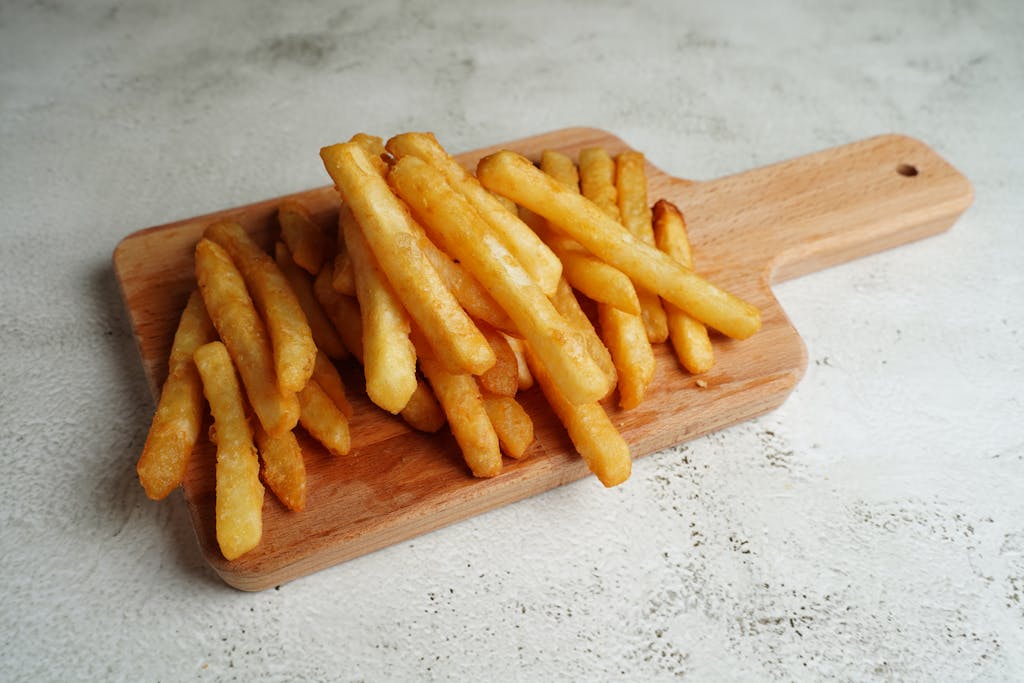
French fries were not invented in France, as their name suggests. Actually, the meal is said to have originated in Belgium, where people began frying potatoes as early as the 1600s. The naming after the French is probably due to the process of “frenching,” or slicing the food into thin slices. This snack gained popularity in its French incarnation after American soldiers based in Belgium during World War I tasted it and mistakenly believed it was French. Now, either you say them in French and call them “pommes frites,” or you say them in English and call them “chips,” but actually, the real origins of the chips are still good to debate about.
The Philly Cheesesteak? Chicago-born?
The Philly cheesesteak, a sandwich that has become synonymous with the City of Philadelphia, is a favorite meal, yet its history is not as straightforward. Although most people associate it with Philly, the sandwich is credited to two hot dog sellers, Pat Olivieri and his brother Harry, who first offered it in the 1930s. Historians have argued that a Chicago-style sandwich inspired it, and the actual origins may date back to the Windy City. Anyway, Philly has adopted it, and the sandwich has become an indistinguishable part of the local cuisine.
Chop Suey: A Chinese-American Invention.
The widely popular Chop Suey is often believed to be a Chinese dish, but this is not the case; on the contrary, it was invented in the United States. Historians speculate that Chinese immigrants’ adaptation of traditional Chinese cuisine to American tastes in the late 19th century led to the creation of a mixed stir-fry of meat and vegetables. Although it is based on Chinese cuisine, it was created and popularized in the U.S., where it is a common food item on the Chinese-American takeout menu.
Wiener Schnitzel! It is not Viennese!
Another food, the legendary Wiener Schnitzel, is not a product of the city it is named after. Although the name literally means Vienna cutlet, the origins of this breaded and fried veal or pork cutlet are Italian. The dish probably had its predecessor in the Cotoletta alla Milanese, which is prepared similarly. In the 19th century, Austrians borrowed the idea, renaming it and making it a household dish on the Austrian menu, though it has an Italian connection.
Tacos Not Quite Mexican at Heart.

Tacos are closely linked to Mexican culture, but their real roots are much older. Mexican-Americans invented the contemporary taco in the US. The term “taco” refers to the technique of filling food into a tortilla, which is certainly Mexican in origin. Yet the custom of packing food into corn tortillas is believed to have originated in pre-Columbian Mexico. The spread of the taco beyond Mexico (and the U.S. in particular) has contributed to its present identity as a global food.
Baked Alaska: A New Yorker Dish.
Although the name suggests it was made in a far-northern, icy country, Baked Alaska is a creation of 19th-century New York. The cake, meringue, and ice cream that make up the dessert were originally invented by the renowned chef Charles Ranhofer at Delmonico’s in celebration of the U.S. acquisition of Alaska. The dish was meant to represent Alaska’s cold weather, though it was never really popular there. But it is a classic of American culinary history, notwithstanding its lack of the name of its original birthplace.
Currywurst—A German spin on Indian spices.
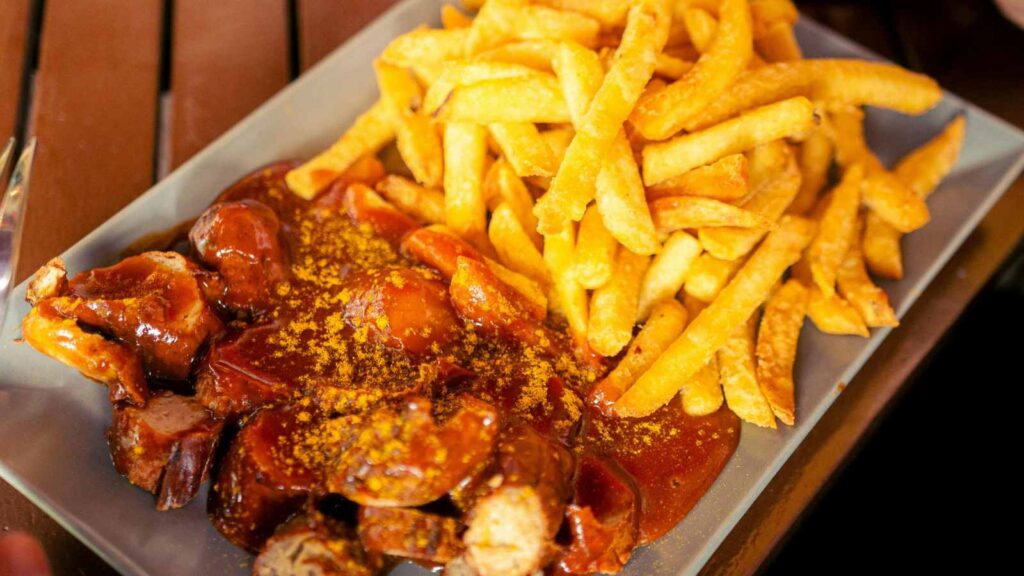
Currywurst, a dish of bratwurst sausage dipped in curry-scented ketchup, is commonly considered a traditional German snack. But in fact, this dish was invented in Berlin in the 1940s when British and Indian soldiers were on rations, and the Indian soldiers had a can of curry powder. The idea of using sausage and curry ketchup was a German invention, a response to wartime needs; thus, this dish was, in fact, a German version of Indian flavors rather than an Indian dish.
Irish coffee was invented in San Francisco.
Although the thought of Irish coffee conjures up quaint pubs in Dublin, the beverage was actually conceived in America. The first Irish Coffee was invented in the 1940s by a Shannon Airport bartender, Jack Koeppler, in San Francisco, who stirred whiskey into his coffee and named it “Irish” to acknowledge the whiskey’s country of origin. This drink came to be identified with Ireland but was actually born in California, where it was popularized.
The Caesar Salad: A Mexican Masterpiece?
The Caesar salad was named after Caesar Cardini, an Italian immigrant who ran a restaurant in Tijuana, Mexico, in the 1920s. Although many believe it is an entirely American dish, it was, in fact, invented in Mexico, not the U.S. Cardini developed the salad when his kitchen was short on supplies. Still, it became a worldwide sensation once Hollywood celebrities started eating it. Thus, even with its name and popularity in American restaurants, the Caesar salad has a long history in Mexico.
Peking Duck – Not Actually From Peking (Beijing)
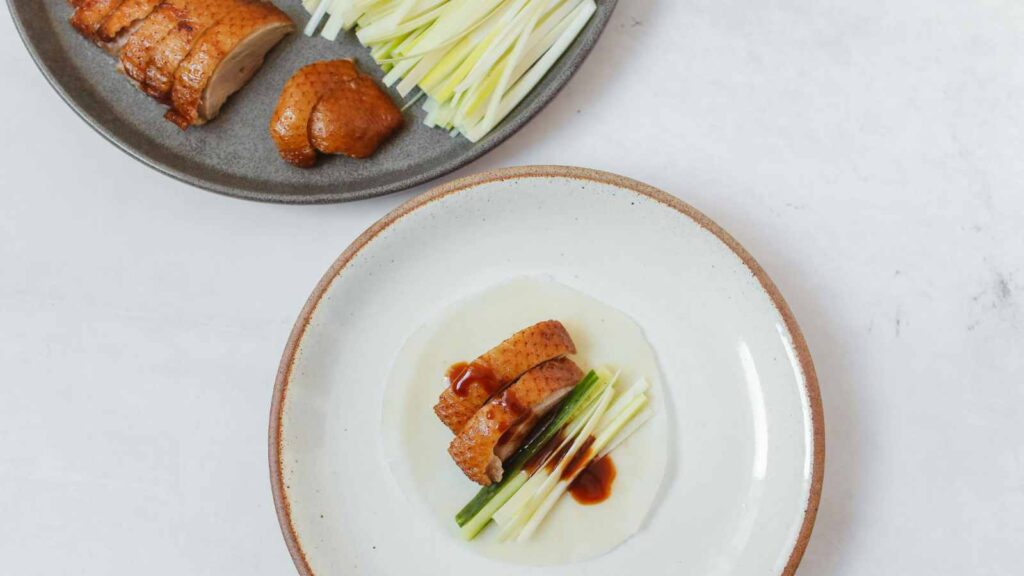
One of China’s most famous dishes, Peking duck, is closely associated with Beijing, where it was traditionally prepared for emperors. However, the dish actually originates from Nanjing, the ancient capital of China. The practice of roasting duck in an oven was refined in Beijing, where it became a culinary symbol. So, while the name “Peking Duck” suggests a connection to Beijing, its creation and early popularity occurred in southern China.
Conclusion
From French fries to Peking duck, many iconic dishes have names that hint at origins they don’t actually share. These culinary misnomers showcase the fascinating way food travels across borders and evolves as it meets new cultures and ingredients. While the dishes on this list are beloved worldwide, the truth behind their origins often surprises even the most dedicated foodies. As we continue to explore the rich tapestry of global cuisine, it’s important to remember that food history is often as layered and complex as the dishes themselves.