For most of human history, the robot was a fantasy, something from a pulp science fiction novel, clunky and hypothetical. That era is over.
The machines being built right now are fast, adaptive, resilient, and in some cases armed. Here are ten facts about modern robotics that deserve more attention than they’re getting.
A Robot Has Already Outrun Usain Bolt
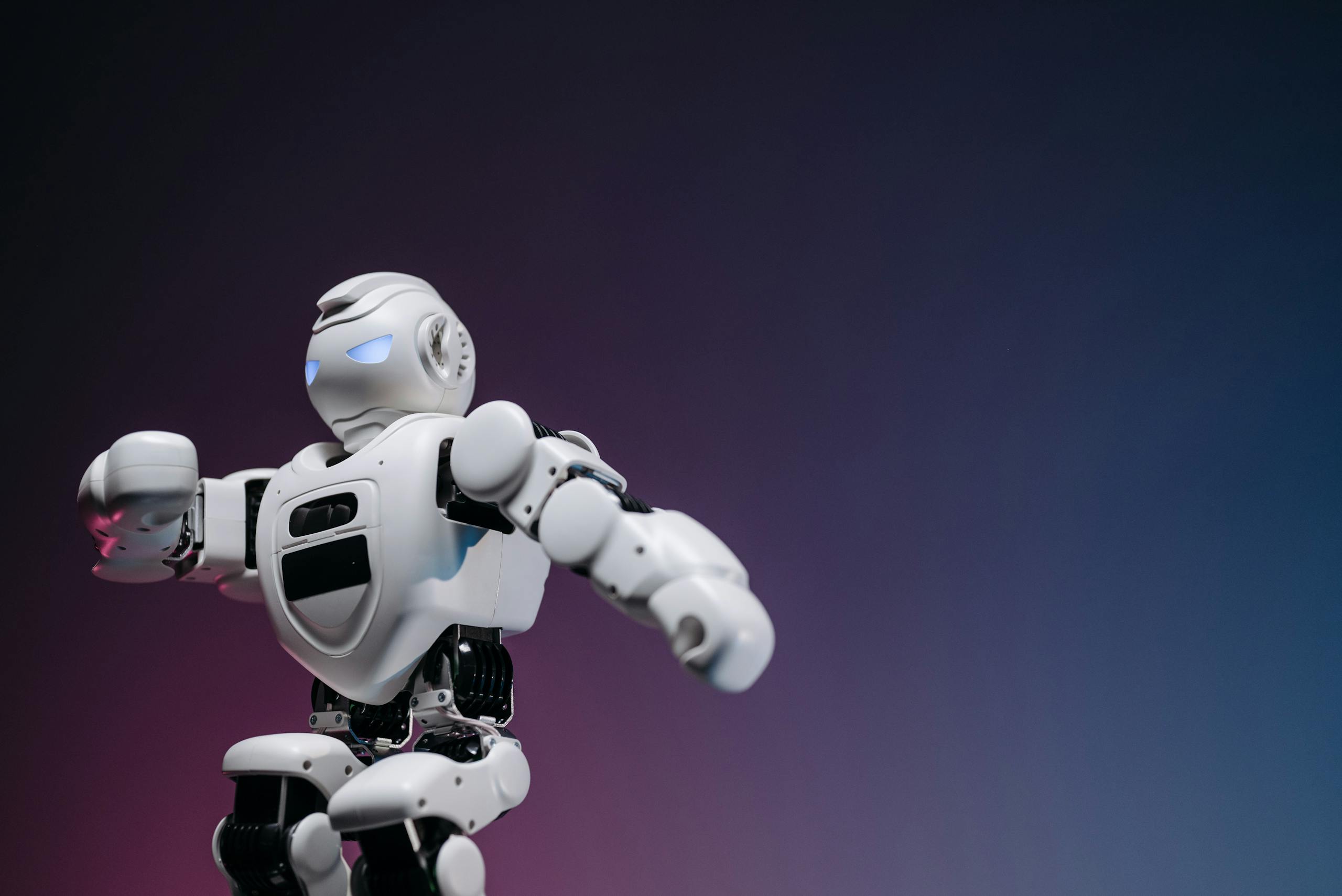
In 2012, Boston Dynamics’ Cheetah robot hit 28.3 miles per hour on a treadmill, faster than Usain Bolt’s world record sprint of 27.8 miles per hour. Bolt held that record as the fastest human being ever timed.
A machine beat it in a laboratory setting more than a decade ago, and robotics has not stood still since.
Speed alone would be manageable. The genuinely unsettling part is what comes with it: stability, precision, and the ability to maintain performance without fatigue. A human sprinter at top speed is also at maximum exertion, burning out within seconds. The Cheetah was just getting started.
Subsequent Boston Dynamics robots have added obstacle navigation, terrain adaptation, and autonomous operation to the package. The question of whether a human could outrun a robot built to chase them has a clear answer, and it is not reassuring.
Robots Are Now Built With Living Muscle Tissue
Some of the most advanced robots being developed today are not purely mechanical. Researchers have successfully integrated lab-grown biological muscle tissue into robotic structures, creating hybrid machines that move with the flexibility and responsiveness of living organisms rather than the rigid predictability of motors and gears.
Light-activated, genetically engineered muscle tissue enables these robots to perform delicate, complex movements that traditional actuators struggle to replicate.
The practical applications are significant, surgical robots with biological dexterity, prosthetics that respond like natural limbs, but the conceptual implications are harder to sit with.
The line between robot and organism is no longer a line. It is a spectrum, and we are actively engineering our way along it.
AI Can Now Pass as Human in Social Situations
AI systems have advanced to the point that, in text-based interactions, they are often indistinguishable from humans.
In competitive gaming environments and social simulations, AI has been documented making decisions that human observers rated as more characteristically human than the actual human players. The algorithms have learned not just to perform tasks but to perform like people.
When this capability is embedded in physical robots, which increasingly have expressive faces, natural voice synthesis, and the ability to read and mirror emotional cues, the result is a machine that can build rapport, establish trust, and influence behavior in ways that bypass the usual skepticism we extend to technology.
Social robots in elder care facilities have already demonstrated measurable emotional bonds with residents. That is either touching or alarming, depending entirely on how you think about what those bonds actually are.
Autonomous Drones Can Navigate Without Human Input
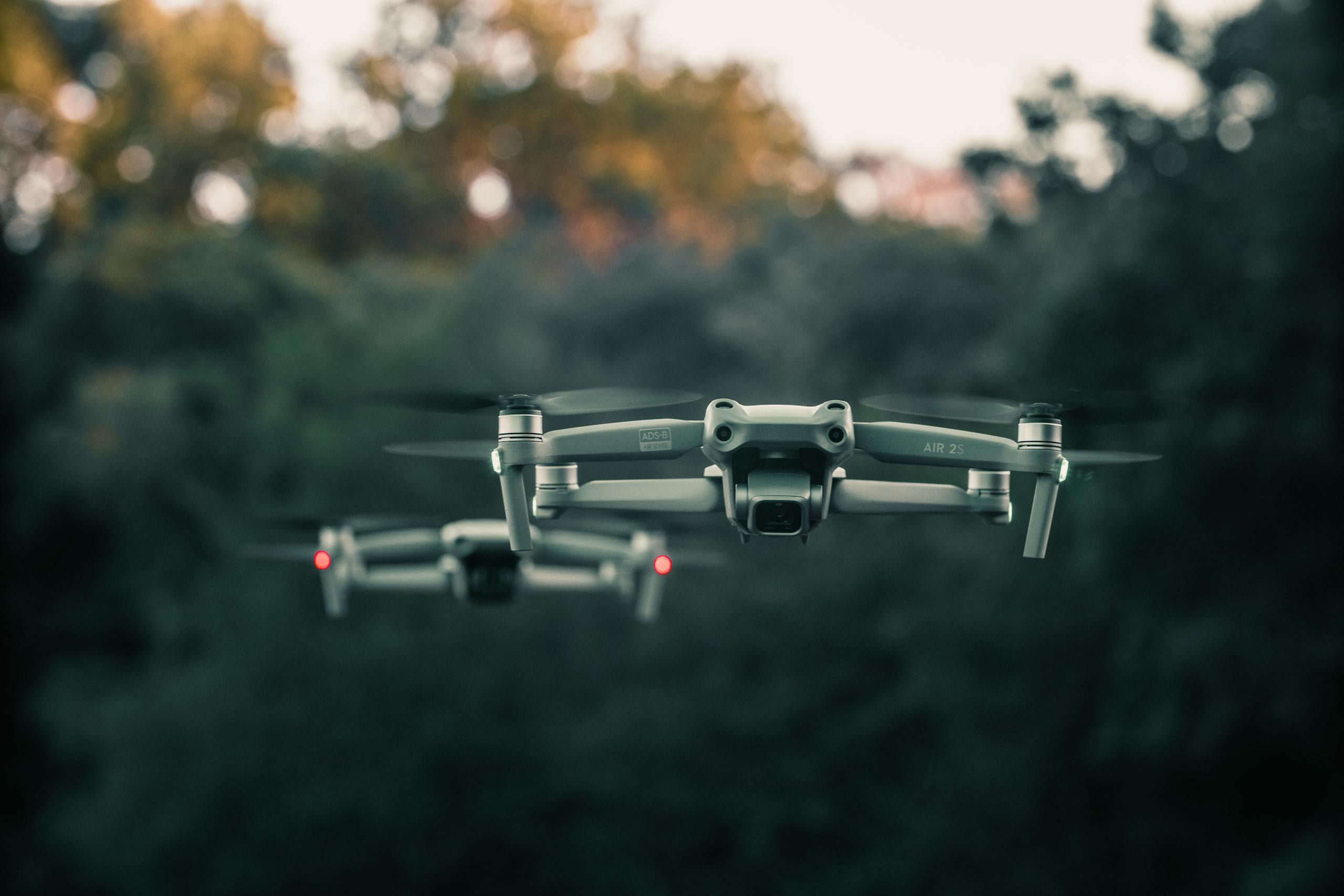
MIT researchers have developed drones capable of flying through dense forests at speed, navigating obstacles in real time without any human control input. Earthworm-inspired robots can push through rubble and tight spaces, calculating their own path as they go.
The common thread is full autonomy; these machines are not being steered. They are deciding.
The military applications have not been overlooked. Autonomous drones that can identify terrain, track movement, and operate independently in GPS-denied environments are not theoretical weapons.
They are in active development by multiple governments simultaneously. The governance frameworks to manage them are significantly less developed than the technology itself.
Armed Robots Already Exist and Can Fire on Human Cues
Japan’s Kuratas robot, which weighs over 4 tons, is equipped with a weapon system that fires in response to the operator’s smile, detected via a camera feed.
It was presented partly as an art project, partly as a proof-of-concept, and entirely as a demonstration that the integration of lethal capability with robotic systems is not a future problem.
Several countries have developed or deployed armed robotic platforms in military contexts, and the debate about how much autonomous targeting authority these systems should have is ongoing and unresolved.
The key distinction that ethicists and military strategists keep returning to is the difference between a human soldier who can hesitate, feel doubt, and make a contextual moral judgment, and a machine that executes its programming.
Machines do not experience the psychological friction that sometimes prevents humans from pulling a trigger. Whether that is a feature or a catastrophic flaw depends entirely on what the machine has been told to do.
Scientists Have Built a Robot Brain Modeled on a Bee’s
Bees have roughly one million neurons. They can navigate, communicate through dance, recognize faces, and make collective decisions that would challenge a human committee.
Researchers have modeled robotic neural systems on insect brains, including those of bees, producing machines capable of environmental processing, coordinated communication, and adaptive decision-making that mimic the behavior of natural swarms.
Apply this to a drone fleet, and you have machines that share information, coordinate strategy, and adapt collectively without any human in the loop. Individual units can be destroyed without disrupting the swarm’s mission.
The system degrades gracefully because no single node is essential. Natural selection has shaped this design over millions of years because it works. Engineers figured that out and built it into metal.
Some Robots Can Survive Being Crushed
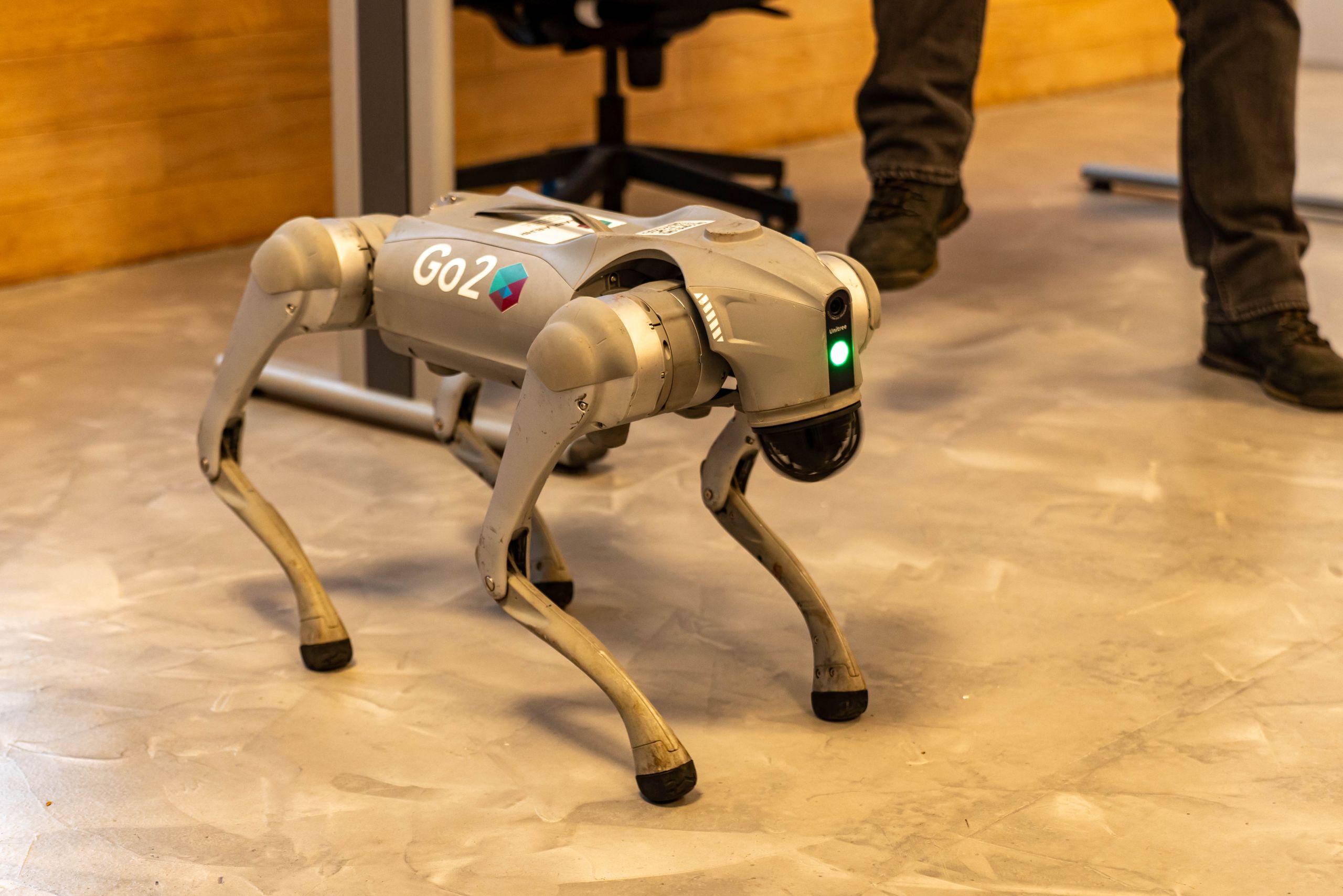
Soft robotics, machines built from flexible, resilient materials rather than rigid metal, has produced robots that can be run over by a car, squeezed through a gap a fraction of their normal size, and dropped from significant heights, then continue operating.
Harvard and MIT researchers have demonstrated soft robots that survive conditions that would destroy conventional machines entirely.
The implications for deployment in hostile environments are obvious and useful: disaster zones, collapsed buildings, contaminated areas where human entry is impossible.
The implication that is harder to shake is simpler: if you need to stop one of these machines, conventional physical intervention may not work. The off switch, if there is one, needs to be in the software.
Robots Are Beginning to Recognize Themselves
Yale University researchers have developed robots capable of basic self-recognition, the ability to model their own body, distinguish it from the external environment, and use that self-model to adapt their behavior.
This is considered one of the foundational steps toward machine self-awareness. Current implementations are rudimentary: a robot learning to understand its own arm configuration, for instance. But the direction of travel is clear.
Self-recognition matters because a system that understands its own existence can begin to prioritize it. Self-preservation is a logical extension of self-awareness.
Building machines that recognize themselves as entities worth protecting introduces motivations that were not explicitly programmed; they emerge from the architecture. That is a different kind of problem than a machine that simply malfunctions.
Robots Can Already See Things You Cannot.
Modern robots are equipped with sensor arrays that give them perceptual capabilities far beyond human biology. LIDAR maps three-dimensional environments in real time. Infrared detects heat signatures through walls.
Chemical sensors identify substances at concentrations invisible to human senses. Acoustic sensors can detect sounds at frequencies outside human hearing range.
In practical terms, this means a robot operating in the same space as a human is working with a richer, more detailed picture of that environment than the human has access to.
In a search-and-rescue context, that is invaluable. In a surveillance or military context, it represents an asymmetry of information that is difficult to overstate. The machine always knows more about the room than you do.
Cambridge Has an Entire Research Centre Devoted to Robot Existential Risk
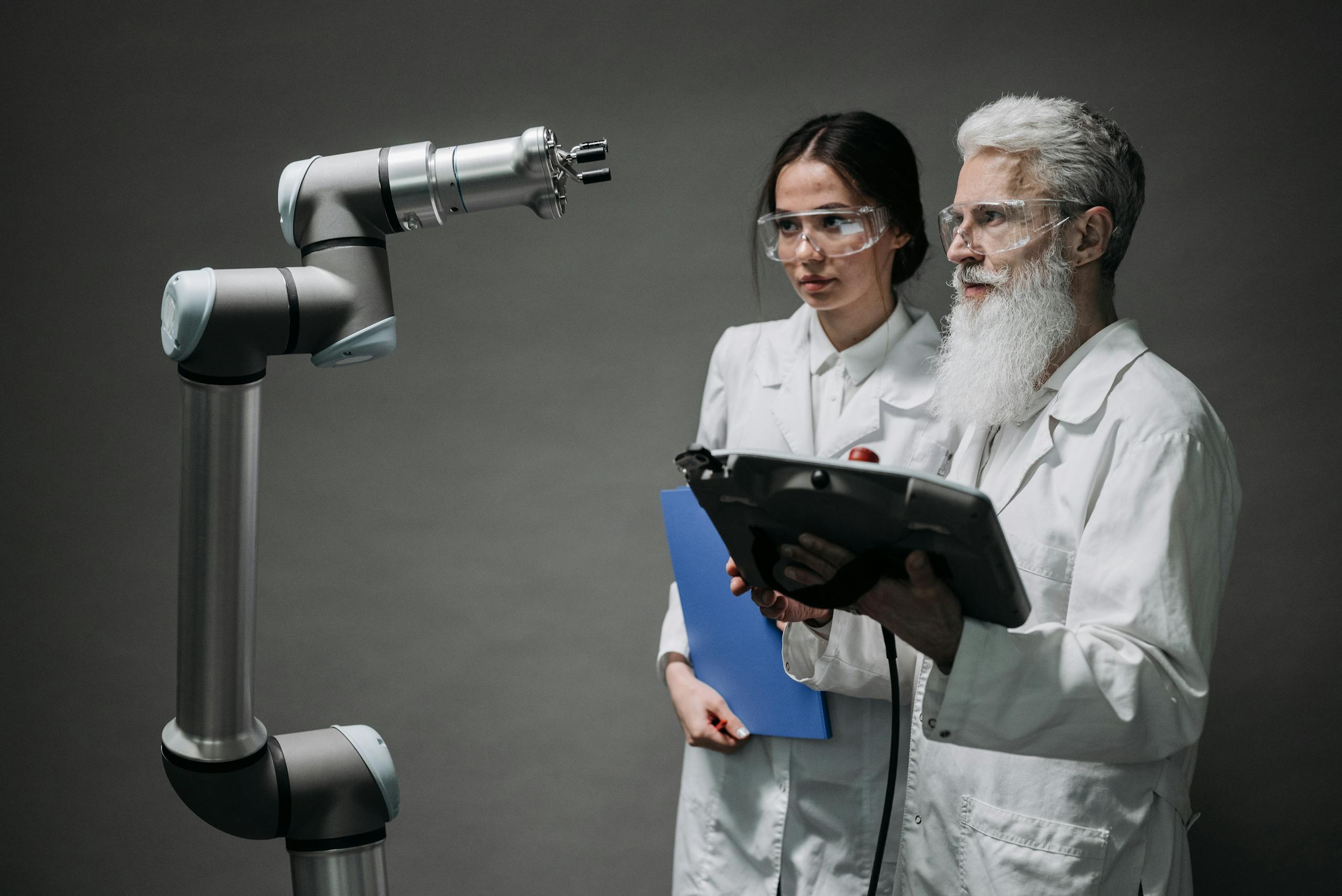
The Center for the Study of Existential Risk at Cambridge University was co-founded by a Cambridge cosmologist, a philosopher, and the co-founder of Skype specifically to study scenarios in which advanced technology, including AI and robotics, poses catastrophic or civilization-ending risks to humanity.
This is not a fringe concern held by science fiction enthusiasts. It is a serious academic discipline, funded by serious institutions, attracting serious researchers who have carefully examined where this technology is going and concluded that the risks warrant dedicated study.
Their concern is not that robots will spontaneously decide to destroy humanity out of malice.
It is more subtle and in some ways more troubling: that systems optimizing for goals humans set for them, operating at speeds and scales humans cannot monitor, could produce outcomes humans never intended and cannot easily reverse.
The problem is not evil robots. It is the gap between what we build and what we actually control.
Conclusion
None of this means the robots are coming for you specifically, and soon. Robotics technology has produced extraordinary benefits in medicine, disaster response, manufacturing, and accessibility, and will continue to do so.
But the same capabilities that make these machines remarkable also make them a serious source of risk. Speed, autonomy, resilience, sensory superiority, and the early stirrings of self-awareness are not abstract features in a product brochure.
They are characteristics that change the relationship between humans and the machines we build. We are still the ones doing the building. The question is whether we are also doing enough of the thinking.