A great game can make people jump out of their seats. A bad referee call can leave fans feeling betrayed and haunted by the memory for years.
Fans remember moments like the ‘Hand of God’ or the ‘Fail Mary’ because they shape sports history, creating lasting emotional bonds.
These calls changed careers and legacies, leaving fans with feelings of frustration, injustice, and a sense of loss that endures over time.
Super Bowl XL’s Questioned Calls

Super Bowl losses already leave scars. Seattle’s loss to Pittsburgh in Super Bowl XL came with extra salt because so many Seahawks fans believed the officiating tilted the game away from them.
Several key calls went against Seattle, and each one seemed to chip away at their momentum.
The frustration was not built around one lonely whistle. It came from the feeling that Seattle kept getting pushed backward at the exact moments when the game was still within reach. A flag here. A ruling there. A promising drive suddenly drained of life.
By the time Pittsburgh lifted the trophy, many fans were talking more about the officials than the champions.
That is the worst kind of sports argument because it never fully ends. Steelers fans can point to the scoreboard and the trophy.
Seahawks fans can point to the calls and the game’s rhythm. Both sides have their version. The final score is official, but the debate still refuses to retire.
The Tuck Rule Game
The Raiders thought they had Tom Brady. That is what made the Tuck Rule Game so unforgettable. In the snowy 2001 playoff clash between New England and Oakland, Charles Woodson hit Brady late in the game, the ball came loose, and the Raiders recovered. For a few seconds, it looked like Oakland had punched its ticket forward.
Then the replay review arrived like a cold wind through the stadium. Officials ruled that Brady’s arm had been moving forward under the tuck rule, making the play an incomplete pass instead of a fumble. New England kept the ball, tied the game, won in overtime, and stepped onto the road that would become a football dynasty.
Raiders fans still hate this call because it felt like the rulebook had beaten what their eyes had clearly seen. To them, the ball was out. Their team had recovered. The game should have been over.
Instead, a strange technical rule cracked open the door for Brady and the Patriots, and the NFL was never the same again.
The 1972 Olympic Basketball Final
The 1972 Olympic men’s basketball final between the United States and the Soviet Union remains one of the most bitter endings in sports history. The game came down to the final seconds, but those seconds seemed to stretch into confusion, argument, and disbelief.
The clock was reset, the ending was replayed, and the Soviet Union eventually scored to win 51-50.
For the United States team, it did not feel like defeat. It felt like the game had been taken out of their hands. The players protested, but the result stood. They refused to accept the silver medals, turning the controversy into a permanent Olympic scar.
This moment still sits at the top because it was bigger than basketball. It happened during the Cold War, on the Olympic stage, with national pride burning on both sides. Every second felt political.
Every decision felt heavy. More than fifty years later, the game still feels less like a finished contest and more like an argument frozen in time.
Thierry Henry’s Handball Against Ireland
Ireland did not lose a small match when Thierry Henry handled the ball against them. They lost a World Cup dream. In the playoff against France for a place at the 2010 tournament, Henry handled the ball before setting up the goal that sent France through.
The officials missed it, the goal stood, and Ireland was left with the kind of sporting pain that does not fade quickly.
The anger came from how clear the incident looked after replay. This was not a tiny shirt-pull in midfield or a foul hidden in a crowd. It was a handball that shaped the biggest moment of the tie.
Fans saw it. Players saw it. The world saw it after the fact. The only people who needed to see it in time did not.
That is what made the moment feel so brutal. A World Cup place is not just another reward.
It means national pride, money, exposure, and the chance for players to live the dream they chased as children. Many fans and teams argue that video review could have prevented this missed call, highlighting the ongoing debate about technology in sports.
Diego Maradona’s Hand of God
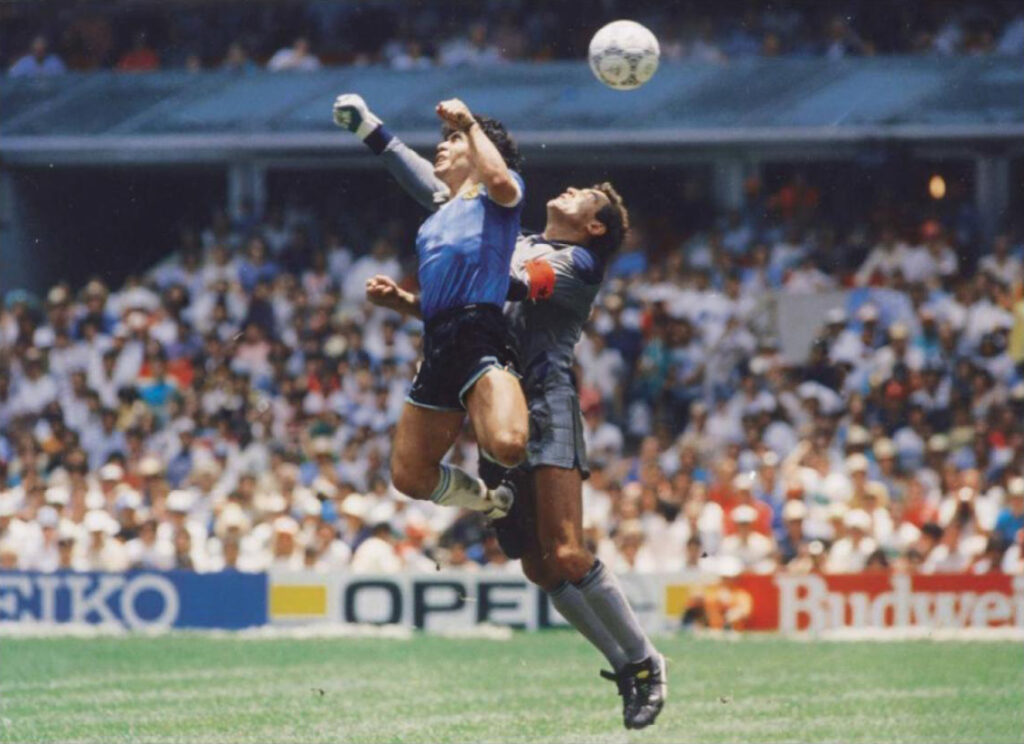
Diego Maradona did not just score a goal against England in the 1986 World Cup. He created a sports ghost that has never stopped floating over soccer history.
In one of the most-watched matches of his career, Maradona jumped near England goalkeeper Peter Shilton and used his hand to knock the ball into the net. The officials missed it, Argentina celebrated, and England stood there with the helpless anger of a team that knew exactly what had happened.
The goal became famous because it carried two emotions at once. It was clever and cruel. It was legendary and illegal. Maradona later called it the “Hand of God,” a phrase that only made the moment more dramatic.
To Argentina fans, it became part of their national mythology. To England fans, it felt like daylight robbery dressed as genius.
What makes the story even more maddening is what happened minutes later.
Maradona scored one of the greatest solo goals the sport has ever seen, slicing through England’s defense like a man playing a different game from everyone else. That brilliance should have been the whole story. Instead, the handball became the shadow that followed it forever.
The Fail Mary
The final play between the Seattle Seahawks and Green Bay Packers in 2012 looked like chaos disguised as football. Seattle threw a desperate pass into the end zone. Packers defender M.D. Jennings appeared to come down with the ball.
Seahawks receiver Golden Tate fought for it. The officials looked at the pile and ruled a touchdown for Seattle.
That single signal lit the fuse. Green Bay fans were furious. Neutral fans were confused.
The phrase “Fail Mary” was born almost instantly because the play felt like a collision between bad luck, messy officiating, and national television embarrassment.
The call became even bigger because it happened during the NFL’s replacement referee period. Fans were already worried that the games were being handled by officials who were not ready for the league’s speed and pressure.
This ending made that fear feel real. It was not just a bad call. It was a public meltdown at the exact moment the NFL could least afford one.
Roy Jones Jr. Losing Olympic Gold
Some losses feel painful. Roy Jones Jr.’s loss at the 1988 Seoul Olympics felt almost impossible to explain. He looked sharper, faster, and far more dominant against South Korea’s Park Si-Hun in the boxing final.
He landed cleaner punches, controlled the tempo, and appeared to give the judges every reason to place the gold medal around his neck.
Then the decision was announced. Park won.
The arena heard it, the viewers saw it, and boxing fans around the world reacted as though they had watched common sense walk out of the building. Jones did not just lose a fight. He lost a moment that seemed already earned.
The controversy still follows Olympic boxing because judging is supposed to reward what happens in the ring, not what people fear, prefer, or misread from the side. Jones later became one of the greatest professional fighters of his generation, but that only deepened the sting.
Fans knew what they had seen in Seoul. They saw a young fighter perform like a champion and leave without the medal that should have told the same story.
The Immaculate Reception
The Immaculate Reception sounds like a miracle, and for Pittsburgh fans, that is exactly what it was. In a 1972 playoff game against the Raiders, the Steelers were nearly finished when a desperate pass bounced through the air and landed with Franco Harris.
He scooped it up and raced into history for the winning touchdown.
The problem was the rule question hiding inside the miracle. At the time, if the ball had touched only an offensive player before Harris caught it, the play could have been ruled illegal.
That detail turned one of football’s greatest highlights into one of its longest arguments.
Steelers fans remember the play as divine timing. Raiders fans remember it as a stolen ending. That split is why the Immaculate Reception still works as sports theater.
It has everything a legend needs: panic, mystery, a sudden hero, a furious loser, and just enough uncertainty to keep everyone arguing more than fifty years later.
Key takeaway
Bad calls last because fans can accept heartbreak, but they struggle to accept helplessness. A missed shot hurts. A dropped pass hurts. A bad punch, a bad swing, or a defensive mistake can ruin a season. Still, those failures are the players’ responsibility.
A referee mistake feels different because it comes from the person trusted to keep the contest fair.
That is why these moments never disappear. They become stories fans tell with the same anger years later.
They live in replays, documentaries, comment sections, sports bars, family arguments, and every new debate about instant replay. Technology has helped, but it has not removed the human pulse from sports.
Maybe that is why we keep watching.
The same unpredictability that creates magic can also create outrage. One whistle can crown a hero. One missed call can build a villain. And one controversial decision can turn a game into a history that never stops arguing back.