
A catastrophic B-52 bomber crash at Edwards Air Force Base in California has left eight crew members dead after the aircraft went down shortly after takeoff during a routine test mission, sending shockwaves through one of the most critical hubs of U.S. military aviation.
The incident unfolded at Edwards Air Force Base in the Mojave Desert region of Southern California, a facility long known for experimental flight testing and advanced defense development. What was expected to be a controlled test flight instead ended in a sudden and devastating loss of life within moments of takeoff.
Officials confirmed that eight personnel were aboard the B-52 Stratofortress when it crashed shortly after becoming airborne. Early assessments from military sources indicate the situation was not survivable, marking one of the most severe aviation losses tied to the aircraft in recent years.
Sudden Takeoff Failure Turns Routine Mission Into Deadly Disaster
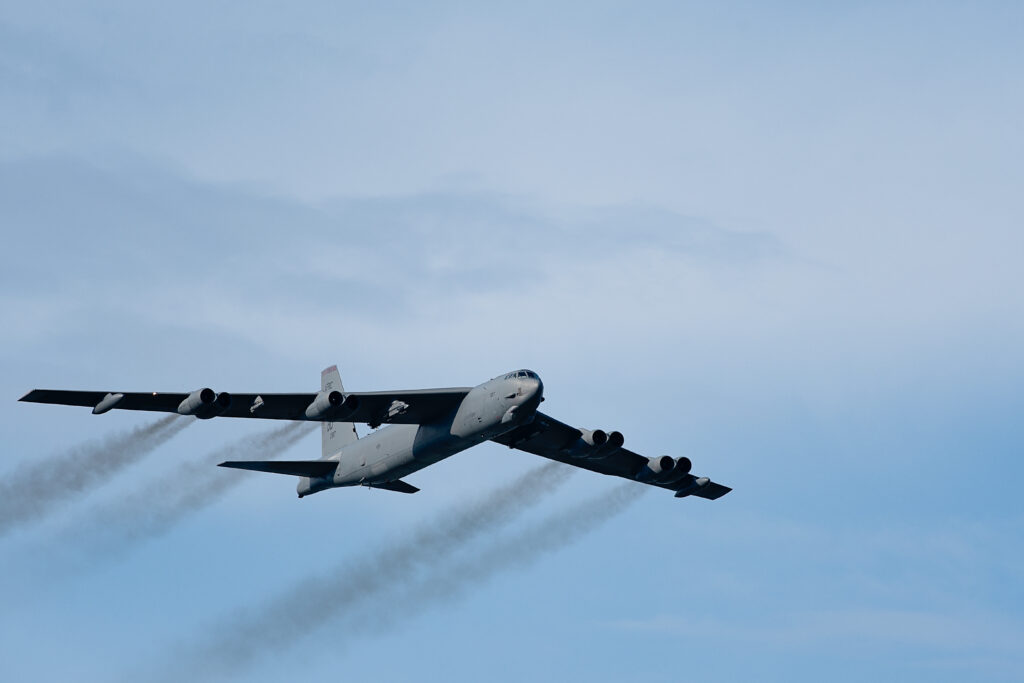
The B-52 had only just taken off when it went down near Edwards Air Force Base on Monday morning. According to early operational details, the flight was part of a scheduled test mission connected to ongoing modernization work on the long-serving bomber platform.
The crash occurred within minutes of liftoff, a phase of flight considered one of the most critical and vulnerable. Investigators are now focusing heavily on what happened during those first moments after the aircraft left the runway, when any mechanical failure or system malfunction can quickly become unrecoverable.
Emergency response teams were deployed immediately across the base’s vast desert terrain. Despite rapid action, officials have indicated that there was no realistic chance of survival once the aircraft impacted the ground.
Edwards Air Force Base at the Center of a National Aviation Tragedy
Edwards Air Force Base, located northeast of Los Angeles in California, is one of the most important flight testing facilities in the United States. It has been the site of countless experimental aviation programs, including military aircraft development and cutting-edge aerospace trials.
The base’s role in testing advanced systems means that aircraft operating there are often pushed through demanding conditions that simulate real-world operational stress. While safety protocols are extensive, test environments inherently carry higher risks than standard flight operations.
This crash has now placed Edwards Air Force Base under intense national attention, as investigators work to reconstruct exactly how a controlled test mission turned into a fatal emergency so quickly after takeoff.
Eight Lives Lost in a Mission Tied to Modernization Work
Officials confirmed that eight individuals were on board the B-52 at the time of the crash. The crew included a mix of military personnel and defense contractors involved in testing operations linked to radar modernization efforts for the aircraft.
Boeing confirmed that two of its employees were among those killed in the incident, highlighting the close cooperation between the U.S. Air Force and defense contractors in upgrading legacy aircraft systems.
The mission was reportedly connected to the B-52 radar modernization program, part of a broader effort to extend the bomber’s operational life well into the future. The aircraft itself has been in service for decades, but continues to undergo significant upgrades to maintain its strategic role.
Why the B-52 Still Matters Despite Its Age
The B-52 Stratofortress remains one of the most important long-range bombers in the U.S. Air Force fleet. Designed in the 1950s, it has been continuously updated with new engines, avionics, and weapons systems to remain operational in modern combat environments.
Its ability to carry large payloads over intercontinental distances makes it a key part of U.S. strategic defense planning. Despite its age, the Air Force has committed to keeping the aircraft in service for decades to come through extensive modernization programs.
That long service life, however, also means that testing and upgrades carry additional complexity. Each new system integrated into the aircraft must be evaluated carefully under real flight conditions, increasing the importance and risk of test missions like the one that ended in tragedy.
Investigators Focus on Critical First Moments After Takeoff
A major focus of the investigation is expected to be the aircraft’s performance immediately after takeoff. Aviation experts note that this phase leaves very little room for correction if something goes wrong, particularly with heavy aircraft like the B-52.
Authorities will examine flight data, maintenance records, onboard systems, and communication logs to determine whether mechanical failure, software malfunction, or another factor contributed to the crash.
At this stage, officials have not confirmed any cause. The investigation remains open, and military authorities have emphasized that conclusions will be drawn only after the full technical analysis is completed.
Boeing and Defense Contractors Under Scrutiny

The presence of contractor personnel on board has added another layer to the investigation. Boeing confirmed its employees’ involvement, reflecting the company’s role in supporting modernization efforts for the bomber fleet.
Defense contractor participation in test flights is common, especially when evaluating new systems or upgrades. However, this incident is likely to prompt closer examination of how test crews are assembled, how systems are validated before flight, and how risks are managed during experimental operations.
Broader Impact on B-52 Modernization Programs
The crash is expected to temporarily impact ongoing B-52 modernization efforts, particularly radar upgrade testing programs currently in development. While the aircraft remains a cornerstone of U.S. strategic airpower, incidents like this often lead to safety pauses and program reviews.
Military analysts will be watching closely to see whether the crash leads to delays in scheduled testing cycles or changes in how modernization flights are conducted.
A National Loss Inside a High-Risk Testing Environment
While the technical investigation continues, the human loss remains the most immediate and painful reality. Eight people involved in a high-level military test mission lost their lives in a matter of moments after takeoff.
Edwards Air Force Base has long been associated with pushing the boundaries of aviation, but this crash underscores the risks that persist even in highly controlled environments designed for safety and precision.
As investigators work to uncover what went wrong, the focus now shifts between technical answers and human accountability, with families, colleagues, and the wider military community awaiting clarity on one of the most serious B-52 incidents in recent years.