Houseplants are a great way to bring the delights of the natural world into our homes, helping to purify the air and give us a sense of well-being. However, many commonly grown houseplants are highly toxic to cats if touched or eaten, leading to serious illness or even death.
To help you keep your feline friends safe from harm, we’ve put together a comprehensive A-Z list of houseplants that are toxic to cats. If you grow any of these beautiful plants in your home, make sure they are placed well out of the way of any inquisitive pets! Should your cat come into contact with or nibble at any of these plants, make sure to contact your veterinary clinic for advice right away.
(Disclaimer – we’ve tried to identify every common houseplant that is toxic to cats, but if bringing a new plant into your home it is always best to double-check it is safe for animals first! The ASPCA also produces a useful list of plants that are not toxic to cats if you’re looking to purchase some new houseplants.
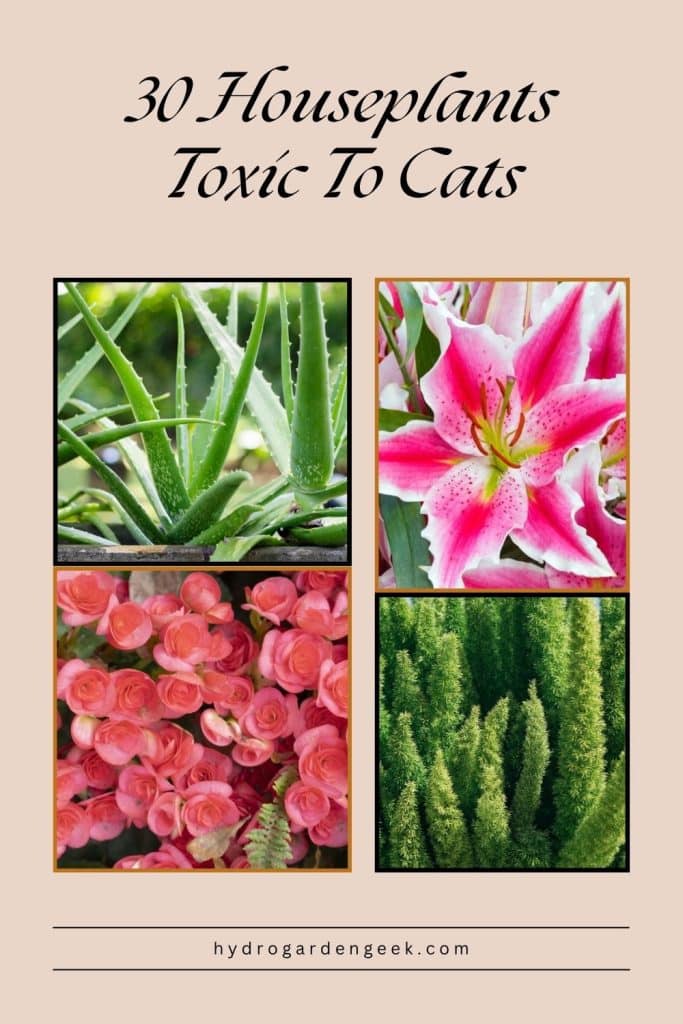
1. Aloe Vera (Aloe Barbadensis Miller)

The fleshy, gel-like leaves of aloe vera contain saponins and anthraquinones, both of which are toxic to cats if ingested.
2. Amaryllis (Amaryllis spp.)

All parts of the amaryllis plant, particularly the bulb, contain a substance called lycorine that is toxic to cats if eaten.
3. Asparagus Fern (Asparagus Densiflorus)

Asparagus fern – which is not a true fern – contains sapinogens, a toxic substance that causes severe gastrointestinal issues in cats.
4. Azalea (Rhododendron spp.)

All parts of the azalea plant contain grayanotoxins, which can cause severe illness in cats if ingested.
5. Begonia (Begonia spp.)

Indoor begonias contain insoluble oxalates that cause irritation and swelling of the mouth, tongue, and lips if eaten.
6. Bird of Paradise (Strelitzia Reginae)

While its toxicity is generally mild compared to other plants on this list, bird of paradise plants can cause mild gastrointestinal upset if your cat nibbles at the foliage or flowers.
7. Caladium (Caladium spp.)

If ingested, all parts of the caladium plant are toxic to cats and can cause severe irritation and swelling of the mouth, tongue, and lips.
8. Chrysanthemum (Chrysanthemum spp.)

Chrysanthemums contain pyrethrins, which can cause mild toxicity in cats if ingested. Symptoms may include drooling, vomiting, diarrhea, and mild dermatitis.
9. Clivia Lily (Clivia Miniate)

Clivia lilies contain lycorine, which can cause symptoms such as salivation, vomiting, diarrhea, and trembling.
10. Corn Plant (Dracaena Fragrans)

Corn plants can cause symptoms such as vomiting, drooling, and lack of appetite if ingested by cats.
11. Dumbcane (Dieffenbachia Seguine)

All parts of the dumbcane plant are toxic to cats if ingested, causing intense burning and irritation of the mouth, tongue, and lips.
12. Elephant Ear (Alocasia spp)

Elephant ear plants contain a toxic substance that, if ingested by cats, leads to symptoms including excessive drooling, vomiting, and difficulty swallowing.
13. English Ivy (Hedera Helix)

All parts of the English ivy plant, including the leaves and berries, are toxic to cats if ingested and can be potentially fatal.
14. Eucalyptus (Eucalyptus Cinerea)

Eucalyptus leaves can cause symptoms such as excessive drooling, vomiting, diarrhea, depression, and weakness if eaten by cats.
15. Geranium (Pelargonium spp.)

While geraniums are not highly toxic to cats, they can cause symptoms such as vomiting, appetite loss, depression, and skin irritation.
16. Gladiolus (Gladiolus spp.)

Gladiolus contains glycosides that, if eaten by cats, can cause symptoms such as salivation, vomiting, diarrhea, lethargy, tremors, or even collapse.
17. Hibiscus (Hibiscus spp.)

Hibiscus is not highly toxic to cats but can cause mild gastrointestinal upset if ingested.
18. Jade Plant (Crassula Ovata)

Jade plants contain compounds that can cause vomiting, depression, lack of coordination, and heart problems in cats.
19. Kalanchoe (Kalanchoe Blossfeldiana)

All parts of the kalanchoe plant are toxic to cats if ingested and can cause symptoms such as vomiting, diarrhea, and in severe cases, heart rhythm abnormalities.
20. Lantana (Lantana Camara)

If a cat consumes any part of a lantana plant, symptoms include vomiting, diarrhea, and depression.
21. Lily (Lilium spp.)

All parts of the lily plant, including the petals, leaves, pollen, and even water from the vase, are highly toxic to cats if ingested and can cause acute kidney failure if treatment is not sought immediately.
22. Mother-in-Law’s Tongue (Sansevieria Trifasciata)

Mother-in-law’s tongue, also known as snake plant or Sansevieria, can cause nausea, vomiting, and diarrhea in cats if eaten.
23. Oleander (Nerium Oleander)

Oleander contains cardiac glycosides, which can affect the heart and cause severe symptoms such as vomiting, drooling, abdominal pain, diarrhea, decreased heart rate, and potentially death.
24. Peace Lily (Spathiphyllum)

If eaten by cats, peace lilies can cause symptoms such as oral irritation, burning sensation, excessive drooling, vomiting, and difficulty swallowing.
25. Peony (Paoenia spp.)

Peonies are not highly toxic to cats but can cause mild stomach issues if eaten.
26. Philodendron (Philodendron spp.)

Philodendrons can cause intense irritation and swelling of the mouth, tongue, and lips if eaten by cats.
27. Pothos (Epipremnum Aureum)

If ingested by cats, pothos plants cause symptoms including excessive drooling, vomiting, and difficulty swallowing.
28. Rubber Plant (Ficus Elastica)
All parts of the rubber plant are toxic to cats if ingested and will cause oral and gastrointestinal irritation.
29. Sago Palm (Cycas Revoluta)
Sago palms contain cycasin, a toxic compound that can cause severe gastrointestinal symptoms, liver failure, and seizures in cats.
30. Swiss Cheese Plant (Monstera Deliciosa)
If eaten by cats, all parts of the Swiss cheese plant can cause symptoms such as oral irritation, excessive drooling, and vomiting.