Carnivorous plants are among the most intriguing wonders of the natural world. While many are familiar with the well-known Venus flytrap, sundews, and pitcher plants, there are many lesser-known, bizarre plant species that rely on unique, sometimes unsettling methods to obtain nutrients.
These plants, often found in extreme environments, have evolved extraordinary mechanisms to capture and digest their prey.
In this article, we will explore some of the most deviant and obscure carnivorous plants and showcase their fascinating adaptations.
Protocarnivorous Bromeliads

Bromeliads are a popular household plant, known for their rosettes of spiky leaves that form water-holding “tanks.” However, certain species of bromeliads are far more than just decorative plants; they are protocarnivorous.
Species such as Brocchinia reducta actively attract and drown insects in their water reservoirs. Interestingly, some bromeliads even produce enzymes that help digest the prey, turning their bodies into efficient, albeit small-scale, carnivores.
These protocarnivorous plants blur the line between insectivores and traditional plants, and their potential evolution into fully carnivorous species raises fascinating questions about plant behavior.
Heliamphora
Heliamphora, commonly known as the sun pitcher, is a genus of carnivorous plants often mistaken for pitcher plants but with distinct features. Unlike its cousins, Heliamphora species produce few, if any, digestive enzymes. Instead, they rely on symbiotic bacteria to break down the captured prey.
Found predominantly at high altitudes in South America, these plants have evolved to thrive in rainy environments. They feature unique, tubular leaves that trap insects, with a small drainage slot to prevent waterlogging.
The captivating relationship between Heliamphora and its bacteria reveals the intricate balance of nature in places where food is scarce.
Nepenthes bicalcarata
The Nepenthes bicalcarata, or “fang pitcher plant,” is one of the most remarkable examples of symbiosis in the plant world. This species forms a mutually beneficial relationship with Camponotus schmitzi, an ant species.
While most pitcher plants catch and digest insects, N. bicalcarata has developed a strategy in which ants actively participate in the hunting process.
The ants colonize the pitcher’s stem, where they assist in capturing larger prey, making the trap even more efficient. In exchange, the ants gain access to food sources such as leftover prey and plant waste.
This relationship shows how carnivorous plants can evolve not only to hunt but also to collaborate with other species for mutual benefit.
Nepenthes lowii
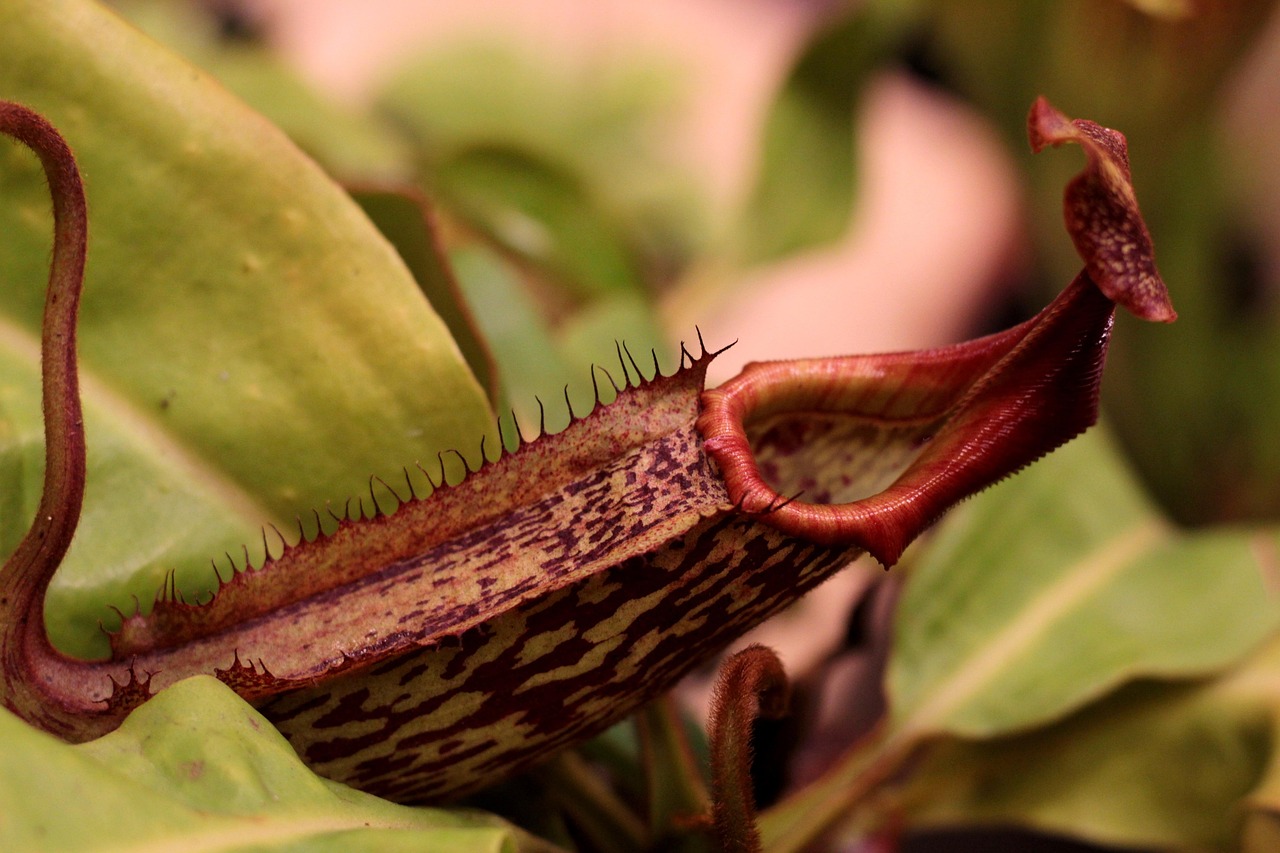
The Nepenthes lowii is a pitcher plant that stands out for its unusual feeding habits. While most pitcher plants rely on insect prey, N. lowii has adapted to feed on a far more unusual source: tree shrew feces.
The plant secretes sweet, sticky nectar that attracts tree shrews, and its pitchers serve as both a feeding site and a toilet. The shrews feed on the nectar and, in return, leave behind their droppings, which are digested by the plant.
This unusual relationship highlights how carnivorous plants can adapt to more abundant and often repugnant food sources, showcasing the plant kingdom’s ingenuity in survival.
Nepenthes rafflesiana
The Nepenthes rafflesiana is another pitcher plant with a unique feeding strategy that revolves around bat guano. These pitchers have evolved to serve as perfect roosting sites for Hardwicke’s woolly bats.
The plants benefit from the bats’ presence, as the guano they produce is a rich nutrient source. While the plant still captures insects, the bat guano provides a much more substantial food source.
This symbiotic relationship between plant and bat is an excellent example of how some carnivorous plants can diversify their diet by incorporating waste from other creatures.
Nepenthes ampullaria
Nepenthes ampullaria is a pitcher plant that has adapted to digest not just insects, but also decomposing plant matter. Unlike other pitcher plants that might become clogged with dead leaves and debris, N. ampullaria has evolved to thrive on this material.
It acts almost like a compost bin, breaking down leaves, petals, and other organic material that falls into its trap. This plant has turned what would be a disadvantageous pile of waste into a reliable source of nutrition, demonstrating the adaptability of carnivorous plants in utilizing available resources to survive.
Roridula
Roridula is one of the largest carnivorous plants, growing over six feet tall. Unlike other carnivorous plants that capture their prey with sticky leaves, Roridula relies on the help of predatory assassin bugs. These insects inhabit the plant’s sticky leaves and hunt any prey that gets caught in the glue.
The assassin bugs kill and feed on the insects, leaving behind waste that the plant then absorbs as nutrients.
This fascinating collaboration between a plant and an insect demonstrates a rare level of teamwork, with the plant indirectly benefiting from the insect’s predatory behavior.
Sundews
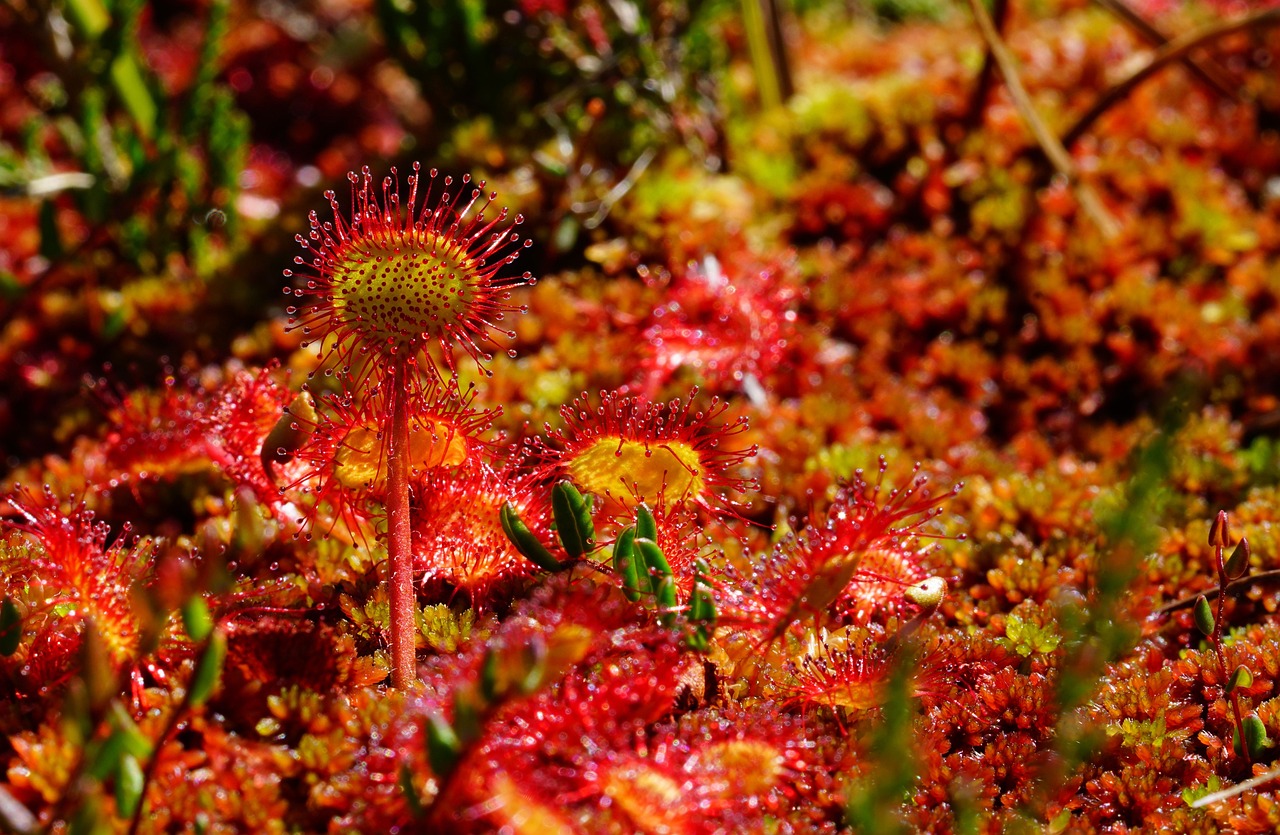
Sundews are widely known for their sticky, glandular leaves that capture insects with a slow, almost passive mechanism. However, some species have evolved a much more active method of capturing prey.
These sundews possess snapping tentacles that rapidly coil around insects when triggered, throwing them into the sticky traps. This fast action is similar to a miniature catapult, ensuring that prey is swiftly secured and unable to escape.
This adaptation gives sundews an edge over other carnivorous plants, as it allows them to capture more agile or larger insects that might escape slower traps.
Mushroom Mycelium
While not traditionally considered plants, fungi are part of the larger kingdom of life that includes many carnivorous organisms. Certain species of mushrooms, through their mycelium, have developed predatory strategies to capture nematodes.
The mycelial threads are lined with microscopic noose-like hoops that constrict when nematodes pass through. These specialized traps are activated only when the fungus detects nematodes in the soil, demonstrating that fungi have adapted a carnivorous lifestyle despite not being plants.
Brocchinia reducta

Brocchinia reducta is a type of bromeliad that takes carnivory to the next level by producing enzymes to digest its prey. Unlike many bromeliads that passively trap insects, B. reducta actively digests them, breaking down their bodies with the help of digestive enzymes.
This process allows the plant to absorb nutrients directly from the decomposing insects, making it one of the few bromeliads with true carnivorous abilities.
Its adaptation is a perfect example of how some plants have evolved to incorporate animal consumption into their survival strategy.
Conclusion
Carnivorous plants are far more than just bizarre curiosities; they are marvels of nature’s ingenuity.
From the unique symbiotic relationships of Nepenthes species to the active digestion of prey by Brocchinia reducta, these plants show how evolution can lead to the development of fascinating, sometimes unsettling, feeding strategies.
Whether they rely on their own digestive enzymes, the help of animals, or even the decomposition of organic material, carnivorous plants highlight the incredible adaptability of life in some of the world’s harshest environments.