We tend to treat bananas as the harmless overachievers of the fruit bowl. They are cheap, portable, filling, and so ordinary that they almost disappear into the background of daily life. Yet once we look past the bright peel and soft sweetness, we find a history shaped by violence, exploitation, panic, disease, and death. The banana may be one of the most familiar foods on earth, but its past is anything but innocent.
When we follow the banana’s trail across plantations, courtrooms, stadiums, laboratories, sidewalks, and highways, a darker picture comes into view. We see labor systems built on human suffering, racist symbolism that refused to die, industrial farming disasters, and bizarre tragedies that sound invented until we trace the details.
The result is not just a list of strange banana stories. It is a portrait of how one everyday fruit became entangled with some of the ugliest parts of modern history.
Bananas Were Used to Keep Enslaved Laborers Working
When bananas spread through plantation economies in the Americas, they were valued not only as a crop but as a practical tool inside brutal labor systems. Plantation owners noticed that bananas were filling, energy-dense, easy to grow, and cheap to distribute. That made them useful as low-cost food for workers whose lives were already controlled through violence and deprivation. In that context, the banana stopped being just a fruit and became part of a larger machinery of extraction, one that treated human beings as units of labor to be maintained as cheaply as possible.
What makes this history especially grim is how ordinary it can sound on the surface. Feeding workers does not sound sinister until we place it inside slavery, where even food served the interests of ownership rather than care. The banana’s convenience, the very quality that makes it attractive today, once helped support plantation economies that depended on coercion and suffering. That is one of the most unsettling truths in the fruit’s history. A soft yellow snack became woven into one of the hardest systems the modern world ever built.
The Banana Became a Racist Symbol in Public Life
Few objects seem less threatening than a banana, which is partly why its racist history feels so jarring. Over time, bananas became tied to degrading stereotypes that compared Black people to apes and monkeys. That association turned the fruit into a tool of mockery, especially in sports, where banana throwing became one of the ugliest visual shortcuts for racist abuse. The act was designed to humiliate, reduce, and dehumanize, all while hiding behind the flimsy excuse of crowd behavior or fan passion.
What makes this story darker is not only its cruelty but its persistence. The banana was used in stadiums for decades as a prop in racist taunting, and the practice did not vanish with time or better laws. Even in recent years, incidents involving bananas thrown at Black athletes showed how quickly old prejudices can surface in modern spaces that like to call themselves progressive. When a fruit becomes a weapon of insult, we are forced to confront the fact that racism does not need sophistication to do damage. Sometimes it only needs a crowd, a target, and a symbol everyone already recognizes.
Banana Workers Were Gunned Down in the Banana Massacre
One of the darkest chapters in banana history unfolded in Colombia in 1928, when workers associated with the United Fruit Company went on strike for better working conditions. Their demands were not extravagant. They wanted basic dignity, fairer treatment, and humane working terms. Instead of serious negotiation, they faced state force. Soldiers were sent in, tensions escalated, and a gathering of workers and families turned into a scene of bloodshed that history now remembers as the Banana Massacre.
What continues to haunt this event is the scale of uncertainty around the death toll. The exact number remains disputed, as is often the case when powerful interests want tragedy to blur at the edges. Some accounts place the number far lower, while others suggest it may have reached into the thousands. That ambiguity does not soften the horror. It deepens it. When laborers asking for fair treatment are answered with rifles and machine guns, the message is unmistakable. Profit mattered more than people. The banana industry’s global success was not built only on trade routes and agricultural skill. In places like this, it was also built on fear, force, and silence.
A Hangman Used Mashed Bananas to Prepare Execution Rope
Some of the darkest banana stories are not about global systems at all. They are about one bizarre detail that makes a grim human act even stranger. In India, veteran executioner Nata Mullick reportedly claimed that mashed bananas mixed with oil made a hanging rope sufficiently slippery. To him, this was part of the technical craft of execution, one more practical adjustment in a profession he described as an inherited trade. That alone is unsettling. It transforms bananas from a breakfast item into a backstage tool of death.
The image is difficult to shake because it collapses two worlds that should never touch. On one side, we have domestic familiarity, the fruit sitting quietly in kitchens and markets. On the other hand, we have the ritual mechanics of state execution, where precision and detachment are used to end a life. The banana sits between them in this story, not as food, not as a symbol, but as a lubricant in the service of killing. We may call it a minor detail, but that is exactly what gives it power. History is often most disturbing when horror shows up in the smallest and most ordinary objects.
Banana Farming Has Exposed Workers to Dangerous Chemicals
Modern banana production has long depended on heavy chemical use, especially in large-scale plantation agriculture. That dependence has created repeated fears about pesticide exposure among the people who work closest to the crop. In Cambodia, reports of banana plantation workers falling ill, fainting, struggling to breathe, and requiring hospitalization raised serious concerns about the conditions under which the fruit is grown. When workers begin collapsing in the same environment where they sleep and labor, it becomes impossible to treat the supply chain as clean, efficient, and morally neutral.
This is where the dark side of convenience becomes visible again. Consumers see a smooth, yellow fruit neatly stacked in stores. Workers may see chemical drift, weak protections, and employers who dismiss symptoms until the harm becomes too obvious to ignore. Even when official explanations become contested or investigations point in multiple directions, the larger issue remains. Industrial agriculture often asks vulnerable workers to carry risks that wealthier consumers never see. The banana’s bright surface hides a production model that has too often flirted with toxicity, especially where oversight is weak, and labor is easy to replace.
Panama Disease Nearly Destroyed the Banana Industry Once, and It Could Do It Again
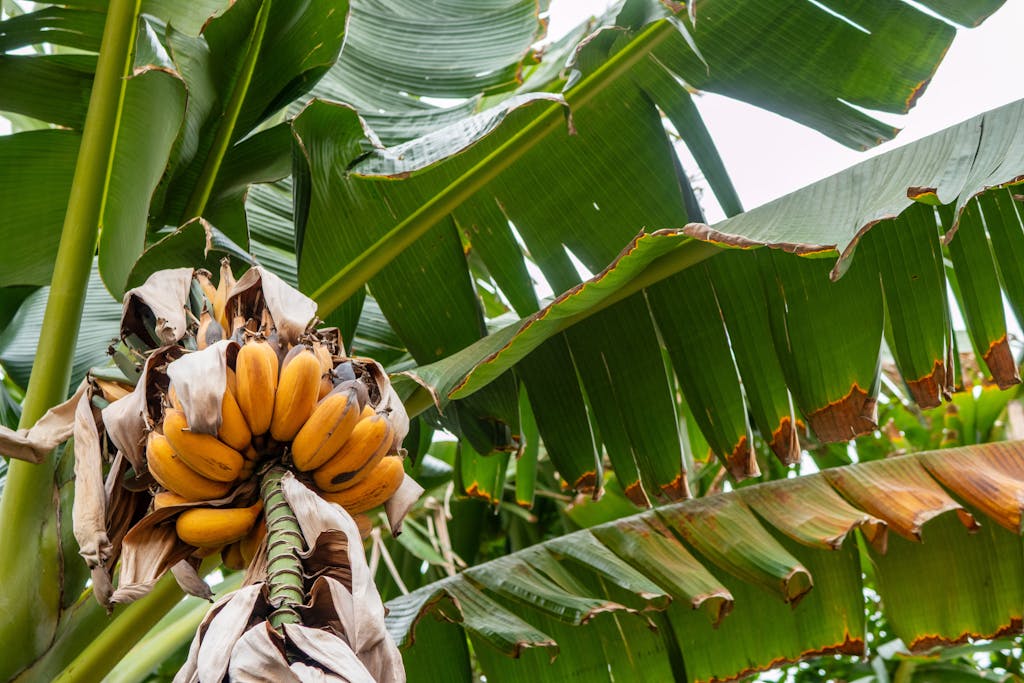
Bananas have been tied not only to human tragedy. They have also been stalked by botanical catastrophe. In the mid twentieth century, Panama disease devastated the Gros Michel banana, the variety that once dominated export markets. Because commercial banana farming relied so heavily on monoculture, the fungus moved like a silent executioner through plantations that had been designed for efficiency rather than resilience. Entire systems built around a single type of banana suddenly looked fragile, and the industry had to pivot toward the Cavendish variety to survive.
That rescue never solved the deeper problem. It merely postponed it. A newer strain known as Tropical Race 4 emerged later and proved dangerous to Cavendish bananas as well, raising fears that the fruit most people think of as permanent may actually be living on borrowed time. This is one of the darkest banana stories because it reveals how global abundance can rest on astonishing biological weakness. The banana seems plentiful only because modern agriculture built an illusion of stability around genetic sameness. Once disease breaks through that illusion, we are reminded that the world’s most common fruit may be one fungal wave away from another crisis.
Bananas Are Radioactive, Even If the Risk Is Tiny
One of the stranger truths about bananas is that they contain radioactive potassium. The risk to human health from eating ordinary amounts is negligible, and no one should treat a banana as a serious radiation threat. Still, the fact itself has a sinister edge because it collides with our assumptions about safety and innocence. We do not expect a lunchbox fruit to belong in any sentence with the word radioactive, yet there it is, quietly carrying a measurable dose.
This story matters less because bananas are dangerous and more because it shows how darkness can hide inside normality. The banana is technically radioactive, but only in the same understated way much of the natural world is full of invisible forces we seldom notice. That contrast is what makes the fact memorable. The danger sounds cinematic, but the reality is mundane. We could call this the least deadly item on the list, yet it still earns its place because it feeds the banana’s unusual reputation. Even when it does not kill or exploit, the fruit still carries a faint scientific eeriness that feels oddly fitting for such a troubled history.
Banana Peels Have Been Linked to Real Injuries and Deaths

The banana peel is usually treated as a comedy prop, the classic shortcut to slapstick humiliation. Cartoons turned it into a visual joke, and popular culture trained us to laugh before the fall even happens. But the real world has always been less forgiving. In the late nineteenth and early twentieth centuries, filthy city streets, careless waste disposal, and crowded sidewalks made banana peels a genuine hazard. People slipped, bones were broken, lawsuits followed, and in some reported cases, the consequences were fatal.
That gap between comedy and danger is what makes this story darker than it first appears. We are used to seeing the peel as harmless because entertainment softened it into a gag. In reality, a slick peel on hard pavement can become a chain reaction. A fall can lead to trauma, and trauma can lead to death. Old newspaper reports treated banana peels not as punchlines but as urban nuisances with serious consequences. The banana did not create those unsafe streets on its own, of course, but it became one of the era’s most recognizable symbols of public disorder. Beneath the joke was a very real risk, and sometimes a body on the ground.
A Dispute Over Allegedly Stolen Bananas Ended in a Fatal Police Shooting
Among the bleakest banana-related stories in recent memory is the death of Jarrell Garris after a grocery store incident involving allegedly unpaid fruit. What began as an accusation over small items, including a banana and grapes, escalated into a police confrontation. Officers attempted an arrest, a struggle followed, and Garris was shot. He later died after being removed from life support. The details of such encounters are often argued over in public, but the moral shock is immediate. A dispute over everyday groceries ended with a human life lost.
This story lands so hard because of the imbalance between cause and outcome. Bananas are cheap, forgettable, almost absurdly ordinary. To see them appear in the chain of events surrounding a death forces us to confront how quickly minor confrontations can become irreversible once power, suspicion, and force enter the picture. The banana itself is not to blame, obviously, yet its presence sharpens the tragedy. Something associated with nourishment and routine became part of a fatal episode that exposed far larger questions about policing, escalation, and whose life is treated as disposable when tension rises.
The Banana Truck Crash Turned a Delivery Into a Disaster Scene
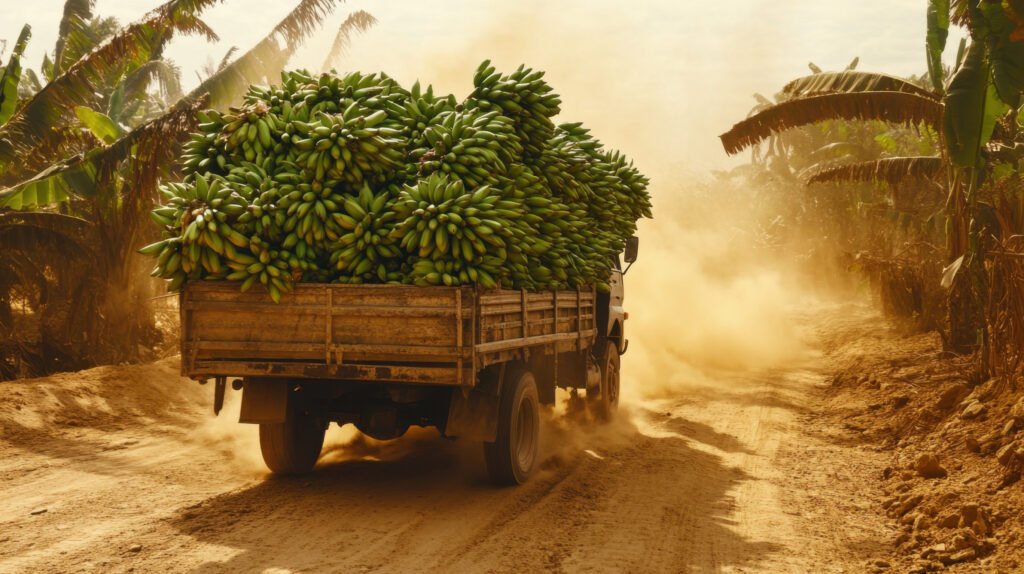
In 1965, a truck hauling a massive load of bananas down a steep descent near Scranton, Pennsylvania, lost control and crashed at devastating speed. The driver, Eugene Sesky, tried to control the vehicle as it accelerated downhill, reportedly reaching a terrifying speed before colliding with cars and finally crashing into a house. He was killed, others were injured, and bananas were scattered across the wreckage. The scene was so striking that it later inspired a song, which only added a layer of folklore to an accident that was, at its core, brutal and real.
This is the kind of story that would sound absurd if the consequences were not so severe. A road catastrophe involving thousands of pounds of bananas almost feels like something invented for dark comedy, but the death and injuries strip away any whimsy. What remains is a reminder that even the most banal cargo can become lethal once speed, gravity, and mechanical failure combine. The image of fruit spilling across a crash site lingers because it is so visually strange, yet the strangest part is how quickly ordinary commerce can become mortal chaos. One truckload of bananas became a disaster powerful enough to leave a local scar and enter cultural memory.
Conclusion
Bananas look like the least dramatic fruit in the world, which is why their history catches us off guard. Behind their soft texture and clean reputation lies a trail that runs through plantation cruelty, racist spectacle, toxic labor conditions, agricultural panic, and deaths so strange they seem fictional at first glance. Once we gather those stories in one place, the banana stops looking simple.
We may still eat bananas tomorrow without a second thought, and most people will. But after tracing this history, we cannot pretend the fruit has lived a gentle life in human hands. Its story is bruised by empire, industry, fear, and accident. That is what makes these dark banana stories so memorable. They reveal how even the most ordinary object can carry the weight of an extraordinary past.