Food names can be sneaky little storytellers. We see “French,” “German,” “Hawaiian,” or “Singapore” on a menu and instantly imagine beaches, bakeries, old-world kitchens, or street markets packed with sizzling pans. Then the truth walks in wearing muddy boots.
Many famous dishes were named for marketing, migration, confusion, branding, or plain old storytelling luck. Some foods borrowed foreign names to sound fancy. Others were created by immigrants blending flavors in new countries. A few were named after people, not places.
That is how we ended up with German chocolate cake that is not German, Hawaiian pizza born in Canada, and Singapore noodles that many Singaporeans would barely recognize.
Hawaiian Pizza Was Born in Canada, Not Hawaii
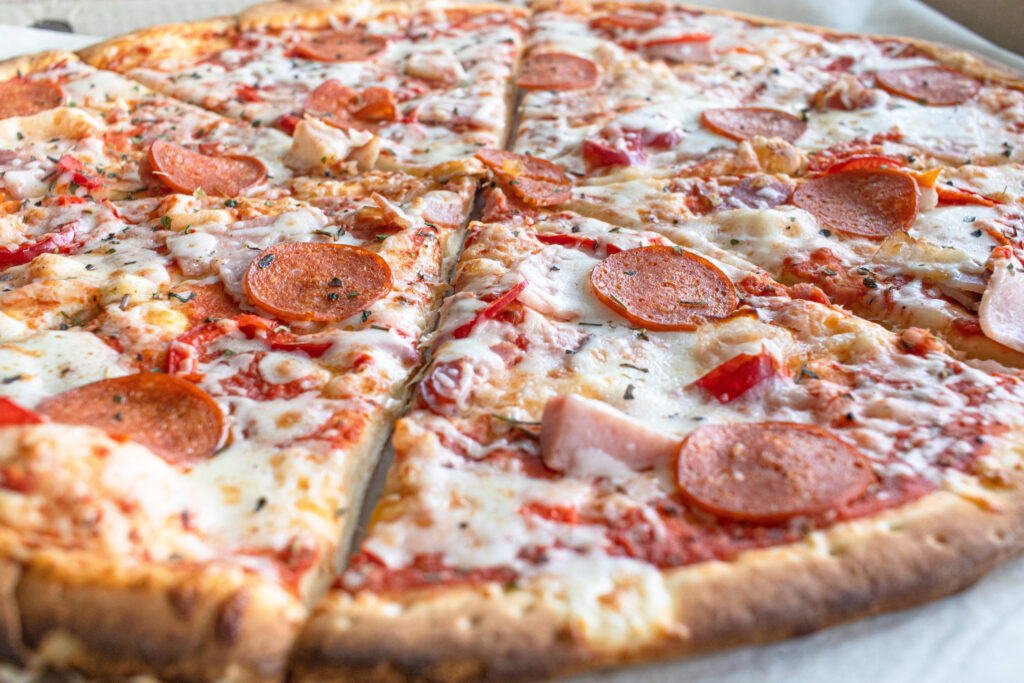
Hawaiian pizza sounds like something invented beside a beach, under palm trees, with ocean air drifting through an open-air restaurant. The real story is much colder, much less tropical, and very Canadian. This sweet-and-savory pizza was created in Ontario in 1962 by Sam Panopoulos, a Greek immigrant who ran a restaurant and decided to experiment with canned pineapple.
The “Hawaiian” part did not come from native Hawaiian cuisine. It came from the pineapple association. At the time, pineapple was strongly associated with Hawaii in North American culture, and the canned pineapple brand Panopoulos reportedly bore a Hawaiian name.
The result was a ham, pineapple, cheese, and tomato sauce pie, one of the most controversial pizzas in modern food history.
We still argue about it as if it personally insulted someone’s grandmother. Some people love the sweet pineapple with salty ham. Others think fruit on pizza is a culinary crime scene. Either way, the name makes the dish sound more island-born than it really is.
London Broil Is an American Trick, Not a British Classic
London broil sounds like something served in a smoky old British dining room with polished silver, thick gravy, and stern-looking waiters. In reality, it is an American preparation style, not a traditional London dish. The name likely became popular in the United States as a way to make a simple marinated beef dish sound more elegant.
The dish usually involves marinating a tougher cut of beef, quickly broiling or grilling it, then slicing it thinly across the grain. That technique matters because the meat can be chewy if handled carelessly. The “London” label gives it a polished, international feel, even though many Londoners would not immediately recognize it as their own food.
This is one of those names that work because they sound classy. “Marinated tough steak sliced thin” does not exactly sparkle on a menu. “London broil” sounds like dinner with manners.
Turkey, the Bird Is Not From Turkey

The turkey-naming mess is one of the best examples of food history getting tangled up in trade routes. The bird we call a turkey is native to North America, yet its English name points to Turkey. That happened because European traders often linked imported goods with the Ottoman Empire, which played a major role in trade between Europe, Asia, and Africa.
When similar birds and exotic goods moved through Turkish trade networks, names got blurred. English speakers eventually attached “turkey” to the North American bird, even though the bird itself did not come from Turkey. Other languages made their own mistakes, too, with some names associating the bird with India or other distant places.
So yes, Thanksgiving’s most famous bird has a passport problem. Its name is less about biology and more about old-world confusion.
Salisbury Steak Is Named After a Man, Not a Place
Salisbury steak sounds British because Salisbury is a real place in England. The dish, though, is deeply American. It was named after Dr. James H. Salisbury, a 19th-century American physician who promoted a meat-heavy diet and believed ground beef could help with certain health problems.
The dish became popular because it was cheap, filling, and easy to serve. Ground beef could be shaped into patties, cooked quickly, and covered with gravy to make it feel more comforting. Over time, Salisbury steak moved from medical theory to military food, school lunches, diners, and frozen TV dinners.
Today, it feels like the spiritual cousin of meatloaf and hamburger steak. The name may sound refined, but the dish is pure American comfort food.
Singapore Noodles Came From Hong Kong-Style Kitchens

Singapore noodles sound like a street-food staple from Singapore, but the dish is more closely tied to Hong Kong-style Cantonese restaurants. It became popular as a curry-flavored noodle dish made with thin rice vermicelli, vegetables, eggs, shrimp, pork, or chicken. The bright yellow color usually comes from curry powder.
The Singapore label likely worked because the dish felt Southeast Asian to diners outside Asia. Singapore is famous for multicultural food, so the name gave the noodles a believable identity. Still, the dish is not a major everyday classic in Singapore itself.
That does not make it fake food. It makes it diaspora food. Restaurants created something tasty, recognizable, and easy to sell across borders. The name may be misleading, but the bowl still delivers.
Mongolian Barbecue Is More Taiwanese Than Mongolian
Mongolian barbecue sounds rugged and ancient, like something cooked by nomads over open flames on the steppe. The restaurant version we know today is much newer and much more connected to Taiwan. It became popular in the mid-20th century as a theatrical dining experience in which customers selected meats, vegetables, sauces, and noodles to be cooked on a large, flat grill.
The “Mongolian” name gave the concept a dramatic edge. It suggested boldness, fire, meat, and adventure. Actual traditional Mongolian cooking is very different, shaped by pastoral life, dairy, mutton, and simple heat sources rather than giant restaurant griddles.
This is food branding doing push-ups in front of the mirror. The name sells excitement, even though the method is more closely linked to Chinese and Taiwanese cooking styles.
Danish Pastries Have Austrian Roots

Danish pastries are so closely tied to Denmark that questioning the name feels almost rude. Yet the flaky, buttery style has strong Austrian roots. In the 19th century, Danish bakers learned laminated pastry techniques from Austrian bakers, especially during a period when labor shortages opened the door to foreign baking influence.
Denmark made the pastry its own. Bakers added fillings, shaped the dough beautifully, and built a pastry culture around it. In Denmark, these pastries are often called “wienerbrød,” which translates to “Vienna bread,” giving Austria a quiet nod in the Danish name.
So the Danish is not a stolen identity. It is more like a borrowed technique that found a new home and became famous under its adopted family name.
Russian Dressing Is an American Condiment
Russian dressing sounds like it should belong beside caviar, rye bread, and icy vodka shots. The condiment, however, became famous in the United States. It is usually made with mayonnaise, ketchup or chili sauce, horseradish, spices, and sometimes pickle relish or other sharp ingredients.
The “Russian” name may have come from early recipes that included caviar or from the old American habit of making foods sound foreign and upscale. The dressing became especially important in deli culture, where it found a permanent home on sandwiches like the Reuben.
It is funny because the dressing’s name travels better than its origin story. Many people assume it came from Russia, but its real identity is much closer to American lunch counters and hotel dining rooms.
German Chocolate Cake Is Named After Samuel German
German chocolate cake is one of the most misunderstood desserts in America. It is not a traditional German cake. The name comes from Samuel German, an American-English chocolatier who created a type of sweet baking chocolate for the Baker’s Chocolate Company in the 19th century.
The famous layered cake became widely known after a recipe using German’s Sweet Chocolate was published in a Texas newspaper in the 1950s. Over time, the possessive “German’s” lost its apostrophe and became “German chocolate cake.” That tiny grammar shift changed how millions of people understood the dessert.
The cake itself is rich, soft, and unforgettable, especially with coconut-pecan frosting. It may not belong to Germany, but it absolutely belongs at the table.
French Fries Probably Belong More to Belgium

French fries may be the most famous misleading food name on earth. The exact origin is still debated, but Belgium has one of the strongest claims. Belgian food culture has a long relationship with fried potatoes, and “frites” remain a national obsession.
One popular explanation says American soldiers encountered fried potatoes in Belgium and called them French fries because French was spoken in parts of the country. Another theory links the name to the cooking technique of “frenching,” meaning cutting food into thin strips.
Either way, the name made France the global star of a food Belgium fiercely defends.
The irony is delicious. Fries became a symbol of fast food, diners, burgers, and casual meals across the world, yet their name still carries a European identity crisis.
Conclusion
Food names are not always history lessons. Sometimes they are marketing tricks, translation accidents, immigrant inventions, or tiny misunderstandings that survive for generations. We keep ordering these dishes because the names sound familiar, even when the geography is wildly wrong.
That is part of what makes food culture so interesting. A dish can be born in one country, renamed in another, changed by immigrants, sold through restaurants, and then accepted as tradition by people who never heard the real story.
The menu lies a little, but the food still tells the truth about movement, creativity, trade, and taste.