Meat can make a meal feel hearty, comforting, and complete, but it also demands more respect in the kitchen than many people give it. A steak left too long on the counter, chicken rinsed under the tap, or a burger judged by color alone can quietly raise the risk of foodborne illness. We do not need a complicated chef’s routine to stay safe. We need sharper habits, cleaner separation, proper temperatures, and less guesswork. The safest kitchen is not the fanciest one; it is the one that treats raw meat like a serious ingredient from the grocery cart to the plate.
Food safety agencies repeat the same core message for good reason: clean, separate, cook, and chill. Raw or undercooked meat, poultry, seafood, and eggs are among the foods most likely to contain harmful germs, and those germs can spread to hands, counters, cutting boards, and ready-to-eat foods when they are handled carelessly. The following meat food safety mistakes are common, avoidable, and far more important than most home cooks realize.
Washing Raw Meat Before Cooking
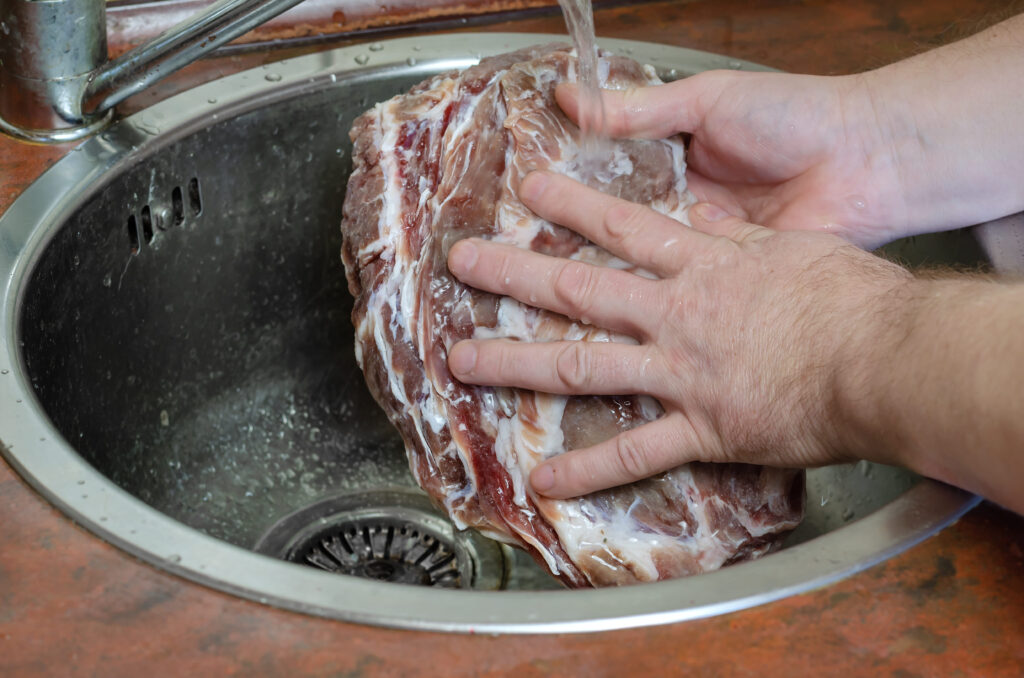
Many people still rinse raw meat because it feels cleaner, especially with chicken. The problem is that running water does not make raw poultry safer. It can splash bacteria around the sink, faucet, counters, nearby dishes, and even fresh produce sitting close to the prep area. We may not see the droplets, but the germs can travel farther than expected and settle on surfaces that will later come into contact with cooked food.
The safer move is simple. Pat meat dry with clean paper towels when needed, season it, cook it to the correct internal temperature, and clean any surface that came into contact with raw juices. CDC guidance specifically warns that raw chicken is ready to cook and does not need to be washed first, because washing can spread germs to other foods, the sink, and the counter.
Using the Same Cutting Board for Raw Meat and Ready-to-Eat Foods
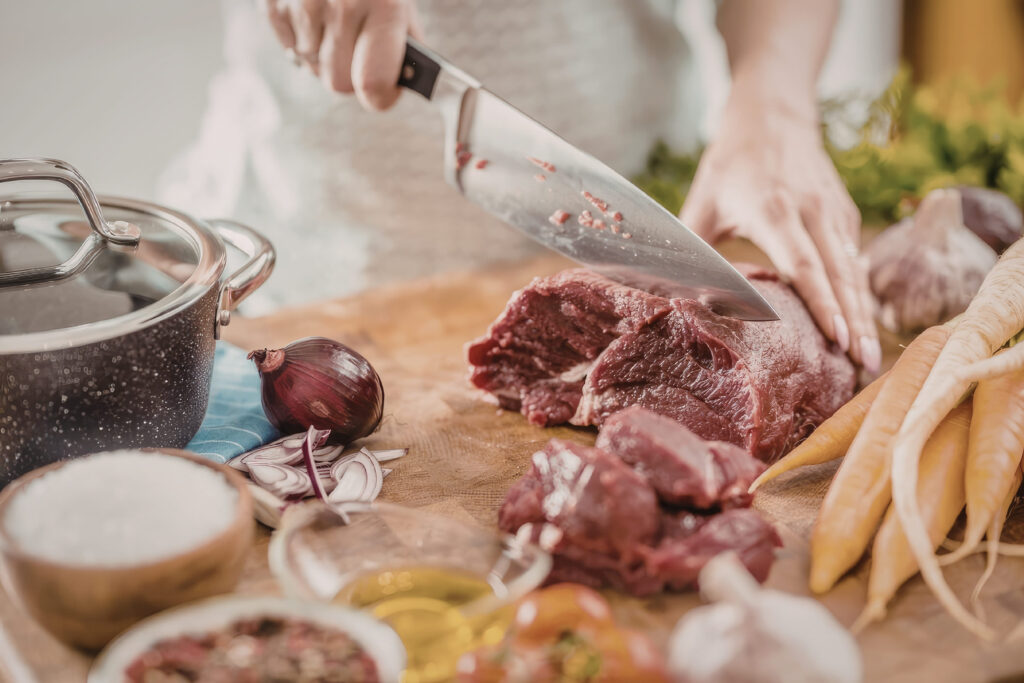
Cross-contamination is one of the easiest mistakes to make because it often occurs before we notice. We slice raw chicken on a board, move it aside, then cut lettuce, tomatoes, bread, or herbs on the same surface. The vegetables may look fresh and clean, but they can pick up bacteria from raw meat juices left behind.
We should use one cutting board or plate for raw meat, poultry, and seafood, then use a separate one for foods that will not be cooked. The same rule applies to knives, tongs, platters, and hands. The CDC and FDA both advise keeping raw meat, poultry, seafood, and eggs separate from other foods during shopping, storage, and preparation.
Judging Meat Doneness by Color Instead of Temperature
A burger can look brown and still be unsafe. A chicken breast can lose its pink color before the thickest part reaches a safe temperature. Juices can run clear before all harmful bacteria are destroyed. Color, texture, and instinct are unreliable, especially with ground meat, thick cuts, stuffed meat, and poultry.
We need a food thermometer, not a lucky guess. The CDC states that the only way to tell if food is safely cooked is to use a food thermometer, since internal temperature must rise high enough to kill germs that can make people sick. Whole cuts of beef, pork, veal, and lamb should reach 145°F, followed by a 3-minute rest; ground meats should reach 160°F, and all poultry should reach 165°F.
Thawing Meat on the Kitchen Counter
Counter thawing feels convenient, but it puts meat in the temperature range where bacteria multiply quickly. The center may still feel frozen, yet the outer layer can sit warm enough for germs to grow. This mistake is especially risky with large poultry, roasts, ground meat packages, and anything left out for hours.
The safer options are refrigerator thawing, cold water thawing, or microwave thawing. Meat thawed in cold water or in the microwave should be cooked immediately, as parts may begin to warm during thawing. FDA guidance is clear that food should never be thawed at room temperature, including on the countertop.
Letting Meat Sit Out Too Long Before or After Cooking
The danger zone is not kitchen folklore. It is the temperature range where bacteria can multiply fast enough to turn a meal into a problem. Meat left out before cooking, cooked meat cooling slowly on the stove, or leftovers forgotten after dinner can all become risky.
Perishable food should not be left out for more than 2 hours. If the food is exposed to temperatures above 90°F, such as during a picnic, party, hot-car ride, or outdoor cookout, the window drops to 1 hour. FoodSafety.gov states that bacteria that cause food poisoning multiply most quickly between 40°F and 140°F, so cooked meat should be kept hot at 140°F or above when not being served right away.
Storing Raw Meat Where Juices Can Drip onto Other Foods
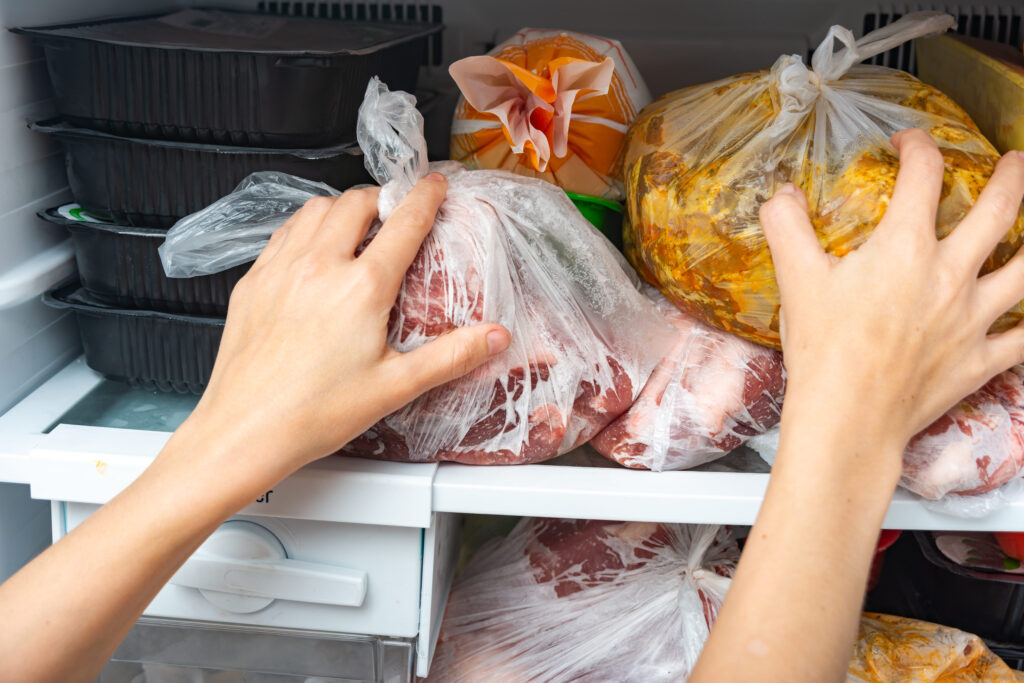
A package of raw chicken on the top shelf of the refrigerator can contaminate everything below it if its juices leak. That one storage mistake can reach salad greens, fruit, leftovers, cheese, lunch meat, and other ready-to-eat foods. The risk grows when meat is loosely wrapped, placed in torn packaging, or stored above uncovered containers.
We should store raw meat, poultry, and seafood in sealed containers or leakproof bags, then place them where juices cannot drip onto other foods. FoodSafety.gov advises placing raw meat, poultry, and seafood in containers or sealed leakproof plastic bags at home, and freezing them if they will not be used within a few days.
Reusing Marinade That Touched Raw Meat
Marinade can look harmless because it smells like garlic, herbs, citrus, soy sauce, or spices. Once it touches raw meat, it becomes a raw meat contact surface in liquid form. Pouring it over cooked steak, brushing it onto grilled chicken at the end, or using it as a dipping sauce without proper handling can transfer bacteria from raw meat to finished food.
We can still use marinade safely, but we need better timing. Set aside a clean portion before adding raw meat, or boil the used marinade before serving it with cooked food. The FDA warns against reusing marinades used on raw foods unless they are brought to a boil first, and it also advises marinating food in the refrigerator rather than on the counter.
Forgetting to Wash Hands After Handling Raw Meat
Hands are one of the busiest tools in the kitchen. They open packages, season meat, touch cabinet handles, adjust the faucet, grab the salt, answer the phone, and pull plates from the cupboard. If we handle raw meat and keep moving without properly washing our hands, we can spread germs across the kitchen in seconds.
The safest routine is to wash hands before cooking, after touching raw meat or packaging, and before touching cooked food or fresh ingredients. The CDC recommends washing hands with soap and warm or cold water for at least 20 seconds, and it specifically reminds people to wash their hands after handling uncooked meat, chicken, other poultry, seafood, flour, or eggs.
Putting Cooked Meat Back on the Same Plate That Held Raw Meat
This mistake happens often at grills, backyard cookouts, and busy family dinners. Raw burgers are placed on a plate and put on the grill, then the same plate is used to carry the cooked burgers back inside. The cooked meat may be safe when it leaves the grill, but the plate can put raw juices right back onto it.
We need a clean plate for cooked meat every time. Tongs should also be switched or washed if they have come into contact with raw meat before being used to handle cooked food. The FDA warns against placing cooked food on a plate that previously held raw meat, poultry, seafood, or eggs unless the plate has been washed in hot, soapy water.
Cooling Big Batches of Meat Too Slowly
A large pot of chili, a deep tray of pulled pork, or a heavy roast placed straight into the refrigerator can cool slowly in the center. The outside may chill first, but the middle can remain warm for too long. That creates a food safety gap that many home cooks overlook, especially after holidays, meal-prep days, and large dinners.
We should divide large amounts of cooked meat into shallow containers so they cool faster. This also makes leftovers easier to reheat evenly. FDA and FoodSafety.gov guidance both recommend shallow containers for leftovers because quicker cooling helps keep food out of the danger zone.
Reheating Leftovers Without Checking the Temperature
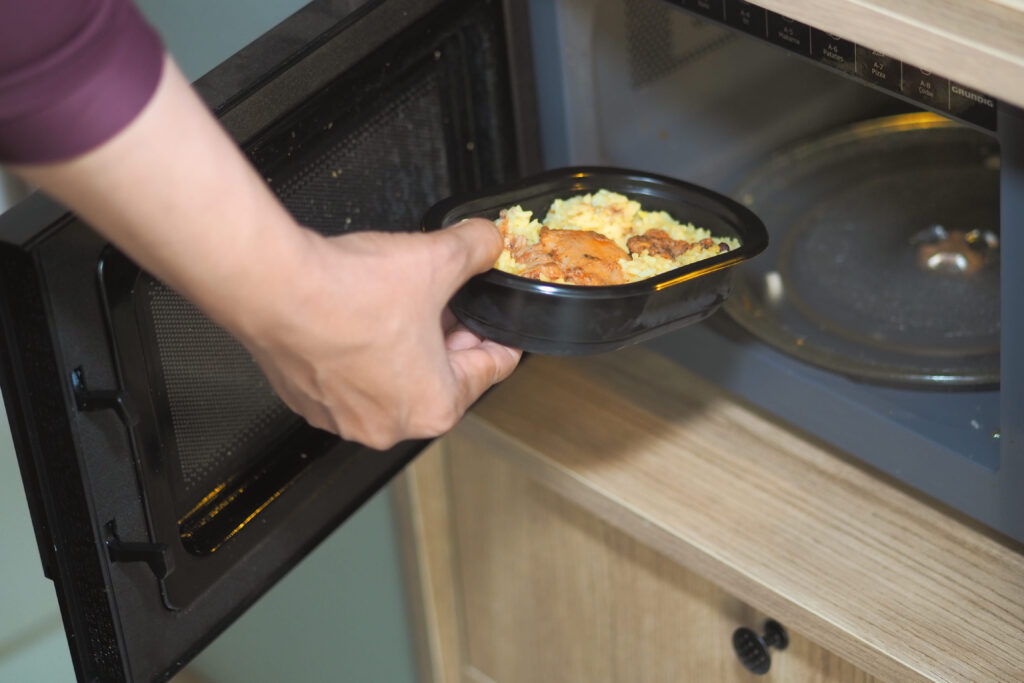
Leftovers can feel safe because the food has already been cooked. That confidence can lead to weak reheating, especially in microwaves that heat unevenly. Cold spots inside meat, casseroles, soups, rice dishes with meat, and frozen prepared meals can remain below safe temperatures even when the outside is steaming.
We should reheat leftovers to 165°F and stir, rotate, or cover microwave foods when needed for even heating. FoodSafety.gov notes that microwaved food should be heated thoroughly to 165°F or above, and the CDC lists 165°F as the safe internal temperature for leftovers and casseroles.