Walking on water sounds like the kind of thing that belongs in myth, legend, or a magician’s final act. Nature, of course, has no patience for our sense of drama. It simply builds creatures with the right weight, the right feet, the right speed, and the right timing, then lets them turn a pond into a runway.
The result is one of the strangest shows in the animal kingdom, where physics becomes performance, and survival looks almost supernatural. Surface tension supports tiny specialists like water striders, while larger animals such as basilisks, geckos, and grebes rely on rapid slaps, clever foot shapes, and body control to stay above the surface.
Water Striders, The Original Water Walkers
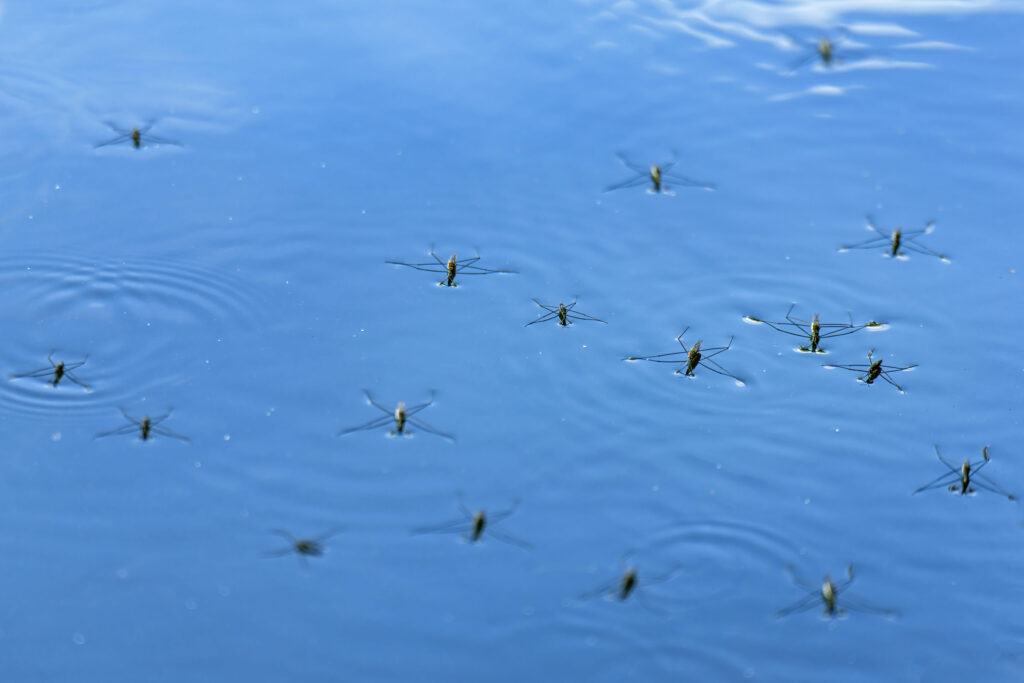
If there is a true master of water walking, it is the water strider. These insects do not cheat, do not splash, and do not brute force their way forward. They simply use the high surface tension of water, along with long hydrophobic legs and fine water-repellent hairs, to distribute their tiny weight so well that the surface holds them up like a stretched skin. Britannica notes that their middle legs drive propulsion, their hind legs steer, and their short front legs grab prey that gets stranded on the surface.
What makes water striders so captivating is how effortless they look. They skim, pivot, and dart with the confidence of a creature that knows the pond belongs to it. There is no hesitation in their movement, only clean control. That elegance comes straight from design, not luck, and it is why they remain the clearest example of an animal that truly walks on water.
Fishing Spiders, The Pond’s Quiet Assassins
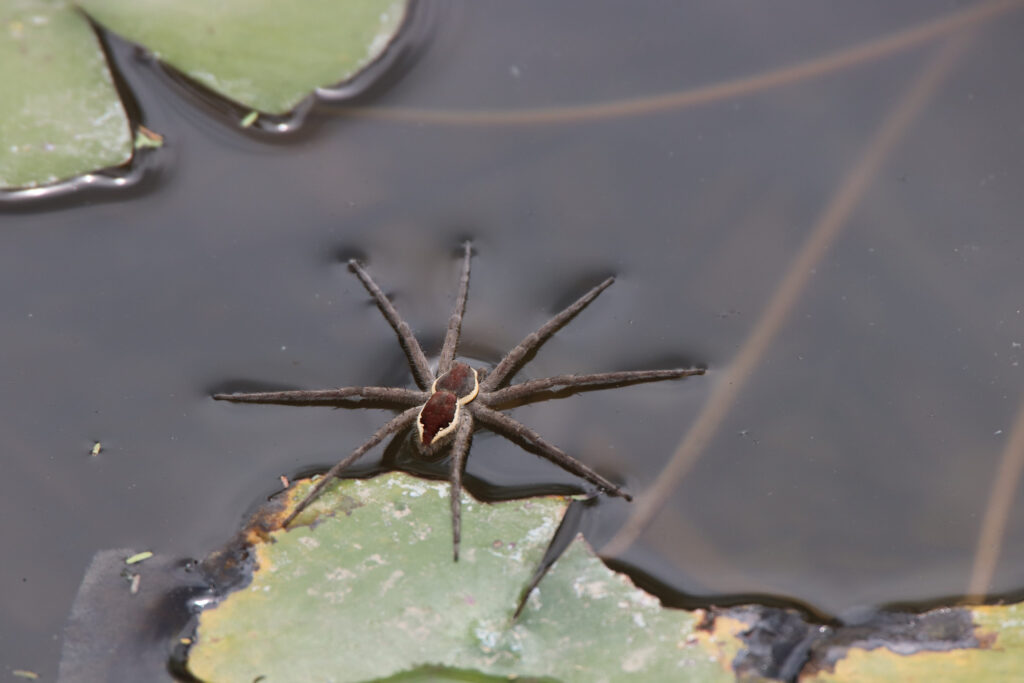
Fishing spiders bring a more unsettling version of the same trick. According to the Smithsonian Environmental Research Center, these spiders can walk on water because their waterproof legs spread their weight across tiny dimples in the surface, letting them skate rather than sink. Some species do far more than glide; they also detect vibrations, ambush prey, and even submerge when needed. A recent Frontiers review describes Dolomedes fishing spiders as famous for walking on water, diving under it, and catching prey that can include small vertebrates.
That combination makes them feel less like ordinary spiders and more like a horror movie creature designed by a physicist. They do not just survive near water; they dominate it. A still pond that looks calm to us can be a full hunting ground to a fishing spider, with every ripple carrying a message. It is hard to watch one move across the surface and not feel that nature gave it a few extra advantages on purpose.
Basilisk Lizards, Nature’s Flashiest Escape Artists
The basilisk lizard is the showboat of this entire category. Britannica and National Geographic both note that basilisks can run across water on their hind legs, a talent that earned them the famous nickname Jesus Christ lizard. Research published in PNAS found that juvenile basilisks generate the forces they need by striking the water, helping keep the body above the surface and upright. Broad fringes on the toes increase the effective surface area during each step, giving the animal a precious fraction of a second before gravity catches up.
The beauty of the basilisk’s trick is that it does not look delicate. A water strider appears light enough to be excused by physics. A basilisk looks like it should sink immediately, and that is exactly why the sight is so dramatic. It sprints with panic, splash, and raw urgency, turning the laws of motion into an escape plan. This is not graceful pond skating; it is survival at full speed.
Geckos, The Surprise Entry No One Saw Coming
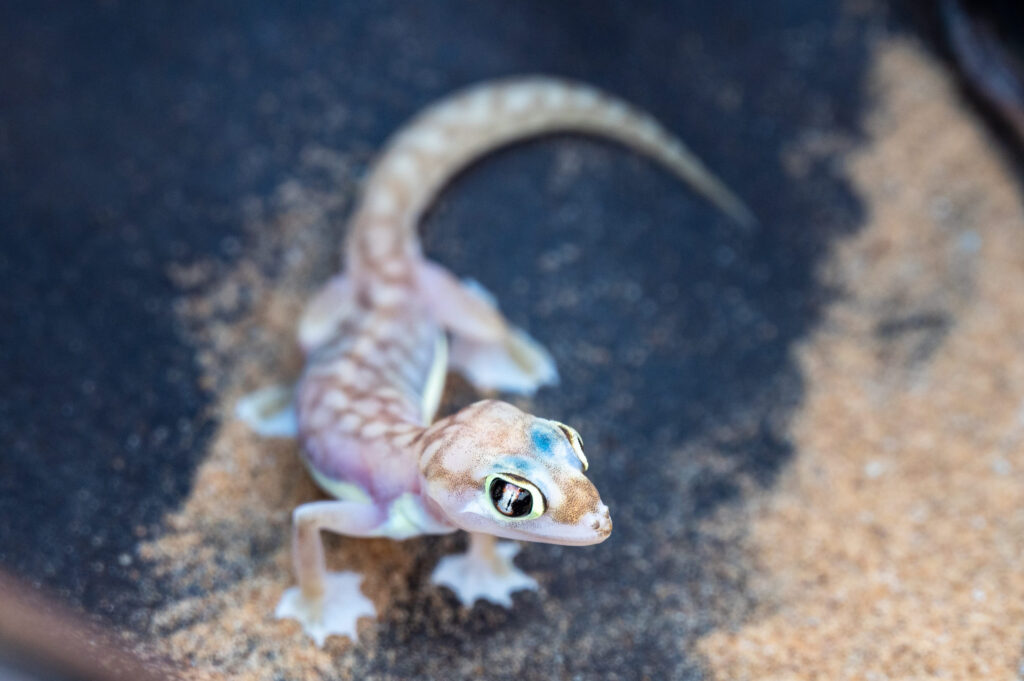
Geckos already had a reputation for impossible movement long before scientists documented them racing across water. In 2018, researchers reported in Current Biology that geckos can move across the water’s surface at speeds close to their land-running pace by combining several strategies, including surface slapping, surface tension, body and tail undulation, and reduced drag from superhydrophobic skin. Oxford and UC Berkeley summaries of the work make the same point clearly: these animals are not relying on one neat trick; they are combining several.
That makes geckos especially impressive because they occupy the awkward middle ground. They are not small enough to live solely on surface tension, and they are not built exactly like basilisks either. So they improvise. They slap, skim, wriggle, and power through the surface in a way that feels almost defiant, as if the animal refuses to admit that water should slow it down. It is messy genius, and it works.
Western Grebes, The Birds That Turn Courtship Into a Miracle
Not every water walker does it to escape danger. Western grebes do it for romance, which somehow makes the whole spectacle even better. During courtship, pairs perform a behavior known as rushing, sprinting across the surface side by side. A study in the Journal of Experimental Biology found that western and Clark’s grebes use exceptionally high stride rates, large feet, fast water impact, and lateral foot retraction to make this possible. Audubon describes western grebes as famously running on water, and the motion looks less like ordinary locomotion than a synchronized eruption.
There is something wonderfully excessive about it. A pond bird could have chosen a modest mating display, a nice call, a subtle nod, a feather ruffle. Instead, the grebe decided that love should involve a shared sprint over open water. The result is one of the most cinematic courtship displays in the wild, a reminder that evolution sometimes rewards a little theatrical flair.
Water Snails, The Oddballs That Do It From Underneath
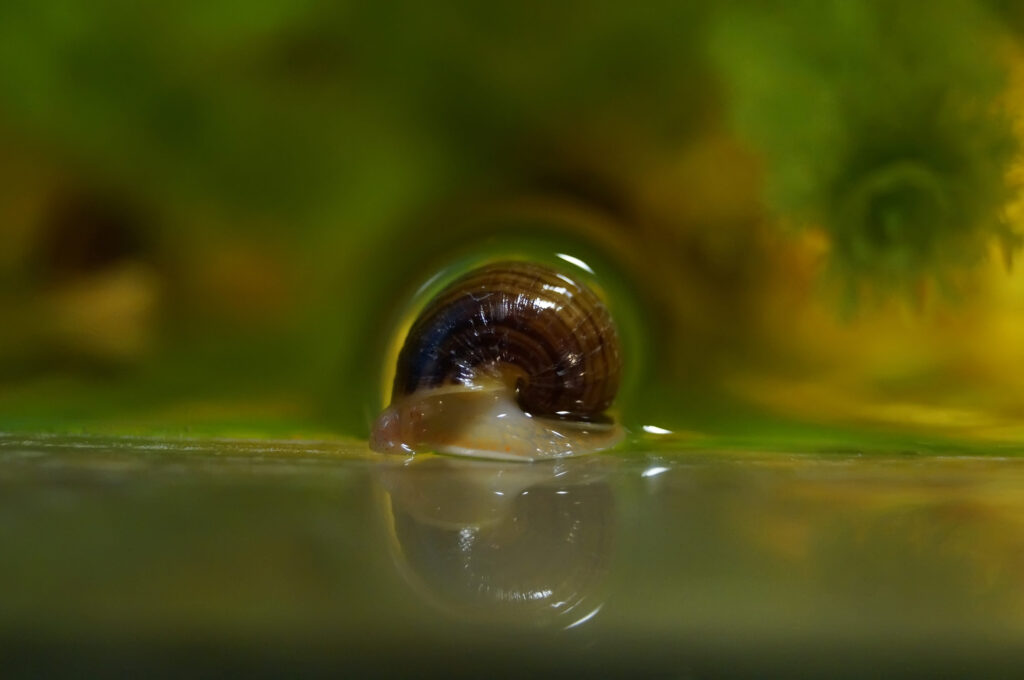
Water snails deserve a place on this list precisely because they break our expectations in a different way. They are not striding on top of the surface like insects or blasting over it like lizards. Instead, some species crawl upside down beneath the water’s surface, using ripples and the mucus water interface to create propulsion. MIT explains that a water snail can, so to speak, walk on water by balancing surface tension and viscous drag, while work reported by Nature and AIP describes snails moving under the surface on ripples of slime.