Useful inventions that went bad usually began with a clean promise. A chemist wanted to grow more food. An engineer wanted safer refrigeration. A weapons designer believed one devastating machine could shorten war by reducing the need for mass armies. The tragedy is that inventions do not stay inside the intention of their inventors once governments, corporations, armies, and markets discover what else they can do.
We should read these stories as warnings about scale, incentives, and weak guardrails. A technology can solve one urgent problem, then create a larger one when it spreads faster than ethics, regulation, or public understanding. These inventions did not simply “go bad” because one person made a mistake. They went bad because human systems found profitable, political, or military uses for tools that were never harmless once deployed on a massive scale.
Freon and CFCs Turned Safer Refrigeration Into Ozone Damage
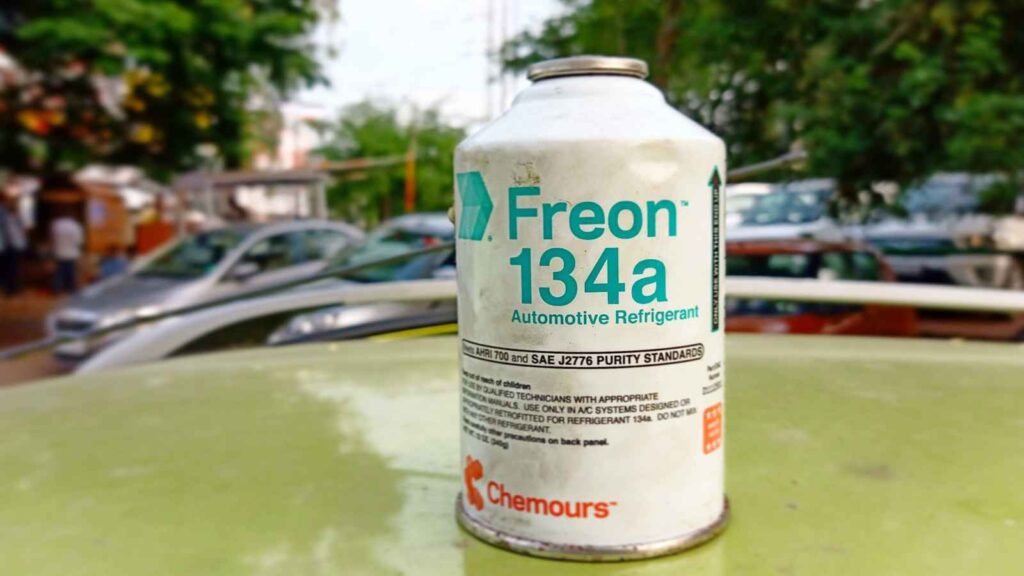
Early refrigeration had a real safety problem. Older systems used dangerous gases such as ammonia, methyl chloride, and sulfur dioxide, and fatal refrigerator leaks in the 1920s prompted companies to seek safer alternatives. NOAA records that CFCs were first synthesized in 1928 by Thomas Midgley Jr. as part of that search. On the surface, it looked like a triumph. Refrigerators could become safer, air conditioning could spread, and aerosol products could use stable propellants.
Then the atmosphere delivered the bill. CFCs helped deplete the ozone layer, which protects life from harmful ultraviolet radiation. The Montreal Protocol became the global response, and UNEP reports that nearly 99 percent of banned ozone-depleting substances have been phased out, putting the ozone layer on a path to recovery. The invention failed because its worst effect was initially invisible. CFCs looked clean at the point of use, yet their true damage happened high above the people who benefited from them.
Nerve Agents Emerged From Insecticide Research

Gerhard Schrader was working on organophosphate insecticides, a field aimed at controlling pests and improving agricultural productivity. The military nightmare began when he discovered tabun, the first nerve agent of military significance, in 1937. A RAND report for the U.S. Department of Defense describes Schrader as a chemist conducting insecticide research when he synthesized the compound now known as tabun, and the researchers themselves experienced symptoms after exposure to a small amount.
The invention went wrong because the same biological pathway that could kill insects could also attack human nervous systems. German authorities recognized the military implications and developed tabun and related nerve agents. This is one of the sharpest warnings in the history of applied chemistry. A compound designed to interfere with pests can become a battlefield terror when its toxicity crosses the species line, and governments classify it as a weapon rather than a warning.
The Haber-Bosch Process Became Fertilizer With a War Shadow
Fritz Haber’s ammonia synthesis helped solve one of agriculture’s hardest problems. Plants need nitrogen, yet atmospheric nitrogen cannot be used by crops unless it is converted into reactive compounds. Haber’s method made ammonia from nitrogen and hydrogen under controlled temperature, pressure, flow, and a catalyst, opening the door to artificial fertilizer on an industrial scale. His 1918 Nobel Prize in Chemistry honored that breakthrough, and the process later became central to modern food production.
The same chemistry also carried a darker load. Ammonia-supported fertilizer, but it also supported munitions, especially when wartime blockades threatened nitrate supplies. Haber then became deeply tied to Germany’s poison gas program in World War I and supervised the first chlorine gas deployment at Ypres in 1915. Today, nitrogen fertilizer remains vital, yet excess nitrogen damages air, water, and soil quality, drives biodiversity loss, and worsens climate change through nitrous oxide emissions.
Agent Orange Turned Plant Science Into Generational Damage

Arthur Galston’s plant research began with growth regulation, not mass environmental destruction. His work on soybeans explored how chemicals could encourage earlier flowering, a potentially useful agricultural goal. At higher concentrations, however, related compounds had defoliating effects. Galston later became one of the scientists who spoke against the military use of Agent Orange, and Yale remembers him as a plant biologist and bioethicist who helped bring attention to the herbicide’s use in Vietnam.
The damage became vast because Agent Orange was not used like a farm chemical applied carefully to a field. U.S. forces sprayed 72 million liters, or 19 million gallons, of defoliants during the Vietnam War, with more than half consisting of Agent Orange. The herbicide was contaminated with dioxin, which has been linked to cancer, birth defects, and lasting environmental damage, and the Associated Press reported in 2025 that millions in Vietnam still live with health issues connected to exposure.
The Gatling Gun Turned Efficiency Into Mechanized Killing
Richard Jordan Gatling patented a hand-driven, multi-barreled gun during the American Civil War. It solved the technical problems of loading, reliability, and sustained bursts of fire, making it a major step toward modern machine gun warfare. Gatling’s idea carried a strange moral logic. He believed a weapon that let fewer soldiers do more battlefield work might reduce the size of armies and, by extension, reduce deaths from combat and disease.
The battlefield learned a different lesson. The Gatling gun helped normalize the idea that one operator could deliver devastating firepower over a distance. It became a preview of the industrial killing systems that later defined modern war. Its most important legacy was not one specific battle, but the shift in imagination it created. Once armies saw that mechanical repetition could replace human muscle, warfare moved closer to the age of machine guns, trenches, colonial suppression, and mass casualty firepower.
Leaded Gasoline Turned Smooth Engines Into a Public Health Disaster
Tetraethyl lead was added to gasoline because engines knocked, and automakers wanted smoother, more powerful performance. EPA’s historical account notes that U.S. industry began extensive use of tetraethyl lead as an anti-knock, octane-boosting gasoline additive in the 1920s. The early technical win was obvious, but the warning signs appeared quickly. Workers producing the additive fell ill and died, and public concern grew around what newspapers called “loony gas.”
The damage spread because lead exhaust did not stay in the engines. It entered the air, soil, homes, and bodies. EPA now states that lead is harmful if inhaled or swallowed, poses serious risks to young children and pregnant women, and lingers in the environment instead of breaking down. UNEP also identifies lead as a cumulative toxicant with no established safe level of exposure. A fuel additive that promised smoother driving became one of the clearest examples of corporate confidence outrunning public health.
TNT Turned a Yellow Chemical Into the Symbol of Explosive Power
Trinitrotoluene, better known as TNT, became famous because it was powerful enough for war yet stable enough for transport and handling. Its usefulness came from a dangerous balance. Britannica notes that TNT melts at 82 degrees Celsius, can be poured into casings, is relatively insensitive to shock, and needs a detonator to explode. Those traits made it attractive for munitions because it could be manufactured, stored, shipped, and packed into shells more safely than more volatile explosives.
That same stability made TNT easier to scale for war. It became a standard reference point for explosive force, serving as chemical shorthand for destruction. Its story shows how “safer handling” can become a double-edged feature. A material that reduces accidental blasts for workers and soldiers can still expand the capacity for planned blasts on battlefields, in cities, along infrastructure, and across landscapes. The invention went badly because practicality made destruction easier to organize.
Zyklon B Turned Pest Control Into Genocide
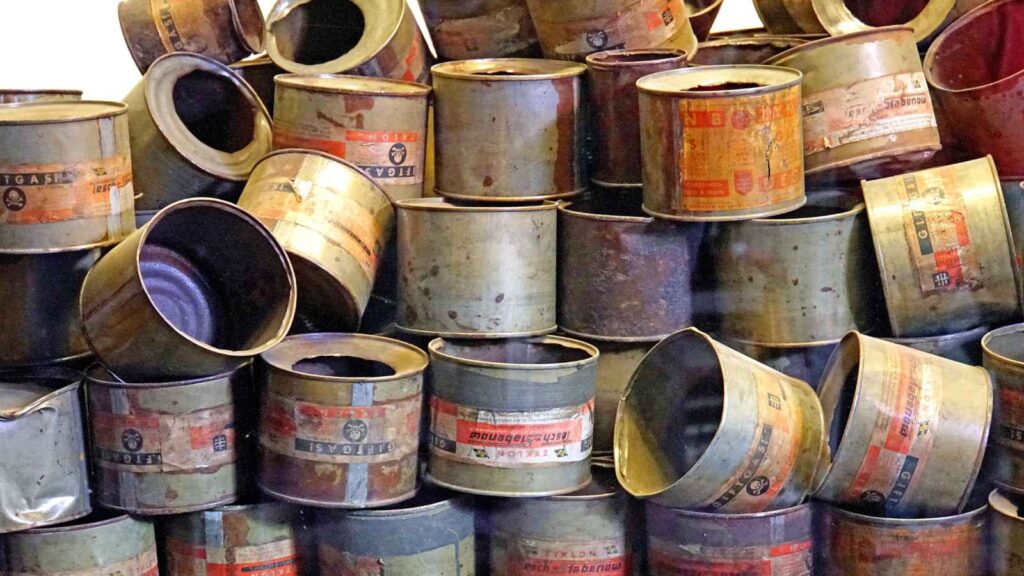
Zyklon B was not created as a murder weapon. It was a pesticide and disinfectant, designed for fumigation and pest control. Its pellets released hydrogen cyanide when exposed to air, making them useful for killing insects and disinfecting spaces. That ordinary industrial purpose makes its later history even more chilling, because the technology did not need to be reinvented to become monstrous. It only needed a regime willing to turn a fumigant against human beings.
Nazi Germany used Zyklon B and other poisonous gases in gas chambers as part of mass murder during the Holocaust. The U.S. Holocaust Memorial Museum records that between 2.3 million and 3 million of the six million Jews murdered in the Holocaust were killed using poisonous gas, with Zyklon B used at Auschwitz Birkenau and other sites. The invention itself began as pest control, but the moral collapse came when bureaucracy, ideology, and industrial supply chains converted it into a tool of extermination.