We are no longer looking at cosmetic procedures as a fringe luxury market. The latest official U.S. data shows a deeply established spending category, with The Aesthetic Society reporting that Americans spent more than $11.8 billion on aesthetic procedures in 2022, up 2% from the prior year, and noting that surgical procedures still generated 70% of revenue even as nonsurgical treatments surged.
By 2024, the American Society of Plastic Surgeons reported nearly 1.6 million cosmetic surgical procedures and more than 28.2 million minimally invasive cosmetic procedures, which makes one thing plain: demand did not disappear; it matured.
That scale matters because money does not flow through a single channel. Americans are spending through repeat injectable appointments, laser-based skin treatments, lip augmentation sessions, and higher-ticket surgeries such as liposuction, breast augmentation, tummy tucks, facelifts, and rhinoplasty.
Public attitudes have shifted along the way, with RealSelf’s national survey finding that nearly 1 in 4 U.S. adults say they have had at least one cosmetic procedure.
Botox and similar neuromodulators
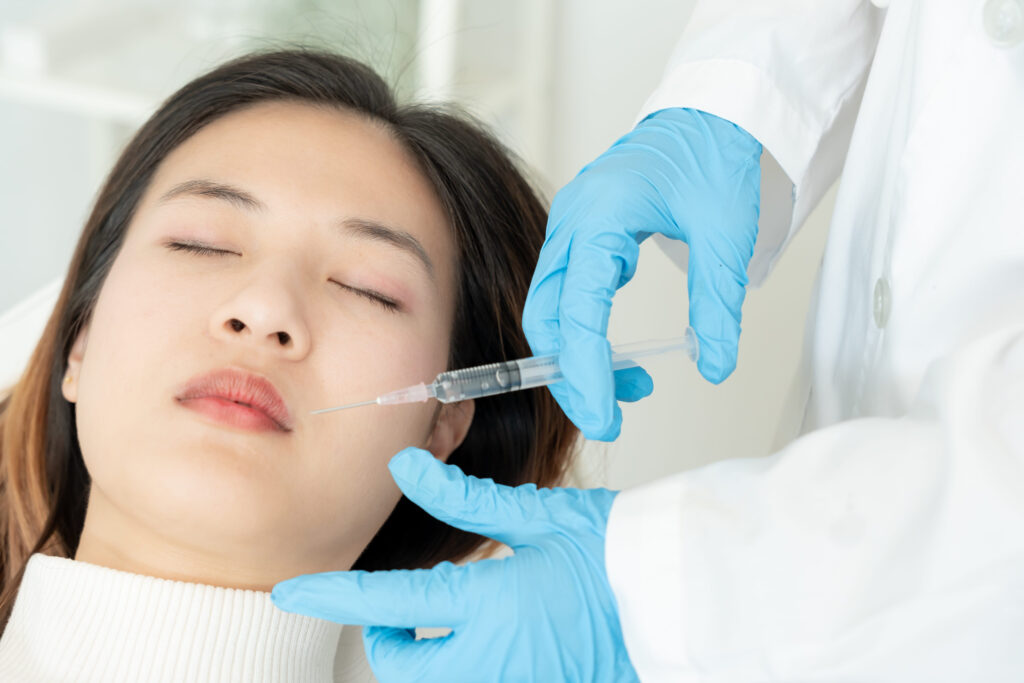
Neuromodulator injections remained the single most common minimally invasive cosmetic procedure in 2024, with 9,883,711 treatments recorded by ASPS.
Using ASPS’s latest published average physician fee of $435 per session for 2023, that works out to an estimated annual spend of about $4.30 billion on this category alone. That estimate is directional rather than absolute, but it captures the real story: lower-cost treatments can still dominate the national beauty economy when people return for maintenance several times a year.
This is exactly why neuromodulators keep outperforming flashier categories. They offer relatively fast treatment, little downtime, and predictable upkeep, so the spending pattern behaves more like a subscription than a one-time splurge. ASPS also reported that neuromodulator injections increased again in 2024, reinforcing the category’s durability.
Fillers
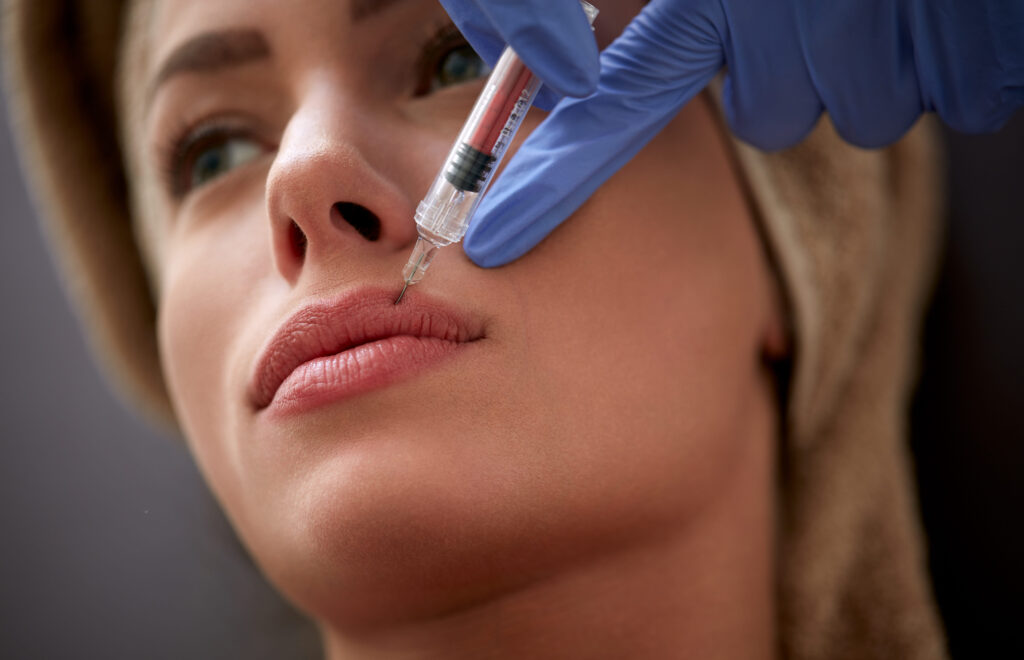
Hyaluronic acid fillers reached 5,331,426 procedures in 2024, according to ASPS. Using the latest ASPS published average fee of $715 for 2023, that points to an estimated $3.81 billion in annual spending for HA fillers alone. Non-HA fillers added another 932,861 procedures; at the 2023 ASPS average of $901, that category points to roughly $840.5 million in additional revenue.
Those totals help explain why fillers keep showing up at the center of cosmetic spending conversations. Even when public chatter turns to “filler fatigue,” the actual procedure volume remains enormous. The appeal is simple: fillers sit in the sweet spot between a cream that promises too little and a surgery that asks too much in price, recovery, and commitment.
Skin resurfacing
One of the most overlooked facts in aesthetic medicine is the amount of money that flows into skin resurfacing. ASPS counted 3,703,305 skin resurfacing procedures in 2024.
Using ASPS’s latest published average fee of $1,829 from 2023, the category lands at an estimated $6.77 billion in annual spending, which makes it one of the most financially significant buckets in the entire market.
That huge total makes sense once we remember that “skin resurfacing” is not one treatment. It includes chemical peels, dermabrasion, ablative and non-ablative lasers, and microdermabrasion.
In other words, it is a broad revenue lane, not a narrow fad. Americans are not only buying wrinkle reduction. They are buying texture correction, pigment improvement, acne-scar softening, and a more polished overall look.
Laser-based skin treatments and lip augmentation
ASPS reported 3,112,056 skin treatment procedures in 2024, including services such as laser hair removal, IPL treatment, laser tattoo removal, and leg vein treatment.
Using the latest published ASPS average of $697 from 2023, that suggests another $2.17 billion in annual spending. Lip augmentation reached 1,449,565 procedures in 2024, and at the ASPS 2023 average of $698 per treatment, that implies roughly $1.01 billion in additional revenue.
This is where the market becomes especially revealing. A single lip treatment does not look like a giant line item next to a tummy tuck or facelift. But when a treatment is socially normalized, widely marketed, repeated, and accessible at a lower entry price, it can quietly generate national spending on a scale that rivals that of major surgical categories.
Liposuction
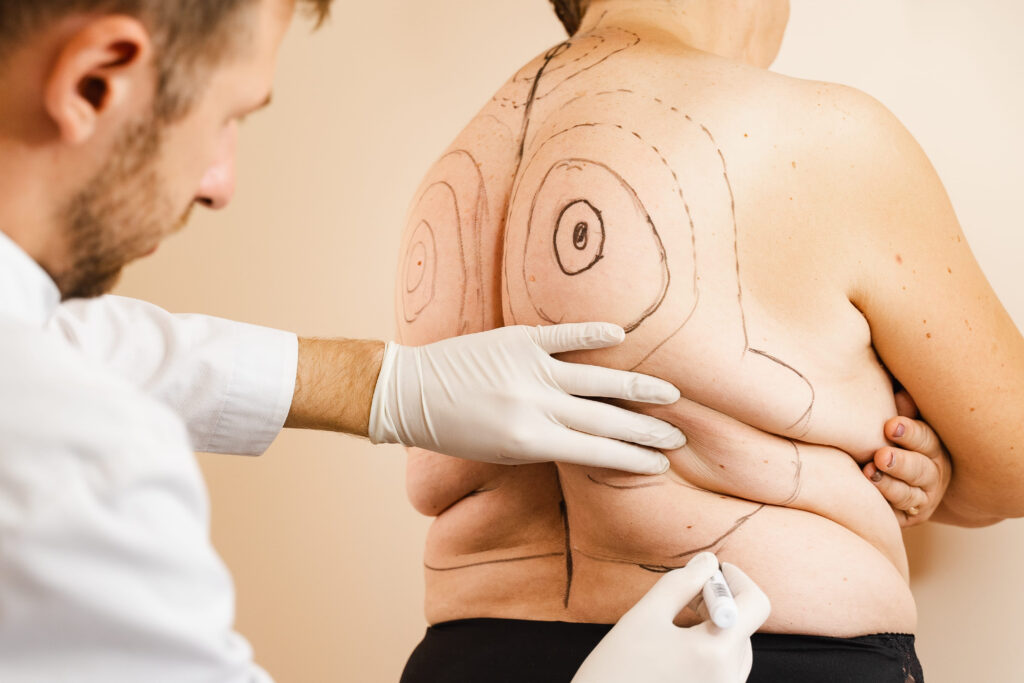
On the surgical side, liposuction remained the most common cosmetic surgery in 2024 with 349,728 procedures. ASPS lists the 2024 physician fee range at $4,300 to $7,500. Using the midpoint of that published range for estimation, liposuction alone represents roughly $2.06 billion in annual physician-fee spending.
That estimate likely understates the patient’s total out-of-pocket cost, because ASPS notes that published fee figures reflect surgeon or physician fees and may exclude other charges associated with surgery, such as facility expenses and additional medical costs. So when we talk about liposuction as a multibillion-dollar category, we are already being conservative.
Breast augmentation, tummy tucks, and breast lifts
Breast augmentation remained a top-tier surgical category in 2024 with 306,196 procedures. Using the ASPS 2024 published fee range of $4,575 to $8,000, the midpoint estimate comes to about $1.93 billion in physician-fee spending.
Tummy tucks reached 171,064 procedures, and the published fee range of $8,000 to $13,500 translates to an estimated $1.84 billion at the midpoint. Breast lifts totaled 153,616 procedures, and the $6,500 to $11,000 fee range implies a total of roughly $1.34 billion.
These numbers show why surgery still commands such a large share of revenue even when minimally invasive procedures dominate raw volume. A patient may buy Botox several times a year, but one tummy tuck or breast augmentation instantly moves into a completely different spending bracket. This is the heart of the U.S. cosmetic market: repeat small-ticket maintenance on one side, life-changing big-ticket surgery on the other.
Facelifts and eyelid surgery
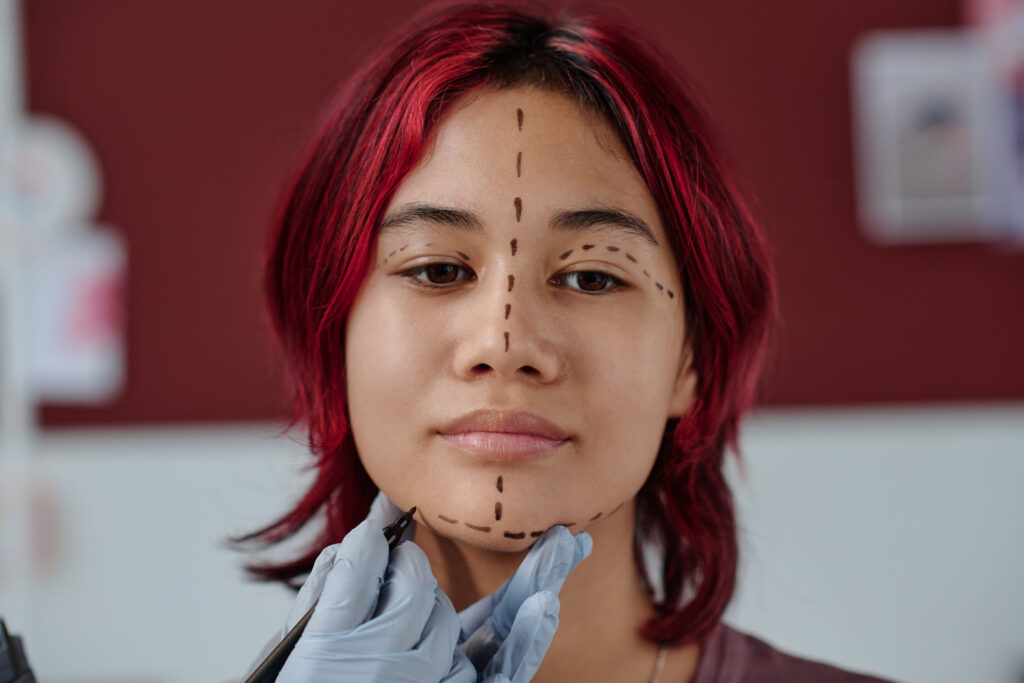
Facelifts totaled 79,058 procedures in 2024, and ASPS lists the 2024 fee range at $12,000 to $19,000. Using the midpoint of that range, facelifts come out to an estimated $1.23 billion in physician-fee spending.
Eyelid surgery reached 120,755 procedures in 2024; using the 2024 upper and lower blepharoplasty fee ranges as a broad guide, even conservative assumptions put the category in the many hundreds of millions of dollars annually.
That matters because facial surgery tends to sit at the intersection of vanity, visibility, and aging anxiety. Unlike a body procedure that can stay private, the face is always in public. The data suggests Americans continue to pay accordingly, especially for procedures that promise a fresher look without radically changing identity.