The brain, often regarded as the crown jewel of animal physiology, is typically viewed as the essential organ for survival. It powers everything from our thoughts and memories to our ability to move, sense, and respond to the environment. But what if you didn’t need a brain at all to survive and thrive?
Surprisingly, many animals manage to do just that, living complex lives with no central brain. Their solutions to survival may not involve a traditional neural network but instead rely on fascinating alternative systems like nerve nets, diffuse nervous systems, or even simple cellular communication.
These animals might lack the biological “hardware” we associate with intelligence, yet their remarkable abilities prove that evolution doesn’t always follow the same path.
Let’s dive into the fascinating world of brainless animals, showcasing the brilliant ways in which they’ve adapted to life without a centralized brain.
Sea Sponges

At first glance, sea sponges might appear to be nothing more than colorful, stationary organisms stuck to the ocean floor. But beneath their simple exterior, sponges are highly specialized creatures that perform crucial ecological functions, such as filtering water and regulating carbon and nitrogen levels. They do all of this without a nervous system, let alone a brain.
Sea sponges rely on the collaboration of specialized cells that work together in an intricate dance to maintain their survival. Despite their lack of neurons, recent studies suggest that sponges possess the genetic components of synapses, the junctions through which neurons communicate.
This discovery places them as a key piece in understanding the evolutionary origins of more complex nervous systems, providing a fascinating glimpse into the distant past of animal life.
Placozoans
Placozoans, one of the simplest known animals, are remarkable for their total lack of nervous tissue. These microscopic, flat, and translucent organisms can move across surfaces by using cilia, hair-like structures that help them glide. Despite their simplicity, they can exhibit coordinated behavior, turning and changing direction in response to environmental cues.
Placozoans lack neurons and muscles, yet their ability to respond to stimuli through a chemical signaling system has led scientists to question how behavior can emerge without a traditional brain.
This ability to adapt without a nervous system highlights how evolution can find different solutions to life’s challenges, including survival and movement.
Jellyfish
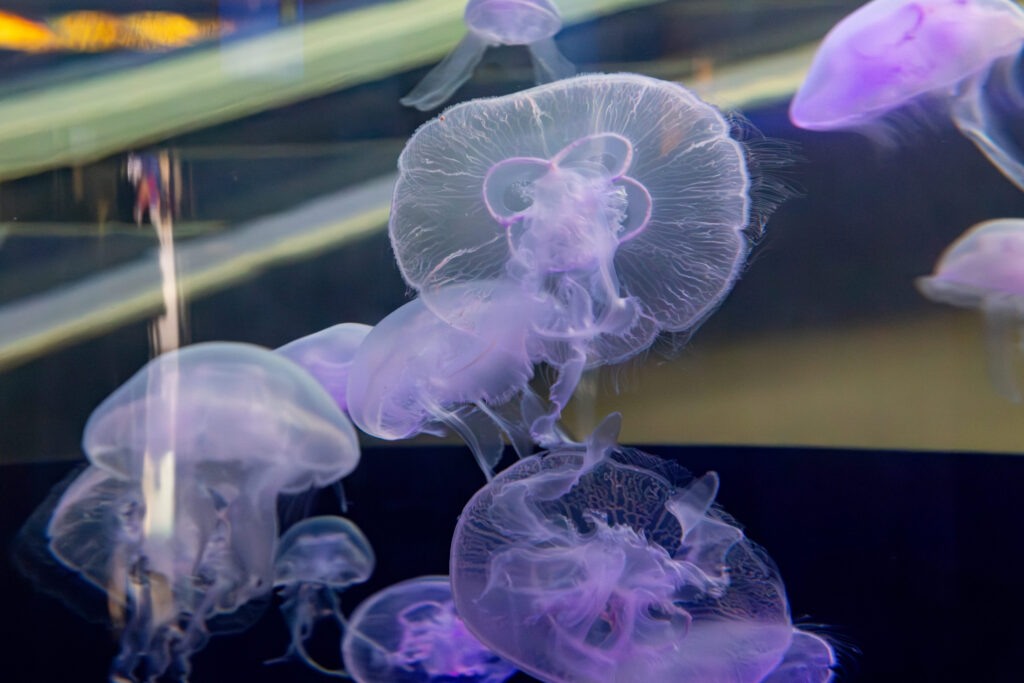
Jellyfish, often seen drifting aimlessly through the ocean, are an excellent example of brainless brilliance. These ancient creatures have no centralized brain; instead, they rely on a diffuse nerve net that allows them to sense their environment and perform basic motor functions.
Yet, researchers have discovered that jellyfish, particularly the Caribbean box jellyfish, can learn from experience, a skill once thought to be solely the domain of animals with complex brains.
In fact, these jellyfish can associate stimuli with outcomes and modify their behavior accordingly, demonstrating that even brainless organisms can learn through nerve cell interactions. This has far-reaching implications for our understanding of how intelligence can evolve in radically different ways from the human brain.
Hydra
Hydra, a small, freshwater organism, might seem like an unlikely candidate for studying sleep and learning, especially since it lacks a central nervous system.
However, recent studies have shown that Hydra exhibits sleep-like behavior, including altered brain activity when deprived of rest. This behavior has led scientists to explore how sleep may have evolved long before complex brains developed.
Hydra’s nerve net, a simple arrangement of nerve cells spread throughout its body, allows it to coordinate basic movements and reactions. Despite its minimal structure, Hydra’s ability to perform tasks like learning and resting shows that the fundamental processes of life can emerge from even the most basic neural frameworks.
Sea Anemones
Sea anemones are beautiful, colorful creatures that are often associated with symbiotic relationships with clownfish, thanks to the popular film Finding Nemo.
What’s often overlooked is their remarkable predatory ability, despite lacking a brain. Instead of a brain, sea anemones rely on a nerve net to control their movements and respond to stimuli, including the sting of their tentacles.
Their ability to paralyze and capture prey with precision and skill is extraordinary for an organism without a central nervous system. These predatory creatures also exhibit social behavior, forming symbiotic relationships with algae and fish, further illustrating the adaptive strategies of animals without brains.
Corals
Corals are another type of invertebrate that thrives without a central brain. Rather than acting as individual animals, corals are colonial organisms composed of many genetically identical polyps working together.
Despite lacking a nervous system, coral colonies exhibit complex behaviors, including synchronized spawning triggered by environmental cues such as the lunar cycle.
Corals rely on chemical and mechanical signaling between polyps to coordinate activities across the colony, demonstrating that even without a central brain, complex, coordinated actions can still occur. This kind of decentralized communication ensures that coral reefs thrive and survive in the challenging underwater world.
Comb Jellies
Comb jellies are fascinating creatures with no brain, relying instead on a nerve net to manage their movements. What makes them even more intriguing is their ability to merge their nervous systems with other comb jellies, creating a temporary fusion of body parts,digestive systems, and even shared nervous control.
This ability to merge and synchronize body functions suggests that these animals can solve complex survival challenges by sharing resources. Their brainless behavior serves as a fascinating example of how evolution has crafted solutions for collective intelligence and resource management without requiring a brain.
Sea Stars
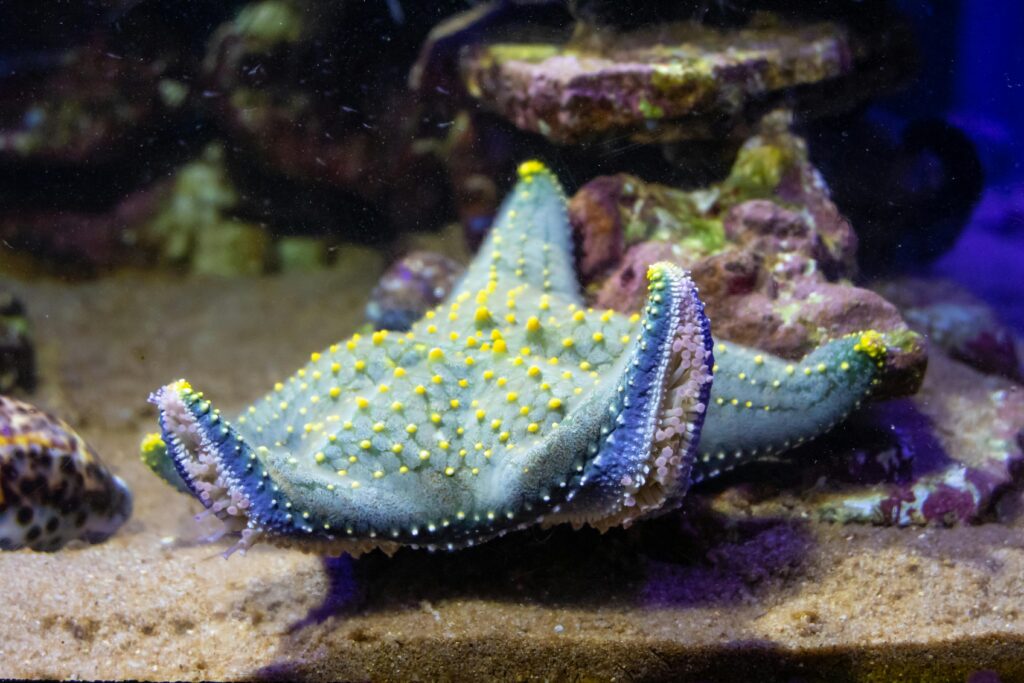
The sea star(or starfish) is another well-known brainless wonder. Although they lack a brain, sea stars exhibit remarkable coordination, using their tube feet and unique body systems to move, hunt, and regenerate lost limbs.
Recent studies show that starfish may not only lack a brain, but their bodies are so distributed that it has been considered an evolving “head” that controls much of their behavior.
This research has led scientists to reconsider how decentralized organisms can achieve remarkable precision and survival through biological systems that don’t require a brain. The starfish demonstrates that intelligence and coordination don’t always need to be housed in one centralized organ.
The Portuguese Man o’ War
The Portuguese man o’ war, often mistaken for a jellyfish, is actually a siphonophore, a colony of specialized cells working together as one. This creature operates without a brain, relying instead on its colony’s coordinated systems to move, sting, and capture prey. With its venomous tentacles, it can paralyze fish, plankton, and other small creatures, despite not having a central nervous system.
Its survival strategy, reliant on environmental factors like wind and ocean currents, reflects a brainless approach to life. The Portuguese man o’ war showcases that, in nature, being brainless doesn’t preclude being highly effective.
Sea Urchins
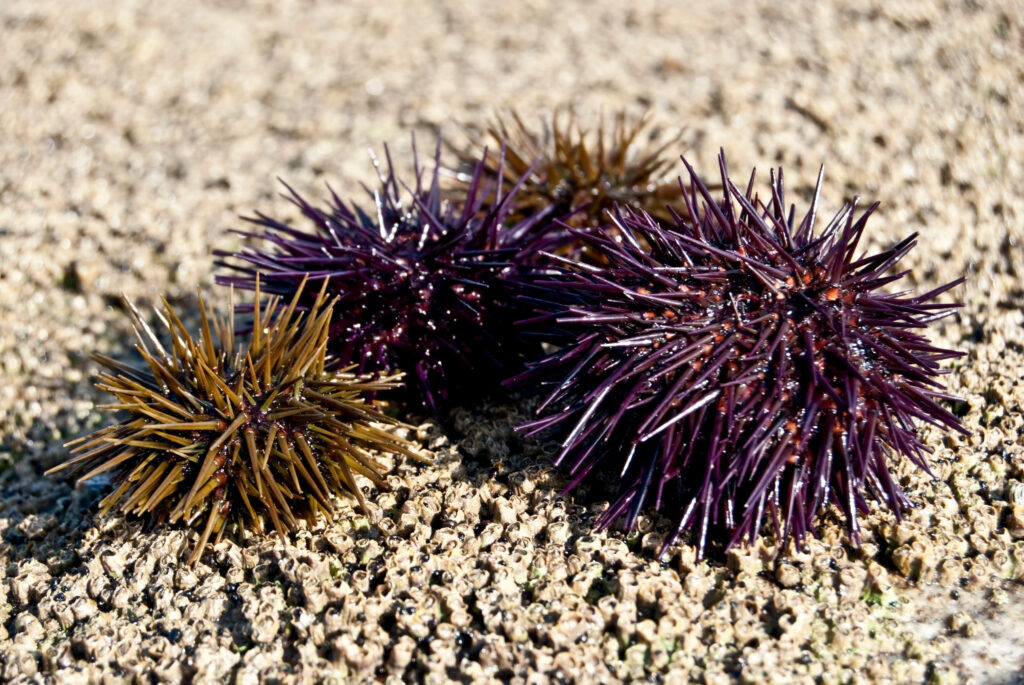
Sea urchins are another marine species that can sense light and move toward or away from it, despite having no brain. Their ability to process visual stimuli relies on photoreceptor cells located along their tube feet, demonstrating that vision can be decentralized across the body without a centralized brain.
This adaptation allows sea urchins to navigate their environment and respond to light-based cues with impressive accuracy. It is yet another example of how life can evolve to meet complex challenges without a brain.