Speed gets most of the attention in the animal kingdom. We celebrate cheetahs, peregrine falcons, sailfish, and other creatures built like living arrows. Yet some of the most fascinating animals on Earth survive by doing the opposite. They move slowly, conserve energy, hide in plain sight, grow protective armor, drift with currents, or stay rooted in one place for life.
The slowest animals in the world are not failures of evolution. They are proof that nature rewards efficiency just as much as speed. A three-toed sloth can turn slowness into camouflage, a Galápagos tortoise can stretch life across more than a century, and coral can build entire reef cities without walking a single step. These animals remind us that survival is not always a race. Sometimes, it is a patient art.
Three-Toed Sloth
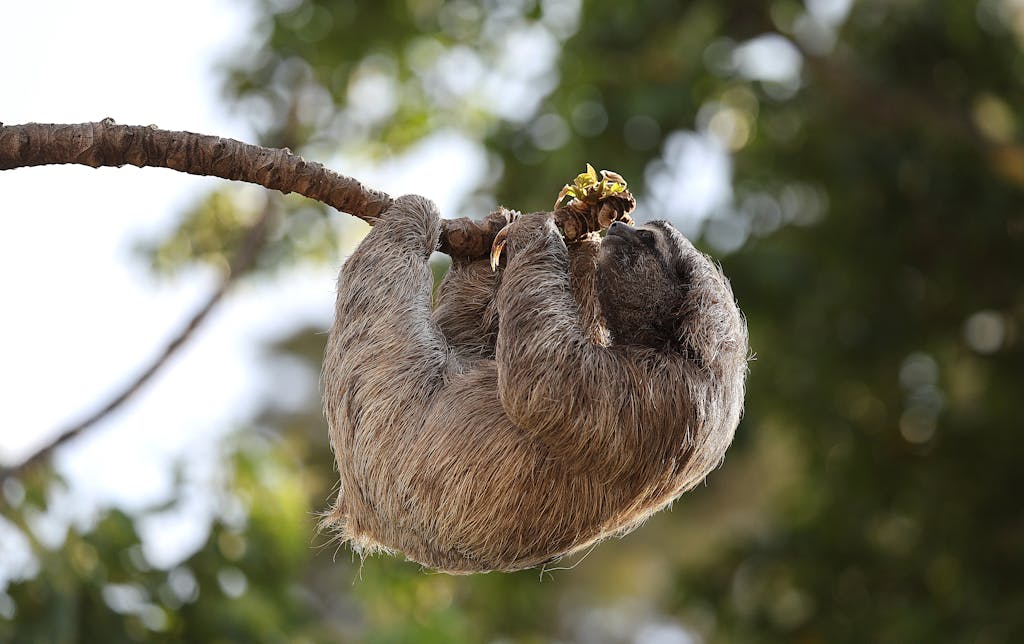
The three-toed sloth is the animal most people imagine first when they think of the slowest animals in the world. It lives in the forests of Central and South America, where speed matters far less than blending into the green ceiling of the canopy. Its long limbs, curved claws, and slow-motion climbing style allow it to hang, feed, rest, and move with very little wasted energy. On the ground, where sloths are clumsy and vulnerable, they become painfully slow, which is why they spend most of their lives in trees.
This slow lifestyle is tied to diet. Sloths eat leaves that are tough, fibrous, and low in energy, so their bodies cannot afford constant fast movement. Their slowness also helps them avoid notice because predators often detect prey through sudden motion. Instead of running, the sloth survives by becoming part of the tree itself, with a rough coat that can support algae and help it blend into humid forest surroundings. Guinness World Records identifies the three-toed sloth as the slowest mammal, with an average ground speed of just 1.8 to 2.4 meters per minute.
Galápagos Giant Tortoise
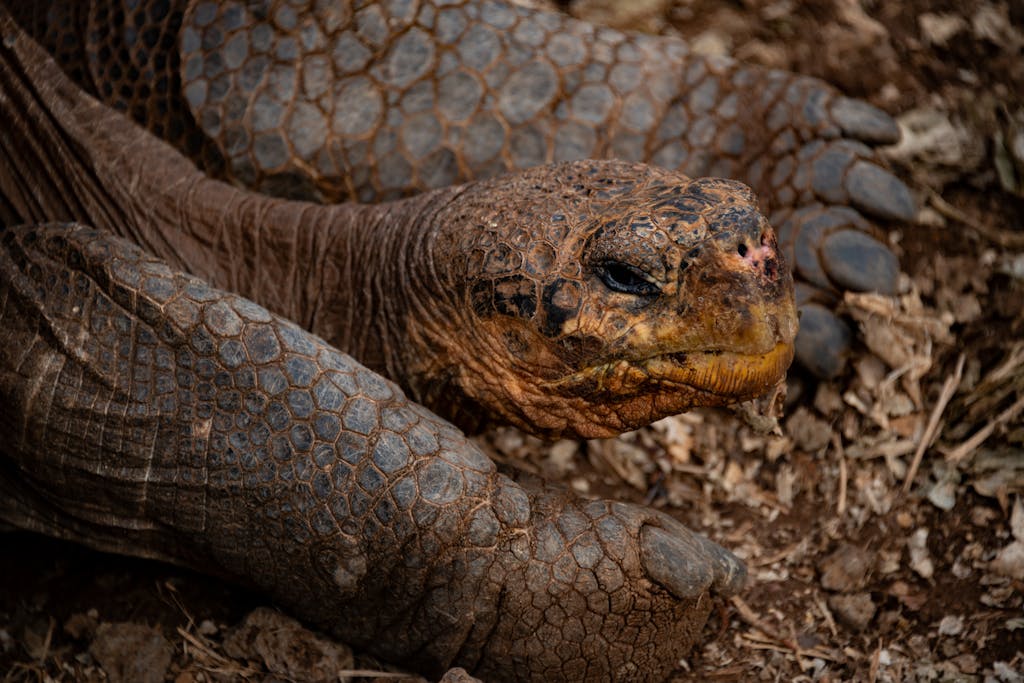
The Galápagos giant tortoise is slow in the grandest possible way. It carries a heavy shell, walks with deliberate steps, and lives on islands where patience has always been part of survival. This reptile does not need the nervous speed of a small prey animal because its shell is a powerful defense system. Its movement is steady, grounded, and almost ancient, as though every step belongs to a longer calendar than ours.
San Diego Zoo notes that Galápagos tortoises move at about 0.16 miles per hour, which makes them dramatically slower than an average walking human. Their slow pace fits their biology. They are herbivores, they spend long periods resting, and their large bodies are built for endurance rather than quick escape. Their fame as slow animals also comes from their long lives, since some giant tortoises can survive for well over a century under the right conditions. In their world, survival is not about sprinting away from danger. It is about lasting longer than almost everything around them.
Garden Snail
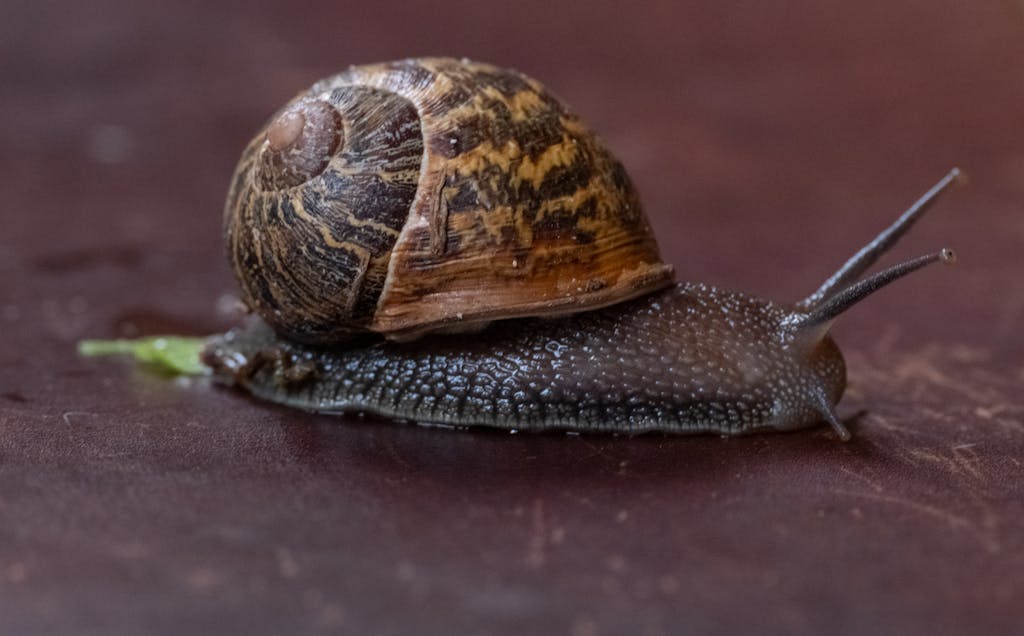
The garden snail turns slowness into a full-body performance. It does not walk, run, or hop. Instead, it glides by contracting a muscular foot over a layer of mucus, leaving behind the familiar silver trail that gardeners often spot on leaves, walls, and damp soil. This movement may look simple, but it allows the snail to cross rough surfaces, climb vertical structures, and even move upside down.
Garden snails are often listed among the slowest land animals, with Live Science reporting a common garden snail speed of about 0.03 miles per hour. That slow pace is not a weakness when paired with a shell, moisture-seeking behavior, and the ability to hide in small spaces. A snail’s shell helps protect it from drying out and from some predators, while its mucus helps reduce friction as it crawls. The result is an animal that moves at a pace almost designed to test human patience, yet it remains one of the most successful small creatures in gardens and wild habitats.
Dwarf Seahorse
The dwarf seahorse is one of the slowest fish ever recorded, and its body explains why. Unlike streamlined fish that slice through water, the dwarf seahorse swims upright with a tiny dorsal fin doing most of the work. It is not built for chasing prey or crossing oceans. It is built for holding on, hiding in seagrass, and waiting for tiny food to drift within reach.
Guinness World Records lists the dwarf seahorse as the slowest fish, noting that smaller seahorses such as Hippocampus zosterae probably do not exceed 0.016 km per hour, or roughly 0.001 mph. This slow speed makes sense because seahorses often use their prehensile tails to anchor themselves to seagrass, coral, or marine plants. Their armor-like bony plates offer protection, and their patient feeding style allows them to ambush tiny crustaceans without racing after them. In the ocean, the dwarf seahorse proves that drifting, gripping, and waiting can be just as effective as swimming fast.
Sea Star
The sea star, often called a starfish, is not a fish at all. It is a marine invertebrate that moves using hundreds or even thousands of tube feet on the underside of its body. These tiny tube feet help it crawl, grip surfaces, pry open prey, and move across the seafloor with a strange, coordinated patience. Its speed depends heavily on the species, habitat, and situation.
NOAA explains that sea stars use tube feet for movement, and adult sunflower sea stars can move as fast as one meter per minute using around 15,000 tube feet. Many other sea stars move far more slowly, especially when feeding, resting, or clinging to rocks. Their slowness is part of their hunting method. A sea star does not need to chase prey like a shark. It can creep toward clams, mussels, and other slow or fixed animals, then use strength, patience, and an unusual feeding system to overwhelm them.
Koala
Koalas look sleepy because their lifestyle demands it. These Australian marsupials feed mainly on eucalyptus leaves, which are fibrous, difficult to digest, and relatively low in usable energy. That diet shapes almost everything about them. A koala spends much of its time resting in trees, moving only when needed to feed, change branches, or respond to threats.
This slow rhythm is not laziness. It is energy management. Koalas have specialized digestive systems that help them process eucalyptus, yet the diet still does not support a highly active lifestyle. Their strong limbs and curved claws make them excellent climbers, but once they settle into a tree fork, they may remain still for long periods. Their quiet, slow-moving nature helps them conserve the limited energy they gain from leaves and reduces unnecessary exposure to danger on the ground.
Manatee
The manatee is slow in a peaceful, floating way. Often called a sea cow, it spends much of its life grazing on aquatic plants in warm, shallow waters. Its large, rounded body, paddle-like flippers, and broad tail are built for gentle cruising rather than sharp turns or high-speed pursuit. A manatee usually appears to drift through the water like a living shadow.
Manatees generally swim at about 3 to 5 miles per hour, though they can move faster in short bursts when necessary. Their slow pace reflects their herbivorous diet and relatively calm lifestyle. They do not hunt fast prey, and their daily routine centers on feeding, resting, surfacing for air, and moving between warm-water areas. Their biggest modern dangers are not natural predators but human-related threats such as boat strikes and habitat pressure. The manatee shows that a slow animal can be powerful, graceful, and deeply vulnerable at the same time.
Slow Loris
The slow loris moves with careful, deliberate control. This nocturnal primate lives in parts of Southeast Asia, where it climbs through trees at night using a strong grip and quiet movements. It does not leap wildly from branch to branch like many other primates. Instead, it reaches, grips, tests, and advances with the caution of an animal that depends on stealth.
Its slow movement helps it avoid detection, but the slow loris has another unusual defense. It is widely recognized as a venomous primate, producing a toxin-related secretion that can become dangerous when mixed with saliva. That means it does not rely only on speed to survive. Its large eyes help it navigate at night, its strong hands help it hold branches firmly, and its slow pace helps it stay hidden from predators and prey alike. Among slow animals, the slow loris is one of the clearest examples of quiet movement as a survival skill.
American Woodcock
The American woodcock is a surprising member of any slowest animals list because birds are usually associated with speed, flight, and quick escape. This plump woodland bird lives in eastern North America and is famous for its long bill, which it uses to probe soil for earthworms. On the ground, it often blends into leaf litter, relying on camouflage more than dramatic movement.
Its claim to slowness comes from flight behavior, especially the male’s courtship display. During breeding season, the male rises into the air and performs a spiraling display flight with distinctive sounds. This flight is slow compared with a normal bird’s flight, and it allows the bird to advertise itself during mating. The American woodcock proves that slow movement is not limited to crawling animals. Sometimes, even flight can become slow when the goal is display rather than escape.
Coral
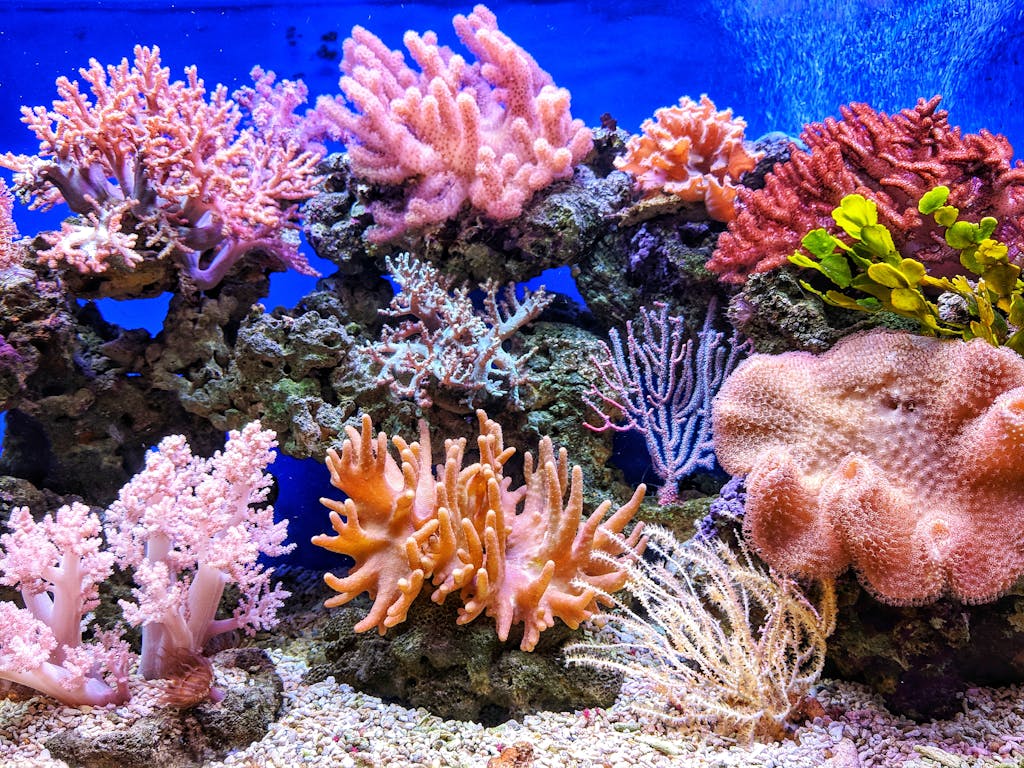
Coral may be the slowest animal on this list because most adult coral polyps stay fixed in place. Many people mistake coral for rock or plant life, but coral is animal life arranged in colonies. Each tiny polyp has a simple body, tentacles, and the ability to capture small food particles. Over time, many stony corals produce hard calcium carbonate skeletons that help build reefs.
NOAA explains that coral structures are made of many tiny polyps, and stony corals create calcium carbonate skeletons that form reef foundations over time. This kind of slowness is almost beyond ordinary movement. Coral does not run from predators, migrate across landscapes, or chase food through the water. Yet coral reefs support extraordinary biodiversity, creating habitat for fish, crustaceans, mollusks, and countless marine organisms. Coral turns stillness into architecture.
Conclusion
The slowest animals in the world challenge the idea that speed is the highest form of strength. A sloth survives by conserving energy and hiding in the canopy. A tortoise survives with armor and endurance. A snail survives with mucus, moisture, and a shell. A seahorse survives by anchoring itself in seagrass. Coral survives by building colonies that can shape entire underwater ecosystems.
These animals are slow because their worlds reward different skills. Some need patience. Some need protection. Some need camouflage. Some need to spend as little energy as possible. Their lives prove that nature does not crown only the fastest creatures. It also rewards the quiet, the careful, the armored, the hidden, and the still.