A high-end restaurant is not just a place to eat. It is a carefully timed performance built around reservations, pacing, service, conversation, dress, wine, table settings, and quiet social signals. That is why small mistakes can feel louder in an elegant dining room than they would at a casual neighborhood spot.
The most common fine dining mistakes are rarely dramatic. We usually lose the room through little things: arriving late, ignoring the staff, dressing without checking the setting, fumbling with wine service, leaving the phone on the table, or treating the tip like an afterthought. Etiquette expert Elaine Swann identified several of these mistakes in a Business Insider guide, including disregarding waitstaff, showing up late, dressing inappropriately, and failing to tip properly.
High-End Restaurant Etiquette Starts Before We Arrive
Fine dining etiquette begins before we walk through the door. A reservation at a high-end restaurant is not a casual suggestion; it is part of the restaurant’s service rhythm. Kitchens prepare courses in sequence, servers manage multiple tables by timing, and hosts often plan seating based on party size, special requests, and dining duration.
That makes lateness one of the easiest ways to damage the evening before the first glass of water arrives. Toast’s restaurant trends report found that seated reservations rose 8% year over year in Q3 2025, cancellations rose 7%, and about 2% of booked reservations were no-shows. Those numbers show why restaurants now care deeply about reservation behavior, because every empty or delayed table affects labor, prep, and pacing.
We should confirm the date, time, party size, dress code, parking options, cancellation policy, and special requests before leaving home. If we are running late, we call immediately instead of hoping the restaurant will simply absorb the delay. A five-minute delay can be manageable, but a 25-minute delay can shift the entire meal into a rushed, awkward, or shortened experience.
Arriving Late Makes the Whole Table Look Disorganized
Being fashionably late may work in some social settings, but it rarely works in fine dining. High-end restaurants often design service around seatings, tasting menus, wine pairings, kitchen fire times, and coordinated course delivery. When one guest arrives late, everyone else has to decide whether to wait with empty menus or order without the missing person.
Swann’s advice is direct: high-end restaurant service works best when everyone arrives at the same time and on time. Her point matters because fine dining is less spontaneous than casual dining. The staff is not simply waiting to take an order; they are managing a sequence.
We should aim to arrive early enough to check coats, use the restroom, settle in, and greet the table without breathless apologies. If the reservation is for 7 p.m., arriving at 7 p.m. already leaves very little room for friction. The better habit is to treat the reservation as the moment we should be seated, not the moment we should start searching for the entrance.
Ignoring the Waitstaff Is a Serious Fine Dining Mistake
Some diners mistake formality for distance. They assume the polished thing to do is barely speak to the server, nod silently, and act as though the staff is part of the furniture. That approach reads cold, not classy.
In a high-end restaurant, the server is part of the experience. They know the menu, timing, ingredients, wine pairings, kitchen limitations, allergens, and service flow. Swann specifically pushes back against the idea that guests should avoid interacting with waitstaff, calling respectful communication important in upscale dining.
We do not need to become overly familiar or be overly friendly. We simply need to be clear, warm, and respectful. Learning a server’s name, saying thank you, making requests politely, and asking informed questions all improve the evening. The tone should be gracious, never bossy, rushed, or dismissive.
Dressing Without Checking the Restaurant’s Standard Can Backfire
A beautiful restaurant does not always require a tuxedo or evening gown, but it almost always expects intention. The safest move is to check the website, reservation confirmation, social media photos, and guest images before choosing an outfit. Escoffier’s fine dining guide notes that dress codes are common, and it recommends checking the restaurant’s website, guest photos, reviews, or calling directly for clarity.
The mistake is not dressing simply. The mistake is dressing without context. A clean, dark shirt, a structured jacket, polished shoes, or an elegant dress can work in many places, but beachwear, gym shoes, loud casual slogans, and wrinkled clothing can look careless in a room built around presentation.
We should match the occasion without turning dinner into a costume party. Understated polish almost always beats noisy luxury. A refined outfit tells the staff and other guests that we understand the room.
Leaving the Phone on the Table Sends the Wrong Signal
A phone on the table may look harmless, but it changes the energy of the meal. It tells companions that our attention is available for interruption at any moment. It also creates clutter in a space where the table has been carefully arranged for plates, glassware, utensils, and service.
Bon Appétit’s 2025 restaurant etiquette piece makes the same point clearly: devices generally belong out of sight during a meal with company, with limited exceptions for solo dining, business needs, or urgent caregiving situations. The article also notes that etiquette is about making others feel valued and comfortable in our presence.
We should silence the phone, place it in a bag or pocket, and mention any urgent situation before the meal begins. If we are waiting for a call from a babysitter, doctor, or family member, we can say so briefly, then keep the device discreet. Constant glancing, scrolling, photographing every course, or answering messages during conversation makes the room feel less elegant.
Misreading the Table Setting Creates Avoidable Awkwardness
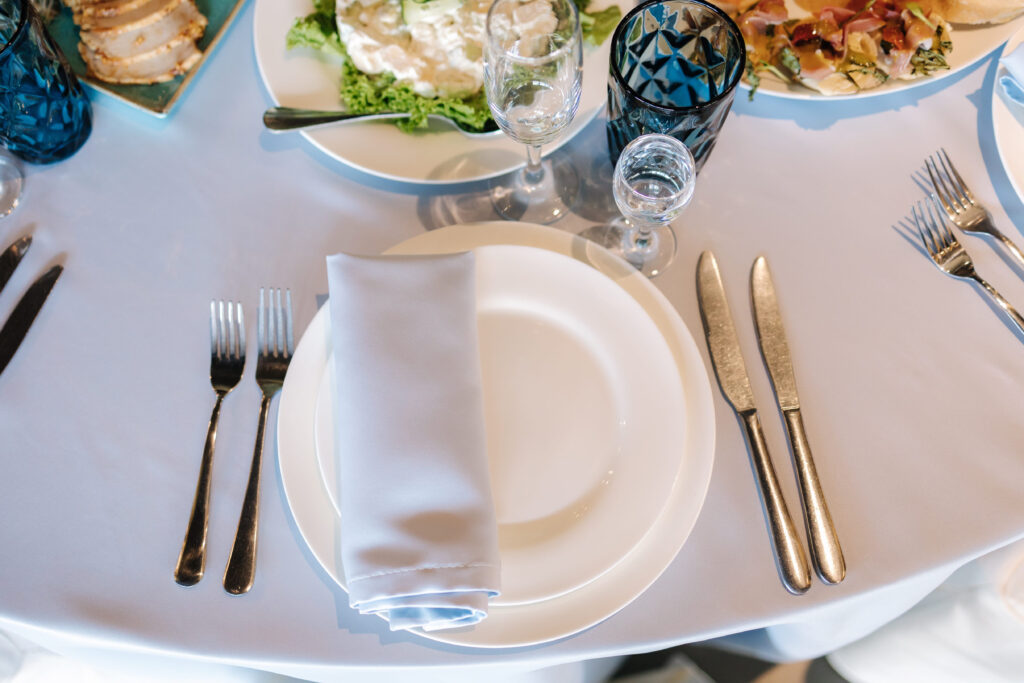
Fine dining table settings can look intimidating, but they follow a simple logic. We work from the outside in with cutlery, use glasses from the correct side, and keep items where the server placed them. Escoffier explains that cutlery is often arranged by course, with the outermost utensils used first, and he also notes that multiple glasses should be left in place until the server removes any unnecessary items.
The bread plate is usually on the left, and drinks are usually on the right. LeTourneau University’s professional dining etiquette guide uses the “BMW” memory cue: bread, meal, water. That means bread sits to the left, the meal sits in the center, and water sits to the right.
We should avoid rearranging the table, stacking unused glassware, flipping glasses upside down, or moving utensils because we feel unsure of ourselves. If we are confused, we quietly observe the host, follow the course sequence, or ask the server. Confidence in fine dining often looks like calmness, not perfection.
Mishandling the Napkin Looks More Obvious Than We Think
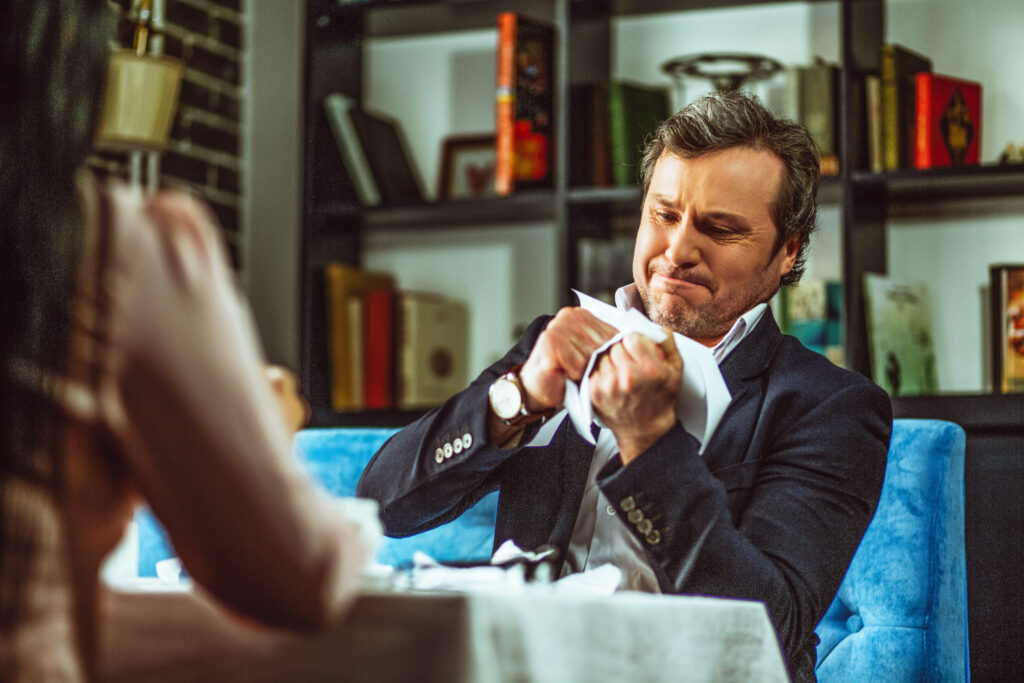
The napkin is one of the first silent signals at the table. In fine dining, it belongs on the lap, not tucked into the collar, spread across the chest, tossed onto the table, or used like a towel. Escoffier recommends folding the napkin in half across the lap and placing it on the chair if we step away from the table for a moment.
LeTourneau’s professional dining etiquette guide also advises placing the napkin on the lap after seating, putting it on the chair during a brief departure, and loosely placing it on the table at the end of the meal.
Use the napkin lightly to dab, not scrub. At the end of the meal, it should not be placed on the plate. That small detail matters because servers clear plates smoothly, and a napkin covered in sauce or food scraps creates an unnecessary mess.
Ordering Without Respecting the Pace of the Table Feels Clumsy
Fine dining works best when the table moves together. If one person orders three courses and another orders only a salad, the meal can become uneven. Someone waits, someone eats alone, and the server has to manage awkward gaps.
Escoffier recommends that everyone in the party order the same number of courses when possible, because it helps the staff time the meal and keeps the table experience balanced.
We should talk briefly at the table before ordering. Are we doing appetizers? Are we choosing the tasting menu? Is anyone skipping dessert? Do we want wine pairings? These small conversations prevent one guest from accidentally disrupting everyone else’s meal rhythm.
Treating the Wine List Like a Test Is a Mistake
A high-end wine list can feel intimidating, especially when the bottle prices climb fast. The worst response is pretending to know everything, ordering blindly, or making loud jokes about the cheapest bottle on the list. The better response is to ask for guidance with confidence.
Escoffier advises diners to ask the server or sommelier for wine recommendations and suggests discreetly pointing to a bottle in the preferred price range instead of announcing a budget awkwardly. It also clarifies that the small taste offered during wine service is meant to check whether the wine has spoiled, not to decide whether we enjoy the style.
We can say, “We are having the lamb and the fish, and we would like something in this range.” That gives the sommelier everything they need: food direction, budget signal, and preferences. The goal is not to impress the table with wine vocabulary. The goal is to help the meal taste better.
Sending Food or Drinks Back for the Wrong Reason Looks Careless
There are valid reasons to return something. The dish may be cold, undercooked in a way that raises concern, not what was ordered, or unsafe due to an allergy. The problem comes when diners send something back simply because they ordered poorly or ignored the server’s explanation.
Fine dining menus often use precise techniques, seasonal ingredients, unfamiliar textures, and chef-driven combinations. If we dislike an ingredient that was clearly listed, that is usually our mistake. If a cocktail is correctly made but not our personal favorite, that is not a preparation error.
Escoffier makes a similar distinction between wine and cocktails, noting that a bottle should be rejected only after tasting if something is truly wrong with it, and that drinks should not be sent back merely because they are not a personal favorite.
We should ask questions before ordering, especially about spice, sweetness, doneness, texture, and portion size. A polite question before the order is far smoother than a complaint after the plate lands.
Snapping, Waving, or Raising a Voice Breaks the Mood
Fine dining rooms rely on quiet attention. Servers are trained to scan tables,read body language, and approach at natural pauses. Snapping fingers, waving across the room, calling loudly, or touching a staff member immediately punctures the atmosphere.
Escoffier advises making eye contact or raising a hand slightly if we need attention, while avoiding snapping, shouting, or exaggerated gestures.
The best signal is subtle. Close the menu when ready to order. Place utensils properly when finished. Make brief eye contact when needing help. Say thank you when the service arrives. These gestures tell the staff what we need without turning the table into a stage.
Talking Too Loudly Can Make the Table Feel Out of Place
A high-end restaurant may be lively, but it is rarely the place for shouting across the table. Loud stories, speakerphone calls, noisy laughter that dominates nearby tables, and arguments about the bill can turn a refined meal into a public spectacle.
We should keep the conversation warm, but controlled. Sensitive topics can still come up among close friends, but the dining room is not the best place for heated debates, graphic stories, or personal conflicts. A good rule is simple: if the next table can follow every word, the volume is too high.
This matters even more during business meals, dates, celebrations, and family occasions. The purpose of fine dining is not stiff silence. It is shared enjoyment without involving other guests in our conversation.
Ordering the Most Expensive Item as a Guest Can Look Tactless
If someone else is hosting, we should order accordingly. Choosing the most expensive entrée, premium caviar supplement, highest priced cocktail, or rare bottle without guidance can make the host uncomfortable. LeTourneau’s professional dining etiquette guide advises guests to follow the host’s lead and avoid ordering the most expensive item on the menu.
The cleanest approach is to ask, “What are you thinking of having?” or let the host order first. If the host encourages the table to enjoy freely, that gives more room. If the host orders modestly, we should stay in a similar range.
This does not mean we must choose the cheapest dish. It means we should read the invitation. Good etiquette protects the host from embarrassment as much as it protects the guest from seeming greedy.
Fighting Over the Check Makes the Ending Awkward
The end of a fine dining meal should feel smooth, not chaotic. Arguing over the bill, grabbing the check, announcing who earns more, or splitting the total with tense arithmetic can sour an otherwise beautiful evening.
If we invite the group, we should be prepared to pay. Escoffier notes that whoever organized the meal should generally pay, and hosts can avoid awkwardness by arranging payment with the server or maître d’ before the meal ends.
For business meals, this matters even more. LeTourneau’s etiquette guide also frames the inviter as the host who should pay, regardless of gender.
If the plan is to split, we should agree early. If one person is paying, the guest should thank them sincerely instead of prolonging a public struggle over the check. A graceful ending is part of the meal.
Tipping Poorly Damages the Final Impression
At a high-end restaurant, the tip reflects the level of service, coordination, and care that went into the meal. Swann recommends at least 20% at high-end restaurants, treating that as a minimum rather than a luxury.
Recent tipping data shows why this topic remains sensitive. Toast reported that the average full-service restaurant tip was 19.2% in Q3 2025, slightly above the seven-year low of 19.1% from the previous quarter.
We should check whether a service charge or automatic gratuity has already been added. If it has, we can decide whether to add more based on the policy and service. If it has not, a thoughtful tip closes the experience properly, especially when the staff handled timing, allergies, wine, table maintenance, coat check, and special requests well.
Lingering Too Long After the Meal Can Hurt the Next Seating
Fine dining encourages lingering more than fast casual dining, but there is still a limit. If the dining room is busy, the restaurant may need the table for another reservation. Escoffier advises guests to enjoy the meal without feeling rushed, but also to read the room if the table is needed later.
We should notice the signals. Has dessert been cleared? Has coffee been finished? Has the check been settled? Are guests waiting near the host stand? Has the server politely checked in more than once? Those cues usually mean the evening is complete.
A graceful exit protects the relationship with the restaurant. It also keeps the night feeling polished. The last impression should be appreciation, not a table that had to be gently pushed out.