The medieval period is often clouded by misconceptions, with popular depictions of the era presenting it as a time of filth, brutality, and ignorance.
From the grimy streets to the supposedly ignorant peasants, the Middle Ages have been painted in the broadest strokes. But what if much of what we think we know about medieval life is wrong?
Let’s take a deep dive into some of the most common myths and separate fact from fiction.
Medieval People Only Drank Alcohol

One of the most enduring myths about medieval life is that people drank only beer and ale because water was supposedly unsafe.
While it’s true that drinking water wasn’t always as clean as it is today, it’s a far cry from the belief that water was universally avoided.
Evidence shows that wells, fountains, and aqueducts were widely used, even in major cities like London, where people had access to running water as early as the 13th century.
In fact, many religious orders preferred water for its simplicity, and some considered it more “holy” than alcohol.
While beer and ale were indeed consumed in large quantities, especially by the laboring classes, this was because they provided nourishment and calories to maintain energy levels, not because they were a replacement for water.
Medieval People Were Always Dirty and Never Bathed
Another pervasive myth is that medieval people were filthy and never bathed. It’s often suggested that people only bathed once or twice a year, a shocking notion for anyone living in today’s world of daily showers.
In truth, hygiene was an important part of medieval life, though practices varied by social class and geography. Many medieval towns had public bathhouses, and even rural homes often had basins for daily washing.
While it’s true that private baths were rare in most households, cleanliness was far more common than we think.
For the wealthy, bathing was a luxury often conducted in designated bathhouses, and both the rich and the poor practiced basic hygiene, such as washing their hands and faces in the morning.
Waste Was Commonly Thrown into the Streets
You may have seen depictions of medieval towns where residents throw waste out their windows into the streets below. While it’s true that sanitation was a challenge, especially in crowded urban centers, the image of people casually tossing their waste into the streets is more fiction than fact.
In rural areas, waste was typically disposed of in private outhouses or used as fertilizer. Even in cities, regulations were in place to manage waste disposal. For example, in London, laws prohibited dumping waste into the streets, and strict penalties were enforced for those caught breaking the rules.
Public toilets, cesspits, and waste collectors, known as gong farmers, helped keep urban areas cleaner than is commonly assumed.
Everyone Wore Dull, Brown Clothing

When we think of medieval clothing, the first images that come to mind are often drab, brown garments worn by peasants. This image couldn’t be further from the truth.
While it’s true that dyeing clothing was expensive, medieval people did not wear only brown or beige. In fact, clothing was often brightly colored, with blue, red, and green being common hues.
The rich wore clothes dyed with expensive dyes, sometimes restricted by law, such as purple, reserved for royalty. Though the lower classes wore simpler clothing, it was not dull or uniform.
Many dyed their wool garments using plant-based dyes, which faded over time but could be quite vivid when new.
Medieval People Had No Table Manners
There’s a widespread belief that medieval people had no concept of dining etiquette, with meals being a free-for-all where everyone ate with their hands. In reality, table manners were important, particularly among the nobility.
Medieval dining etiquette was highly structured, especially in the homes of the wealthy. Guests were expected to wash their hands before meals, and there were strict rules about behavior at the table.
Talking with your mouth full, picking your teeth, and slurping your food were considered uncouth. In fact, many of the dining rules we follow today, like saying grace before meals, originated in the Middle Ages.
People Never Left Their Villages
While it’s true that medieval life was more restricted than modern life, it’s a myth to assume that most people never left their villages. Trade, travel, and pilgrimages were common in the medieval period.
Markets, fairs, and festivals brought people from surrounding areas together, and long-distance trade connected villages to the wider world.
Pilgrimages to religious sites were widespread, and many medieval people traveled to holy locations for spiritual reasons.
The idea that everyone stayed confined to their immediate surroundings is an oversimplification of a much more dynamic world.
They Slept as We Do

Today, most of us sleep through the night without interruption, following a fairly regular sleep cycle. But medieval people often practiced something known as “segmented sleep.”
This meant they would sleep for a few hours, wake up for an hour or so, and then go back to sleep for a second stretch. This waking period, often referred to as the “watch” or “wake,” was spent reflecting, reading, praying, or even engaging in sexual activity.
This practice was so common that it persisted until the 17th century. People didn’t view sleep the same way we do today, and breaking up the night’s rest was completely normal.
They Only Had Primitive Weapons and Tools
The medieval period is often imagined as one of primitive tools and rudimentary weaponry. While it’s true that weapons were often made from basic materials, medieval people were incredibly resourceful and skilled at creating effective tools and weapons.
Blacksmiths and artisans of the time were highly skilled, creating weapons such as swords, crossbows, and axes with surprising precision.
Even everyday tools, such as plows and hammers, were designed with functionality in mind, and many of these designs were improved over centuries to make tasks easier and more efficient.
Medieval Life Was Unchanging
It’s easy to assume that life in the medieval period was static, with little technological or cultural evolution. However, the medieval period was marked by significant developments, including the invention of the printing press, the rise of universities, and advancements in architecture.
The medieval people were constantly innovating, whether in agriculture, military technology, or urban planning. Far from being a time of stagnation, the Middle Ages were a dynamic period that laid the foundation for much of modern society.
Medieval People Were Ignorant
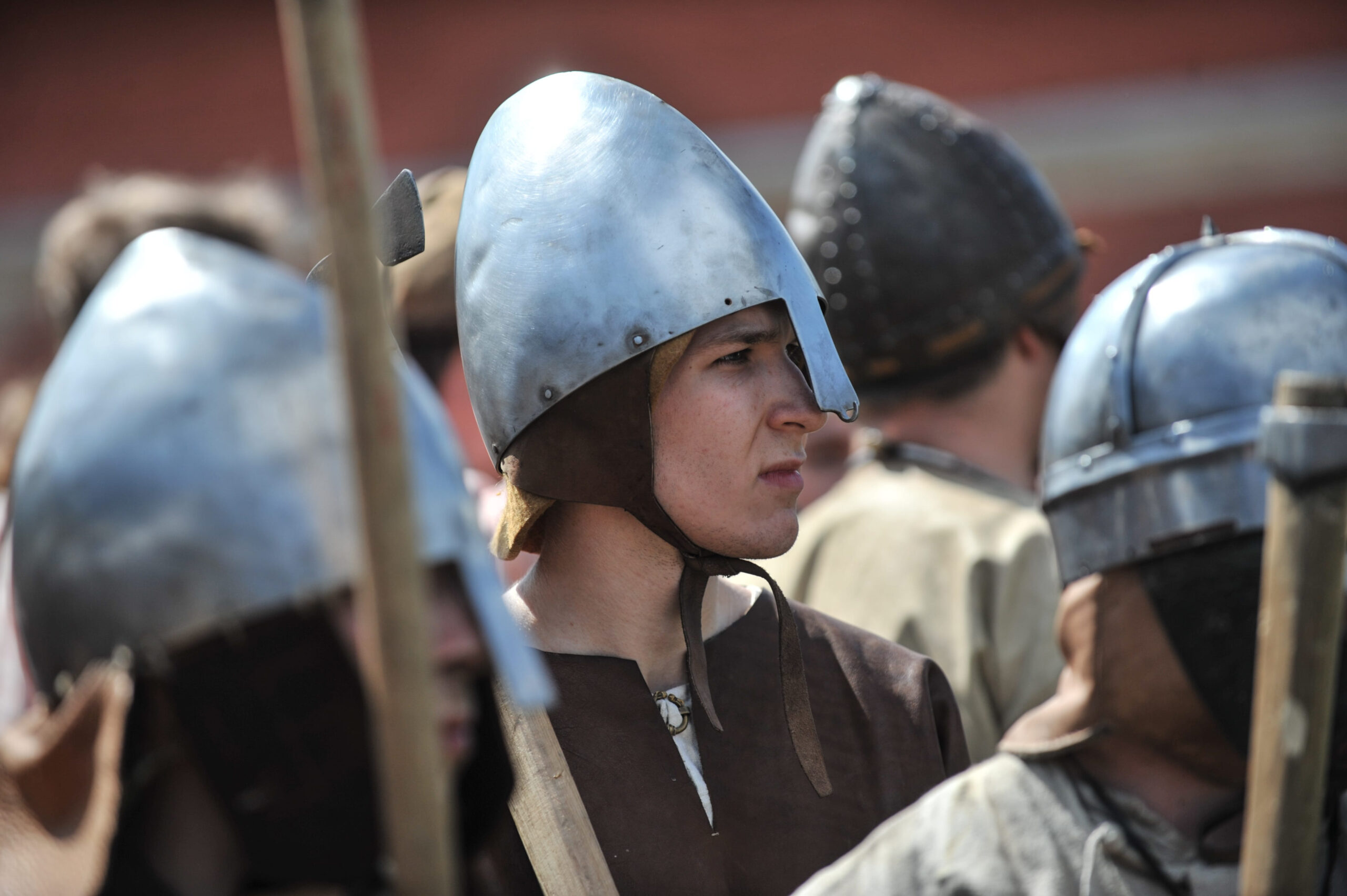
Perhaps one of the most damaging misconceptions is that medieval people were ignorant or lacked knowledge. In reality, medieval scholars were highly educated, and many advancements were made in the fields of science, medicine, and philosophy.
Monasteries were centers of learning, and scholars translated and preserved many ancient texts. The concept of “medieval ignorance” overlooks the fact that many medieval people were deeply knowledgeable, particularly in subjects such as astronomy, mathematics, and theology.
Conclusion
The medieval period, often romanticized or vilified in popular media, is a fascinating chapter of history. By dispelling these common misconceptions, we can better understand the complexities and advancements of the time.
Medieval people were not the dirty, ignorant peasants often portrayed in movies and books. Instead, they were individuals who contributed to the development of modern society, and their lives were far more nuanced than the myths that have come to define them.