Early arthritis signs can begin quietly with joint stiffness, swelling, warmth, reduced movement, fatigue, and recurring pain. This detailed guide explains the symptoms that deserve attention, how different arthritis types may feel, and when joint pain should be checked.
Morning Joint Stiffness That Lasts Longer Than Usual

Morning stiffness is one of the most important early signs that you may be developing arthritis, because it tells us how a joint behaves after rest. A healthy joint may feel slightly tight after sleep, but it usually loosens quickly once we start moving. Arthritis stiffness can feel different: the joint may feel locked, heavy, swollen, or resistant, as though the body needs extra time to “warm up” before normal movement returns. This sign matters most when it keeps happening, affects the same joints, or lasts long enough to change the morning routine.
The timing of stiffness can help separate different arthritis patterns. Osteoarthritis often causes stiffness in the morning or after sitting, but this stiffness usually lasts less than 30 minutes and may be accompanied by pain during joint use. Rheumatoid arthritis, by contrast, commonly causes stiffness lasting longer than 30 minutes after waking or after resting, often with tenderness, warmth, swelling, and pain at rest or during movement. When we notice stiffness that lingers, spreads, or returns after inactivity, it becomes more than a normal “slept wrong” complaint.
Joint Pain That Keeps Coming Back
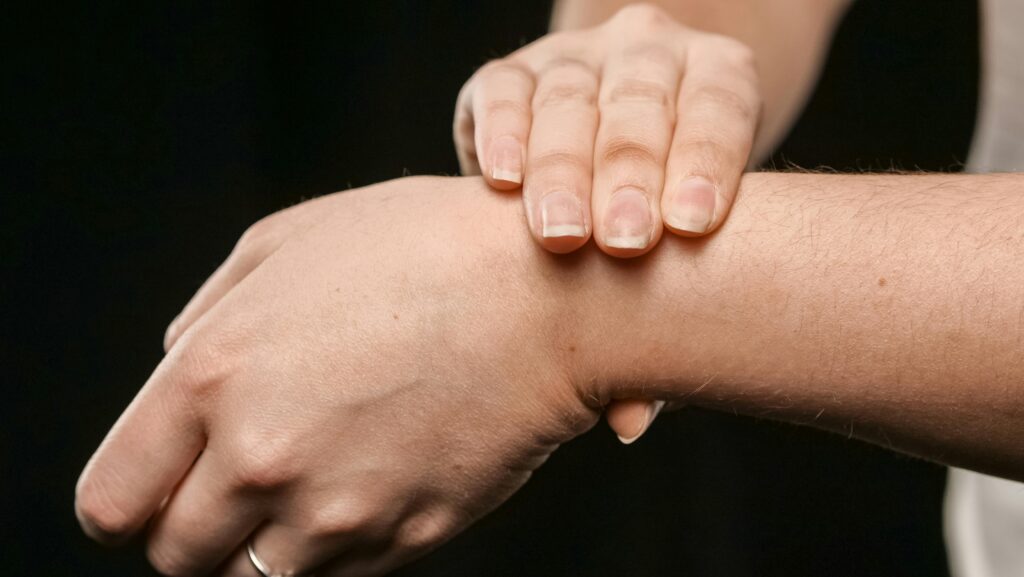
Recurring joint pain is one of the most common early arthritis symptoms, but it is also among the easiest to dismiss. A single painful day after heavy lifting, a long walk, or a minor strain may not point to arthritis. The bigger warning sign is pain that keeps returning without a clear injury, pain that affects the same joint repeatedly, or pain that appears with swelling, warmth, or reduced movement. Arthritis pain may be dull, aching, sharp, throbbing, or pressure-like, depending on the joint and the underlying condition.
Osteoarthritis pain often appears during or after movement and may improve with rest, especially in early stages. Rheumatoid arthritis pain can occur at rest and with movement because the immune system drives inflammation of the joint lining. We should pay close attention when joint pain begins to limit normal activities, such as gripping a mug, climbing stairs, opening jars, kneeling, typing, walking the dog, or sleeping through the night. Pain that starts changing behavior is no longer just background discomfort.
Swelling Around a Joint

Swelling is one of the clearest signs that something inside or around a joint may be inflamed. A swollen joint can look puffy, feel tight, or seem larger than the same joint on the other side of the body. Rings may feel tighter, shoes may feel uncomfortable, or a knee may feel full when bending. Swelling may result from inflammation, excess joint fluid, soft-tissue irritation, injury, infection, gout, rheumatoid arthritis, psoriatic arthritis, or an osteoarthritis flare.
Persistent or repeated swelling deserves attention because it can interfere with joint mechanics. The Arthritis Foundation flags joint swelling that lasts more than 3 days or occurs more than 3 times a month as a symptom pattern worth discussing with a doctor. We should also notice whether swelling appears after activity, after rest, in one joint, in several joints, or in a symmetrical pattern. That pattern provides clinicians with important clues about whether the problem is mechanical, inflammatory, autoimmune, or related to another condition.
Warmth, Redness, or Darkened Skin Around a Joint
A joint that feels warm to the touch can signal active inflammation. Redness, warmth, tenderness, or darker skin around a joint can appear when blood flow increases in the area, as the body responds to irritation or disease activity. These signs can occur in several arthritis types, including inflammatory arthritis and gout, but they can also appear with infection or injury. That is why warmth and redness should never be ignored when severe, sudden, or accompanied by fever.
General arthritis symptoms can include pain, stiffness, swelling, skin changes around the joint, and decreased range of motion. Urgent evaluation is especially important when severe pain and swelling suddenly affect one joint, the skin around the joint is red or hot, or joint soreness occurs with fever, chills, eye symptoms, or urinary or genital symptoms. We can safely watch mild, short-lived soreness after obvious overuse, but a hot, swollen, painful joint deserves quicker medical attention.
Reduced Range of Motion
Reduced range of motion means the joint no longer moves as freely as it used to. A shoulder may not reach overhead, a knee may not bend fully, fingers may not close into a full fist, or the hip may feel blocked when getting into a car. This symptom can develop gradually, so people often adjust without noticing. They use the other hand, avoid stairs, stop kneeling, walk shorter distances, or choose easier clothing because buttons and zippers become annoying.
Loss of movement can appear when pain, swelling, cartilage changes, joint lining inflammation, muscle weakness, or structural changes affect the joint. Osteoarthritis can cause joint changes that limit movement, and rheumatoid arthritis swelling can interfere with daily activities such as making a fist, combing hair, buttoning clothes, or bending the knees. We should treat movement loss as an early signal because preserving motion is often easier than trying to regain it after months or years of avoidance.
Tenderness When Pressing Near the Joint
Tenderness is different from general aching. It appears that light pressure around the joint can cause discomfort, soreness, or a sharp reaction. This can happen around fingers, wrists, knees, ankles, elbows, toes, shoulders, hips, or the jaw. Tenderness may signal inflammation in the joint itself, irritation of surrounding soft tissues, or stress on nearby tendons and ligaments. It becomes more concerning when accompanied by swelling, warmth, stiffness, or recurrent pain.
Rheumatoid arthritis commonly includes tenderness with joint pain, swelling, and warmth. Osteoarthritis can also make joints tender, especially when cartilage and surrounding tissues are irritated. When we press around a painful joint and notice consistent tenderness, the detail is useful to track. A simple symptom note can include the joint involved, how long the tenderness lasts, whether it occurs after activity or rest, and whether it is accompanied by swelling or reduced movement.
Small Joint Changes in the Hands, Fingers, Wrists, Feet, or Toes
Early arthritis often affects small joints before people expect it. The fingers may feel stiff when typing, the wrists may ache during simple tasks, or the toes may hurt when walking. Morning stiffness in the fingers, trouble closing the hand, or swelling around knuckles can feel minor until daily tasks become slower. These small joint symptoms deserve attention because both rheumatoid arthritis and osteoarthritis can affect the hands, though they often do so in different ways.
Rheumatoid arthritis is more common in the wrists, hands, and feet, and often appears on both sides of the body in a symmetrical pattern. Osteoarthritis in the hands may lead to bony enlargement and shape changes in finger joints over time. We should be especially alert when both hands, both wrists, or both feet begin showing similar symptoms, because symmetry can point toward inflammatory arthritis rather than a single overused joint.
Pain That Appears During Activity and Eases With Rest
Pain that occurs when a joint is used and improves when the joint rests can be an early clue to osteoarthritis. A knee may ache while climbing stairs, a hip may hurt after walking, or fingers may complain after gardening, cooking, or gripping tools. This pain pattern often starts mildly, then becomes more frequent as the joint becomes irritated. People may notice they can still function, but they start planning around the joint.
Osteoarthritis symptoms often begin slowly and commonly start in one or a few joints. Pain may appear when using the joint and improve with rest, swelling may occur after activity, and affected joints may gradually lose movement. We should not assume this pattern is harmless simply because rest helps. Repeated activity-linked pain can mean the joint needs evaluation, strengthening support, weight management guidance when relevant, physical therapy, safer movement strategies, or treatment to reduce pain and protect function.
Pain, Stiffness, or Swelling on Both Sides of the Body
Symmetrical symptoms can be one of the strongest early clues of rheumatoid arthritis. This means the same or similar joints on both sides of the body are affected, such as both wrists, both hands, both knees, or both feet. The pain may not be perfectly equal, but the mirrored pattern matters. It suggests the issue may be systemic rather than purely mechanical.
Rheumatoid arthritis symptoms often happen on both sides of the body and commonly involve the hands, wrists, and feet. This does not mean every symmetrical ache is rheumatoid arthritis, but it does mean we should avoid brushing it off as random soreness. When paired with morning stiffness lasting more than 30 minutes, fatigue, warmth, tenderness, or swelling, symmetrical joint pain warrants a conversation with a healthcare professional.
Fatigue That Comes With Joint Symptoms
Fatigue can be an early sign of arthritis when it appears alongside joint pain, swelling, stiffness, or warmth. This is not ordinary tiredness after a busy day. It can feel like low energy, heaviness, brain fog, or a deep need to rest even after sleep. In inflammatory arthritis, fatigue can happen because the immune system is active and the body is dealing with ongoing inflammation.
Rheumatoid arthritis can include fatigue, occasional low-grade fever, and loss of appetite, and psoriatic arthritis can also cause tiredness or lack of energy. We should pay attention when fatigue and joint symptoms co-occur, especially during flares. A person may feel “off” before the joints become obviously swollen. That early whole-body warning can help distinguish inflammatory arthritis from simple overuse.
Sudden Flares That Last for Days
A flare is a period when symptoms suddenly get worse. Joint pain may intensify, stiffness may last longer, swelling may increase, and ordinary tasks may become harder for several days. Some flares follow stress, illness, overactivity, poor sleep, medication changes, or injury. Others appear without an obvious trigger. The key sign is the repeating pattern: symptoms calm down, then return.
Arthritis symptoms can sometimes suddenly worsen in flare-ups that last several days. Rheumatoid arthritis flares may be triggered by stress, environmental factors such as cigarette smoke or viral infections, too much activity, or stopping medications suddenly. We should record flare timing, affected joints, possible triggers, and duration because this information can help a clinician identify the arthritis type and recommend a more precise treatment plan.
Grinding, Popping, Creaking, or Grating Sensations
Joint sounds are common and do not always mean arthritis. A painless pop after stretching may be harmless. The concern grows when grinding, scraping, crunching, or grating are accompanied by pain, stiffness, swelling, or reduced movement. In osteoarthritis, cartilage and other joint tissues may change over time, affecting how smoothly the joint moves.
Knee osteoarthritis may cause grinding or scraping noises while walking or moving, and over time, muscle and ligament weakness may contribute to buckling. We should watch the full symptom picture, not the sound alone. A noisy joint with no pain may not require alarm, but a noisy joint that aches, swells, stiffens, or starts giving way should be checked.
A Joint That Feels Loose, Weak, or Unstable
Joint instability can feel like wobbling, slipping, buckling, or a sudden loss of confidence in the joint. A knee may feel as though it could give way on stairs. An ankle may feel unreliable on uneven ground. A thumb, finger, or wrist may feel weak during gripping. This symptom can appear when pain reduces activity, muscles weaken, ligaments become strained, or the joint structure changes.
Osteoarthritis can cause a joint to feel loose or unstable, and joint pain can reduce activity, leading to muscle weakness that places more stress on the joint. We should not wait until instability causes a fall or injury. Early strengthening, balance work, supportive devices, physical therapy, and diagnosis can help protect mobility and confidence.
Skin Patches, Nail Changes, and Joint Pain Together
Joint symptoms, along with skin or nail changes, can point to psoriatic arthritis, especially in people with psoriasis. Warning signs may include scaly, inflamed patches on the scalp, elbows, knees, or other areas, along with joint stiffness, pain, and swelling. Nail pitting, crumbling, thickening, or separation from the nail bed can also be part of the picture. These clues are easy to miss because people may treat the skin, nails, and joints as separate problems.
Psoriatic arthritis often develops years after psoriasis begins, and symptoms may include morning stiffness, fatigue, tender areas where tendons or ligaments attach to bone, sausage-like swelling of a whole finger or toe, nail changes, and eye inflammation. We should take this combination seriously because psoriatic arthritis can affect peripheral joints, the spine, tendons, and the eyes, and can affect daily function.
Sausage-Like Swelling in a Finger or Toe
A whole finger or toe that becomes swollen from base to tip is different from ordinary knuckle swelling. It can look puffy, tight, and sausage-like, and it may be painful or difficult to bend. This symptom is strongly associated with psoriatic arthritis, though a clinician must evaluate the full context. It may appear with psoriasis, nail changes, heel pain, foot pain, back stiffness, or fatigue.
NIAMS lists painful, sausage-like swelling of a whole finger or toe as a psoriatic arthritis symptom. We should not ignore this sign, especially when it occurs more than once or is accompanied by skin and nail symptoms. Early recognition can help prevent prolonged inflammation from damaging the affected digit or nearby joints.
Heel, Sole, or Tendon Attachment Pain
Pain where tendons or ligaments attach to bone can be another clue to arthritis, especially in psoriatic arthritis and related inflammatory conditions. This pain may appear at the back of the heel, the sole of the foot, or around the elbows, knees, hips, or other attachment points. It may feel like a stubborn strain, but it keeps returning or is accompanied by joint stiffness and swelling.
Psoriatic arthritis can cause tenderness in entheses, the areas where tendons or ligaments attach to bones, with common spots including the back of the heel and sole of the foot. We should consider the broader pattern when heel or tendon pain does not behave like a normal injury. Persistent tendon attachment pain, plus morning stiffness, skin symptoms, nail changes, or swollen fingers and toes, warrants medical review.
Back, Neck, Hip, or Spine Stiffness

Arthritis does not only affect the hands and knees. It can also involve the spine, hips, neck, and lower back. Osteoarthritis in the spine may cause stiffness and pain in the neck or lower back. Psoriatic arthritis can affect spinal joints, leading to stiffness in the neck, lower back, and hips.
Back stiffness deserves closer attention when it is worse in the morning, improves with movement, returns after rest, or appears with other inflammatory signs. We should also note pain that radiates from the hip into the groin, inner thigh, buttocks, or knee, as hip arthritis can refer pain to nearby areas. A joint problem does not always hurt exactly where the damage is happening.
Trouble With Everyday Tasks
One of the most practical early signs of arthritis is a gradual decline in daily function. The body starts negotiating with pain. We open jars differently, avoid stairs, choose slip-on shoes, stop kneeling, type more slowly, skip walks, or ask someone else to carry bags. These small adjustments can appear before a formal diagnosis.
Rheumatoid arthritis swelling may interfere with tasks such as making a fist, combing hair, buttoning clothes, or bending knees. Arthritis symptoms can generally make moving a joint difficult, and common affected areas include the wrists, hands, fingers, ankles, feet, toes, back, spine, knees, and hips. We should take function changes seriously because they show how symptoms are affecting real life, not just how pain scores look on paper.