
Expanded
This particular growing medium has many names. Many refer to Expanded
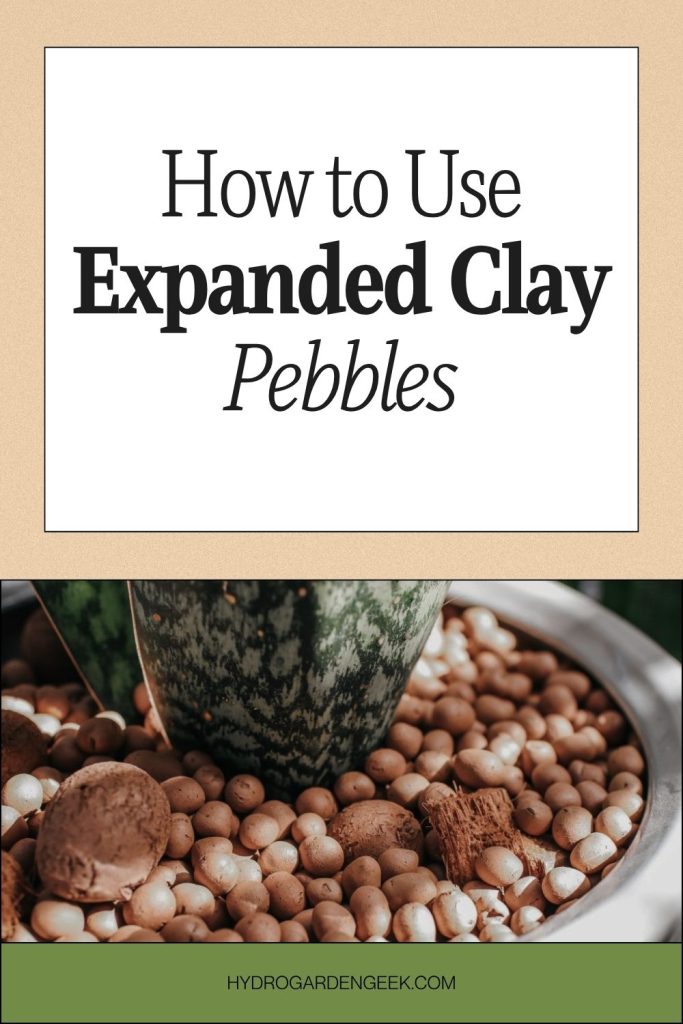
Clay pebbles primarily support plants and their root systems when used in hydroponic gardening. The gaps within and between the individual clay ball pieces give the roots access to air, water, and nutrient solutions. Their ability to provide aeration while retaining just enough moisture offers an ideal environment for hydroponically grown plants to thrive.
Clay pebbles’ porous structure, neutral pH, and lightweight nature make them an extremely useful growing medium that some people love. However, as with most growing mediums such as perlite, gravel, coconut coir, and Rockwool, they have their own pros and cons.
We will share some of those pros and cons, as well as how to best use and leverage

What Are Expanded Clay Pebbles ?
Expanded
The clay is heated to over 2000°F in a rotary kiln. As the clay becomes molten, the trapped air expands, creating small air pockets throughout the material. The finished product is round, lightweight clay pellets with very tiny holes that give way to excellent drainage.
With their ability to absorb and store moisture for plants to use when needed, they can provide aeration while retaining just enough moisture for your plants.
In areas with limited water, hydroton
You can find LECA at any hardware store, garden center, and online retailer.

Tips on How to Use Clay Pellets in Hydroponics
When getting started with
Once soaked, you will need to add a small amount of grow nutrients.
A shallow coverage of just 1–2 inches is recommended for young seedlings. As plants mature, the depth of
Clay pebbles should be filled to an adequate depth surrounding each plant’s root structure. Seedlings may only need 1–2 inches, but mature plants require much more. Leafy greens need at least 6 inches, while large fruiting plants can use up to 11 inches of pebble depth to cover the entire root zone.
If you decide to use hydroton

Pros of Using Clay Pellets
Here are some of the main reasons why people love
Clay pebbles are known to provide reliable drainage. This is mainly because the gaps between the pebbles allow for the plant to drain well, preventing waterlogging. While they drain excess water,
In addition, the
Clay pebbles can be used for multiple growing cycles. All you have to do is clean the pebbles to remove sediments. You can do this by boiling them or using a hydrogen peroxide or rubbing alcohol soak. Because they are reusable, they are a more cost-effective medium, unlike some that are one-time use.
Cons of Clay Pebbles
While
They don’t store nutrients themselves, so the hydroponic system must supply them directly to the roots.
The idea of washing and soaking before use can be a bit time-consuming. This can honestly be a turnoff for many gardeners who lack patience for this process and step.
If exposed to light in reservoirs or grow beds, their moist surface can attract algae, potentially blocking oxygen and light from reaching the roots.




Awesome information!!!! Thank you and have a great day!!!