If you’ve ever dreamed of growing your own juicy strawberries, there’s no better way to experience the full magic of gardening than starting from seed. Sure, it’s easier to buy pre-grown plants or use runners, but there’s something deeply satisfying about nurturing your strawberries from the very beginning.
With patience, the right techniques, and a little care, you can grow a beautiful, fruitful strawberry patch right in your own backyard. And guess what? It’s not as hard as you might think. Let’s dive into the step-by-step process of growing strawberries from seed, so you can enjoy fresh, homegrown strawberries in the years to come.
Why Grow Strawberries from Seed?

Growing strawberries from seed offers more than just the satisfaction of watching your plants flourish. It provides a hands-on experience, connecting you with the growing process from start to finish. While this method can take longer and won’t produce fruit in the first year, it offers unparalleled control over the varieties you grow. Whether you want to experiment with heirloom varieties or simply enjoy the challenge, growing strawberries from seed can be highly rewarding.
Selecting the Right Strawberry Seeds
Not all strawberry seeds are created equal. While you can save seeds from store-bought strawberries, it’s generally better to purchase fresh seeds from a reputable supplier. Fresh seeds (less than 2 years old) have higher germination rates, increasing the likelihood of success. Always opt for commercial strawberry seeds rather than growing from saved seeds, as this will significantly increase your chances of success.
Prepping Strawberry Seeds

One of the most critical steps in growing strawberries from seed is stratification. This mimics the winter chill that wild strawberries naturally experience, ensuring the seeds germinate properly. Here’s how to get it right:
Cold Stratification
Before sowing your strawberry seeds, place them in the fridge for 30 days to undergo cold stratification. This process is vital for many strawberry varieties, as it helps break the seed’s dormancy and triggers germination. Simply place the seeds in a sealed plastic bag with a moist paper towel or sand, and store them in the fridge at temperatures between 34°F (1°C) and 39°F (4°C). If you’re unsure whether your seeds require stratification, it’s best to go ahead and cold-stratify them; it’s unlikely to harm the seeds and will likely help the process.
Rapid Stratification Method
If you’re pressed for time, a faster method exists. While it may not be as reliable as the traditional 30-day cold stratification, the rapid method involves alternating between the fridge and freezer. Place the seeds in a zip-top bag with moistened sand or potting mix, and refrigerate for 24 hours. Then, place the bag in the freezer for another 24 hours. Repeat this process for about 7 days, after which the seeds should be ready for sowing. However, note that the traditional method is often more successful in producing robust germination.
Sowing Strawberry Seeds
Now that your seeds are stratified and ready, it’s time to sow them for germination. Follow these steps for the best results:
Light is Key
Strawberry seeds require light to germinate. One common mistake gardeners make is burying the seeds in the soil, which will inhibit their ability to sprout. Instead, gently scatter the seeds on the surface of your moist potting mix. Lightly press the seeds into the soil, ensuring good contact with the moisture but leaving them exposed to light.
The Perfect Potting Mix and Temperature
Choose a well-draining potting mix that retains moisture without becoming waterlogged. You want the soil to feel moist but not soggy. Ideal germination temperatures range between 65°F to 75°F (18°C to 24°C). If you’re starting indoors, set up grow lights or place the pots on a sunny windowsill, but avoid direct, harsh sunlight, which can dry out the soil and hinder germination.
Germination Timeline

Strawberry seeds are notoriously slow to germinate. While some may sprout in as little as 10 days, others might take several weeks or even months to show signs of life. This variability is completely normal and part of the strawberry seed journey. Keep your pots in a warm, well-lit area, and monitor the soil’s moisture regularly.
As the seeds begin to sprout, you’ll see tiny green seedlings pushing through the surface. At this stage, be patient and gentle with your seedlings. Ensure they receive plenty of light (at least 12 hours a day) and keep the soil moist but not overly wet. Avoid watering directly on top of the seeds; use a mister or water from below to maintain consistent moisture levels.
Caring for Strawberry Seedlings
Once your strawberry seedlings start to grow, their care needs change. Here’s how to provide them with the best environment for strong, healthy growth:
Transplanting Seedlings
As your strawberry seedlings develop a few true leaves, it’s time to think about transplanting them into larger containers. This process, known as “potting up,” helps ensure that the plants have enough room to spread their roots. Each plant should be moved into its own individual pot, where it can continue to grow without competition for nutrients.
Light, Water, and Fertilization
Strawberry seedlings need a lot of light to grow strong. If you’re growing indoors, use LED grow lights on a timer to simulate natural sunlight. Keep the lights on for about 12 hours a day to ensure the seedlings receive sufficient light for optimal growth.
When watering, keep the soil consistently moist but avoid overwatering. Strawberry seedlings are sensitive to excess water, which can lead to root rot. Additionally, once the seedlings have grown a few true leaves, you can start feeding them with a balanced liquid fertilizer or compost tea to encourage healthy growth.
Hardening Off Strawberry Plants Before Transplanting Outdoors
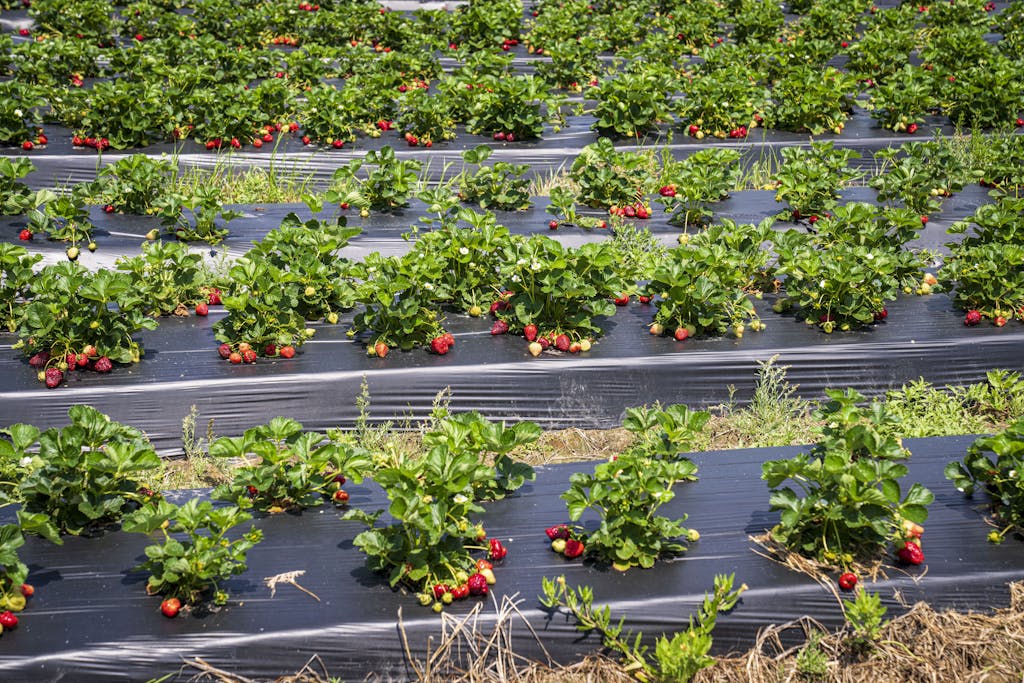
Before moving your strawberry plants outdoors, it’s important to “harden them off.” This process helps acclimate your seedlings to outdoor conditions, reducing the shock they might experience when exposed to full sunlight, wind, and temperature fluctuations.
Start by placing your strawberry seedlings outside for a few hours each day in a shaded area, gradually increasing the time they spend outdoors. After a week or two, your plants will be ready for full exposure to outdoor conditions.
Planting Strawberry Seedlings Outdoors
Once your strawberry seedlings have been hardened off and the risk of frost has passed, it’s time to transplant them into the ground. Choose a sunny spot with well-draining soil, and space your plants about 12 to 18 inches apart to give them room to spread.
For those growing strawberries in pots, keep your plants in containers where you can easily move them and protect them from pests and harsh weather. If planting directly in the garden, enrich the soil with organic compost or a slow-release fertilizer to ensure the plants have the nutrients they need to thrive.
Maintaining Your Strawberry Plants
Once your strawberries are in the ground or in containers, continue caring for them by ensuring they receive enough water, light, and nutrients. In the first year, you likely won’t see any fruit, but your plants will be establishing roots and developing strong foliage. When your plants are established, you’ll be rewarded with a bountiful harvest in subsequent years.
Strawberries are susceptible to a variety of pests, including slugs, aphids, and birds. Consider installing netting around your plants to deter birds, and use natural pest control methods, such as neem oil or companion planting, to protect your crop from pests.