When we talk about the senses, we usually stop at sight, hearing, smell, taste, and touch. In the animal world, that list is nowhere near enough.
Many species detect signals we barely notice or cannot perceive at all, including magnetic fields, infrared radiation, tiny electrical currents, polarized light, and ground vibrations. What looks mysterious to us is often just biology pushed to an extraordinary level of precision.
What makes these abilities so compelling is that they are not party tricks. They are survival systems. They help animals hunt in darkness, cross oceans, find home after years away, stay upright in shifting currents, and identify prey from vibrations so faint that a human would miss them entirely. Once we look closely, the so-called sixth sense stops sounding like fantasy and starts looking like one of evolution’s sharpest tools.
Spiders Turn Vibration Into Usable Intelligence
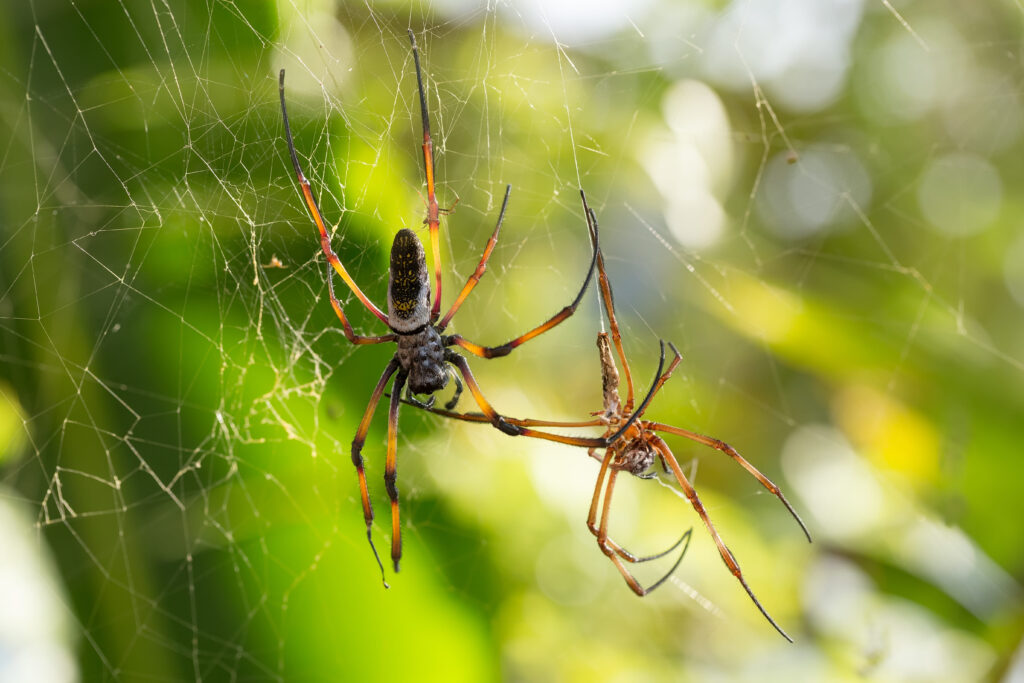
We often think of a spider web as a trap, but it is also a sensory network. Spiders use slit sensilla, strain detectors built into the exoskeleton, to read deformations caused by prey, predators, mates, and even shifts in the web itself.
Research on spider mechanosensing shows that these slit organs are highly refined detectors, with some vibration-sensitive organs responding to frequencies spanning several orders of magnitude and to minute leg or substrate deflections. In orb webs, vibration patterns can carry enough information for a spider to estimate both direction and distance to the source, which means the web functions less like a passive snare and more like a distributed information platform.
That is what makes a spider’s world feel almost supernatural from the outside. The animal is not waiting for visual confirmation. It is reading motion signatures through silk and body strain, then sorting them into categories that matter, prey worth rushing toward, debris worth ignoring, or danger worth avoiding. For a creature with no need for human-style reasoning, that is an astonishingly efficient extra sense.
Jellyfish and Comb Jellies Keep Balance with Internal Gravity Sensors
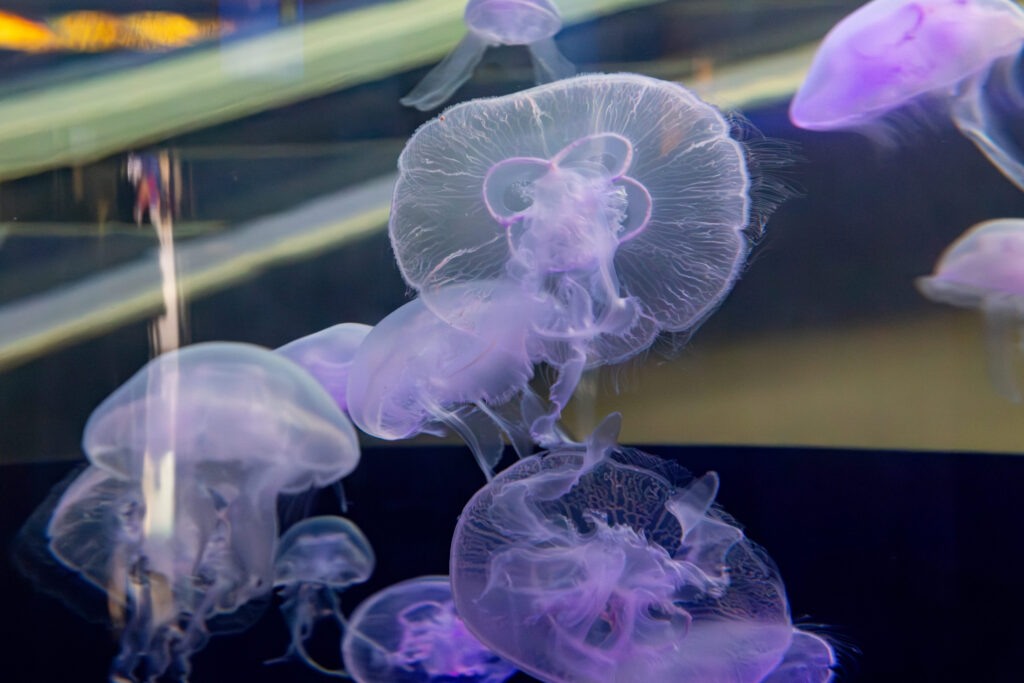
Some of the oldest animal lineages on Earth solve orientation without anything resembling a human-style brain. In jellyfish and related early branching animals, statocysts act as gravity and balance sensors.
A review of cnidarian sensory biology describes statocysts in jellyfish as structures with a dense concretion surrounded by ciliated sensory cells, in which movement of the internal mass stimulates the cilia and provides a vestibular sense. In plain terms, the animal can tell which way is up and stabilize its movement through water even with a far simpler nervous system than our own.
That matters more than it first appears. In the open water column, losing orientation is not a small inconvenience. It can mean inefficient swimming, missed prey, or vulnerability in currents. A statocyst gives these animals a built-in reference point, a constant conversation between gravity and motion that lets an ancient body plan remain surprisingly capable.
Pigeons Detect Magnetic Information for Navigation
Pigeons have long looked uncanny because they return home across distances that seem to defy common sense. Modern research supports the idea that birds use magnetic information for navigation, and studies summarized in major reviews show that pigeons and ducks can discriminate magnetic anomalies. Those responses fail when the upper beak is anesthetized or when trigeminal input is disrupted, indicating that magnetic-intensity information is conveyed through trigeminal pathways and used for navigation.
The important point is that this is not just simple compass use. Birds appear able to extract positional information from the Earth’s field, helping them understand where they are, not just which way is north. That shifts magnetoreception from a neat add-on to a genuine navigational sense, one that extends perception beyond the visible landscape into the structure of the planet itself.
Dolphins Build a Three-Dimensional World Out of Sound
Dolphins do not just hear the ocean; they actively scan it. Echolocation works by producing clicks and analyzing returning echoes, allowing dolphins to determine the location and identity of objects around them.
A controlled study showed that dolphins could maintain target detection via echolocation for days at a time, with high accuracy and no significant decline across prolonged sessions. That is not just sharp hearing. It is active sensing, a way of constructing a spatial model from sound.
This ability becomes especially powerful in murky or low-visibility water, where sight loses much of its value. A dolphin can continue operating in conditions that would severely limit a visual hunter, effectively replacing light with acoustic structure. That is why echolocation feels so close to a true sixth sense; it gives access to a layer of reality that humans cannot directly experience.
Pit Vipers Hunt by Detecting Infrared Heat
Pit vipers are among the clearest examples of an extrasensory channel that humans simply do not possess. Their loreal pit organs, positioned between the eye and nostril, detect infrared radiation emitted by warm objects.
Research on the molecular basis of snake infrared sensing shows that pit vipers can detect warm-blooded prey through infrared wavelengths and combine thermal and visual information in the brain for extremely accurate targeting, with prey detection possible at distances up to about a meter.
That turns darkness into a different kind of visibility. A hidden rodent is not invisible if its body heat can be mapped. The result is a predator that does not merely react to movement or scent, but can interpret a thermal scene with remarkable precision. In practical terms, the viper is not guessing where dinner is. It is reading heat as information.
Sharks and Rays Read Electric Fields in Water
Sharks, rays, and their relatives possess one of the most famous nonhuman senses, electroreception. Specialized organs called the ampullae of Lorenzini allow them to detect extremely small electrical changes in the environment.
Work on the molecular basis of electroreception describes these organs as capable of responding to very weak electric fields, and experiments in skates have documented sensitivity to stimuli as small as 5 nV per centimeter. In dark, murky, or sediment-rich habitats, that means prey can betray its position through muscle activity alone.
This is also why hammerheads are so visually dramatic and biologically interesting. Their widened head distributes sensory pores over a broader area, likely improving environmental sampling during hunting. Electroreception lets these animals detect life that is hidden, buried, or otherwise outside the reach of ordinary sight, making the ocean feel less empty and more electrically alive.
Platypuses Combine Electricity and Water Motion
If one animal seems designed to prove that evolution enjoys surprises, it is the platypus. Research on the platypus bill shows that it contains specialized electroreceptors and several types of mechanoreceptors.
Additional work suggests that mechanical waves from moving prey and the prey’s electrical signals arrive with a delay pattern that bimodal neurons can use to estimate distance. That means the platypus does not rely on one strange sense, but on the fusion of two.
In the muddy streams where platypuses forage, vision is not the point. A buried or moving prey item creates tiny electrical and mechanical cues in water, and the platypus bill turns those cues into a hunting map. It is a superb example of what an animal’s sixth sense often really is, not magic, but an elegant integration of signal types that human bodies never learned to exploit.
Bumblebees Use Polarized Light as a Sky Map
To a human observer, the sky often looks like a wash of brightness and color. To a bumblebee, it contains directional structure. Recent work shows that bumblebees can use polarized light to orient and navigate, with both their compound eyes and ocelli contributing depending on light conditions.
In dim light, the ocelli appear particularly important, while in bright light, both systems help detect the polarized pattern produced when sunlight scatters in the atmosphere.
This matters because bees must navigate quickly and reliably in an environment where the sun shifts, landmarks change, and time matters. Polarized light gives them a built-in celestial reference system. They are not just flying through the air; they are reading a coded pattern overhead, one most humans move through without even knowing it exists.
Elephants Listen Through Their Feet
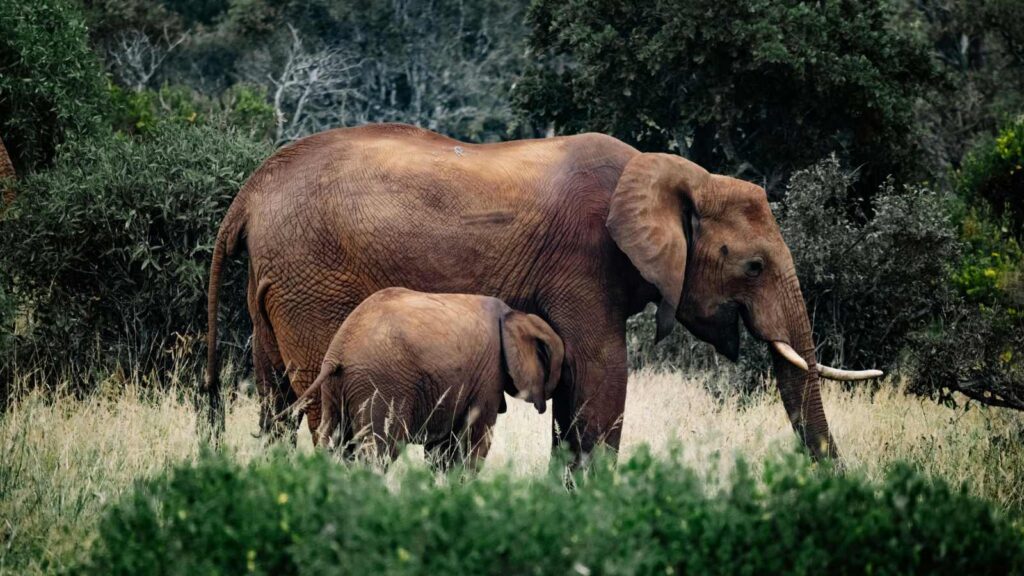
Elephants are famous for their size, memory, and social bonds, but one of their most fascinating abilities is their ability to sense seismic activity. Reviews of elephant communication note that their low-frequency rumbles can travel along the ground as seismic waves and may be received through their foot pads. This extends communication beyond airborne sound, giving elephants another channel for detecting biologically relevant information over long distances.
That helps explain why elephant perception feels so expansive. A distant event is not only heard, but it may also be felt. In habitats where line of sight is limited and social coordination is important, ground-borne vibration can convey warnings, contact signals, or movement information. The result is a sensory field that is literally larger than the one humans usually inhabit.
Sea Turtles and Salmon Use Magnetic Maps Across Vast Distances
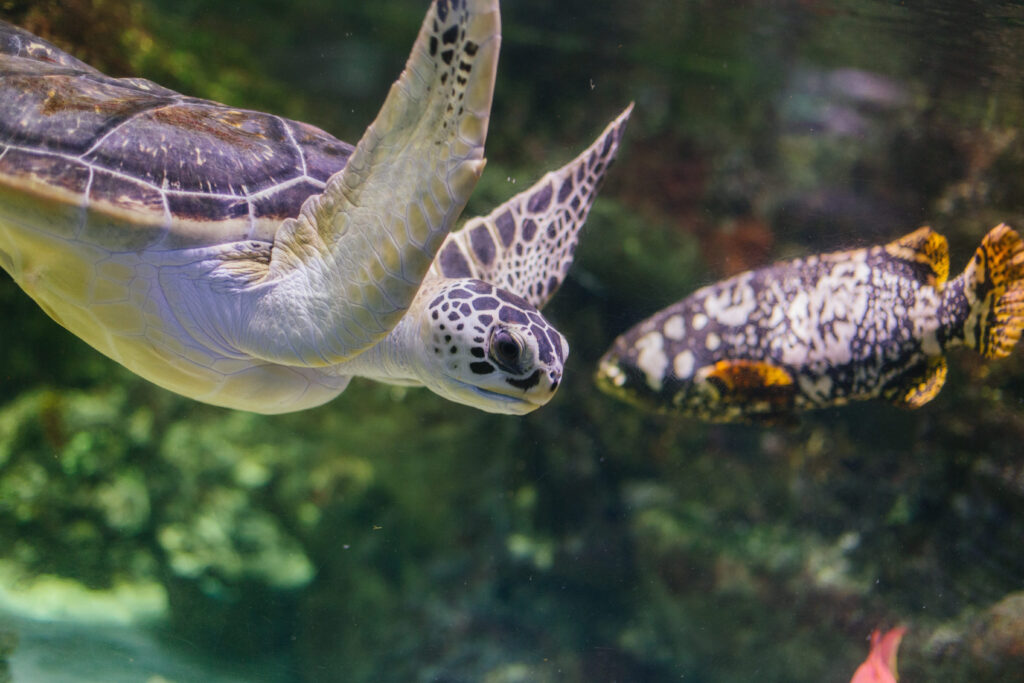
Long-distance migration may be the most breathtaking example of animal sensing because it combines raw perception with endurance and memory. A leading hypothesis, supported by decades of research, proposes that sea turtles and salmon imprint on the magnetic field of their natal areas and later use that information to return to the correct region years later. The evidence indicates that sea turtles detect both magnetic inclination and field intensity, giving them access to location-specific signatures worldwide.
This does not mean smell and local cues stop mattering. In salmon, chemical cues remain crucial near the home river, but magnetic information appears to help address the much larger open-ocean part of the problem. That two-stage system, global positioning first, local pinpointing second, is one of the strongest reminders that many animals do not simply perceive more sharply than we do. They often perceive along entirely different dimensions.