Many 1980s dinner staples did not vanish because Americans suddenly lost interest. Some were banned, restricted, reformulated, or pushed off menus by food-safety rules, wildlife protections, animal-welfare laws, and changing health standards.
The 1980s dinner table had a certain confidence. Frozen dinners came out of the microwave like modern miracles, salad bars looked endless, steakhouse menus leaned rich, and party desserts glowed in colors that felt almost electric. Food was convenient, flashy, creamy, salty, and often served without much public debate over additives, endangered species, trans fats, raw eggs, or imported delicacies.
That world did not disappear overnight. It changed one rule, one lawsuit, one safety warning, one conservation fight, and one reformulation at a time. Some of the foods below are now banned in specific places, others are heavily restricted, and others still exist only after losing the ingredient, sourcing method, or packaging that once made them part of the old-school dinner experience.
Raw-Milk Soft Cheeses

A 1980s dinner party with a cheese board could feel worldly, especially when soft European-style cheeses appeared beside wine, crackers, grapes, and little knives nobody knew how to use properly. Raw-milk cheese has always had passionate defenders because it can develop deep, complex flavor. Still, U.S. rules make it difficult to legally sell the youngest raw-milk cheeses through ordinary channels.
Federal cheese standards require cheese made with unpasteurized dairy ingredients to be cured at not less than 35 degrees Fahrenheit for at least 60 days. The FDA has also continued monitoring raw-milk cheese because pathogens remain a food-safety concern, especially for vulnerable groups.
That rule reshaped the American cheese board. Many raw-milk hard and aged cheeses can still be sold legally, but fresh, soft, young raw-milk cheeses face strict limits. The result is a dinner-party category that survives in altered form. We still get the romance of cheese, but the riskiest versions no longer move through the U.S. market as freely as nostalgia suggests.
Sulfite-Treated Salad Bars
The 1980s salad bar looked fresh even after sitting out longer than it should have. Lettuce stayed crisp, potatoes stayed pale, and cut fruit kept its color because some operators used sulfites to preserve the look of raw produce. For diners, it felt like abundance. For sulfite-sensitive people, especially some people with asthma, it could become dangerous.
FDA action in 1986 changed that old salad-bar habit. U.S. food rules prohibited the use of sulfites to maintain the color and crispness of fresh fruits and vegetables intended to be served raw or presented fresh to consumers, a change tied to reports of sulfite-triggered reactions. Food manufacturers must also declare sulfites on labels when they reach 10 parts per million or higher.
The modern salad bar may still carry risks from poor temperature control or cross-contamination, but the old sulfite trick is no longer part of the legal playbook for raw produce. That makes this one of the clearest examples of a 1980s dinner habit that did not survive public-health scrutiny. The lettuce did not disappear. The chemical gloss did.
Raw-Egg Caesar Dressing and Hollandaise
Caesar salad, hollandaise sauce, homemade mayonnaise, and certain creamy desserts had a restaurant glamour in the 1980s. Many classic versions depended on raw or lightly cooked eggs, which helped create a silky texture without tasting heavy. The problem is that raw shell eggs can carry Salmonella, and that risk is greater in food-service settings where a single batch can reach many people.
The FDA now advises using pasteurized shell eggs or pasteurized egg products for recipes served raw or undercooked, including Caesar dressing and homemade ice cream. Food-code rules for highly susceptible populations also call for pasteurized eggs in foods such as Caesar salad, hollandaise, Béarnaise, mayonnaise, meringue, eggnog, and ice cream.
That does not mean Caesar salad is banned. It means the old “crack a raw egg into the bowl at the table” performance has become more complicated, especially in institutions, senior facilities, child-care settings, hospitals, and cautious restaurants. The flavor can survive with pasteurized egg products, but the carefree 1980s attitude around raw-egg sauces has lost its innocence.
Red No. 3 Dinner Desserts
The 1980s loved a dramatic dessert table. Gelatin molds, bright cherries, candy-studded cakes, pink frostings, and neon-looking sweets fit the mood of the decade. Some of those foods used synthetic colors that later came under sharper scrutiny, and Red No. 3 became one of the biggest modern examples.
In January 2025, the FDA revoked authorization for FD&C Red No. 3 in food and ingested drugs under the Delaney Clause after data showed cancer in male laboratory rats. Food manufacturers have until January 2027 to comply, and makers of ingested drugs have until January 2028.
This does not erase every cherry, candy, or red dessert from grocery shelves. It forces manufacturers to reformulate products that used Red No. 3 for that vivid color. The nostalgic dessert may still appear at the table, but its old dye chemistry is being shown the door.
Shark Fin Soup

Shark fin soup carried status in certain banquet and restaurant settings, especially as a symbol of luxury, ceremony, and wealth. It was never a routine weeknight American dinner, but it belonged to the broader 1980s era of conspicuous dining, where rare and expensive ingredients often impressed before anyone asked where they came from. Modern law has sharply changed that conversation.
The Shark Fin Sales Elimination Act became effective on December 23, 2022, and prohibits possession, transport, and sale of shark fins in the United States, with narrow exceptions. NOAA Fisheries describes the law as a measure to end the U.S. shark fin trade and support shark conservation.
The soup itself is no longer the point. The fin trade became an ethical and ecological issue. In today’s market, a restaurant cannot treat shark fin as a glamorous old luxury without running into serious legal and conservation barriers.
Beluga Caviar
Beluga caviar was the kind of old luxury that looked tiny on a spoon and enormous on a bill. It appeared in fine dining, hotel events, and wealthy dinner-party culture as a shortcut to sophistication. The trouble was that beluga sturgeon populations were under severe pressure, and the caviar trade became impossible to separate from conservation concerns.
The U.S. Fish and Wildlife Service suspended import and re-export of threatened beluga sturgeon caviar and meat from Caspian Sea basin countries in 2005. The covered countries included Azerbaijan, Iran, Kazakhstan, Russia, and Turkmenistan, which were central to the old beluga caviar trade.
Caviar still exists in America, including farmed and alternative sturgeon roe, but the classic Caspian beluga fantasy does not sit on the table in the same way. The old status symbol became a case study in how luxury dining can collide with endangered-species protection. The spoon stayed. The source changed.
Foie Gras
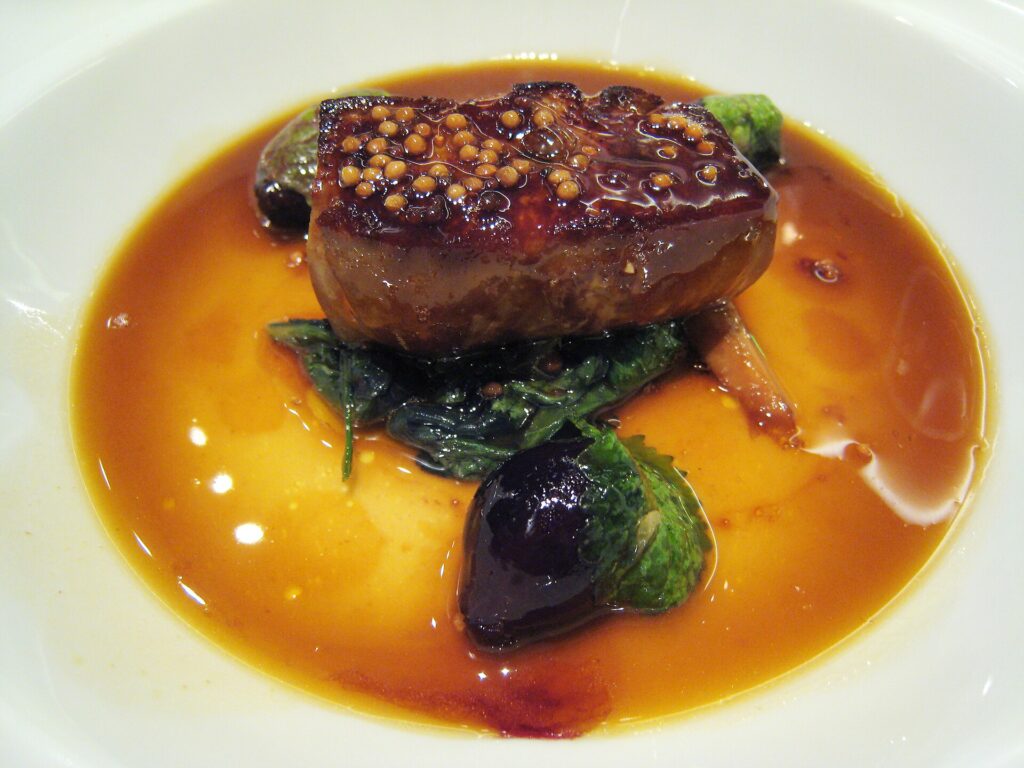
Foie gras had a polished 1980s restaurant aura. It belonged to white tablecloths, French menus, wine pairings, and the kind of dinner where the server explained the dish before anyone lifted a fork. The controversy stemmed from the production of traditional foie gras, especially the practice of force-feeding ducks or geese to enlarge the liver.
California law makes it illegal to sell a product in the state if it is the result of force-feeding a bird for the purpose of enlarging the liver beyond normal size. The law has faced years of litigation, but the core restriction remains one of the best-known U.S. examples of animal-welfare law reshaping a luxury food market.
Foie gras is not banned everywhere in the United States. That matters. But in places with strict rules, the old restaurant ritual has become legally fragile, ethically charged, and harder to serve without debate. It moved from indulgence to argument.
Blackened Redfish
Blackened redfish became one of the defining American restaurant dishes of the 1980s. The spicy, smoky, cast-iron style helped make red drum a sensation, especially in Gulf Coast cooking. Popularity brought pressure, and pressure brought fishery management.
The Gulf of Mexico red drum fishery management plan was implemented in 1986 and prohibited directed commercial harvest from the exclusive economic zone in 1987. Gulf Council material describes red drum as a federally managed species under that fishery plan, with commercial harvest limits tied to concerns over the stock.
This is not a simple “the food was banned” story. Redfish can still be caught and eaten under state rules, and aquaculture or legal sourcing can keep versions of the dish alive. Still, the original boom changed after regulators stepped in, which makes blackened redfish one of the clearest examples of a dinner trend that became too popular for its own supply chain.
Traditional Haggis

Haggis was not a mainstream 1980s American dinner staple, but it did appear in immigrant, Scottish-American, Burns Night, hotel, pub, and specialty-dining contexts. Traditional haggis is made with sheep offal, oatmeal, fat, and spices. The U.S. problem is the lung.
Federal meat inspection rules state that livestock lungs shall not be saved for use as human food. That rule effectively blocks the sale of traditional haggis made with sheep lung in the United States, even though lung-free versions can be made for American consumers.
This is a strong example of a food surviving only in name, not in its original form. American haggis can exist, but it has to be adapted. For purists, that changes the dish. For regulators, the ingredient line is clear.
Sea Turtle Soup
Sea turtle soup belongs to an older fine-dining tradition, but it still lingered in memory and specialty food culture into the late twentieth century. The dish once signaled refinement in certain restaurants and social clubs. Today, it reads very differently because sea turtles are protected wildlife, not menu material.
NOAA notes that many countries, including the United States, prohibit killing sea turtles and collecting their eggs. Green turtles were historically exploited for their fat, meat, and eggs, contributing to population declines, and sea turtle protection remains tied to recovery and anti-trafficking efforts.
That turns old turtle soup into more than a retro curiosity. It becomes a reminder that some “classic” foods depended on wildlife practices modern law no longer tolerates. If a restaurant wants a nostalgic turtle soup today, it usually has to use mock turtle recipes or legal substitutes, not protected sea turtle meat.
Conclusion
The biggest lesson from these 1980s dinner foods is not that the past was reckless and the present is perfect. Food rules often change after science, conservation, lawsuits, outbreaks, consumer pressure, and public values catch up with what people have been eating for years. Partially hydrogenated oils, shark fins, Red No. 3, raw-egg sauces, raw-milk cheeses, and protected wildlife all show how dinner can become a legal story as much as a culinary one.
Nostalgia still has a place at the table, but it works best when it tells the truth. Some 1980s favorites survived by reformulating. Some became restricted luxury goods. Others disappeared because the original version depended on ingredients, animals, or safety assumptions that no longer pass the test. The food memories remain vivid, but the rules around them have changed for good.