Throughout history, great inventions have often arisen from a deep sense of desperation. When vital resources become scarce ,whether through war, natural disasters, or unforeseen events, human ingenuity surges to find new solutions. These moments of crisis have fueled some of the most innovative breakthroughs, from products that saved lives to treats we now enjoy every day. It’s during these desperate times that the most creative minds find ways to turn adversity into opportunity, often creating something better than the original resource it replaced. What began as a temporary solution to a shortage has often become a permanent game-changer in the market.
Innovation born from desperation has shaped the course of industries, cultures, and consumer habits around the world. From Fanta to synthetic rubber, these inventions not only solved immediate issues but also spurred long-term changes that continue to impact modern life. The stories behind these inventions prove that sometimes, the most transformative ideas come from the most unexpected places. Let’s dive into ten genius inventions that were born from sheer necessity and desperation.
Synthetic Dyes

Before the 19th century, vibrant colors like purple were incredibly expensive and often reserved for the elite. These dyes were typically derived from rare sources such as sea snails, making them difficult and costly to produce. However, with the industrial revolution in full swing, demand for accessible, affordable color grew exponentially. William Henry Perkin, a young chemist, was attempting to synthesize quinine when he accidentally produced a brilliant purple substance that would later become the first synthetic dye.
This accidental discovery revolutionized the textile industry, enabling vibrant colors to be produced cheaply and widely. The advent of synthetic dyes made colorful clothing accessible to the masses, transforming fashion and the global textile industry. Perkin’s innovation not only solved a pressing issue but also marked the beginning of a new era in chemical manufacturing, with lasting effects on both the fashion industry and the world of chemistry.
Gasogen Vehicles
As World War II raged on, a petroleum shortage in Europe left civilians without access to gasoline, severely disrupting daily life. Farmers could no longer run their tractors, and doctors couldn’t make their rounds, creating a critical crisis for essential services. In response, mechanics turned to wood gasification, a technology developed in the 19th century, to build vehicles that could run on wood rather than gasoline. By attaching a “Gasogen” unit to vehicles, they could burn wood or charcoal to produce a flammable gas that powered their engines.
These wood-burning vehicles, while less powerful and slower than gasoline-powered cars, became an essential mode of transportation in Europe during the war. Over a million gasogen vehicles were in use by the end of the war, providing an ingenious solution to the shortage of petroleum. Though the technology was eventually phased out after the war, it remains a testament to human ingenuity under extreme pressure.
Beet Sugar

In 1806, Napoleon’s Continental System, aimed at disrupting Britain’s economy, led to a serious shortage of cane sugar, a staple commodity in Europe. Sugar, a crucial commodity for preserving food and adding sweetness, was no longer readily available. To address this, scientists in France and Germany turned to sugar beets, a more readily available alternative. After experimenting with different techniques, they found a way to extract and refine sugar from beets, creating an efficient process that would reshape the sugar industry.
The development of beet sugar not only solved a critical wartime issue but also changed the landscape of global agriculture. Once the trade blockade ended, beet sugar remained competitive due to its local availability and efficiency in production. This breakthrough reduced Europe’s dependence on cane sugar from its colonies and laid the foundation for the modern sugar industry, providing a cheaper, more sustainable alternative.
Fanta
In the early 1940s, Coca-Cola faced a major crisis as the war and trade restrictions made it nearly impossible to source the ingredients for its flagship drink. The German bottling plant was essentially at a standstill, with a supply chain cut off, making production of Coca-Cola impossible. Max Keith, the plant manager, had no choice but to find a solution that would keep the operation running. After exploring local resources, his team created Fanta, a drink made from leftover fruit scraps, designed to be a quick, affordable alternative to the iconic soda.
Fanta’s inception may have been born of necessity, but it quickly became a global sensation. The ingenuity behind the creation of Fanta not only saved the company during wartime shortages but also gave birth to one of the most recognizable beverages in the world. Fanta’s unique flavor and rich history as a wartime invention have made it an enduring favorite, showcasing how a resourceful solution to an immediate problem can evolve into a cultural phenomenon.
Canned Food
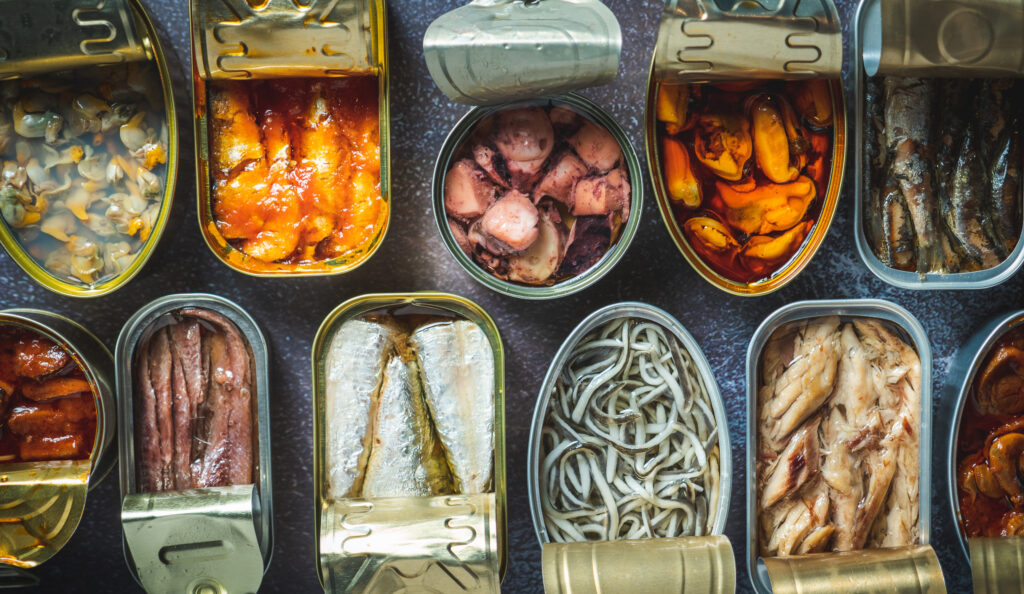
In the early 19th century, armies faced an ongoing problem: how to feed soldiers during long military campaigns. During the Napoleonic Wars, large numbers of soldiers suffered from malnutrition and scurvy due to the lack of preserved food. Napoleon Bonaparte, ever the strategist, offered a reward to anyone who could devise a method to preserve food for his troops. Nicolas Appert, a French confectioner, discovered that food could be preserved by sealing it in airtight containers and boiling it, thereby giving rise to the canning process.
The canning process revolutionized food preservation, enabling food to be stored for extended periods and transported over long distances. Appert’s method, later refined with tin-plated cans, became crucial not only for the military but also for the global food distribution network. Today, the canning industry continues to thrive, proving that necessity truly is the mother of invention, as Appert’s breakthrough helped ensure that no one would ever go hungry again during extended campaigns or long journeys.
Wood Pulp Paper
Throughout history, paper was made from recycled cotton and linen rags. However, by the 19th century, the demand for paper skyrocketed as literacy rates soared and the printing press spread knowledge far and wide. This surge in demand created a rag shortage, threatening the production of books and newspapers. Friedrich Gottlob Keller, a German weaver, observed how wasps created paper-like nests by chewing wood and mixing it with saliva. Inspired by this process, Keller invented a mechanical system to grind wood into pulp, which could then be used to make paper.
This innovation solved the rag famine by providing a much cheaper and more abundant alternative to traditional rag-based paper. The widespread use of wood pulp paper revolutionized the printing industry, making it cheaper and more accessible to the public. Keller’s breakthrough is still in use today, proving that desperate times can inspire lasting, transformative innovations that shape industries for centuries.
Synthetic Rubber
During World War II, Japan’s control over much of the world’s natural rubber supply created a critical shortage for the United States, particularly for military vehicles and equipment. With no time to waste, the U.S. government initiated a project to develop a synthetic substitute that could meet the military’s demands. Chemists, working under intense pressure, developed a new polymer, GR-S (Government Rubber-Styrene), that mimics the elasticity and durability of natural rubber. This breakthrough enabled the U.S. to continue its war effort without relying on imports.
Synthetic rubber became a key player in the automotive and manufacturing industries post-war, as it was more affordable and readily available than natural rubber. The development of synthetic rubber not only solved a wartime crisis but also paved the way for modern manufacturing and the rise of the automotive industry. This invention demonstrates the far-reaching effects that desperation-fueled innovation can have on the global economy.
Margarine
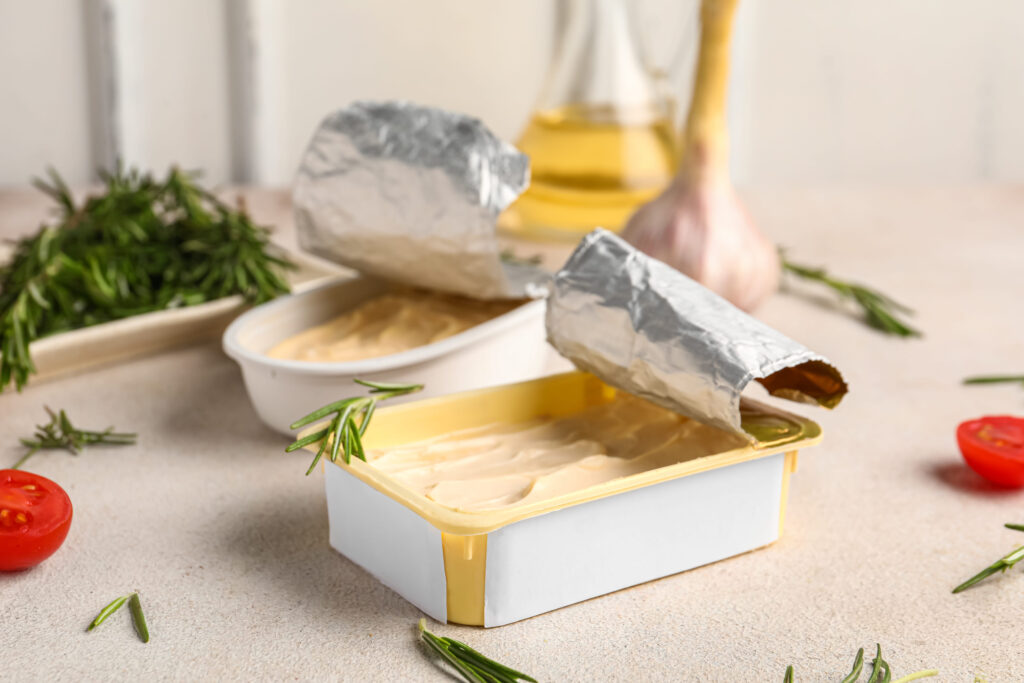
In the late 19th century, France faced a growing population and rising butter prices, both essential to the military and to the urban poor. Emperor Napoleon III responded by offering a prize for anyone who could create a cheap, shelf-stable alternative to butter. Chemist Hippolyte Mège-Mouriès won the prize in 1869 by developing oleomargarine, a substance made from beef tallow, milk, and water. This innovation provided a necessary food source for the working class and soldiers, particularly during times of conflict when dairy products were rationed.
Margarine evolved throughout the 20th century, eventually replacing animal fats with vegetable oils. Despite initial resistance from the dairy industry, margarine became a widely accepted alternative to butter, especially during wartime. Today, margarine remains an essential part of global food systems, proving that necessity often drives innovations that can outlast their original purpose.
Chicory Coffee
During both the Napoleonic Wars and the American Civil War, naval blockades made coffee beans almost impossible to acquire. For people who relied on coffee to start their day, this shortage was a major disruption. In cities like New Orleans, locals turned to chicory, a root known for its medicinal properties, as a substitute for coffee. Roasting and grinding chicory root produced a dark, bitter beverage with a taste similar to coffee, and the mix of chicory and coffee became a popular drink that lasted long after the shortage ended.
Chicory coffee became a cultural trademark in New Orleans, where it remains a staple to this day. The shortage led to the creation of a unique coffee blend that defined the region’s culinary identity. This ingenuity during a time of scarcity not only helped people survive but also shaped a cultural tradition that continues to thrive in the modern era.
Nutella
After World War II, Italy faced a severe cocoa shortage due to import restrictions and high taxes. Pietro Ferrero, a pastry maker, needed a solution to satisfy the demand for chocolate without the key ingredient: cocoa. He turned to the abundant hazelnut crop in northern Italy, combining it with small amounts of cocoa and cocoa butter to create a creamy, spreadable paste. The result was Nutella, which not only solved a local shortage but became a beloved treat worldwide.
What began as a clever workaround to stretch cocoa supplies eventually evolved into a global brand. Nutella’s widespread popularity transformed it into a breakfast staple for millions. The legacy of Ferrero’s desperation-driven innovation is a testament to the power of creativity under pressure, as Nutella remains a favorite of both children and adults worldwide.