Food is more than just something we eat every day; it’s a subject of endless fascination, with numerous surprising and intriguing facts about the ingredients, preparation, and even the history behind them.
From the unexpected origins of your favorite snacks to the curious scientific principles that govern how food works, the world of food is filled with awe-inspiring stories.
Let’s take a journey through ten unbelievable food facts that are bound to make you look at your next meal a little differently.
Coffee

Fact: The priciest coffee in the world is harvested from civet poop.
While you might think coffee prices are steep, nothing compares to the outrageous cost of kopi luwak, or civet coffee. This unique brew comes from beans that are eaten, digested, and excreted by the civet, a small mammal.
The beans are then collected from their feces, cleaned, and sold for astronomical prices. Often fetching between $120 and $600 per pound, kopi luwak is popular in parts of Asia and the U.S.
But here’s the real question: who was brave enough to try coffee made from animal waste in the first place?
Feast
Fact: The largest food item on a menu is roast camel, stuffed with multiple animals.
This incredible culinary creation is often served at Bedouin weddings. It involves roasting a camel stuffed with a sheep, which is itself stuffed with chickens, which are stuffed with fish and eggs.
This foodception is more than just a meal; it’s a celebration of abundance and culinary creativity. It’s not a dish you’d find at your local diner, but it’s a staggering display of culinary craftsmanship.
FDA Regulations
Fact: The FDA permits a certain number of insects and rodent hairs in your food.
For those who might think their food is completely free from critters, think again. The FDA allows up to 30 insect fragments and one rodent hair per 100 grams of peanut butter.
While it’s not a reason to throw out your peanut butter stash, it’s a surprising fact that makes you rethink what’s really going into your food. After all, food safety regulations strike a balance between practicality and health standards.
The First Soup

Fact: The first-ever soup was made from hippopotamus.
Soup is an age-old dish, with evidence of its existence dating back to around 6000 BC. The earliest known recipe was made using hippopotamus meat.
Imagine that the original soup was not a hearty chicken noodle soup, but an exotic, wild game dish. It’s incredible to think how far soup has come since then, evolving into countless varieties across the globe.
Refried Beans
Fact: Refried beans are only fried once.
The name “refried beans” is actually a mistranslation. The original term in Spanish, frijoles refritos, translates to “well-fried beans,” not “re-fried.” So, while many think the beans are fried multiple times, they’re only fried once, debunking a common misconception about this popular dish.
Worcestershire Sauce
Fact: Worcestershire sauce is made from dissolved anchovies.
For many, Worcestershire sauce is an essential kitchen staple, but what you might not know is that its base ingredient is anchovies.
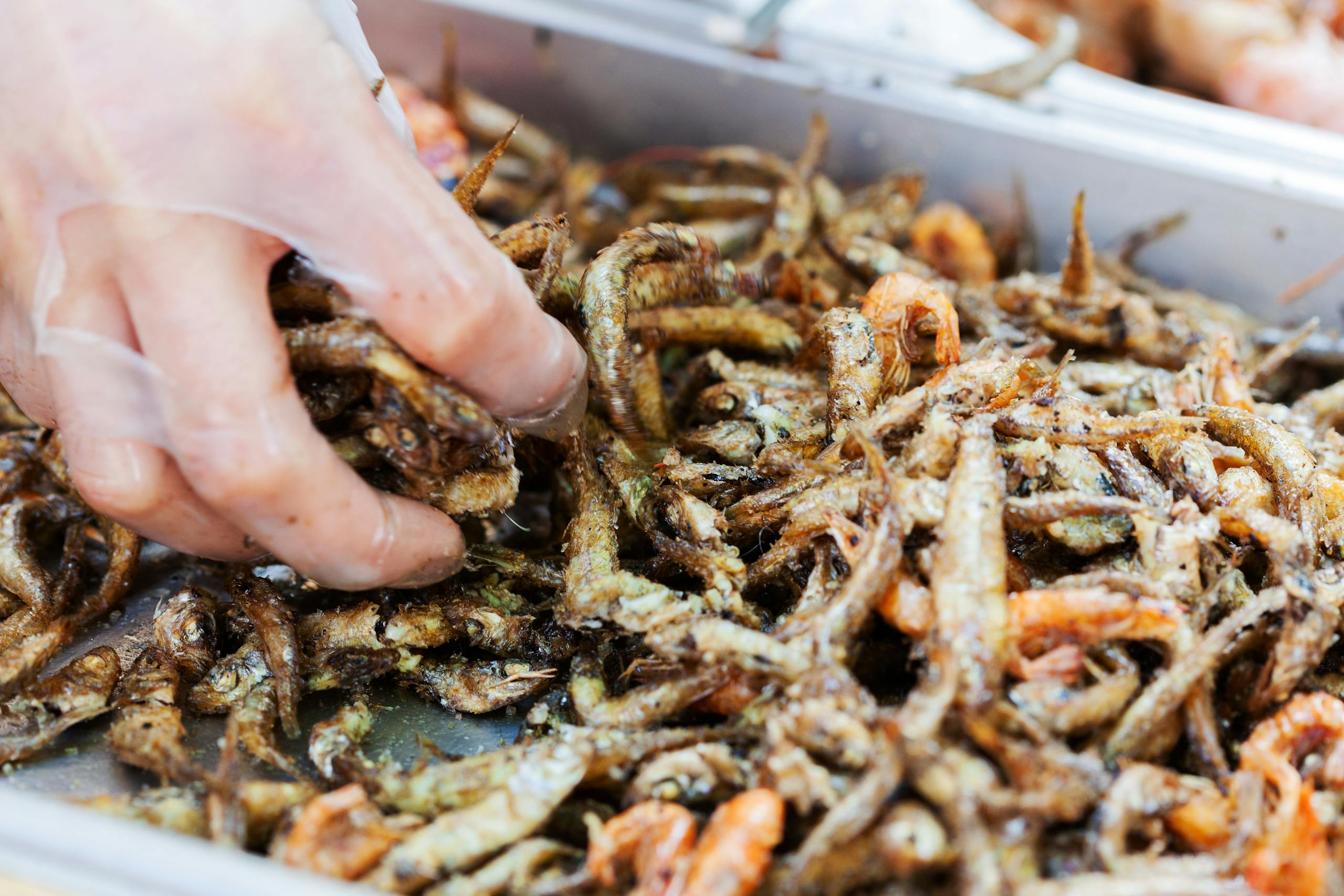
These small fish are soaked in vinegar and allowed to dissolve, including their bones. It’s a tangy, savory sauce that enhances many dishes, but next time you splash it on your meal, you might think about the fish used to make it!
Popsicle

Fact: The Popsicle was invented by an 11-year-old and kept secret for 18 years.
In 1905, Frank Epperson, an 11-year-old, accidentally created what we now know as the Popsicle. He left a mixture of powdered soda and water outside on a cold night with a stir stick, and by morning, it had frozen solid.
He called it an “Epsicle,” but it wasn’t until 18 years later that he patented the frozen treat and named it the Popsicle. Sometimes the best inventions come from unexpected moments!
Microwaves
Fact: Microwave cooking was discovered when a chocolate bar melted in someone’s pocket.
The invention of the microwave oven happened by pure accident. Percy Spencer, a scientist at Raytheon, noticed that a chocolate bar in his pocket melted as he walked past a radar tube.
This prompted him to experiment with other food items, like popcorn, which quickly popped in front of the tube. Thus, the microwave oven was born, changing how we cook forever.
Peanuts
Fact: Dynamite can be made with peanuts.
It might seem hard to believe, but peanut oil can be processed to make glycerol, a key ingredient in dynamite.
While other materials can also be used to produce dynamite, the connection between peanuts and explosives is an unexpected and shocking food fact. It’s a curious example of how food ingredients can serve a much broader range of functions than we’d expect.
Coconut Water

Fact: Coconut water can be used as a substitute for blood plasma in emergencies.
Coconut water has a fascinating property: in emergency situations, it has been used as a temporary substitute for blood plasma.
It’s sterile and has a pH similar to human blood, making it a viable alternative when medical supplies are scarce. Of course, this is a measure of last resort, but it’s incredible how nature provides such a versatile and life-saving liquid.
Conclusion
These ten food facts offer a glimpse into the strange and wonderful world of food. From the origins of coffee to the surprising uses of coconut water, food is much more than meets the eye. It’s an ever-evolving subject full of history, science, and surprising discoveries that continue to intrigue us.
So, the next time you sit down for a meal, remember: food is far from ordinary, it’s a story in every bite.