Sex has been humanity’s most reliably fascinating subject for as long as humans have had opinions. Philosophers have theorized about it. Poets have wept over it. Scientists have dissected it, sometimes literally.
And through the centuries, some of history’s sharpest minds have offered advice on desire, pleasure, and intimacy that ranges from remarkably insightful to absolutely unhinged.
Here, in all their glory, are ten lessons that prove our ancestors were every bit as preoccupied with sex as we are, just with fewer options and more lizards.
Pythagoras- Save It for Winter

Yes, that Pythagoras. Before he became immortalized in every geometry classroom, he was busy telling young men to keep their pants on.
He advised against any sexual activity before the age of 20, arguing that ejaculation squandered a man’s vital essence, the kind of energy better spent on mathematics, presumably.
He also had thoughts on seasonal timing: winter was acceptable for intimacy, summer a dangerous drain on strength. Whether he arrived at this conclusion through rigorous observation or just really hated being sweaty, we cannot say.
Either way, he positioned celibacy as a form of intellectual edge, which is perhaps the most ancient version of “I’m too busy for a relationship right now.”
King Solomon- Words Are Foreplay
Solomon, that prolific ancient king who reportedly had 700 wives and 300 concubines, clearly knew a thing or two about keeping things interesting.
In the Song of Songs, he woos his beloved with breathtaking poetry, eyes like doves, hair cascading like goats leaping down a hillside.
Bizarre imagery aside, the lesson is surprisingly modern: words matter. The mind is an erogenous zone.
Solomon understood that seduction lives in attention, metaphor, and the art of making someone feel extraordinary through language. Long before dating apps, he mastered the art of the well-crafted opening line.
Pliny the Elder- A Pharmacist He Was Not
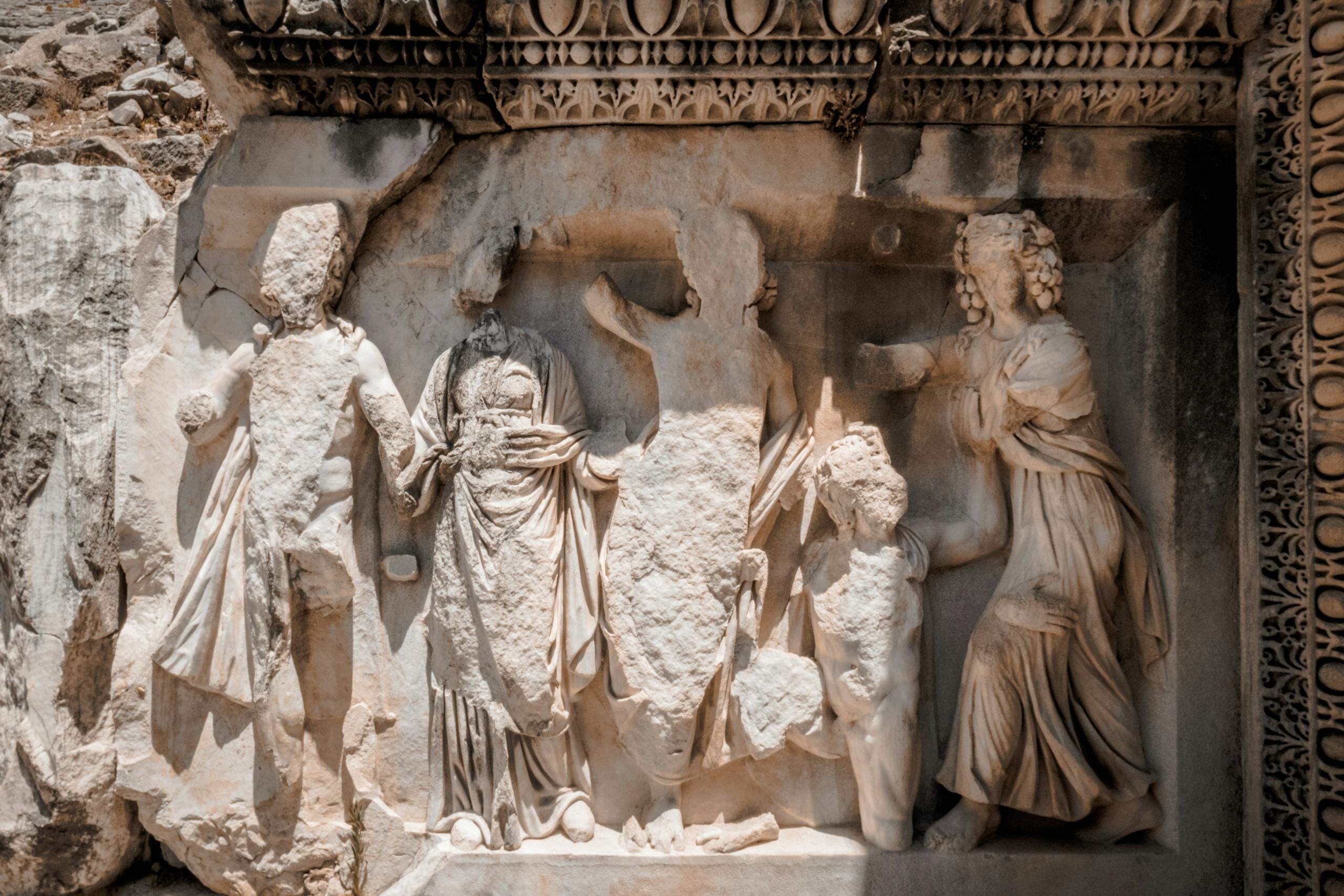
Pliny the Elder wrote a 37-volume encyclopedia of natural history, which is either an impressive dedication or a cautionary tale about having too much time on one’s hands.
Within those volumes, he dispensed sexual advice that reads like a dare. Men wishing to dampen excessive desire were told to try drinking urine infused with lizard.
Men seeking enhanced vigor could apparently find it in amulets fashioned from vulture lungs. Women dealing with fertility troubles were pointed toward remedies involving infant excretions.
The Romans did not lack confidence in their prescriptions. What Pliny lacked in clinical trial data, he compensated for with sheer creative conviction. Points for commitment.
Ge Hong- The Taoist Approach to Conservation
The fourth-century Chinese philosopher Ge Hong brought a more measured, philosophical lens to the question of sexual energy. Drawing on Taoist thought, he argued that jing, the vital essence contained in semen, was a finite and precious resource.
Ejaculation, in his view, was a kind of spiritual hemorrhage. By practicing controlled, non-ejaculatory sex, a man could redirect that energy upward through the body, nourishing the brain and extending his lifespan.
It sounds eccentric until you realize that versions of this philosophy underpin tantric traditions still practiced today. Ge Hong may have been ahead of his time, or at least ahead of Pliny.
Aristotle- Eat Your Vegetables (For Reasons)
Aristotle gets credit for systematizing Western thought, but he also weighed in on the aphrodisiac potential of food.
He observed that certain pungent and aromatic foods could enhance female arousal by affecting bodily fluids, a rudimentary but not entirely wrong instinct about the relationship between diet, physiology, and desire.
Modern science confirms that nutrition affects hormone levels, circulation, and mood, all of which influence sexual experience.
Aristotle didn’t have the biochemistry to explain why, but he noticed the pattern. Which, for 350 BCE, is respectable empiricism with a side of onions.
Lucretius- Detach, Enjoy, Move On
The Roman poet Lucretius had little patience for the suffering that comes with obsessive desire.
In On the Nature of Things, he argued that fixating on an unattainable lover produced real physical anguish, and that the cleanest solution was straightforward: seek pleasure elsewhere, without entangling it in emotional dependency.
He wasn’t advocating recklessness so much as rational detachment, the idea that desire shouldn’t colonize your peace of mind. It’s a position that would feel at home in a modern philosophy podcast, delivered by someone who owns exactly two houseplants and sleeps very well.
Rousseau- He Told On Himself
Jean-Jacques Rousseau, Enlightenment philosopher and champion of human freedom, wrote one of history’s more startlingly candid autobiographies. In Confessions, he described how, as a child, being spanked by his caretaker produced feelings he couldn’t quite categorize but definitely couldn’t forget.
He connected this early experience to his adult erotic imagination, making him one of the first major thinkers to publicly acknowledge the psychological roots of sexual taste.
Whatever you think of Rousseau… and there are good reasons to think complicated things about him, he opened a door that Freud would later walk through with a notepad and an agenda.
Kant- Consent Is Non-Negotiable

Immanuel Kant was not a romantic. His moral philosophy was built on categorical imperatives and rational duty, not candlelit dinners. But his thinking on sex was genuinely ahead of its time.
He argued that treating another person purely as a means to your own gratification, using them as an object, was a profound ethical failure.
His metaphor was a sucked lemon: once consumed for its juice and discarded, the lemon has not been respected as a lemon.
Crude, yes. But the underlying principle, that mutual respect is non-negotiable in intimacy, forms the philosophical backbone of modern consent ethics. Kant may have been joyless, but he wasn’t wrong.
Albertus Magnus- Keep It Simple
Saint Albertus Magnus, the 13th-century scholar and theologian, took a no-frills approach. Sexual pleasure, in his view, was a tolerable human necessity when practiced within marriage and in moderation.
He recommended the missionary position as sufficient. Not inspired, but sufficient. His counsel reflects the medieval church’s broader project of containing and regulating desire rather than celebrating it, which, historically speaking, worked about as well as you’d expect.
Still, his acknowledgment that pleasure had a legitimate (if carefully supervised) role in human life was a meaningful concession for a 13th-century man of the cloth.
Freud- Sex Explains Everything

Sigmund Freud arrived in the late 19th century with a theory so sweeping it reordered how Western culture understood the human mind: sexual energy, which he called libido, drives virtually everything we do.
Our dreams, our neuroses, our creativity, our relationships, all of it, in Freud’s framework, trace back to desire and its complications. Much of his specific theorizing has since been revised, challenged, or outright discredited.
But his core insight, that sexuality is not separate from psychology, that what happens in the bedroom (or is repressed out of it) shapes who we are, fundamentally changed medicine, literature, and culture.
Whatever his flaws, Freud made desire intellectually respectable in a way it had never quite been before.
Conclusion
From Pythagoras counting seasons to Freud counting dreams, the history of human thought about sex is a testament to one enduring truth: we have always been trying to understand ourselves through our desires.
These thinkers got plenty wrong, Pliny spectacularly so, but they got something right, too. Pleasure is not just biological. It is philosophical, ethical, poetic, and deeply personal.
The conversation they started, across centuries and continents, is still the one we’re having now.