Ever found yourself stuck in a situation where forgetting just one thing turned your day upside down? Maybe it was your wallet, your keys, or even just a charger, and suddenly everything came to a screeching halt. It’s more common than you think, and yet, it’s so easy to avoid. These small, often overlooked items have the power to make or break your day.
Imagine a world where your life doesn’t grind to a halt just because you missed one crucial thing before leaving home. Want to avoid those stress-filled moments? Here’s what you should always have with you before you step out the door.
Cellphone

We do not carry a phone only to scroll or answer messages. A cellphone now acts as a map, a camera, a wallet, a flashlight, a calendar, a booking tool, a work device, and an emergency contact point all at once. Leaving home without it can make a person feel oddly cut off, and in many cases, that feeling is justified.
The practical value becomes obvious the moment plans change. Delays happen, addresses get mixed up, rides need to be arranged, confirmation codes must be pulled up, and directions often need to be checked in real time. A fully functional phone helps us adapt without drama. Carrying it is no longer just a habit of modern life; it is one of the simplest forms of daily preparedness we have.
Notebook and Pen
There is something quietly dependable about a notebook and a pen. Phones are efficient but also distracting, fragile, and limited by battery life. A small notebook gives us a place to capture directions, names, reminders, ideas, shopping notes, quick observations, or unexpected instructions without unlocking a screen or worrying about signal and charge.
We also tend to think more clearly when we write something down with intention. The act of putting words on paper slows the mind just enough to sharpen focus. Whether we are handling work tasks, personal errands, or creative thoughts that arrive at inconvenient times, a notebook and pen remain one of the most reliable backup systems we can carry.
Extra Jacket or Light Layer
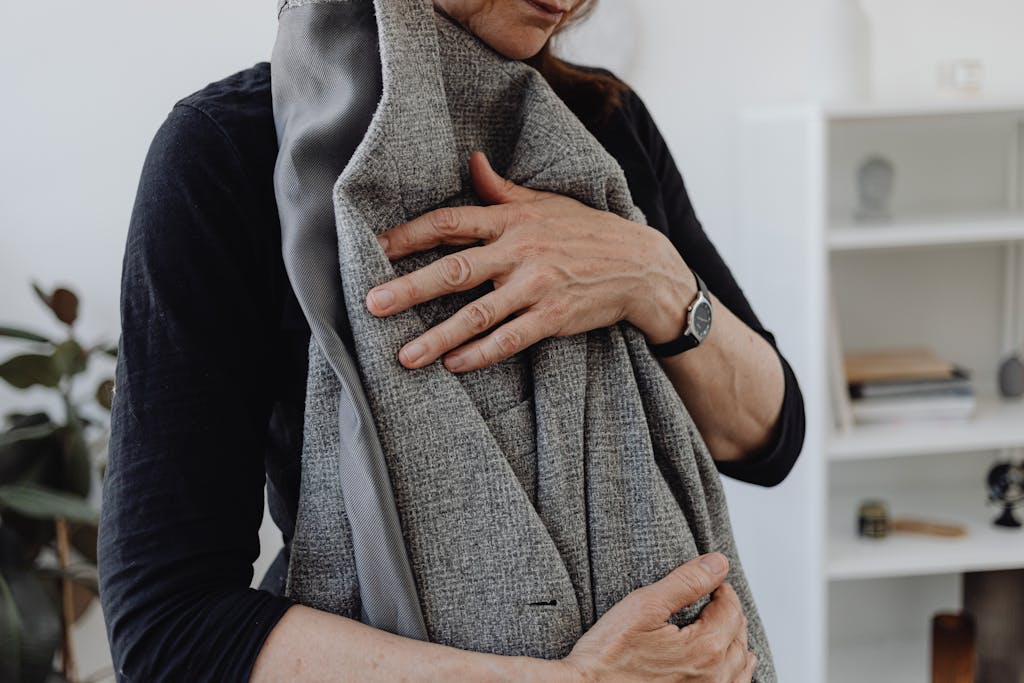
The weather has a way of changing tone without asking permission. A day that starts warm can turn windy by evening, an over-air-conditioned office can feel miserable after an hour, and a light drizzle can quickly make a short walk feel much longer. Carrying an extra layer protects us from those shifts before they start dictating our mood and comfort.
The best option is something lightweight, compact, and easy to fold into a bag or leave in the car. We do not need a bulky coat for every outing; we just need a practical layer that offers flexibility. An extra jacket is one of those items that may sit quietly unused for days, then suddenly become the thing we are most grateful to have.
Wallet or Card Holder
We should never underestimate the value of carrying a wallet or slim card holder that actually contains the essentials we need. It is not just about money; it is about identity, access, and the ability to solve problems on the spot without depending on luck. When we have our identification, payment cards, transit pass, and any key membership cards in one place, we remove a surprising number of potential delays from the day.
A good wallet also helps us stay organized under pressure. When we reach a checkout line, get stopped in traffic, check into an appointment, or need to verify who we are, fumbling through pockets and bags wastes time and creates stress that could have been avoided. The best wallets are not necessarily large or expensive; they are simply well-structured enough to keep the right things within reach.
Keys
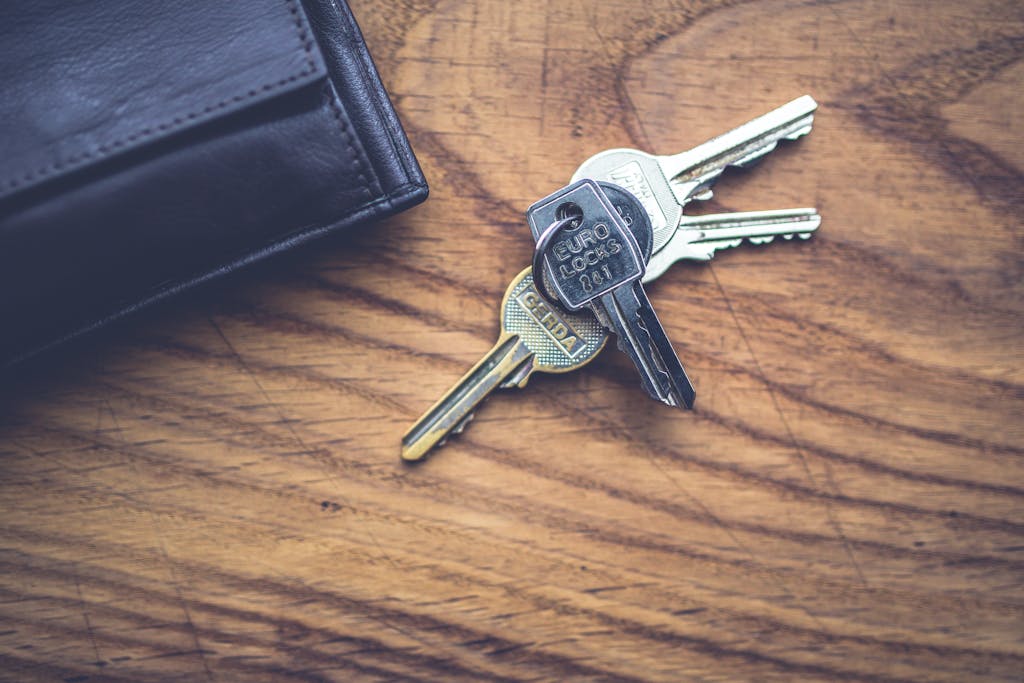
Few forgotten items create more instant frustration than keys. They control access to the places and tools that shape our routines, our homes, our vehicles, our offices, our lockers, and sometimes even our mailboxes. When keys are missing, the inconvenience is immediate, and the cost can become painfully real if the solution involves lockouts, replacement keys, or a last-minute locksmith.
We are better off treating keys as non-negotiable rather than optional. A dedicated bowl by the door, a hook near the entrance, or a fixed pocket in a daily bag can save us from the daily ritual of searching surfaces in a hurry. For people who are often on the move, attaching a compact tracker to a keyring adds another layer of protection that can turn a potential disaster into a quick recovery.
Portable Charger
A phone is only useful when it has power, and that is why a portable charger belongs on every serious leave-home checklist. Even people who start the day with a full battery can watch it drain fast through navigation, calls, music, social media, work apps, and constant background activity. The device that keeps everything running can become useless long before the day ends.
We gain peace of mind when we keep a compact power bank in a bag, coat pocket, or car console. It turns travel delays, long commutes, unexpected overtime, and missed charging opportunities into minor inconveniences instead of full-scale problems. The smartest portable charger is not always the biggest one; it is the one we actually carry consistently and remember to recharge after use.
Reusable Water Bottle

Hydration is one of those needs people often neglect because the effects of ignoring it creep in quietly. We do not always notice the slow slide into discomfort, a dry mouth, a dull headache, lower energy, poor concentration, or irritability, until it starts affecting how the day feels. A reusable water bottle helps us stay ahead of that decline rather than react too late.
There is also a financial benefit that becomes obvious over time. Buying bottled water repeatedly is one of those small daily habits that feel harmless but add up remarkably quickly. Carrying our own bottle cuts waste, saves money, and gives us control over one of the simplest habits that supports health, comfort, and steadier energy throughout the day.
Sunglasses
Sunglasses are often treated like an accessory, but they earn their place as a practical daily essential. Bright sunlight can make driving more difficult, force us to squint through walks and errands, and leave us dealing with avoidable eye strain by the end of the day. The right pair of sunglasses improves comfort immediately and makes outdoor movement feel less harsh.
We also know that a sudden burst of bright glare can affect safety, especially behind the wheel or when crossing busy streets. A dependable pair of sunglasses stored in a hard case inside a bag or car helps us stay ready when the sun becomes more aggressive than expected. That one simple habit can make ordinary routines feel more controlled and less tiring.
Personal Medication
Some of the most important items to carry are the ones people rarely talk about until they need them urgently. Personal medication, pain relief, allergy tablets, lip balm, tissues, a few bandages, or any small care essential specific to our routine can make the difference between pushing through the day and having it thrown off by discomfort. These are not glamorous items, but they are often the most useful.
We should build these mini essentials around real life rather than around a generic packing list. A person prone to headaches needs something different from someone who wears contact lenses or manages allergies. The smartest daily carry setup is personal, not performative. It reflects what our day actually demands, not what looks impressive in a flat lay photo.
Hand Sanitizer

We touch more shared surfaces in a normal day than most people would care to count. Door handles, elevator buttons, payment terminals, railings, carts, gas pumps, and public counters all pass through dozens or hundreds of hands before ours. Hand sanitizer is one of the easiest tools we can carry to reduce that daily exposure when soap and water are not immediately available.
The real advantage lies in convenience. A small bottle clipped to a bag or tucked into a side pocket can be used in seconds, which makes the habit far more likely to stick. We do not need to turn hygiene into a dramatic ritual; we just need a practical way to stay a little cleaner in the spaces where germs move fastest.
Emergency Cash
Digital payments are convenient right up until they suddenly are not. A card reader can fail, a network can drop, a phone battery can die, a parking machine can reject tap payments, or a small local vendor may still prefer cash. Those moments tend to happen when we are already in a hurry, which makes the absence of backup money feel even more frustrating.
We are wiser when we keep a modest amount of folded emergency cash tucked into a secure part of the wallet or bag. It does not need to be a thick stack; just enough to cover transport, food, or one urgent purchase if the digital systems around us stop cooperating. Cash is old-fashioned only until it becomes the only thing that works.