The sky is supposed to be empty. Clouds, yes. Rain, fine. The occasional bird. But humanity has a long and well-documented history of looking up to find something falling toward them that has absolutely no business being airborne.
Here are ten of the strangest, most inexplicable, and occasionally tragic things that have genuinely dropped from above.
A Hammerhead Shark Landed on a Disc Golf Course

On May 18th, 2025, golfers at Splinter City Disc Golf Course in Myrtle Beach, South Carolina, were mid-round when a hammerhead shark fell out of the sky near the 11th hole. Not a small fish. A hammerhead shark.
The explanation, once it arrived, was only marginally less surreal than the event itself. An osprey had caught the shark from the ocean and was attempting to carry it back.
Ospreys are impressive hunters capable of lifting fish their own weight, but two aggressive crows harassed the bird into dropping its catch. The shark landed on the course.
The golfers, to their credit, appear to have handled this with reasonable composure. Wildlife experts confirmed the incident was an extreme but not impossible example of avian hunting going completely wrong. The shark did not survive. The golfers presumably finished their round.
SpaceX Satellite Debris Crossed the Midwest Sky
On January 28th, 2025, residents across southern Wisconsin, Michigan, and as far away as Chicago looked up to see a blazing streak crossing the sky.
It was fragments of a SpaceX Starlink satellite, specifically Starlink 5693, re-entering the atmosphere after its orbit decayed. The debris burned in a spectacular fiery arc visible across hundreds of miles.
Low-orbit satellites are designed to deorbit and burn up harmlessly, and most of the time they do. Occasionally, denser components survive re-entry and reach the ground.
As humanity places ever-larger constellations of satellites into orbit, SpaceX alone has launched thousands; the frequency of these displays is only going to increase.
The night sky is increasingly decorated with human debris, which is either a marvel of engineering or a cause for concern, depending on whether one lands on your car.
Two Tons of Gold Fell on a Siberian Airport

In 2018, a cargo plane departing Yakutsk Airport in Siberia experienced a hatch failure mid-flight. The cargo it was carrying, approximately two tons of gold bars, along with diamonds and platinum, cascaded out of the aircraft and rained down onto the runway and surrounding area over a stretch of roughly ten miles.
The Antonov An-12 aircraft, a Soviet-era workhorse, returned to the airport. Ground crews and local authorities spent considerable time recovering gold bars from the tarmac and the surrounding terrain. Most was accounted for.
Some, by various reports, were not immediately found, which raises questions about what a person does when they discover a gold bar in a Siberian field. The incident caused no injuries, which seems almost beside the point.
An Eagle Dropped a Baby Dingo into Someone’s Garden
In the highlands of Victoria, Australia, a resident discovered a small, injured puppy in their backyard, with no obvious explanation for how it had gotten there.
DNA testing confirmed it was a purebred alpine dingo, a rare find, as pure dingoes have largely been displaced by crossbreeding. The puppy, named Wandi after the nearby town of Wandiligong, had scratches on its back consistent with being carried by large talons.
A wedge-tailed eagle, Australia’s largest bird of prey, had apparently picked Wandi up as a meal, thought better of it or misjudged the weight, and dropped him into the garden below. Wandi survived, recovered, and was eventually transferred to a conservation sanctuary.
He also inspired a children’s book, which is the most Australian possible ending to a story about an eagle dropping a dingo on someone’s house.
Florida Residents Were Pelted by Frozen Iguanas
Cold snaps in South Florida produce a phenomenon that sounds like a nature documentary gone wrong: frozen iguanas falling from trees.
When temperatures drop sharply, which does happen in Florida, though briefly, cold-blooded iguanas lose muscular control and simply let go of whatever they’re perched on. They plummet to the ground in a stiff, apparently lifeless state.
Most of them are not actually dead. When temperatures rise again, the iguanas warm up, recover full function, and go about their business as if nothing happened.
Florida wildlife officials have repeatedly reminded residents not to bring the fallen iguanas inside to warm them up, on the grounds that a large lizard regaining consciousness and mobility in your living room is not an improvement.
The iguanas are, it should be noted, an invasive species. Florida’s relationship with its wildlife is complicated.
A Digital Currency Promoter Threw Money off a Roof

In December 2018, hundreds of Hong Kong dollar banknotes drifted down onto the streets of Sham Shui Po, a working-class district of Hong Kong.
Crowds formed immediately, people scrambling to collect the bills, each worth roughly $13 USD, as they floated down.
The source was a man named Wong Ching-Kit, a self-described digital currency promoter who had climbed to a rooftop with a supply of cash and apparently decided this was effective marketing.
It was not, in the conventional sense. The ensuing chaos drew police, and Wong was arrested. The event did generate extensive media coverage, which may have been the point.
It remains one of the more expensive and legally inadvisable publicity stunts in recent Hong Kong history.
A Storm Deposited an Alligator in a Charleston Neighborhood
In July 1843, making this the oldest entry on the list, a violent storm swept through Charleston, South Carolina, and reportedly deposited a live alligator in the city’s French Quarter.
Local accounts describe the animal lying in the street, disoriented and presumably furious, having been lifted from whatever body of water it called home and transported involuntarily to an urban neighborhood.
Meteorologists confirm that tornado-strength winds are entirely capable of lifting large animals. There are well-documented cases of fish, frogs, and other creatures being swept up by waterspouts and deposited miles away.
That an alligator is heavier and more alarming than a frog does not change the underlying physics. The 1843 Charleston alligator is one of the earliest recorded examples of a category of event that turns out to be more common than most people would prefer.
Giant Ice Blocks Started Falling from the Spanish Skies
In 2000, residents of southern Spain experienced something genuinely difficult to explain: blocks of ice weighing up to nine pounds began falling from clear skies.
They shattered windshields, damaged roofs, and left craters in the ground. There were no storms. No passing aircraft appeared to be the source.
Scientists investigating the events coined the term “megacryometeors” for the phenomenon. Unlike hailstones, which form during storms, megacryometeors appear to form in clear atmospheric conditions through processes that are still not fully understood.
The leading theories involve unusual interactions between temperature and humidity at high altitude. They have been documented in multiple countries since.
The sky, it turns out, is occasionally capable of generating large falling ice for no obvious reason, which seems like information everyone should have.
A Mysterious Black Substance Covered a Michigan Town
In February 2016, residents of Harrison Township, Michigan, woke to find their homes, cars, and streets coated in a thick black, oily substance that had apparently fallen overnight.
People were understandably alarmed. Laboratory analysis eventually identified the material as bird excrement, specifically waste from a large flock containing digested seeds, berries, and organic matter, which had produced a dark, viscous coating.
The mystery that lingered was not what it was but how so much of it had fallen so uniformly across such a large area.
The leading explanation involves a large, coordinated flock, possibly starlings, which form massive murmurations, releasing simultaneously as they pass over the township. The result was effectively a biological airstrike. Residents were advised to wash their cars.
A Stowaway Fell from a Plane over London
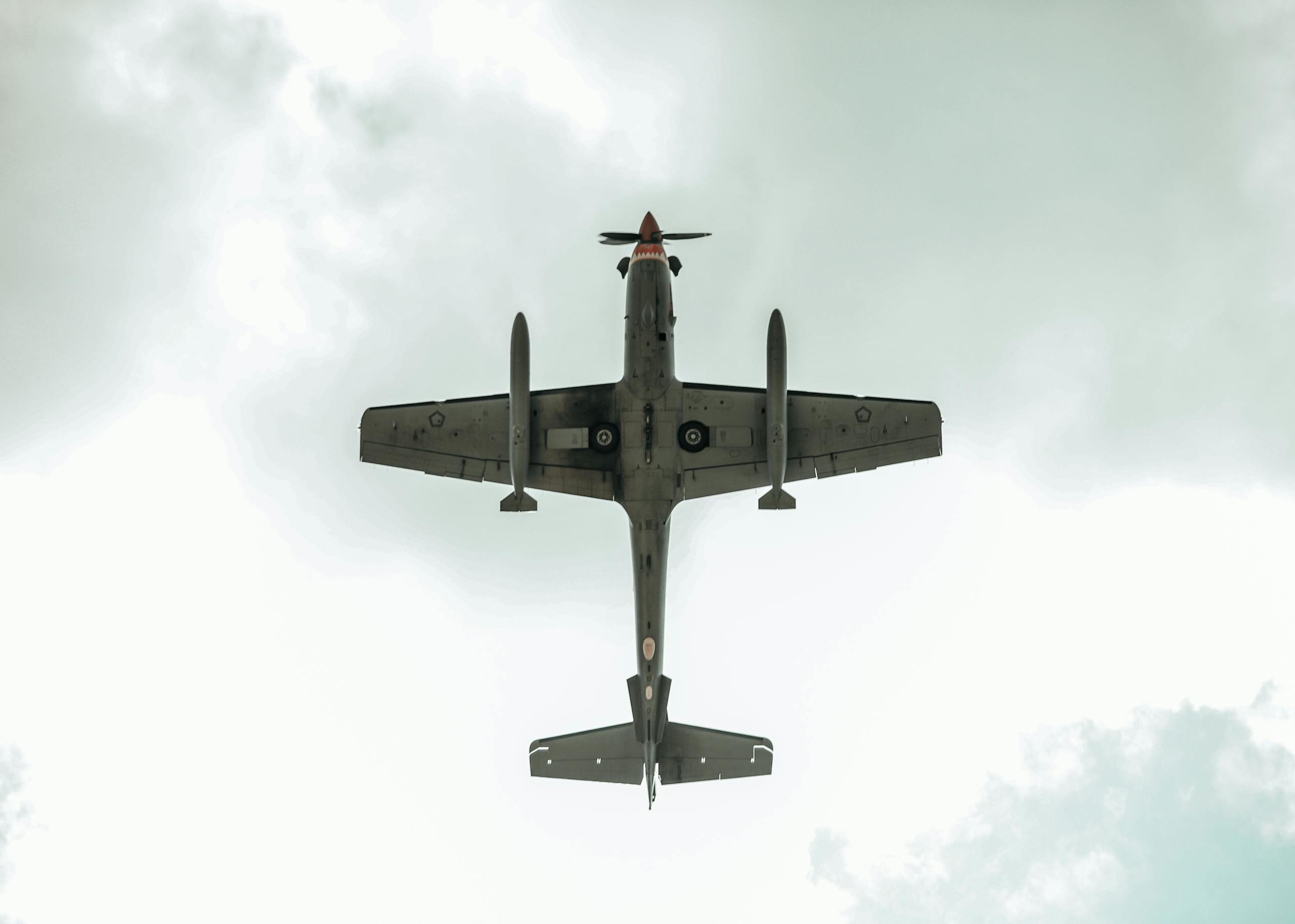
On June 3rd, 2019, a man fell from the landing gear of a Kenya Airways Boeing 787 as it approached Heathrow Airport and landed in a garden in Clapham, south London. The homeowner returned to find a body in his garden.
The man had been hiding in the landing gear compartment, a space with no oxygen, no heating, and temperatures that drop to minus 60 degrees Celsius at cruising altitude.
Stowaways in aircraft landing gear are rare but not unheard of. The survival rate is vanishingly low. The Clapham case was tragic, and the man was never formally identified.
It is a story that sits differently from the others on this list, less absurd, more a reminder that the same sky that occasionally drops gold bars and frozen iguanas is also, sometimes, the last thing someone sees when they make a desperate attempt to cross a border and run out of luck.
Conclusion
The common thread running through all ten of these stories is the same: the sky does not warn you. A hammerhead shark, a gold bar, a frozen iguana, none of them announce themselves before arriving.
The world above us is genuinely unpredictable, governed by wind patterns, orbital decay, bird decisions, atmospheric chemistry, and occasionally the choices of a man on a Hong Kong rooftop with too much cash and not enough judgment.
Looking up remains one of life’s more underrated activities. You never quite know what you’ll see coming.