Squirrels can be a major nuisance for home gardeners trying to grow tomatoes. These small rodents love ripe tomatoes just as much as we do! Unfortunately, squirrels have no qualms about invading your garden, digging up newly planted seedlings, or taking large bites out of your prized beefsteak tomatoes. Keeping squirrels away from your tomato plants is crucial for ensuring you actually get to enjoy the fruits of your labor.
In this article, we will provide tips and advice for deterring squirrels and protecting your tomato plants. Strategies will include physical barriers like fencing and netting, natural repellents using smells and tastes squirrels hate, removing food sources to make your yard less attractive, and scaring them off with sounds, lights, and predators.
Why Do Squirrels Eat Tomatoes?
While birds and rabbits often get blamed, the culprits behind these frustrating nibbles are frequently our adorable, acrobatic neighbors: squirrels. But why exactly do these furry friends target our prize tomatoes? Here’s the inside scoop:
- Hunger and Thirst. Tomatoes boast a surprisingly high-water content, making them a tempting source of hydration, especially during hot summer months. So, a squirrel taking a single bite and leaving the rest may be seeking just a quick quench, not a full-blown tomato feast.
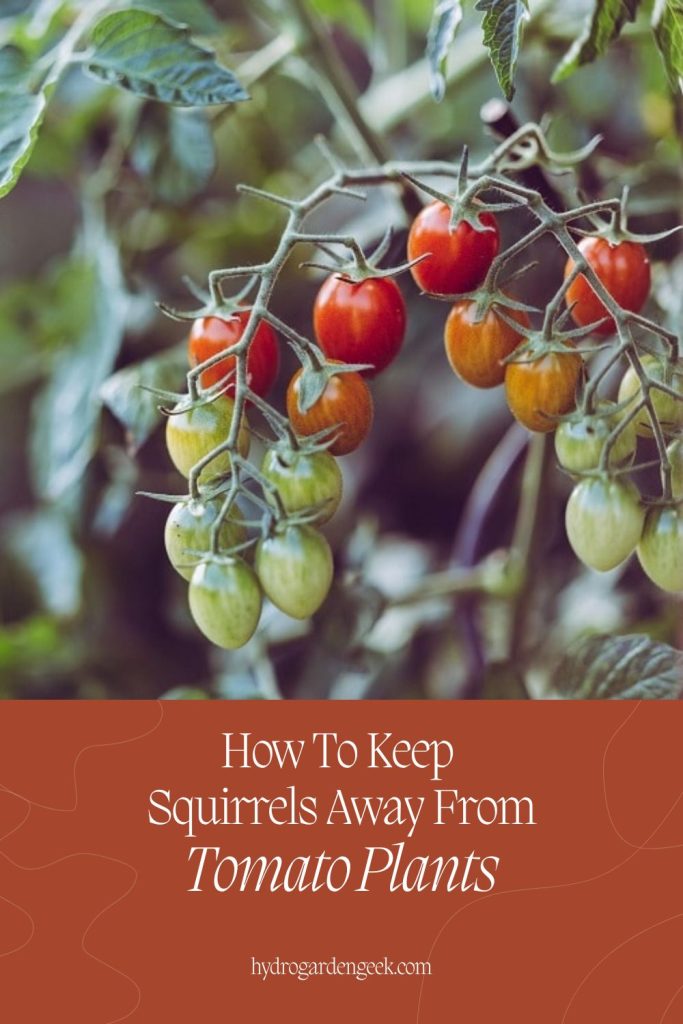
- Ripeness Matters: Squirrels are opportunistic feeders, prioritizing readily available and easy-to-digest food. This means they’re most drawn to perfectly ripe tomatoes, with their soft texture and sweet sugars. Green, unripe tomatoes hold little appeal thanks to their astringency and lack of accessible nutrients.
- Sensory Cues: The vibrant red color of ripe tomatoes acts like a beacon for hungry squirrels. These visual cues, combined with the sweet aroma emanating from the fruits, effectively signal a high-value food source, making them irresistible to resist.
- Competition and Scarcity: When food sources are scarce in their natural habitat, squirrels may venture further into human territories and become bolder in their foraging ventures. This increased desperation can lead them to try new foods, including tomatoes, which they might normally avoid.
- Learned Behavior: If a squirrel discovers a tasty tomato feast in one garden, it’s likely to remember and return for more. This behavior can be passed on to other squirrels in the area, leading to a localized surge in tomato pilfering.
How to Find Out That Squirrels Are Eating My Tomatoes?
Figuring out that squirrels are the culprits behind the damage to your tomato plants can be tricky. Squirrels are sly creatures and good at covering their tracks. However, there are some telltale signs that point the finger at squirrels as the perpetrators:
- Half-eaten tomatoes with small bite marks. If you find tomatoes in your garden that have had small chunks taken out of them, with only the flesh removed, it is likely the work of squirrels. The bite marks will be small, similar to nibble or teeth marks, indicating a smaller animal was the culprit. Squirrels are known to take a few quick bites out of tomatoes to get to the juicy flesh inside. Larger pests like rats or birds would leave much larger bite marks or take much bigger portions.
- Dug up seedlings. If your newly planted tomato seedlings look like they have been uprooted from the soil, with the stems chewed off, squirrels are to blame. They will sometimes dig up the tender young seedlings and eat the roots and stems, destroying your plants. You may notice some seedlings overturned in the garden bed, with soil scattered around from the digging. The chewed off appearance of the stems indicates squirrels’ sharp teeth were at work.
- Missing tomatoes. Squirrels are sneaky thieves and will steal ripe tomatoes right off the vines. If you notice your ripe tomatoes disappearing overnight, with no remnants left behind, squirrels are likely the culprits. They can quickly grab tomatoes and carry them away in their mouths to enjoy elsewhere, leaving no trace behind. It’s best to harvest ripe tomatoes daily before squirrels beat you to them.
- Damaged lower branches. Lower tomato vine branches and stems are vulnerable to squirrel damage through nibbling or chewing. Examine the lower parts of your tomato plants for any chew marks on the more tender branches and stems near the ground. Squirrels can access these easily and will gnaw on them for the green matter inside.
- Shells or nut remnants. If you find any walnut shells, acorn fragments, pecan shards, or other nut pieces laying around your tomato plants, it’s a sign of squirrels. They will often take advantage of any available food sources like nuts while also pilfering your tomatoes. The remnants are evidence they’ve been there feeding.
- Bushy-tailed bandits. Nothing confirms squirrel presence more than actually spotting them in the act! Their distinctive bushy tails are unmistakable. Set up a trail camera or wildlife camera and aim it at your tomato plants to monitor for activity. This can catch sneaky squirrels in the process of stealing your tomatoes.
Protecting Tomato Plants from Squirrels
Squirrels can be a major nuisance to home gardeners growing tomato plants. These bushy-tailed rodents have an affinity for ripe, red tomatoes and will raid plants to get their fill. Fortunately, there are several effective methods for protecting tomato plants from squirrel damage.
Eliminating Squirrel Attractions
Reduce the appeal of tomato plants to squirrels by removing nearby food sources and shelter. Clean up any fallen tomatoes, rotting vegetables, or nuts around the garden daily. Prune back bushes, trim overhanging branches, and cut away hiding spots to deny squirrels cover.
Squirrels are less likely to target tomato plants if other food is available. Provide alternative foods they like better, such as corn cobs, sunflower seeds, or ears of dried corn. Place these decoy foods away from the garden to shift squirrel attention. Be sure to check and replace decoys regularly.
Installing Motion Sensor Lights
Motion activated lighting is an effective squirrel deterrent. Squirrels generally avoid well-lit areas, as it leaves them more vulnerable to predators. Place motion sensor spotlights around the garden and aim them at tomato plants. Choose LED bulbs or other high-efficiency lighting to save energy.
For best results, use strobe light motion detectors. Strobe lighting startles squirrels and creates the illusion of danger. Place multiple strobe lights around the garden for full coverage. Check batteries and positioning regularly to ensure activation upon squirrel approach. Strobe lighting works well overnight when other deterrents are inactive.
Using Sounds to Scare Squirrels
Squirrels have sensitive hearing, and startling sounds can effectively scare them away. Place battery-powered ultrasonic repellers around the garden that emit high-frequency sounds when motion is detected. Though silent to humans, these sounds painfully annoy squirrels. Check and replace batteries regularly for peak performance.
Loud alarms or radios can also deter squirrels. Set motion detectors to trigger a loud horn, siren, or talk radio when activated by a squirrel. Vary the sounds to prevent habituation. Ensure speakers are positioned to aim sound directly at plants. The sudden noise will frighten off garden raiders.
Using Dogs and Cats to Deter Squirrels
One of the best ways to keep squirrels away from tomato plants is to use dogs or cats as natural deterrents. Dogs will actively chase squirrels from the yard, while cats will scare them off with their presence and scent. Have pets patrol the garden area frequently to instill fear in local squirrels. An added benefit is pets will alert you to squirrel presence with barking or hissing.
Install a perimeter fence around vegetable gardens to prevent squirrels from sneaking in undetected. The fence should be at least 5 feet tall with an outward overhang to stop squirrels from climbing over. Bury the bottom 1 foot of fencing to prevent tunneling underneath. Gates should close securely to block all squirrel access points.
Sprinkler Deterrents
Motion activated sprinkler systems effectively protect gardens from hungry squirrels. When squirrels try to approach tomato plants, the system shoots a startling yet harmless jet of water. This trains squirrels to avoid the area.
Use a sprinkler system with multiple heads for full coverage across the garden. Adjust nozzles to hit key plants and likely squirrel approach routes. Check wiring connections regularly to keep the system operating properly. Routine maintenance is essential for consistent squirrel deterring activation.
Applying Predator Urine
The scent of predator urine, such as coyote or fox, triggers a fear response in squirrels that keeps them away. Apply these commercial repellent sprays around the garden’s perimeter and directly onto plants. Reapply after several weeks once scent starts fading. Exercise caution handling these strong-smelling formulas.
Hang urine-soaked cotton balls in pantyhose around plants. The scent diffuses better than spray bottles for longer efficacy. Refresh cotton balls with additional predator urine every 2 to 3 weeks. The continual scent reinforcement enhances the deterrent effects. Make sure to handle urine-soaked items with gloves.
Planting Additional Crops
Give squirrels designated plants to distract them from tomatoes. Interplant quick-growing crops like radishes, lettuce, and beans throughout the garden. These swiftly maturing plants help satisfy squirrel appetite, so they’re less likely to target tomatoes.
Train vining crops like cucumbers, peas, and squash onto trellises surrounding tomato plants. This living barrier obscures tomatoes to obscure them from sight. The alternative fruits and vegetation provide added forage to shift squirrel attention. Replant distraction crops as needed to sustain the protective buffer.
Using Fences and Cages as Barriers
Physical barriers like fences and cages can effectively protect tomato plants from squirrels. These obstacles deny squirrels direct access to ripened tomatoes and deter their raiding attempts. There are some fencing and caging options to secure vegetable gardens using simple, affordable materials. Custom solutions can also be constructed to suit specific garden layouts and squirrel behavior observed.
Position barriers to fully enclose plants while allowing enough room for vine growth and fruit development. Inspect installations routinely to identify and mend any access points exploited by clever squirrels trying to reach tomatoes within. With robust construction and proper maintenance, vegetable gardens can be made virtually impenetrable to thieving squirrels.
Required Equipment
Gardening tools and materials are necessities for installing effective squirrel barriers. Having the right protective fencing supplies on hand allows quick response to squirrel intrusions when tomatoes ripen. Essential items include:
- Hammer and nails. A sturdy claw hammer along with an assortment of 1 to 2-inch exterior-grade nails are used for assembling wooden framework and attaching wire fencing. The variety of nail sizes accommodates different construction needs. Protect hands with gloves when hammering.
- Pliers and wire cutters. Both standard and needle nose pliers assist wiring and fencing manipulation during barrier construction. Wire cutters cleanly trim mesh fencing or snip binding twist ties. Cut resistant gloves guard fingers when cutting wire.
- Lumber and posts. These provide structural support for fencing and cages. Pressure treated 4×4 posts set in concrete withstand years of use, while wooden 1×2 boards frame cages. Check lumber quality before purchase to avoid warped or cracked pieces.
- Wire fencing. Galvanized steel wire with 1/2 to 1 inch spacing limits squirrel climbing yet allows airflow and light for plants. Sturdier 14- or 16-gauge wire resists gnawing with pliers, helping bend and attach. Vinyl coated fencing also protects hands.
- Zip ties and metal wire. Tightly binding seams with zip ties or wire prevents openings for squirrels to exploit. Carry various sizes of ties and 20-gauge wire when inspecting for holes. Check existing ties and replace worn ones before they loosen and fail.
Setup
Properly installing squirrel barriers takes planning and precision for maximum effectiveness. Follow these key set up steps:
- Choose location. Position fences to entirely surround plants, providing at least 2 feet clearance from stems to allow vine spread and fruit growth. Cages should fit snugly around tomato plants with room for plant size increase. Scout for potential access points like low-hanging branches.
- Prepare soil. Loosen soil across the surface area where fences will be installed using a spading fork or tiller. Level any uneven spots or raised beds to enable solid post footing. Dig narrow trenches to sink wire fence edges below dirt level. Inside cages, enrich and smooth the ground before enclosing plants.
- Set posts and framework. Fence posts should extend at least 2 feet in the ground and less than 8 feet apart. For cages, assemble wooden frames first before wiring. Check structure alignment using a carpenter’s level. Secure all joints with several nails or screws drilled at angles to fortify.
- Attach wiring. Pull fencing taut across posts, leaving no sagging gaps along the bottom edge for squirrels to crawl under. Staple or wire mesh to framework every 6 inches or fewer. For easiest access, install hinged cage and fence doors that latch closed. Wrap excess wiring around post tops to prevent climbing over.
- Walk perimeter. Vigilantly inspect barriers for even tiny gaps, then seal them completely using more wiring, zip ties, caulk, or spray foam. Check for shifting or holes weekly and perform repairs promptly before squirrels discover them.
Natural Squirrel Deterrents
In addition to physical barriers, there are several homemade repellent options for keeping squirrels away from tomato plants using natural ingredients. These remedies rely on scents, spiciness, or toxic compounds disagreeable to squirrels. Continued applications are required since most wear off over several days. Natural remedies offer affordable, environmentally-friendly protection that diversifies squirrel control efforts.
Squirrel-Deterring Companion Plants
Certain plants naturally repel squirrels with their strong scents, making ideal tomato garden companions. Marigolds release an odor from their roots that drives away rodents when planted amidst vegetables. Cheery nasturtiums contain peppery oils squirrels dislike. Garlic chives or regular garlic bulbs also deter with their potent aroma.
Interplant repellent flowers and herbs throughout susceptible crops. Concentrate them along borders facing woodlands and squirrel habitat, creating a living squirrel barrier. For potted tomatoes, incorporate repellent plants into the same containers. Maintain companion plants by pruning and regular watering for robust scent emission protecting tomatoes.
Apple Cider Vinegar Solutions
Apple cider vinegar’s strong smell and tartness drives squirrels away from tomato plants. Soak cotton balls in the vinegar and attach them around stems with twist ties. The vinegar diffuses in all directions, repelling squirrels when approached. Replace the cotton balls as the acid scent diminishes.
Fill shallow dishes with cider vinegar and position them around the garden perimeter. Vinegar odor intensity alarms squirrels on contact, signaling tomato plants are unsafe. Refill dishes daily, since sunlight and moisture reduce potency. Use protective gloves when handling vinegar.
Mint as a Repellent
The smell of mint is unpleasant to squirrels, and they will avoid areas where it grows. Plant mint herb around susceptible plants, making a protective border to fox squirrel foraging. Keep it trimmed and propagate fresh cuttings to maintain a vigorous plant density.
To maximize scent impact, make mint spray using pure mint essential oil and water. The oil has more concentrated fragrance than plants alone. Apply the spray directly onto tomato fruit, vines, and around plants weekly or after rain washes aroma away.
Chili Flake Deterrents
Squirrels detest spicy sensations, and capsicum-derived spices like chili flakes cause oral irritation, driving them away. Sprinkle dry flakes onto ripening tomatoes or the surrounding soil. Reactivate faded spice by respraying after rain or watering. Handle chili powders cautiously, wearing eye protection and dust mask.
Mix ground flakes into flour paste glue before drying to create long-lasting chili strings. Hang these irritating garlands around plants to deter squirrels. As a bonus, the swaying strings also frighten squirrels with unpredictable motion. Monitor garlands, replacing faded strings about every 2 weeks through harvest.
Coffee Ground Barriers
Used coffee grounds make an eco-friendly squirrel repellent. Spread grounds around the garden perimeter, forming an unpleasant aromatic barrier that deters entry. Respray the area after rain washes away older grounds. The caffeine content and acidity may also contribute to squirrel avoidance. Coffee grounds boost soil nutrition as they decompose.
Stuff large mesh bags with used grounds and position them around plants. The longer-lasting bags prevent heavy rains from washing away the squirrel deterrent. Their presence also provides a physical obstacle, and processing the unknown sack’s purpose bewilders squirrels. Replace bags as they degrade after several weeks.
Chili Pepper Sprays
Similar to chili flakes, sprays made from hot chili peppers chase away squirrels from tomatoes due to burning sensations. Blend or process peppers, dilute with water, then strain pulp chunks before spraying onto plants. Reapply weekly for most effective protection. Use extreme caution when handling peppers, avoiding skin or eye contact.
Add a few drops of dish soap to the chili spray recipe, which amplifies its sticking ability and longevity on plant surfaces. The soap also helps the capsaicin ingredients penetrate squirrel skin upon contact for maximum burning impact. Do not use soap additives near harvest time, and triple rinse tomatoes before consumption.
Bamboo Skewer Deterrents
Pointed bamboo skewers placed around plants pierce and discomfort squirrels that attempt to pass through them. Insert skewers into the ground angled outwards, with just the sharp tips above soil level for concealed discomfort. Cluster 3 to 5 skewers around each plant as necessary, depending on squirrel persistence.
Glue or wire skewer sticks into irregular wooden boards. Arrange spiky plank barriers blocking major garden access routes. Check placements regularly to replace loosened skewers promptly. Use thick gloves when handling bamboo to avoid finger piercing. Discard broken bamboo bits during garden maintenance to prevent debris injuries.
Key Considerations for Squirrel Trapping
Squirrel trapping requires planning and preparation for safe, effective implementation. Consider these key guidelines before installing traps:
- Select humane traps. Enclose squirrels unharmed for relocation, using cages or boxes with food bait inside and a trip door for entry. Available options range from single catch to multiple catch designs in various sizes. Ensure openings accommodate local squirrel dimensions. Check traps daily to promptly release non-target species.
- Strategize trap placement. Position cages along fences or raised boards in areas of highest observed squirrel activity near plants. Conceal traps with branches when possible, allowing the bait smell to attract them. Secure traps to prevent tipping with weight inside. Set out multiple traps to capture sufficient numbers for control.
- Choose tempting baits. Bait traps with slices of apple, walnuts or pecans, peanut butter mixes, or even meat-based cat food. Vary baits to determine local squirrel preferences for best luck. Refresh stale baits to maintain scent for continual attraction over days. Tie baits securely so squirrels cannot steal them without entering traps.
- Manage humane release. Before releasing, move trapped squirrels at least 5 miles from the original area to prevent immediate returns. Select rural, wooded release sites with water providing them the best odds to survive. Obtain permission for private property releases, avoiding urban settings with greater threats.
- Monitor and adjust. Check traps twice daily to provide captured squirrels prompt relief. Record activity to identify areas needing more traps and favored baits. Add deterrents like sprinklers upon release sites if residual squirrels persist. Trap until no captures occur for one week minimum, indicating substantial control.
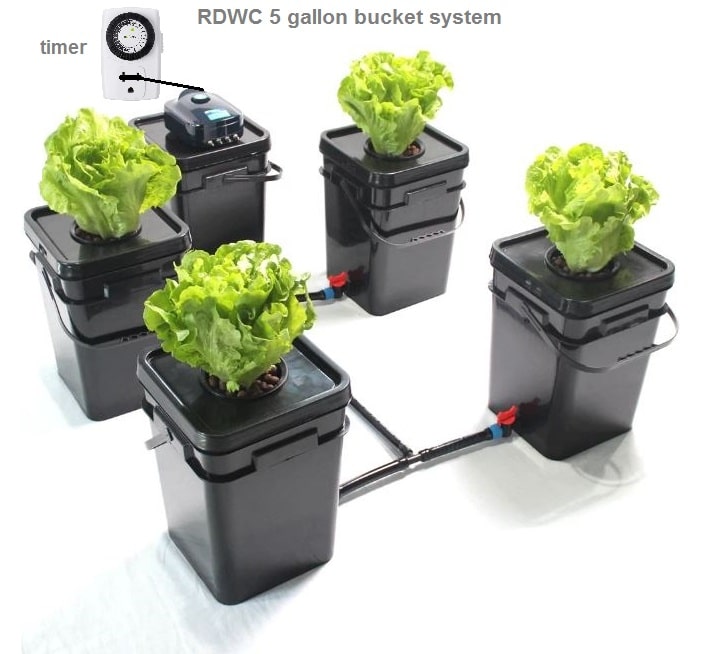
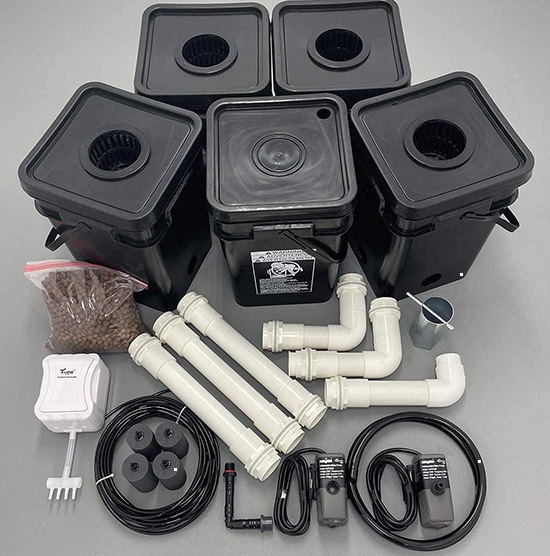
- Reservoir Bucket Connected to 4 Grow Buckets
- 400 Gallon/hour Circulating Pump
- Large 5 gallon square buckets, pre-drilled
FAQs
Is white vinegar effective for deterring squirrels?
White vinegar can be an effective squirrel repellent due to its strong smell and sour taste. Spray undiluted white vinegar directly on tomato plants, focusing on ripe fruits and vulnerable areas. Reapply after rain. The vinegar irritates squirrels' scent receptors and taste buds without harming plants.
What other pests target tomato plants?
Tomato plants can be targeted by various pests besides squirrels, including aphids, cutworms, hornworms, snails, slugs, flea beetles, and tomato fruit worms. These insects damage leaves and fruits through chewing, sucking sap, or transmitting plant diseases.
How can tomato plants be protected from all pests?
Use integrated pest management by combining physical barriers like row covers, natural insecticidal soaps, beneficial insects, crop rotation, attractant plants, and removing diseased material to protect tomatoes from all pests. Check plants daily for early signs of damage.
Do squirrels feed on tomatoes nocturnally?
Squirrels are diurnal animals, meaning they are active during the daytime. They prefer to feed on tomatoes and other garden produce in the early morning and late afternoon hours. However, hungry squirrels may make overnight raids if tomato plants are close to structures where they nest.