Sleep paralysis can turn an ordinary night into something that feels like it’s been stolen from a horror film. We wake up, sense the room around us, try to move, and discover that the body has gone silent. The eyes may open, the mind may race, and yet the arms, legs, voice, and chest can feel trapped under an invisible weight. For some people, the fear gets worse because the episode is accompanied by a shadowy presence, pressure on the chest, buzzing sounds, or the feeling of floating outside the body.
The frightening part is that sleep paralysis feels supernatural even though it has a biological explanation. During an episode, the brain appears to wake up before the body fully leaves rapid eye movement (REM) sleep. That creates a strange overlap: waking awareness, dreamlike imagery, and temporary muscle paralysis all at once. Medical sources describe sleep paralysis as a temporary inability to move or speak that happens while falling asleep or waking up, often with hallucinations or chest pressure.
What Sleep Paralysis Actually Means
Sleep paralysis occurs at the fragile boundary between sleep and waking. We are conscious enough to notice the room, hear sounds, and feel fear, but the body remains locked in a state of sleep. This temporary loss of movement is called atonia, and it normally protects us during REM sleep so we do not physically act out vivid dreams. In sleep paralysis, that protective system lingers for a few seconds or minutes after awareness returns.
This makes the experience feel deeply confusing. We are awake, but the body behaves as if it still belongs to a dream. We may breathe, move our eyes, and remain aware of our surroundings, yet voluntary movement remains blocked. That mismatch explains why many people describe sleep paralysis as being trapped inside their own body.
Why the Body Freezes During Sleep Paralysis
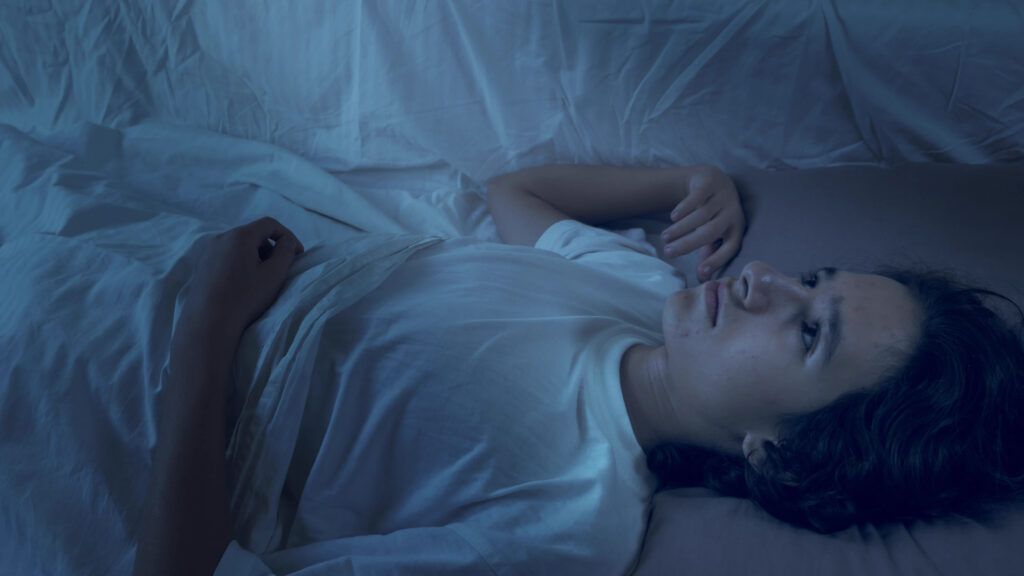
The body does not freeze because something is holding it down. It freezes because REM sleep uses temporary muscle shutdown as a safety feature. During REM sleep, the brain becomes highly active, dreams grow vivid, and the muscles relax so strongly that major movement becomes nearly impossible. Research reviews describe sleep paralysis as a mixed state in which waking awareness and REM muscle atonia overlap rather than switching cleanly from one state to the next.
That overlap matters because the brain rarely handles mixed signals calmly. It may be realized that we cannot move, scan the room for danger, and then turn fear into a story. The body feels pinned, so the mind searches for an explanation. That is why sleep paralysis often feels like an attack, even when the real cause is a sleep transition glitch.
Why Sleep Paralysis Hallucinations Feel So Real
The hallucinations in sleep paralysis feel vivid because the dream system has not fully switched off. We may see a figure near the bed, sense someone in the room, hear footsteps, feel pressure on the chest, or experience floating and falling. Sleep Foundation notes that hallucinations appear in an estimated 75% of sleep paralysis episodes and often fall into three groups: intruder hallucinations, chest pressure hallucinations, and vestibular-motor sensations such as floating or out-of-body feelings.
These hallucinations can feel more convincing than an ordinary dream because the bedroom still looks real. We are not fully in a dream world, so the hallucination layers over a familiar room. That makes the mind say, “This is happening here,” which increases panic. The fear then sharpens attention, and the episode can feel longer than it actually is.
The “Shadow Figure” Is One of the Most Common Terrors

Many people describe a dark figure standing nearby, sitting on the bed, or watching from the corner of the room. This type of hallucination is often called an intruder hallucination. It usually creates the feeling that another presence has entered the room, even when no one is there. Harvard Health describes this category as a sense of an evil or disturbing presence nearby.
The shadow figure feels powerful because the brain already feels helpless. When we cannot move, the mind is more likely to interpret vague shapes, low light, or internal fear as threats. A pile of clothes, a doorway, or a dark corner may become part of the hallucination. Sleep paralysis does not need a detailed monster to terrify us; it only needs awareness, fear, and the inability to move.
Why the Chest Can Feel Heavy
Chest pressure is one of the most alarming parts of sleep paralysis. Some people feel as if someone is sitting on them, pressing down, or choking them. Cleveland Clinic lists chest pressure and suffocation sensations among common symptoms, and Harvard Health describes these as “chest pressure hallucinations” that may come with a feeling of choking or suffocation.
The frightening detail is that most people can still breathe during sleep paralysis, even though breathing may feel restricted. REM sleep changes breathing patterns, and the fear response can make every breath feel more dramatic. When the brain notices immobility and chest heaviness at the same time, it may create the terrifying impression of being crushed. That sensation explains why, in many cultures, old folklore described sleep paralysis as a demon, witch, ghost, or spirit pressing on the sleeper.
How Long Does Sleep Paralysis Usually Last
A sleep paralysis episode can feel endless, but it usually lasts only a short time. Cleveland Clinic says an episode may last a few seconds or up to 20 minutes, though it usually lasts a couple of minutes. The Sleep Foundation reports that symptoms may last from seconds to 20 minutes, with an average of 6 minutes.
Fear stretches time during the episode. A few seconds can feel like several minutes because the brain focuses intensely on escape. The person may try to scream, kick, sit up, or call for help, yet nothing responds. The episode typically ends on its own, or when someone speaks to or touches the person, or when the brain fully exits the REM state.
Is Sleep Paralysis Dangerous?
Sleep paralysis usually feels dangerous, but the episode itself is generally not considered harmful. NHS describes it as scary but harmless for most people, and Harvard Health notes that it is not usually a serious medical risk on its own. The real problem comes when the fear becomes repetitive enough to damage sleep habits, increase anxiety, or make someone dread bedtime.
That distinction matters. We should not dismiss the experience just because it is usually harmless. A person who has repeated terrifying episodes may start sleeping less, staying up late, using alcohol to relax, or avoiding sleep altogether. Those coping habits can worsen sleep disruption, and sleep disruption can feed the cycle.
What Causes Sleep Paralysis?
Researchers have not identified one single cause for every case. Sleep paralysis appears more likely when the sleep-wake system becomes unstable. Poor sleep quality, irregular sleep schedules, stress, trauma, alcohol use, anxiety disorders, and family history have all been linked to a higher risk in medical literature.
The simplest way to understand the trigger is this: anything that fragments sleep can raise the chance of waking at the wrong moment during REM sleep. Shift work, jet lag, all-nighters, inconsistent bedtimes, and heavy stress can all make that timing messier. The body wants a smooth transition from dream sleep to waking, but disrupted sleep can make it clumsy.
Why Stress Makes Episodes More Likely
Stress keeps the nervous system alert, and an alert nervous system does not always sleep smoothly. When we go to bed worried, overstimulated, or emotionally exhausted, the body may enter sleep without fully calming down. Sleep may become lighter, more broken, and more likely to produce sudden awakenings. Reviews of sleep paralysis research have linked stress, trauma exposure, anxiety symptoms, poor sleep, and psychiatric conditions with both frequency and intensity of episodes.
This does not mean sleep paralysis is “all in the mind.” It means the brain and body respond to pressure. Stress can disrupt sleep architecture, increase nighttime awakenings, and make fear feel sharper at the onset of an episode. When fear becomes part of the pattern, the bedroom itself can start to feel unsafe, which makes the next night harder.
Why Sleeping on Your Back Can Make It Worse
Sleeping on one’s back appears to make sleep paralysis more likely for some people. NHS specifically advises people who experience sleep paralysis not to sleep on their back, and Harvard Health lists back sleeping among sleep habits linked with the condition.
Back sleeping may worsen the sensation of chest pressure or breathing discomfort during an episode. It can also make snoring or airway problems more noticeable in people who already have breathing issues during sleep. We do not need to treat sleep position as the only cause, but changing position can be a practical first step for people who repeatedly wake up frozen on their backs.
The Link Between Sleep Paralysis and Narcolepsy
Sleep paralysis can occur on its own, but repeated episodes may point to another sleep disorder. Narcolepsy is one of the most important conditions to consider, especially when sleep paralysis appears alongside sudden daytime sleep attacks, extreme daytime sleepiness, vivid hallucinations when falling asleep, or sudden muscle weakness triggered by emotion. Sleep Foundation notes that recurrent sleep paralysis can be associated with narcolepsy, and Harvard Health separates isolated sleep paralysis from recurrent sleep paralysis linked to possible sleep disorders.
We should pay attention to patterns. A one-time episode after sleep deprivation may not signal anything serious. Frequent episodes with daytime exhaustion, collapsing sleepiness, or muscle weakness deserve medical evaluation. That does not mean panic; it may mean the body is asking for a proper sleep assessment.
Sleep Paralysis, Anxiety, PTSD, and Panic

Sleep paralysis has strong links with mental health stressors, especially anxiety, panic symptoms, and trauma-related conditions. NHS lists PTSD generalized anxiety disorder, and panic disorder among conditions linked with sleep paralysis. The systematic review by Denis, French, and Gregory also found associations with stress and trauma, psychiatric symptoms, and sleep problems, with particularly strong prevalence patterns in PTSD and panic disorder.
The connection makes sense because sleep and emotional regulation share the same body. When the nervous system stays guarded, sleep may become fragmented. When sleep becomes fragmented, emotional control can weaken. Sleep paralysis then becomes more than a strange night event; it can become part of a wider stress loop.
How Common Is Sleep Paralysis?
Sleep paralysis is more common than many people think, although estimates vary widely across studies and populations. StatPearls reports an overall population estimate of around 7.6%, while Sleep Foundation says roughly 20% of the general population experiences infrequent episodes. A sleep quality review also notes that prevalence estimates vary widely, with one systematic review giving a lifetime estimate of 7.6% and individual studies ranging from 2% to 60%.
Those numbers tell us two useful things. First, sleep paralysis is not rare enough to be treated as strange or shameful. Second, research varies because studies define episodes, populations, and measurement methods differently. Students, people with disrupted sleep, people with trauma histories, and people with sleep disorders often report higher rates than the general population.
What To Do During an Episode
During sleep paralysis, the best first response is to remember that the episode will pass. We can focus on slow breathing, eye movement, or tiny muscle movement such as wiggling a toe or finger. Trying to fight the entire body at once can increase panic. Smaller movements may help the brain transition fully into wakefulness.
We can also use a mental script before bed if episodes recur. A simple phrase such as “This is sleep paralysis, it is temporary, I can breathe, it will end” can reduce terror when the episode begins. The goal is not to overpower the episode with force. The goal is to lower fear long enough for the sleep-wake switch to finish changing states.
How To Reduce Sleep Paralysis Episodes
The strongest prevention strategy starts with regular sleep. NHS recommends 7 to 9 hours of sleep, consistent sleep and wake times,regular exercise, and avoiding large meals, smoking, alcohol, or caffeine shortly before bed. It also advises avoiding back sleeping when sleep paralysis keeps happening.
We can make prevention more practical by treating sleep as a rhythm rather than a random nightly event. A steady bedtime, dim lights before bed, less late caffeine, fewer all-nighters, and a calmer wind-down routine can reduce sleep fragmentation. People who work shifts or travel across time zones may need extra consistency because their sleep clock is already disrupted.
When To Speak With a Doctor
Medical support becomes important when episodes happen often, cause intense fear, create anxiety about sleep, or leave someone tired all day. NHS advises seeking medical advice when sleep paralysis happens often and causes anxiety, fear of sleep, or constant tiredness from poor sleep. Harvard Health also recommends speaking with a doctor when episodes feel distressing or repeat over time.
A clinician may ask about sleep habits, stress, medications, substance use, nightmares, snoring, daytime sleepiness, and symptoms of narcolepsy or sleep apnea. They may suggest a sleep diary, sleep hygiene changes, treatment for insomnia, therapy for anxiety or trauma, or referral to a sleep specialist. The goal is not to label every episode as a disease. The goal is to find out whether another treatable condition keeps triggering the episodes.
The Real Horror Is Not the Episode, But the Misunderstanding
Sleep paralysis feels terrifying because it attacks our most basic sense of control. We expect waking up to mean immediate movement, clear perception, and safety. Instead, the brain gives us awareness without motion, fear without a visible cause, and dream fragments inside a real room. That combination can make a harmless sleep event feel like proof of danger.
The more we understand the mechanism, the less power the terror holds. Sleep paralysis is not a sign that the body has failed, nor is it proof that something supernatural has entered the room. It is usually a temporary REM sleep overlap that becomes frightening because the mind wakes before the muscles do. Once we see the pattern, we can protect sleep, reduce triggers, and know when repeated episodes deserve professional help.