If you’re a tomato gardener, you know that pests can seem like the worst enemies, sneaking into your garden and leaving behind a trail of damage. But with the right tools, you can fight back and protect your plants. Tomato plants are particularly susceptible to pests, from tiny aphids to larger hornworms, and dealing with them quickly and effectively is key to keeping your garden healthy. Let’s dive into the seven most common tomato pests and how to get rid of them.
Aphids
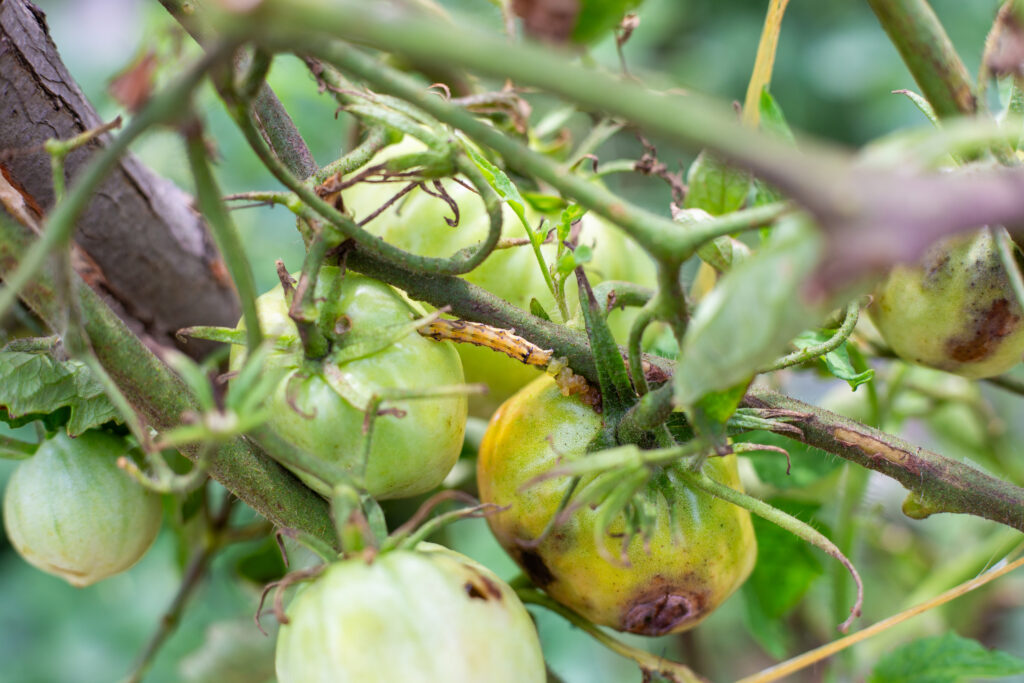
Aphids might be small, but they sure know how to make a mess. These tiny pests suck the sap from your tomato plants, weakening them and often leaving behind sticky honeydew that attracts mold. They tend to gather on the undersides of leaves, where they’re hard to spot.
How to get rid of aphids:
- Natural predators: Bring in ladybugs or lacewings, which will feast on aphids without harming your plants.
- Insecticidal soap: A simple, eco-friendly solution that suffocates aphids.
- Neem oil: Works wonders at repelling and preventing aphids from coming back.
Whiteflies
Whiteflies are often mistaken for little white moths. These pests love to hang out on tomato plants’ leaves and suck out the sap. Their feeding weakens the plant and causes its leaves to yellow. But their real danger lies in their ability to transmit plant viruses.
How to get rid of whiteflies:
- Sticky traps: Place yellow sticky traps near your plants to catch adult whiteflies.
- Neem oil spray: A natural way to disrupt their feeding and breeding.
- Beneficial insects: Parasitoid wasps, natural predators of whiteflies, can keep their populations in check.
Tomato Hornworms
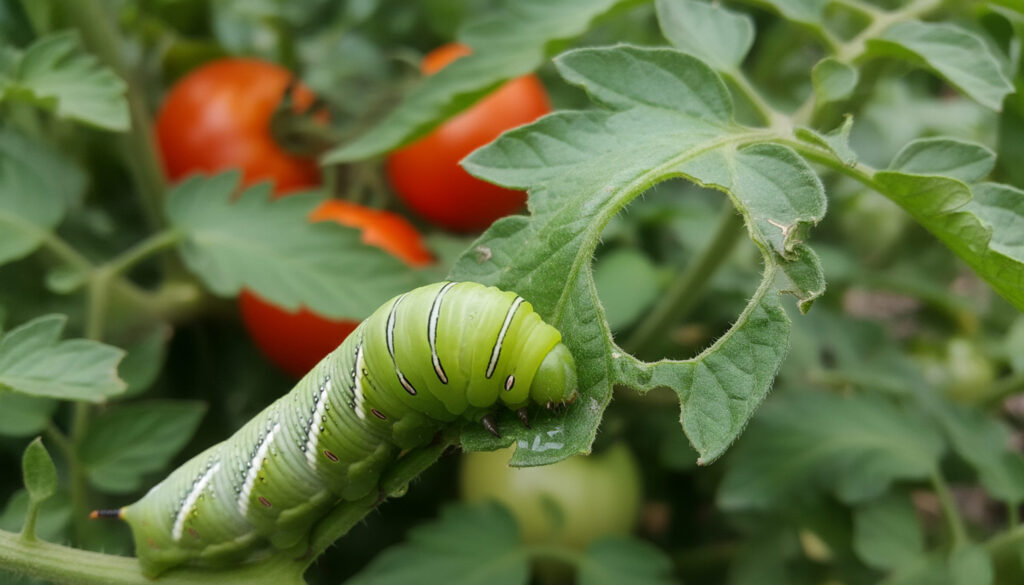
Tomato hornworms are the stuff of garden nightmares. These large green caterpillars blend seamlessly with the foliage, making them difficult to spot until they’ve already started chewing through your plants. Their voracious appetites can defoliate a tomato plant in no time.
How to get rid of hornworms:
- Manual removal: Simply pluck the worms off the plant and drop them into soapy water.
- Diatomaceous earth: This powder can be sprinkled around your plants to create an effective barrier against pests like hornworms.
- Bacillus thuringiensis (Bt): This natural bacterium targets caterpillars and can be used as a pesticide.
Spider Mites
Spider mites are often difficult to see with the naked eye, but their damage is unmistakable. These microscopic pests cause speckled, yellowing leaves and, in severe cases, can lead to plant death. Spider mites thrive in hot, dry conditions, making them a common problem during the summer.
How to get rid of spider mites:
- Water spray: A strong jet of water can knock spider mites off your plants.
- Neem oil or insecticidal soap: These treatments smother the mites and stop them from reproducing.
- Predatory mites: These helpful bugs can be introduced to keep spider mites under control.
Cutworms
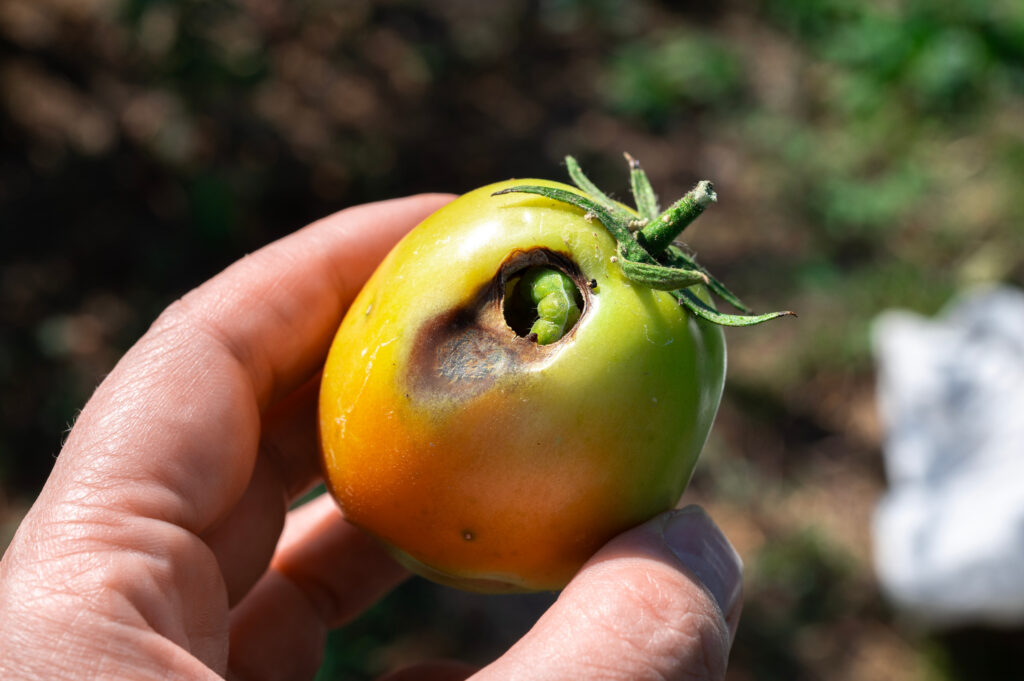
Cutworms are notorious for attacking young tomato seedlings. These pests hide in the soil during the day and emerge at night to chew through the stems of young plants, causing them to fall over. They typically target seedlings that are just starting to grow.
How to get rid of cutworms:
- Collars around seedlings: A simple cardboard or plastic collar around the base of seedlings can protect them from cutworms.
- Diatomaceous earth: Sprinkle it around your plants to create a physical barrier that cutworms can’t cross.
- Hand-picking: If you find cutworms, remove them at night when they’re most active.
Thrips
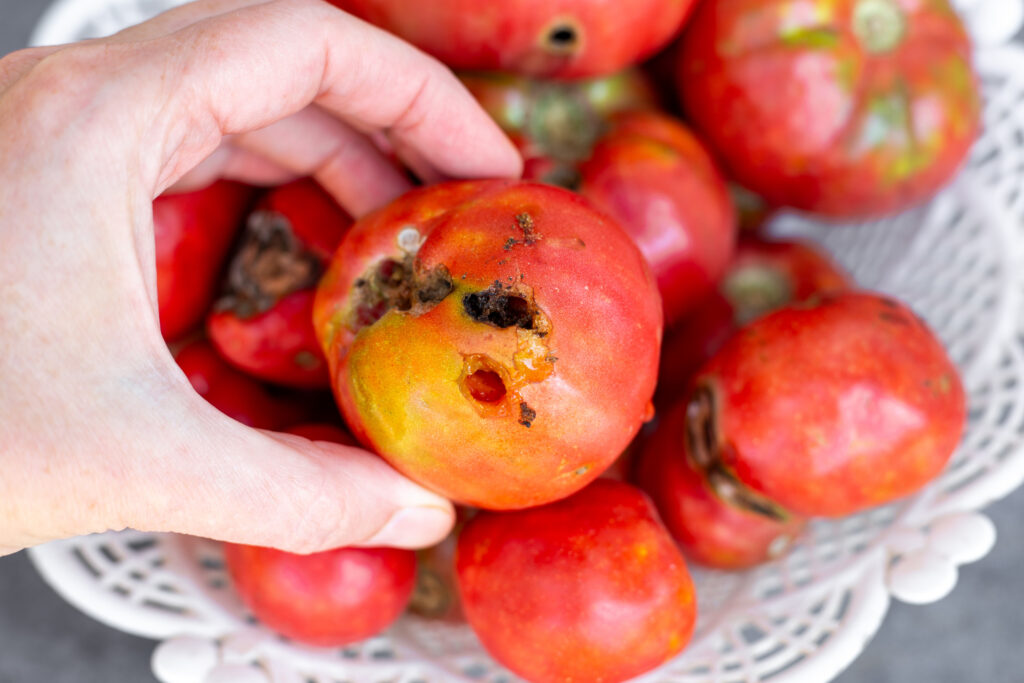
Thrips may be small, but they can do serious damage. These slender insects feed on the juices of tomato plant leaves, causing them to become deformed and scarred. Thrips can also transmit plant viruses, making them even more harmful.
How to get rid of thrips:
- Sticky traps: Set up blue or yellow sticky traps to catch adult thrips.
- Neem oil: An excellent natural repellent that works on a variety of pests, including thrips.
- Beneficial insects: Minute pirate bugs and predatory mites are natural predators that can help control thrips.
Fungal Infections
While not technically pests, fungal infections like powdery mildew and blight can devastate your tomato plants. These diseases thrive in humid conditions and can quickly spread to other parts of the plant, causing leaves to wilt and die.
How to get rid of fungal infections:
- Prune affected leaves: Cutting away infected parts of the plant can prevent the spread of the fungus.
- Fungicides: Organic fungicides like copper sulfate or neem oil can help control fungal diseases.
- Proper watering techniques: Avoid overhead watering, as it can encourage fungal growth. Instead, water the base of the plants to keep the leaves dry.