Open‑concept homes have become incredibly popular for their airy, expansive feel. However, many homeowners find themselves grappling with one glaring issue: a lack of privacy. While this design trend offers a sense of openness, it can also make your space feel too exposed. Fortunately, there are creative ways to introduce privacy and definition without resorting to major renovations. Here’s a more in-depth look at how to make your open‑concept home both functional and private.
Strategically Place Large Plants
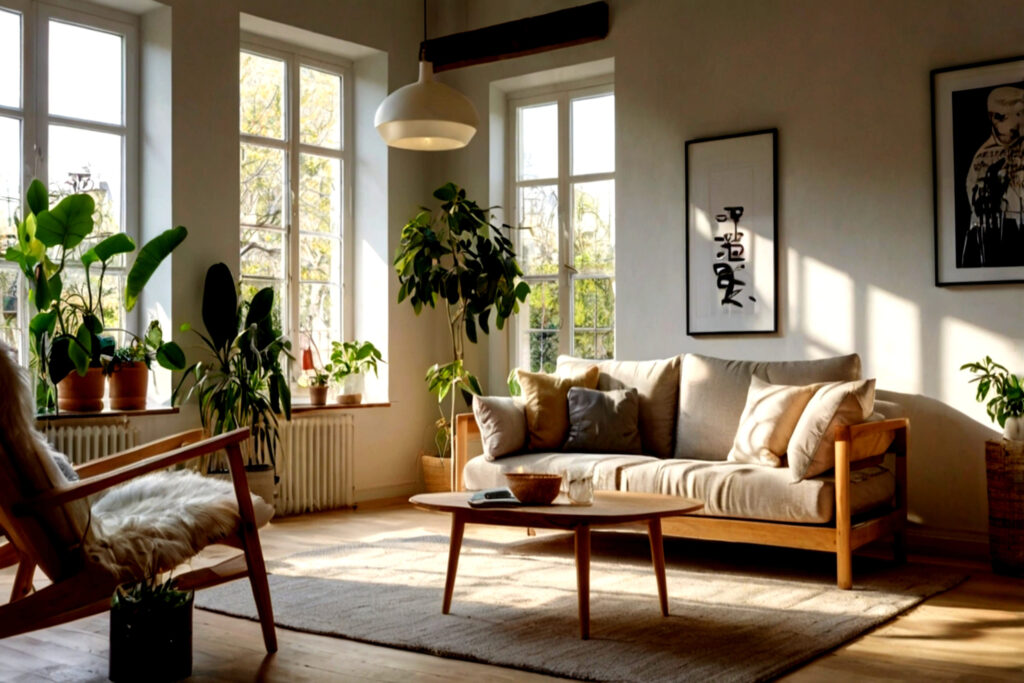
Tall, leafy plants like fiddle‑leaf figs or rubber trees can act as natural dividers between different zones in an open concept home. By thoughtfully positioning them, you create a green, living barrier that not only offers privacy but also adds life and texture to your space. Larger plants are especially effective at separating areas, such as a living room from a dining area, providing a visual boundary without disrupting the flow of the room.
Use Freestanding Room Dividers
Freestanding room dividers or folding screens are versatile, temporary solutions for adding privacy to open‑concept spaces. These dividers can be moved around to suit your needs, making them ideal for renters or anyone who prefers a non-permanent solution. You can use them to block off a specific area, like a guest sleeping nook or home office, or even to create a cozier environment for activities like yoga or meditation. Freestanding dividers come in a variety of styles, from minimalist metal screens to boho-inspired fabric panels, so you can choose one that suits your aesthetic.
Install Floor‑to‑Ceiling Drapery
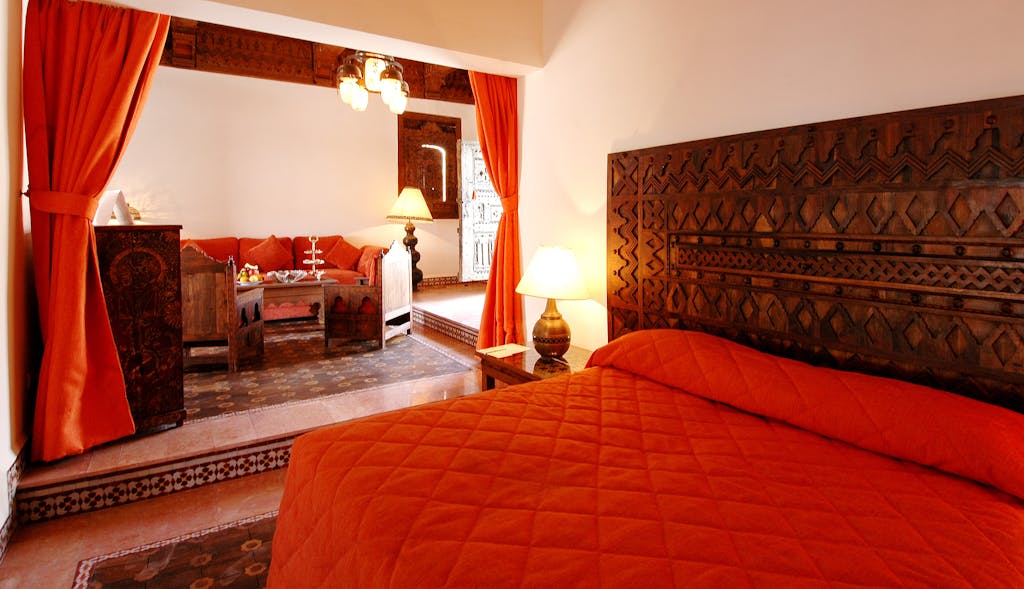
Floor‑to‑ceiling drapery on ceiling tracks offers the flexibility to divide your space when you need privacy and open it up when you want more airflow. Choose lightweight fabrics that don’t overwhelm the room. Light linen or cotton drapes can create a soft separation between spaces, such as a reading nook and the living room, or between your kitchen and dining areas. The beauty of this solution is that you can close them when you want privacy or pull them back to restore the sense of openness.
Incorporate Half Walls or Partial Partitions
Half walls or partial partitions are an excellent way to provide privacy while still keeping an open flow. These can be used to create a division between the kitchen and living room or even between a hallway and the main living area. Half walls are ideal because they don’t completely close off spaces, maintaining the openness that’s characteristic of open‑concept designs. They also work well in large rooms where you need to provide some level of separation without making the space feel cramped or claustrophobic.
Add Sliding Doors or Barn Doors
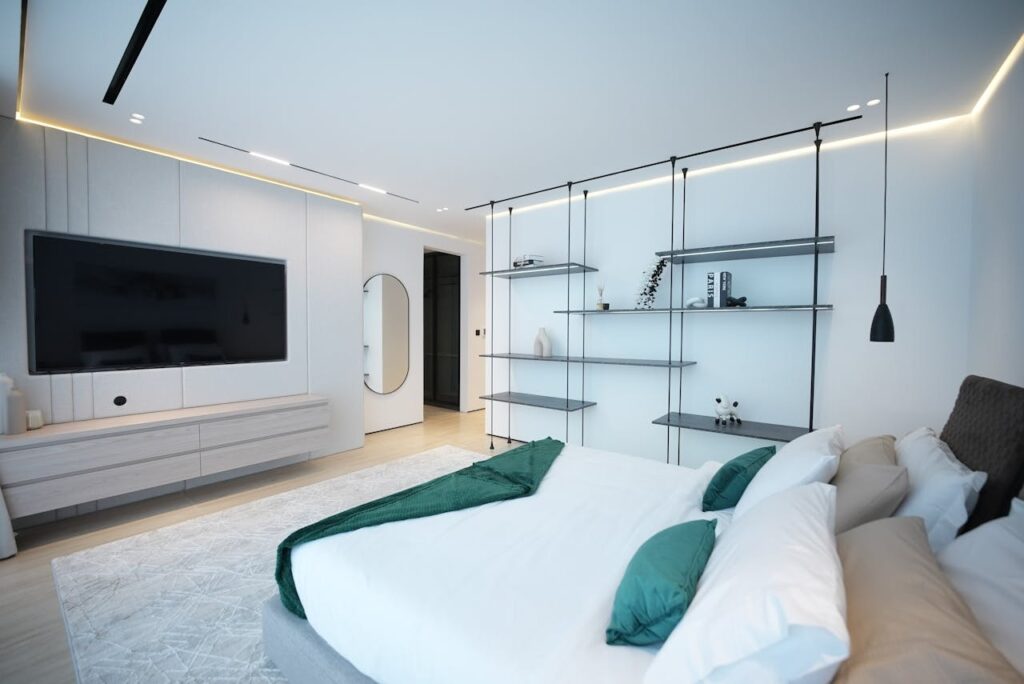
If you want the option to create more intimate, enclosed spaces without completely closing off the room, sliding doors or barn doors are a perfect solution. These types of doors can be used to temporarily section off areas, such as a home office or guest bedroom. The best part is that you can pull them shut for privacy and slide them back to open things up. They’re ideal for homes that need a blend of open and closed design elements.
Introduce Slatted Wood or Peek‑a‑Boo Panels
Slatted wood panels or frosted glass dividers are a stylish and subtle way to add privacy without making the space feel closed in. These dividers allow light to filter through while creating distinct zones. For example, a slatted wood divider between your living room and dining area can maintain the open‑concept feel while still offering a visual break between the spaces. This allows for privacy while preserving the airy, light atmosphere.
Use Hidden Door Bookcases
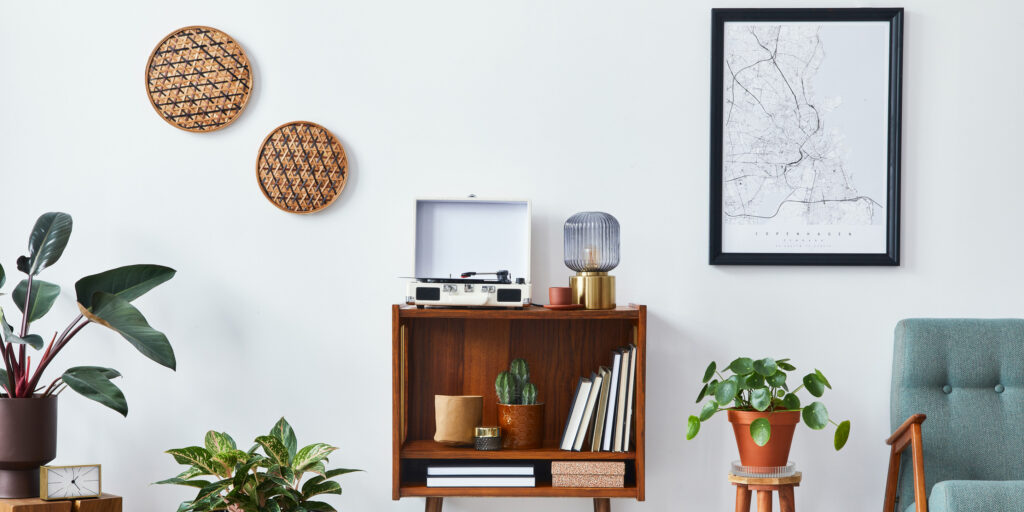
For a more creative, functional approach, consider building hidden-door bookcases that serve as both a room divider and a clever storage solution. These bookcases can blend seamlessly into your space and open to reveal private areas, like a small home office or a library nook. When closed, they serve as a divider between the living space and a more intimate room. Hidden doors provide the ultimate privacy while maintaining the aesthetics of your open‑concept design.
Install Frosted or Fluted Glass Partitions
Fluted or frosted glass partitions are another elegant solution for dividing your space. They offer a degree of privacy by obscuring sightlines, while still allowing natural light to flow through, preventing the room from feeling dark or closed off. This type of partition works well in areas like kitchens or bathrooms, where you need to create separation without sacrificing brightness or space. You can install these glass panels between living areas, or even use them as a stylish way to separate a workspace from the rest of the home.
Strategically Place Furniture
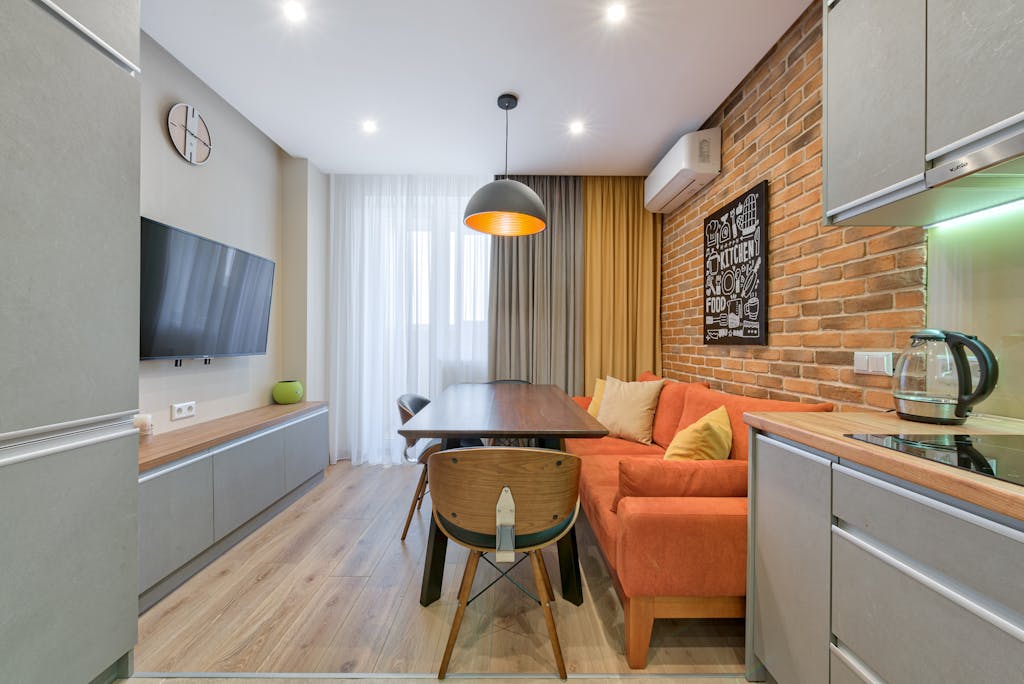
One of the easiest ways to create privacy in an open‑concept home is by arranging your furniture thoughtfully. Positioning your sofa, chairs, and tables so they face inward or turn away from high-traffic areas will naturally create boundaries between spaces. For instance, facing the back of a sofa toward the dining room while leaving the front open to the living area creates an obvious division without the need for physical walls. This method is especially effective in large rooms where you can delineate functional areas with just a few key pieces of furniture.
Add Area Rugs to Define Zones
Area rugs are a simple but effective way to break up space in an open‑concept home. By placing large rugs under specific furniture clusters, you can visually define distinct sections of a room, such as the living area, dining area, or home office. Rugs add warmth and comfort to your home and can also signal different activities within the same space. For example, a large rug under the dining table delineates the dining area while keeping the rest of the space open and accessible.
Play with Lighting to Define Spaces
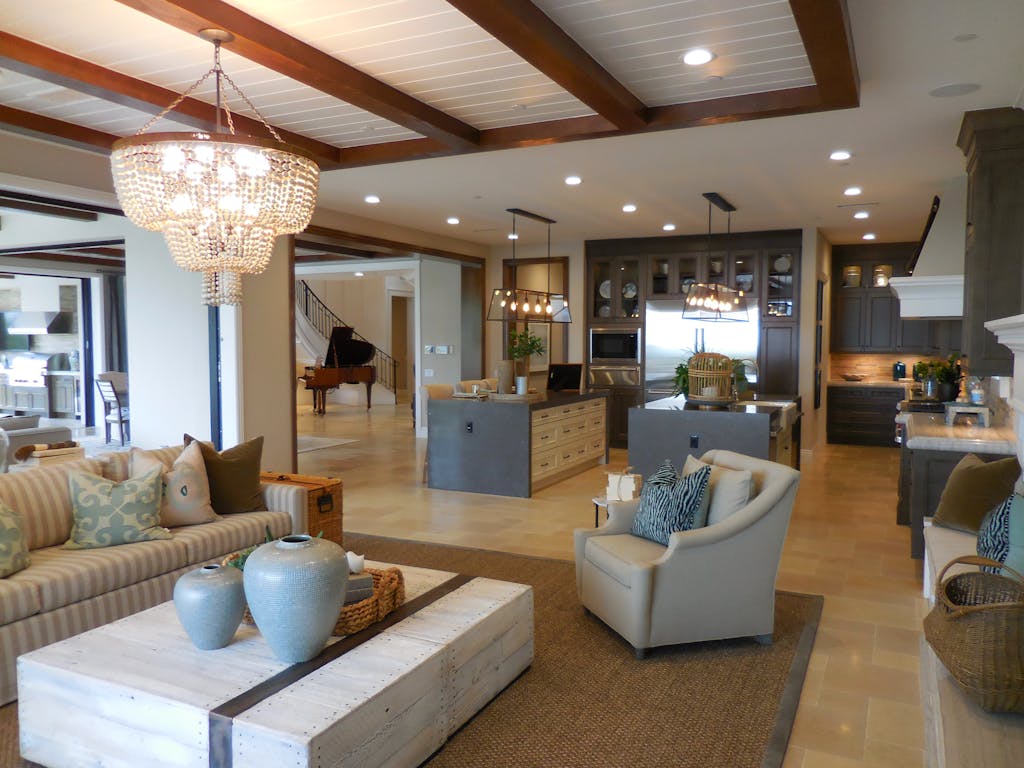
Lighting is an often-overlooked yet powerful tool for creating privacy in an open‑concept home. By adjusting lighting in specific areas, you can effectively signal different zones and activities. For example, bright pendant lights over the kitchen island define that space, while dimmer, warmer lighting in the living room creates a more intimate atmosphere. Use task lighting in workspaces and mood lighting in relaxation areas to subtly shift the energy in different zones.
Install Modular Walls or Screens
Modular walls or screens can create a fully customizable privacy solution in open‑concept homes. These walls are typically lightweight, movable, and can be rearranged as needed. You can create privacy in specific areas while maintaining an open feel in other parts of the home. Modular walls are perfect for people who want flexibility and the ability to change their layout based on the time of day or specific needs.
Conclusion
These methods can help you make your open‑concept home feel more private and personalized, all without the need for costly renovations or major construction. By combining physical dividers, strategic furniture placement, and lighting, you can enjoy the best of both worlds: openness and privacy without sacrificing style.