Animals with unusual diets reveal how far wildlife will go to survive, from blood-drinking bats and bone-eating vultures to sea slugs that steal sunlight from algae.
A dinner table in the wild doesn’t always look like claws, teeth, and clean hunting. Sometimes it looks like a tiny bird sipping blood from a seabird’s wound, a worm melting whale bones without a mouth, or a beetle rolling a ball of dung like treasure. Nature has no polite menu. It has survival, timing, hunger, and adaptation.
The strange part is that these bizarre feeding habits are rarely random. Many animals with unusual diets evolved this way because ordinary food was too scarce, too hard to digest, or too fiercely contested. The result is a world where poop becomes fuel, blood becomes dinner, bones become energy, and sunlight becomes a stolen snack.
Vampire Bats Turn Blood Into a Full Meal

The common vampire bat has one of the most famous unusual diets in the animal kingdom. Unlike fictional vampires, it doesn’t suck blood. It makes a small cut in the skin of a sleeping animal, then laps up the blood that flows from the wound. Only three bat species feed on blood, and they live from Mexico through parts of South America. San Diego Zoo explains that vampire bats often feed on mammals or birds and use a chemical in their saliva to keep blood flowing long enough for a meal.
Blood sounds rich, but it is a difficult diet. It is high in protein, low in fat and carbohydrates, and can expose the feeder to pathogens. Smithsonian notes that vampire bats are the only mammals known to survive on blood alone, making their biology unusually specialized. They also share regurgitated blood meals with hungry roostmates, turning their grim diet into one of the strangest examples of social cooperation in mammals.
Bearded Vultures Eat Bones Like Other Birds Eat Meat
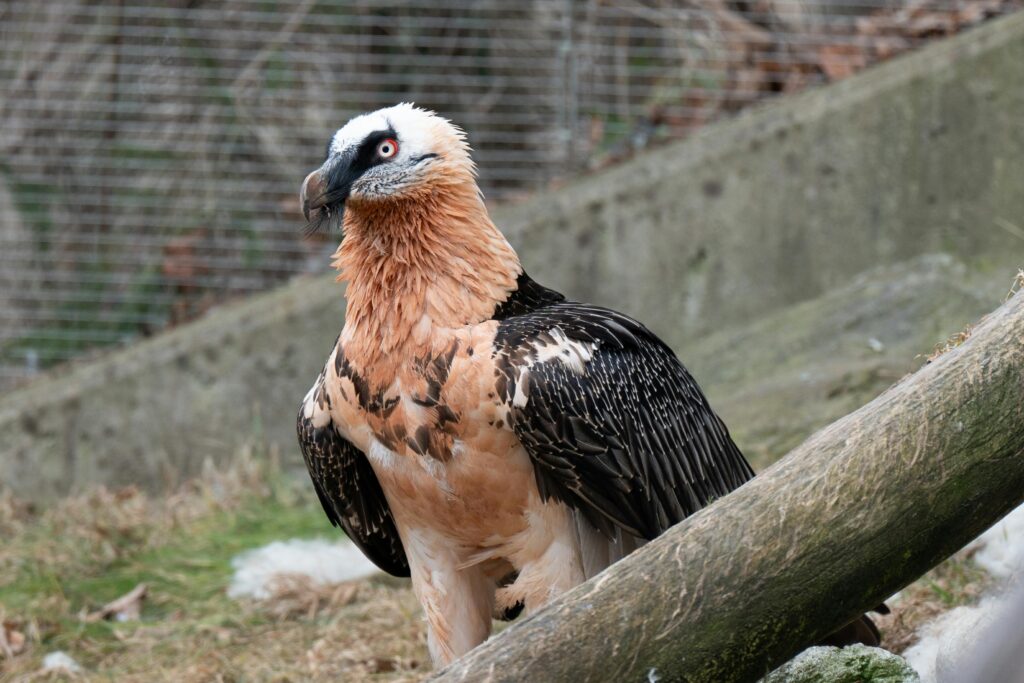
Most scavengers arrive for flesh. The bearded vulture waits for the leftovers that nearly everyone else ignores. This bird feeds heavily on bones, swallowing small bones whole and dropping larger ones onto rocks until they shatter. A scientific review describes the bearded vulture as the only species with a bone-based diet, and old bones can still retain much of their nutritional value after other scavengers have stripped a carcass.
The trick works because bones are not empty trash. They hold marrow, fat, calcium, and protein. The bearded vulture has a highly acidic digestive system that allows it to process material most animals leave behind. This feeding style reduces waste in mountain ecosystems and provides the bird with a food source that is less subject to competition. Among animals with unusual diets, few look as dramatic as a bird that turns skeletons into supper.
Koalas Survive on Toxic Eucalyptus Leaves
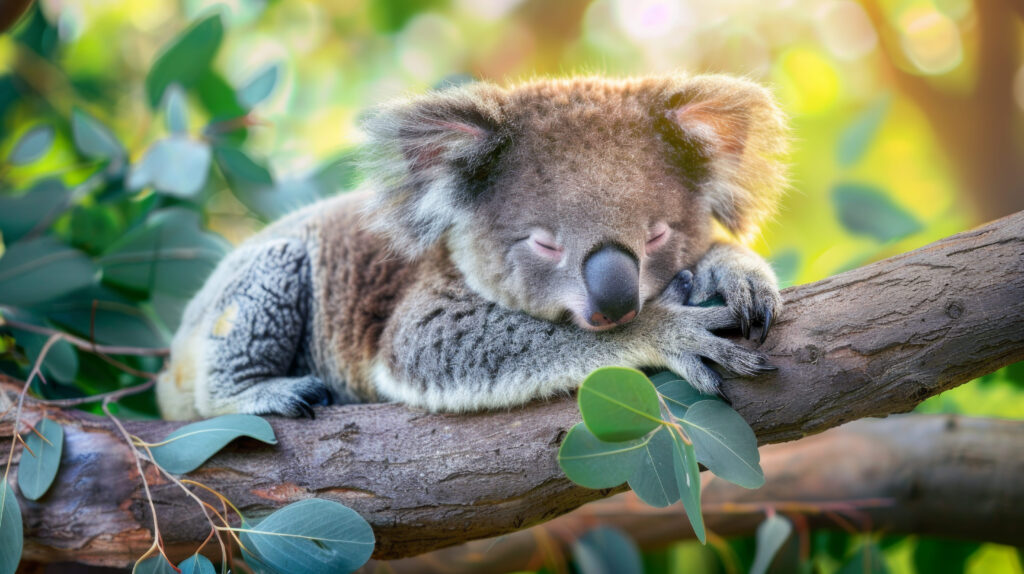
Koalas look sleepy and gentle, but their diet is brutal. They live mostly on eucalyptus leaves, which are fibrous, low in nutrition, and loaded with compounds many animals cannot tolerate. Queensland’s environment department notes that eucalypt leaves contain toxic compounds that most animals cannot eat, and koalas rely on specialized digestion to handle this difficult food.
This diet helps explain the koala’s famously slow lifestyle. When food provides limited energy and takes effort to break down, the body must conserve fuel. Koalas grind leaves with ridged molars, process tough plant matter through a specialized digestive system, and spend long stretches resting. Their unusual diet keeps them closely tied to eucalyptus forests, so habitat loss can quickly become a feeding crisis.
Giant Pandas Are Carnivore Built Bears Living on Bamboo
Giant pandas are classified as bears, yet their daily menu looks more like a bamboo processing job. The Smithsonian National Zoo explains that giant pandas grasp bamboo with a “pseudo thumb,” an enlarged wrist bone covered with a fleshy pad, and use strong jaws and teeth to crush tough stems.
The challenge is that bamboo is not a high-energy food for a bear-sized animal. Zoo pandas may receive around 80 to 100 pounds of bamboo a day because they are selective and need large amounts to meet their nutritional needs. Their feeding habits look cute on the surface, but biologically, they are intense. Pandas spend hours eating because their survival depends on volume, patience, and constant chewing.
Hoatzins Ferment Leaves Like Feathered Cows
The hoatzin is a tropical bird with a digestive system that seems borrowed from a cow. Instead of relying mainly on seeds, fruit, or insects like many birds, it eats leaves and ferments plant matter in its foregut. Research on hoatzin digestion describes it as a rare leaf-eating bird with active foregut fermentation, a process that helps break down tough vegetation.
This feeding system comes with a cost. Fermentation takes space, and the hoatzin’s enlarged crop affects its body design. It is not known as a strong flyer, partly because its digestive machinery is so bulky. Still, this strange setup lets the bird live on leafy resources that many other birds cannot use efficiently. The hoatzin proves that weird diets often reshape the whole animal, not just the stomach.
Dung Beetles Treat Manure Like Buried Treasure
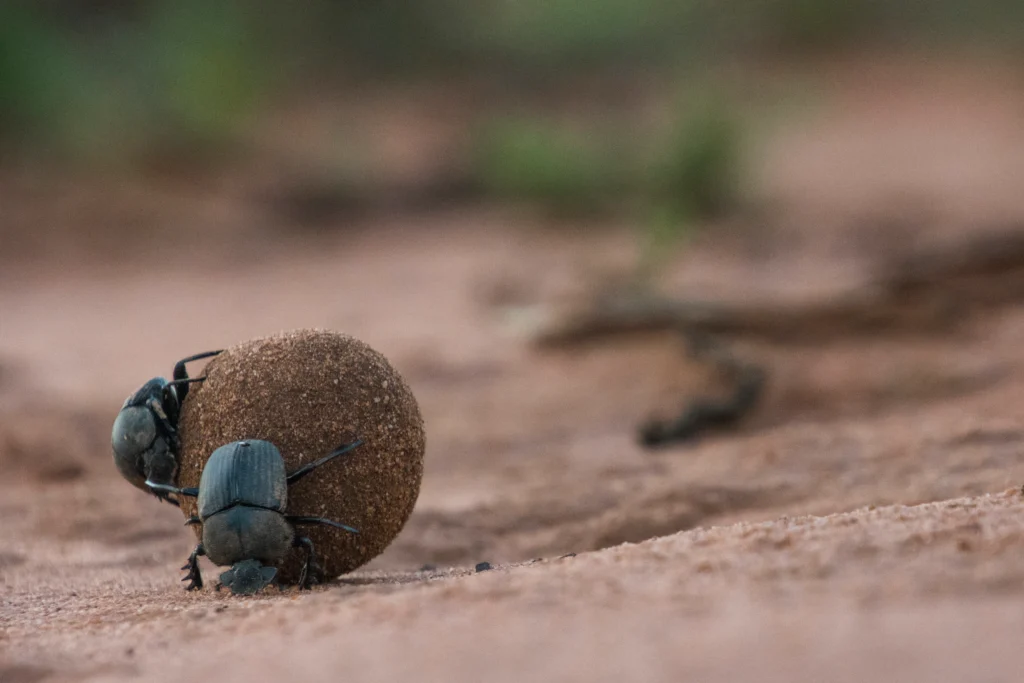
Dung beetles turn one animal’s waste into another animal’s food source. San Diego Zoo explains that many dung beetles use herbivore manure because it still contains half-digested plant matter and nutrient-rich liquid. Adult beetles may feed on the liquid portion, while larvae can grow inside dung prepared by adults.
The feeding habit may sound disgusting, but its ecological value is huge. Dung beetles help clean landscapes, bury organic matter, recycle nutrients, and improve soil. Smithsonian reports that hundreds of dung beetle species roll dung balls away from fresh manure before burying them underground. Without these insects, waste would linger longer, parasites would spread more easily, and soil systems would lose an important natural recycler.
Bone-Eating Zombie Worms Melt Skeletons Without a Mouth
Deep in the ocean, whale bones can become a feast for creatures that look almost unreal. Osedax, often called zombie worms or bone-eating worms, live on the bones of dead whales and other vertebrates. Smithsonian Ocean explains that these worms lack a mouth or a stomach. Instead, they secrete acid through their skin to dissolve bone and rely on symbiotic bacteria to process fats and proteins.
Monterey Bay Aquarium describes bone-eating worms as animals that feed on the bones of dead whales that sink to the deep-sea floor. Their diet shows how even death is not wasted in the ocean. A whale fall can feed communities for years, and Osedax helps unlock nutrients trapped inside bone. It is one of the most bizarre feeding systems known because the animal eats by dissolving its food from the outside in.
Sea Slugs Steal Photosynthesis From Algae
Some sea slugs blur the line between eating and becoming part of what they eat. Sacoglossan sea slugs feed on algae and can steal chloroplasts, the tiny structures that help algae photosynthesize. Smithsonian explains that these slugs can snatch chloroplasts from algae and use them to produce energy through photosynthesis.
The emerald green sea slug, Elysia chlorotica, is one of the best-known examples. Smithsonian has reported that scientists have long studied how this slug gains its “solar power” after consuming algae. This does not mean the slug is a plant, but it does make its feeding strategy extraordinary. Instead of simply digesting algae, it keeps part of the algae’s machinery working inside its own body.
Egyptian Vultures Crack Eggs With Stone Tools
The Egyptian vulture does not always rely solely on its beak. When faced with tough eggs, especially large ones like ostrich eggs, it may use stones as tools. San Diego Zoo Wildlife Alliance describes how Egyptian vultures can travel to select a rock, carry it back, and drop it onto an egg until the shell cracks.
This behavior makes the bird stand out because tool use is rare among birds. The Peregrine Fund also notes that Egyptian vultures use smooth stones to break into eggs and have even been observed using sticks in nesting behavior. The meal is simple, but the method is sophisticated. It turns a hard-shelled food source into an accessible meal by solving problems rather than brute force.
Archerfish Shoot Their Food Out of the Air
Archerfish eat insects, but the way they get them is what makes their feeding habit bizarre. They fire jets of water from below the surface to knock insects off branches and leaves. Research published through the National Institutes of Health describes archerfish as animals that hit insects with precisely aimed water jets to knock them down.
This hunting style requires aim, timing, and an understanding of the distortion between water and air. The fish must account for how light bends at the surface, then fire a shot strong enough to dislodge the prey. Once the insect falls, the fish rushes in before competitors can steal the prize. It is one of nature’s cleanest examples of a feeding habit that looks almost engineered.
Vampire Finches Drink Blood on Remote Galápagos Islands
The vampire ground finch looks small and harmless until feeding gets desperate. Found on remote Galápagos islands, it sometimes pecks at larger seabirds until blood flows, then drinks it. Galápagos Conservation Trust explains that vampire finches live on Wolf and Darwin islands, where fresh water is scarce, and food can disappear during dry periods.
The Natural History Museum describes how these finches peck at seabirds until blood begins to flow, then lap it up with their tongues. This behavior may have evolved from parasite picking, in which finches once helped clean larger birds. Over time, the relationship appears to have shifted into something more parasitic. It is unsettling, but in a harsh island environment, even blood can become a backup food source.
African Egg-Eating Snakes Swallow Eggs Whole
African egg-eating snakes have taken specialization to an extreme. They feed on bird eggs, swallowing them whole even when the egg looks too large for the snake’s narrow head. Britannica explains that egg-eating snakes have ventral spines on neck vertebrae that extend into the esophagus and help break the eggshell from the inside.
After the shell cracks internally, the snake squeezes out the egg contents and regurgitates the crushed shell. That means the animal keeps the soft nutrition and rejects the bulky packaging. This is one of the cleanest examples of a body built around one food type. Teeth become less important, the throat becomes a cracking tool, and the entire feeding process turns into a biological egg opener.
Shipworms Eat Wood Under the Sea
Shipworms sound like worms, but they are actually highly modified bivalve mollusks. They bore into submerged wood, including piers, docks, and wooden ships. Smithsonian’s marine invasions resource describes Teredo navalis as a shipworm that bores into wood, with small, ridged valves used to grind and tear fibers.
Wood is hard to digest, so shipworms rely on microbial help. Smithsonian Magazine explains that shipworms farm bacteria inside their gill cells, and those bacteria provide enzymes that help break down wood. This feeding habit made shipworms infamous in human history because they damaged wooden vessels and waterfront structures. In nature, though, they help return fallen wood to the marine food web.
Flamingos Eat Upside Down With Built-In Filters
Flamingos may look elegant, but their feeding style is wonderfully strange. They lower their heads into shallow water, upside down, and use specialized bills to filter tiny food particles. Smithsonian reports that flamingos can filter food such as shrimp and worms from water, and newer research shows they use movement and water flow to capture prey in food-poor environments.
A 2025 Berkeley report explains that flamingos use their webbed feet to stir bottom sediment and create small vortexes that help pull food toward their mouths. Their pink color also comes from diet, especially carotenoids in algae and small crustaceans. The bird’s beauty is tied directly to what it eats, which makes the flamingo a walking food story in feathers.
Termites Turn Wood Into Fuel With Microbial Help
Termites are famous for eating wood, but the full story is more complex. Wood is packed with cellulose, a tough plant material that most animals cannot digest on their own. Research on termite gut microbes explains that termites rely on protists and bacteria in the hindgut to break down cellulose and hemicellulose into usable compounds.
This partnership lets termites live on dead plant material and recycle nutrients through forests, grasslands, and soils. It also explains why they can become destructive when they move into homes. Their diet is not bizarre because they chew wood. It is bizarre because they survive by running a tiny fermentation system inside their bodies, powered by microbial workers.