Americans are still drawn to the fantasy of the unusual pet: a fox curled on the couch, a capybara by the pool, a wallaby in the pasture, or a tiny glider launching from a curtain rod. The legal system leaves room for some of these animals, but unevenly. Federal law may prevent certain species from being imported and may also prevent “injurious” species.
States may allow or ban the species outright, counties and cities may impose yet another set of restrictions, and permit programs may turn what is initially just an interesting idea into a serious regulatory undertaking. California explicitly states that certain species allowed as pets elsewhere, such as hedgehogs and sugar gliders, are prohibited there; Florida has a permit process for many species; Georgia has a list of legal pets, which includes some exotic mammals and marsupials; and New York prohibits possession of dangerous animals as pets. The answer is therefore never “yes” or “no,” but only “yes” here, “no” there, and “only if we can prove it,” and so on.
The legal baseline we have to respect before choosing any exotic pet.
We should think about exotic-pet legality in layers. Federal laws: First, the U.S. government has the U.S. Fish and Wildlife Service, which maintains an injurious wildlife list under the Lacey Act, and the CDC still has a ban on the importation of all African rodents. Next, there are state laws, which are most likely to be relevant and useful because, while some states allow personal pets for unusual animals, others ban them.
County and city laws then follow, which may be more restrictive than state laws. Finally, there is the question of whether the animal is ethically and realistically keepable, as WWF’s current framework rates exotic pets on five themes: conservation, legality, public health, invasiveness, and animal welfare. That framework matters because “legal” and “good idea” are not remotely the same thing.
Why the fennec fox stays on every legal exotic-pet shortlist.

If we are talking about truly strange but still plausible exotic pets, the fennec fox is the glamour pick. It looks custom-built for internet obsession, yet the appeal is not invented: San Diego Zoo notes that its ears can be half as long as its body, and the species is adapted to Sahara conditions with very little water. Legally, WWF notes that national laws or import restrictions do not currently protect the animal, but ownership is regulated at the state, county, or city level.
That’s precisely why the fennec fox is included on all those “legal exotic pet” lists yet never on the simple yes-or-no list for the whole nation. In terms of suitability, the WWF classifies the fennec fox as a moderate risk, and that’s about the right warning label for it. We can have one as a pet in the United States, but we should not think for a moment that it is easy, quiet, or even remotely domesticated in the dog-and-cat sense.
Capybaras are legal in some places, but their size and water needs change everything.
The capybara is the oddball celebrity of the moment, and it earns that status honestly. National Geographic describes it as the biggest rodent on Earth and emphasizes that it is semi-aquatic, with partially webbed feet and a body built for wetlands and swimming. Nat Geo also notes that capybaras can live in groups of up to 40, which matters because the species is not just big, it is social.
From the legal perspective, the Georgia Department of Natural Resources has rodents such as capybaras on their list of legal pet possibilities, while Kentucky states, “Non-prohibited exotic species are allowed. A wildlife transportation permit is required to bring an exotic animal into Kentucky from out of state.” That is the whole capybara story in one sentence: possible, yes; simple, no. Once we add the need for serious space, water access, fencing, a herd-compatible social life, and an exotic vet, the capybara stops looking like a meme and starts looking like a land-use decision.
Sugar gliders are still sold as starter exotics, even though they are anything but simple.
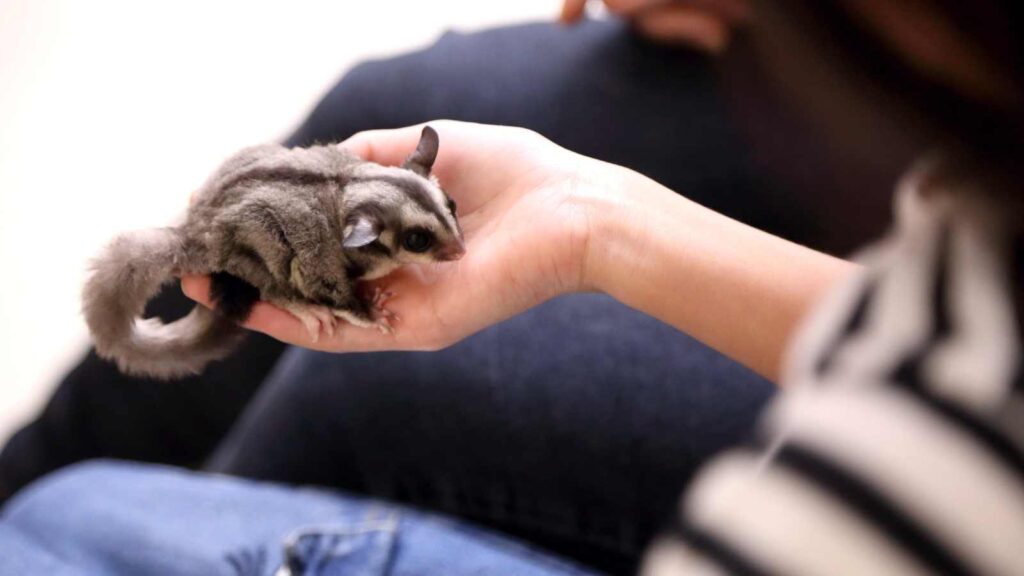
Sugar gliders are often marketed as tiny, cute, and beginner-friendly, which is ultimately how people get in trouble. San Diego Zoo describes them as highly social, largely nocturnal marsupials with a patagium that allows them to glide remarkable distances, and it flatly says wildlife like this typically does not make good household pets.
WWF classifies sugar gliders as moderate risk and warns that laws vary at the city, county, and state levels. For example, California specifically lists sugar gliders as exotic animals prohibited as pets. On the other hand, Georgia allows them only if the owner has valid documentation showing they are from a regulated USDA source. So yes, we can legally own sugar gliders in some parts of the United States, but the real ownership package includes nighttime activity, social needs, specialized housing, legal paperwork, and the constant risk of people mistaking “small” for “easy.”
Hedgehogs are the rare, weird pet that sometimes crosses into realistic territory.
Among unusual pets, the four-toed hedgehog is one of the few that lands closer to “realistic” than “reckless.” WWF currently rates the four-toed hedgehog as low risk and says hedgehogs can be suitable pets if well cared for. That does not make them universally legal, though. California still names hedgehogs as a familiar example of an exotic animal that may be legal in other states but not allowed there.
At the same time, Georgia’s legal-pet guide includes insectivores such as hedgehogs and tenrecs. In other words, the hedgehog is weird enough to satisfy the exotic-pet itch but ordinary enough that it no longer belongs in the same conversation as a primate or a big cat hybrid. If we insist on finding the least absurd animal on this list, the hedgehog has the strongest claim, precisely because the law and welfare concerns are usually more manageable than they are for foxes, gliders, or coatis.
Wallabies prove that legal ownership can still feel more like livestock management than pet care.

Xtrekx via 123rf.
A wallaby is one of the clearest examples of an animal that can be legal without becoming even remotely ordinary. Smithsonian’s National Zoo describes Bennett’s wallabies as medium-sized marsupials native to Australia and Tasmania and notes that they can crawl and swim in addition to hopping.
On the regulatory side of things, Florida’s personal pets section specifically includes wallabies in its list of common Class III animals that need a permit, and Georgia’s legal pets section includes marsupials like wallabies and kangaroos.
This means that our wallaby is absolutely within the realm of “legal in parts of the US.” And it means that we should stop thinking of it as a quirky pet and start thinking of it in terms of fencing, outdoor shelters, weather control, vet access, and space for a nervous little prey animal to behave naturally. Our wallaby is legal enough to be interesting to hobbyists, but it’s really not that far removed from private animal facility status.
Coatis are legal in some jurisdictions, but they are a spectacularly bad fit for casual owners.
If we want a species that illustrates the gap between legal ownership and sensible ownership, the coatis may be the best case study. Florida’s personal-pet rules list coatis among Class III species that can be possessed with the relevant permit, and Florida’s caging rules even spell out enclosure standards for raccoons, coatis, and kinkajous. That is the legal side.
The behavioral side is far less cozy. The San Diego Zoo states that coatis are “agile opportunistic omnivores with claws, curiosity, climbing ability, and intensity that lasts a lifetime” and states in no uncertain terms that “coatis are wildlife and should not be domesticated as pets.”
Nat Geo adds that they are diurnal, highly active, and social. We can therefore say something precise: the coati belongs on a list of weird animals that may be legal to own in parts of the U.S., but it also belongs near the top of the list of animals most likely to punish romantic thinking.
Axolotls are easier to house than a fox but harder to keep correctly than many buyers expect.
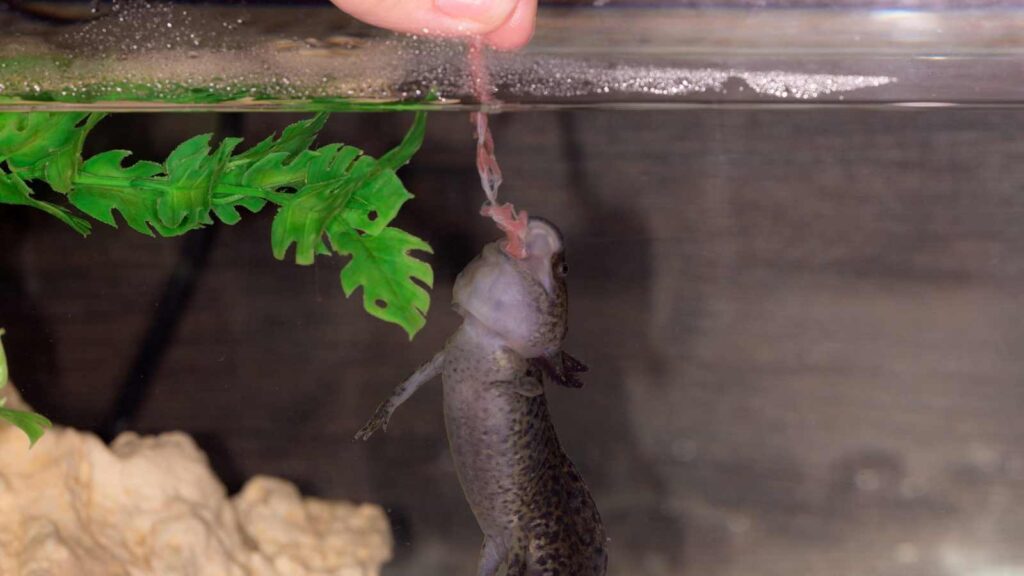
The axolotl is proof that an exotic pet does not need fur to be complicated. National Geographic notes that axolotls are critically endangered in the wild, have decreasing populations, and can regenerate lost limbs. WWF classifies axolotls as moderate risk, warns that their wild populations are declining, and says some U.S. states prohibit them or require permits.
WWF also adds the point many buyers miss: their dietary and water-quality needs are hard to meet in captivity, and for that reason, they generally are not recommended as pets. So the axolotl sits in a very particular niche. It can be legally kept in some jurisdictions, and it is undeniably one of the strangest animals a private owner might acquire. It requires controlled water conditions, access for veterinarians, ethical sourcing, and technical precision, all of which belie its soft and cartoon-like appearance. It is a legal oddity, not something to be used as a desk accessory.
Conclusion:
We can legally own some genuinely weird animals in parts of the United States, but the list of lawful animals is narrower than clickbait suggests, and the list of responsible animals is narrower still. Hedgehogs are the closest thing to a realistic oddball pet on this page, while sugar gliders, axolotls, and fennec foxes are possible in some jurisdictions, but they come with serious welfare and legal caveats. Capybaras, wallabies, and coatis move even farther away from ordinary pet ownership and closer to private-facility management. The winning standard is not “Can we get one?” It is, “Can we prove it is legal, keep it well, and justify the choice after the novelty wears off?”