Trypophobia, a term that can send a shiver down the spine of many, is the fear or discomfort triggered by clustered patterns, repetitive holes, or texture arrangements that seem to overwhelm the human eye.
While it’s not officially recognized as a phobia in clinical settings, countless people report experiencing a strong, visceral reaction to objects or creatures with such textures. This unique aversion often arises from an unsettling sense of disorder, as these patterns can appear alien or evoke images of disease, decay, or infestation.
Whether it’s the sight of tiny holes, grooves, or bizarre textures, certain animals in nature unknowingly sport designs that could cause discomfort in those sensitive to trypophobia.
Interestingly, many of the creatures that fall into this category are simply living out their evolutionary strategies, with these strange visual patterns serving a wide variety of purposes, from camouflage to reproduction. Let’s take a deep dive into the bizarre yet fascinating world of animals whose physical traits are uniquely designed to trigger your trypophobic response.
The Surinam Toad
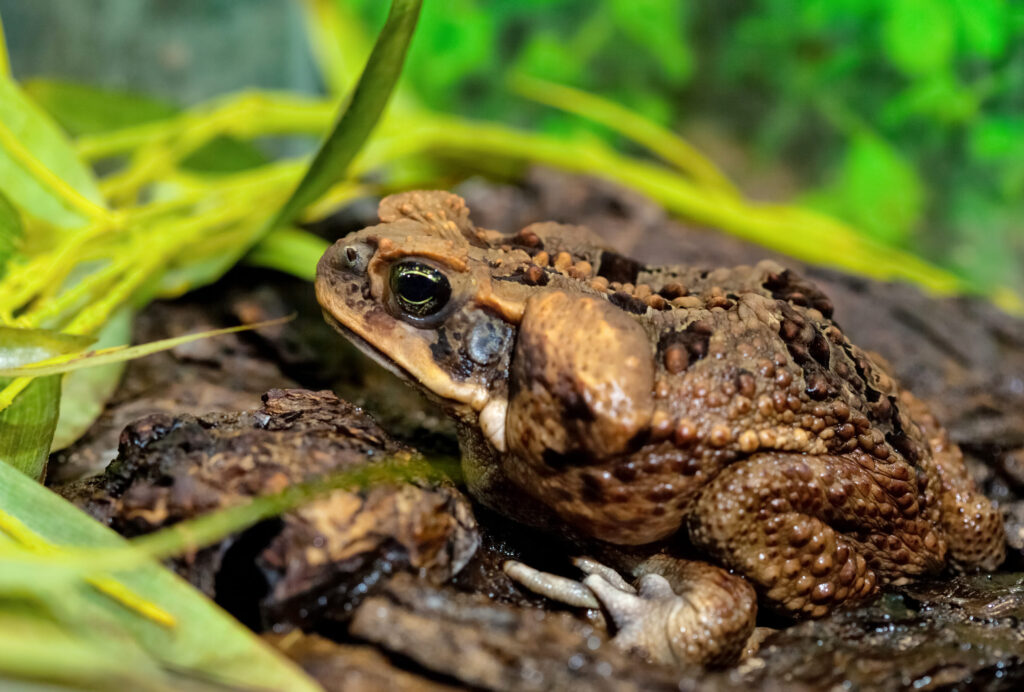
Arguably one of the most famous animals linked to trypophobia is the Surinam toad (Pipa pipa), which calls the Amazon rainforest home. When breeding, the female toad carries fertilized eggs on her back, where the skin forms large, honeycomb-like pockets.
These cavities serve as protective chambers for the developing embryos, which later hatch directly from the mother’s back as fully formed tadpoles. For some, this unusual mode of reproduction can seem almost unsettling, especially as the sight of her back dotted with rows of deep, dark, pockmarked pockets becomes a visual representation of clustered, tightly packed holes.
The Surinam toad’s peculiar, otherworldly design is a perfect example of how nature can generate patterns that make even the bravest squirm. For many people, this mass of small, round holes mimics the textures that evoke the strongest trypophobic responses. Interestingly, these patterns are not a visual accident but an adaptive feature of this toad’s survival strategy. Still, we can’t deny the unsettling visual impact.
Barrel Sponges
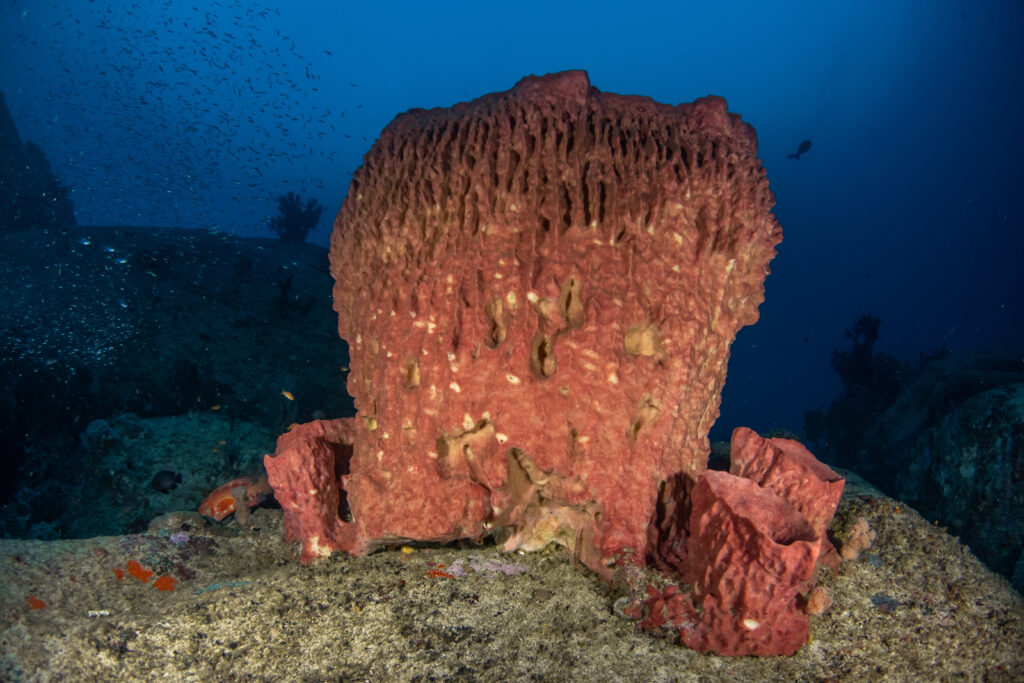
Sponges are often perceived as simple,harmless organisms, but barrel sponges take that simplicity to an extreme. These massive, cylindrical sponges have thousands of tiny pores lining their bodies.
These pores serve as the creature’s respiratory system, filtering water to extract food particles, yet to the human eye, they look like an endless grid of miniature holes. Imagine gazing at a rock that is alive with thousands of minute cavities that stretch from top to bottom, and it’s easy to understand why this organism makes some people uneasy.
While the biological function of these holes is vital for the sponge’s survival, it’s this very repetition of tiny, uniform holes that triggers the trypophobic reaction. In their natural habitat, these sponges are breathtaking to observe, but viewed from a trypophobic perspective, their presence in the ocean evokes an eerily alien sensation.
Stony Coral
Coral reefs are known for their dazzling beauty, but one type of coral, the stony coral, has a deeply intricate structure that resembles a series of tiny cups or cavities clustered together in large numbers. Each “cup” is the skeletal home of a polyp, an individual animal that contributes to the collective coral colony.
As a whole, stony corals form vast colonies that, when viewed up close, resemble a complex, repetitive network of small openings. These polyps, working together, build and expand the colony over time, creating a dense, packed texture of thousands of repeating chambers.
For trypophobes, the effect can be unsettling. The sight of hundreds, or even thousands, of holes packed into the surface of a coral colony can trigger discomfort and visual anxiety. The precise, almost architectural arrangement of these holes is a clear example of how nature’s designs sometimes match the very patterns that cause us to instinctively recoil.
Brain Coral
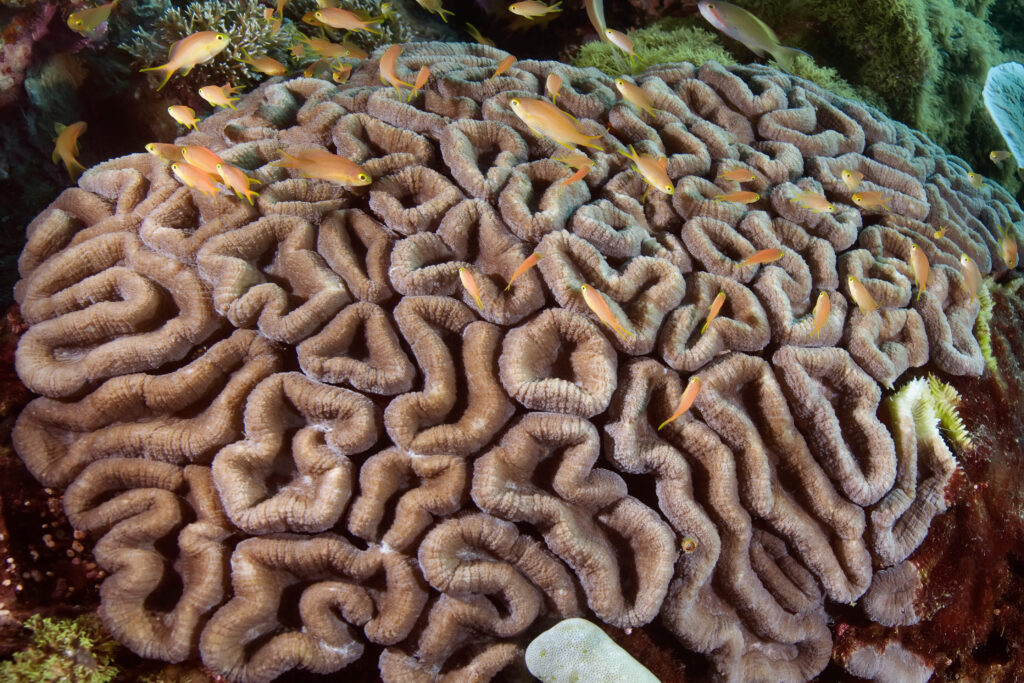
Brain coral takes the concept of intricate, repetitive patterns to a whole new level. Its surface is covered with deeply etched grooves and valleys that mirror the folds of a human brain.
To anyone suffering from trypophobia, the dense, twisting lines of this coral can feel like an invasion of the mind itself. The brain coral’s maze-like surface creates a visual clutter, with the repetition of patterns overwhelming the eye and leaving little room to rest.
What’s remarkable is that this exact structure serves a crucial purpose in the coral’s survival. The grooves and channels are designed to catch and filter water, helping the coral gather food particles. While these biological benefits are undeniable, the relentless visual texture may cause discomfort in some viewers. It’s a beautiful contradiction of function and unsettling form.
Honeycomb Cowfish
The honeycomb cowfish is not only an unusual-looking fish but one whose body pattern feels tailor-made to trigger trypophobic reactions. Its body is covered in a network of hexagonal, geometric scales that fit together like the tiles of a mosaic.
This rigid, honeycomb-like pattern is meant to protect the cowfish from predators, serving as armor. But the repetitive pattern of perfectly aligned hexagons can feel like a visual overload when examined closely.
The visual effect is hard to ignore. From a distance, the scales appear as a textured surface, but the closer you get, the more apparent the distinct hexagonal shapes become, leading to the perception of a sea creature entirely covered in holes.
While this natural design serves a practical purpose, the repetitive, geometric pattern is precisely the kind of visual that can evoke discomfort in those sensitive to trypophobic cues.
Sand Dollars
When we think of sand dollars, we often picture small, flat, coin-like objects that wash up on the beach. But look closer, and you’ll notice the intricate pattern on their surface, which, under magnification, resembles a delicate star shape composed of several small, circular openings.
These holes are not just ornamental; they are vital to the sand dollar’s function. They allow the organism to exchange water and gases, and when the sand dollar is alive, the holes are critical for its survival.
For many, however, this close-up view can provoke discomfort. The small, perfectly arranged holes across the sand dollar’s surface may seem harmless, but to a trypophobic, they are more than enough to spark unease. The precise geometry of these holes, arranged in a symmetrical, star-like pattern, evokes a deep sense of discomfort when viewed in such close detail.
Tessellate Moray
The tessellate moray eel, known for its striking honeycomb pattern, demonstrates how repetitive surface patterns can manifest even in more dynamic creatures.
The tessellation on this eel’s body consists of small, dark spots distributed across its length, creating an almost patterned mosaic. When the eel moves through the water, these dots appear to shift and dance, giving the illusion of a surface entirely covered in tiny, repeating units.
While the pattern is natural and serves as camouflage for the eel in its rocky habitat, the repeated spots can create a sense of overwhelming visual noise when viewed up close. The eel’s body becomes a canvas of tiny holes, clustered markings, and repetitive patterns, exactly the kind of design that makes trypophobia sufferers uneasy.
Reticulated Giraffe

At first glance, giraffes may not seem like the kind of animals that would trigger trypophobia. But the reticulated giraffe, with its distinctive coat pattern of polygonal patches separated by thin white lines, creates a strong visual effect.
The sharp, repeated geometric shapes across its body can feel overwhelming when viewed closely, as the intricate network of patches almost mimics the geometric precision of a grid or a honeycomb.
While this pattern helps the giraffe blend in with the environment by breaking up its outline against the savanna, to someone sensitive to visual patterns, the large, interconnected shapes may seem disorienting and unnatural. It’s a perfect example of how repetition in nature, even in a mammal as majestic as the giraffe, can trigger the visual overload that defines trypophobia.