The animal kingdom is full of marvels, each species uniquely adapted to survive and thrive in their environment. But some behaviors observed in the wild defy explanation, leaving scientists scratching their heads.
These strange, often baffling actions challenge everything we think we know about survival and instincts. Here, we delve into 10 of the most curious and inexplicable animal behaviors that continue to astound researchers worldwide.
Fur Seals and Penguins

One of the most perplexing and disturbing behaviors observed in the wild is seen in fur seals on Marion Island, Antarctica. In 2006, researchers stumbled upon a shocking sight: a fur seal attempting to mate with a king penguin.
Initially thought to be an isolated incident, the bizarre act has since been observed repeatedly, with the seals often resorting to extreme violence. Some of these attempts end in tragedy, with the seals killing and consuming the penguins after the failed mating attempts.
What makes this behavior so perplexing is that fur seals are known to mate within their species, and cross-species mating has never been documented in their history. While scientists speculate that the lack of females on the island could be pushing the young males to engage in these desperate acts, there’s no clear evolutionary or reproductive benefit to this strange behavior.
And unlike hybrid offspring produced by cross-species mating in other animals, the seals’ actions don’t result in any offspring, only death. So why are they doing it? The question remains unanswered.
Mass Apathy in Baboons
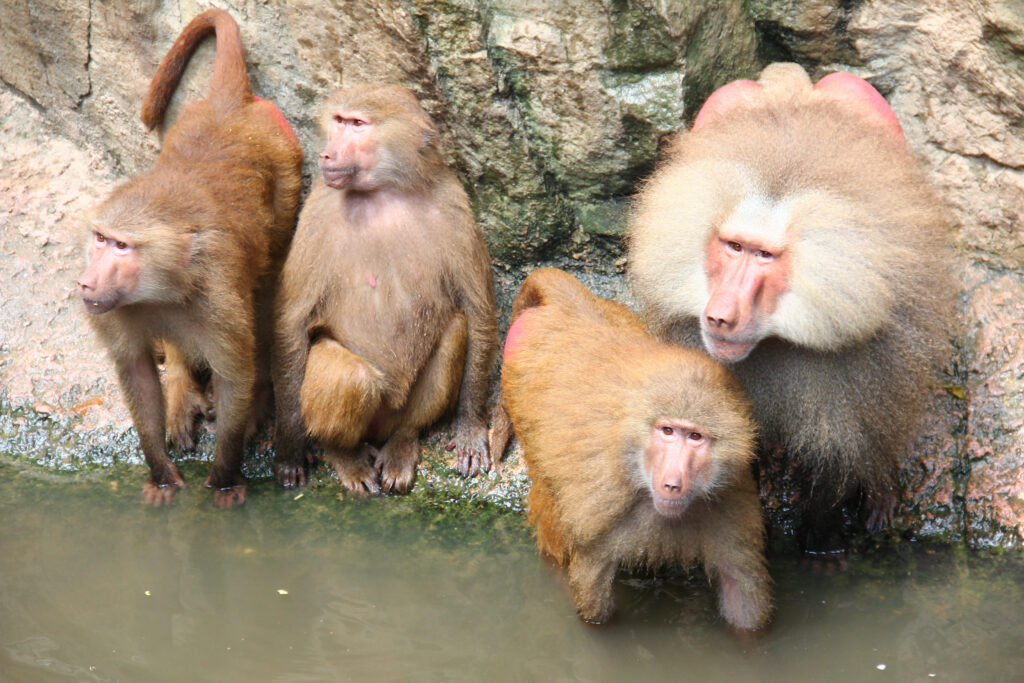
In 2013, a shocking event occurred at the Emmen Zoo in the Netherlands. A normally lively colony of baboons suddenly fell into a strange, collective state of apathy. They stopped engaging in their usual activities, no playing, no fighting, no interacting with their keepers. The baboons simply sat there, motionless, staring off into the distance.
This wasn’t an isolated incident. Similar cases of mass apathy occurred in the same group of baboons in 1994, 1997, and 2007. At each event, the entire group fell into an odd, trance-like state with no apparent cause. Some theories suggest it was triggered by minor, undetected earthquakes, while others propose environmental or social triggers.
But nothing has definitively explained this strange phenomenon. What causes a group of baboons, known for their high energy and social interaction, to suddenly freeze in place and fall into a state of collective apathy? The answer remains elusive.
Blue Whales Singing Deeper
Blue whales are the largest creatures on Earth, and their haunting songs echo across the vast oceans. But in recent decades, there’s been an unexpected change: the pitch of their songs is getting deeper.
Over the past 50 years, the frequency of blue whale songs has steadily lowered by as much as 30%. Scientists have been monitoring this phenomenon for decades, and the trend is clear: blue whales’ voices are becoming increasingly deep.
But why is this happening? Some scientists speculate that the deepening pitch could be a response to increasing underwater noise pollution, such as shipping traffic and industrial activity, which might be masking the whales’ usual frequencies.
Others believe the changes could be related to shifts in the whales’ environment, such as warming ocean temperatures or changes in the composition of their habitat. No matter the cause, the change in whale song pitch remains an unexplained phenomenon, one that continues to fascinate and puzzle researchers.
Chickens Changing Sex
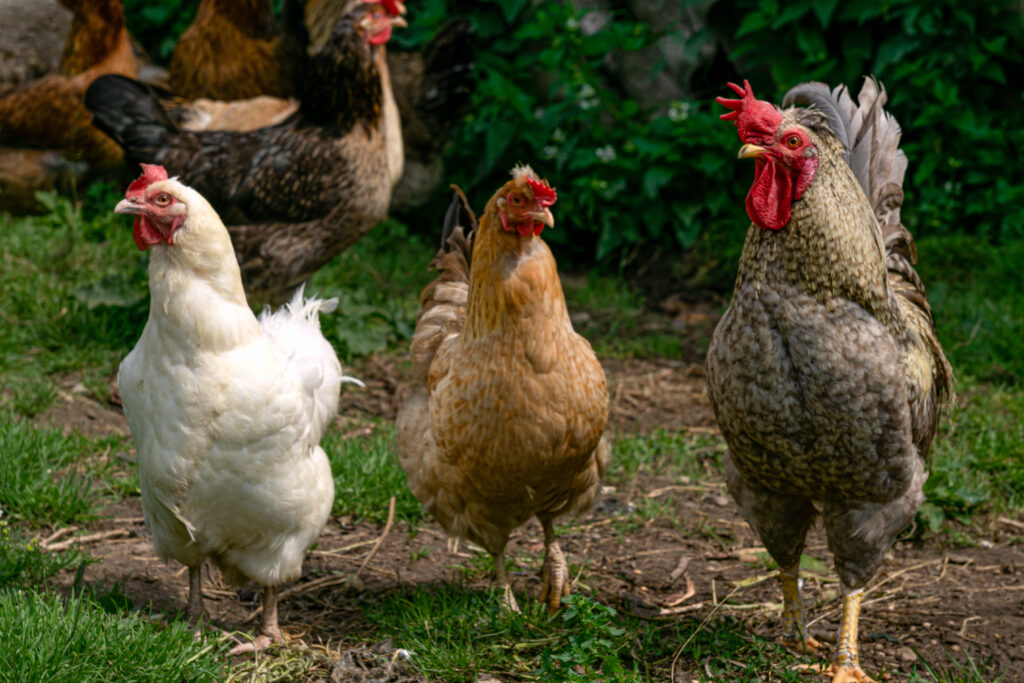
Sex change in animals is not unheard of, particularly in certain species where it can help with reproduction. However, the phenomenon of female chickens undergoing sex changes is one of the most baffling. Under certain hormonal conditions, female chickens can develop male physical traits, such as combs and wattles, and even exhibit male behaviors, such as crowing. But the transformation is not complete; the chicken doesn’t actually become male, it simply adopts male characteristics while still remaining genetically female.
This transformation is thought to occur when one of the chicken’s two sex organs (the left ovary and right testes) becomes more active, producing male hormones that trigger the changes. But the reason for this shift is still unclear. While rare, spontaneous sex changes have been observed, most famously in a hen named Gertie in England, who stopped laying eggs and began crowing like a rooster. While the phenomenon has been documented, no one really knows why it happens, adding yet another mystery to the animal world.
Glow-In-The-Dark Scorpions
Scorpions are fascinating creatures, known for their deadly stings and nocturnal lifestyles. But one of their most bizarre traits is their ability to glow in the dark. When exposed to ultraviolet (UV) light, scorpions emit a bluish-green glow, visible even under moonlight. This glow, however, doesn’t seem to serve any obvious survival purpose. In fact, it could be detrimental to scorpions, as it makes them more visible to predators such as owls and nocturnal rodents.
So why do they glow? Some scientists believe the glow might be a form of communication between scorpions, while others think it could help them find each other in the dark. Another theory suggests that it could be a defense mechanism, signaling to predators that the scorpion is toxic or dangerous. Whatever the reason, the glowing scorpion remains one of nature’s great mysteries, and scientists continue to explore why such a seemingly risky trait has evolved.
Mass Beaching of Dolphins and Whales
The mass beaching of dolphins and whales is one of the most tragic and puzzling phenomena in the marine world. In 2009, a group of 55 false killer whales stranded themselves on a beach in South Africa.
Despite rescue efforts, the whales repeatedly returned to the shore, and the situation became so dire that euthanasia was considered the most humane option. While human activities such as sonar testing and shipping noise have been linked to some beaching events, the phenomenon predates these modern technologies.
Scientists have long been trying to understand why marine mammals strand themselves in such large numbers. One theory suggests that sick or disoriented animals may beach themselves to die. However, mass beachings often involve healthy animals, and the reasons behind the behavior are still unclear.
Some researchers believe that beaching could be a natural behavior, while others speculate that it may be triggered by a variety of environmental factors, including changes in ocean currents, water temperature, or social dynamics within the group.
Genets Riding on Rhinos
In Hluhlwe-iMfolozi Park in South Africa, an unusual behavior has been observed involving genets, a small, cat-like creature, and black rhinos. In a bizarre twist, genets have been seen riding on the backs of rhinos. This behavior is puzzling because genets are solitary animals and typically do not form such close bonds with other species. Unlike birds that ride on larger mammals to feed on parasites, the genets don’t seem to be gaining any obvious benefit from hitching rides on rhinos.
Some researchers have speculated that the genets might be using the rhinos for transportation, or perhaps they are seeking safety from predators. However, no one really knows why these small creatures have taken to this unusual behavior. The sight of a genet riding around on the back of a rhino is both perplexing and fascinating, adding to the mystery of interspecies interactions.
Crocodile Tears
The term “crocodile tears” has long been used to describe fake or insincere displays of emotion. The phrase originates from the myth that crocodiles cry while eating their prey, supposedly out of remorse.
But scientists have discovered that this is no myth, crocodiles really do shed tears while eating, although not for the reasons we might expect. It’s not an emotional response but rather a physiological phenomenon.
Research has shown that crocodiles, alligators, and caimans produce tears during feeding due to the physical exertion required to catch and tear apart their prey. The tears likely help protect their eyes from the stress and pressure exerted by the jaw muscles during feeding. While this behavior has been observed in crocodiles, the true purpose of the tears remains unclear, and the phenomenon continues to fascinate researchers.
Sloths Trekking to the Toilet
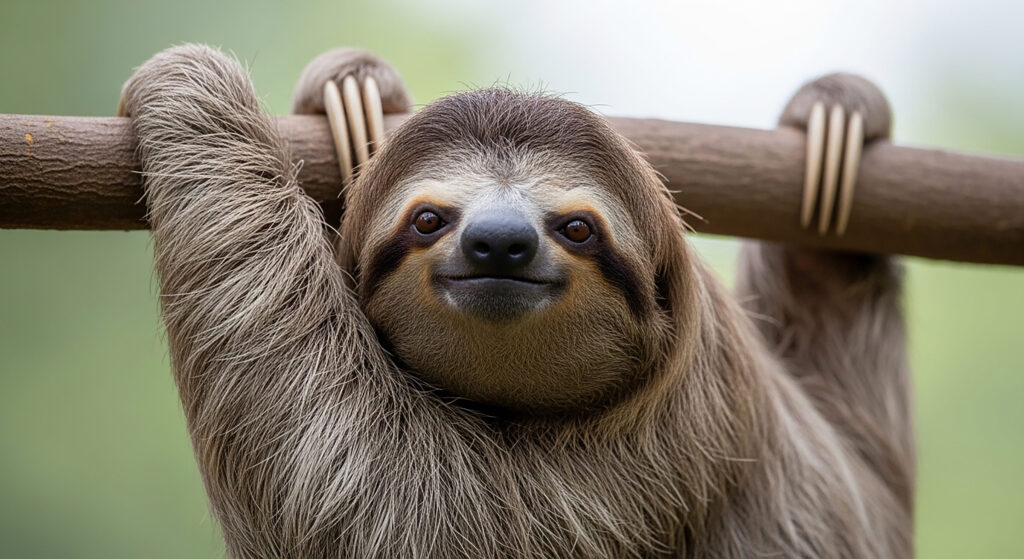
Sloths are known for their slow movements and laid-back lifestyle, but one of their most puzzling behaviors is their ritual of descending from the trees to defecate.
Despite spending most of their lives in the safety of the canopy, sloths will leave the trees and make the dangerous trek to the forest floor once a week to relieve themselves in a single spot. This strange behavior leaves them highly vulnerable, as they are exposed to predators such as jaguars and ocelots during their descent.
Scientists have long debated the reasons behind this odd behavior. One theory is that sloths do this to avoid leaving scent trails near their nests, which could attract predators. Others suggest it may be linked to instinctive behavior, though no definitive explanation has been found. Regardless of the reason, this slow-motion trek to the toilet remains one of the most baffling and risky routines in the animal kingdom.