When we talk about flowering plants, we usually think in seasons. We expect spring color, summer fragrance, and dependable cycles that return on cue. Yet some of the most fascinating plants on Earth completely refuse that timetable.
They build energy slowly, hold their spectacle in reserve, and turn flowering into an event so delayed that seeing it can feel less like gardening and more like witnessing geological patience in botanical form.
What makes these plants unforgettable is not just that they bloom late. It is the scale of the performance once they finally do. Some send up colossal flower towers. Some bloom only at night and vanish by morning.
Some flowers bloom once in a lifetime and then die. One famous species even returned to bloom after more than 31,000 years in frozen storage. When we line them up side by side, we get a remarkable lesson in how diverse, strange, and dramatic the plant kingdom can be.
Puya chilensis
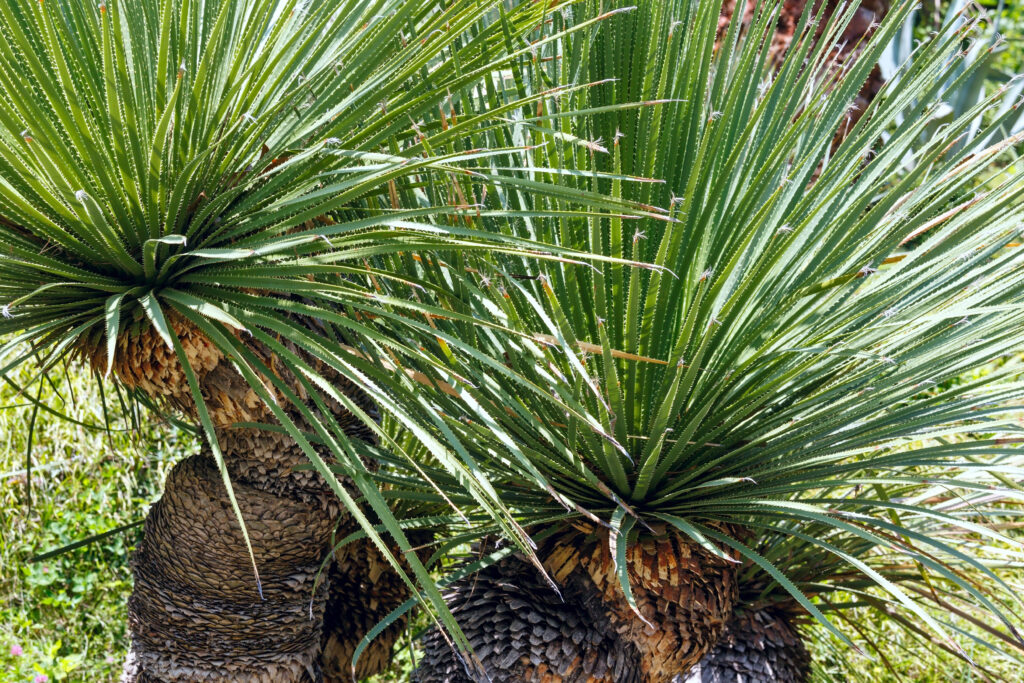
We begin with a plant that looks like it was designed by a medieval blacksmith. Puya chilensis forms fierce, spiny rosettes and eventually lifts a towering flower panicle above them, with the Cambridge University Botanic Garden noting that the panicles can reach about 5 meters. The legend that it is a true “sheep eater” has been widely repeated, but the more grounded and more interesting fact is how slowly it reaches flowering maturity.
Reporting on a Royal Horticultural Society plant at Wisley, Earth.com noted that one specimen took 15 years to mature and that the flowers generally take about 15 to 20 years to appear. Once a rosette flowers, it dies back, making the bloom feel even harder won. We are not looking at a casual garden performer here; we are looking at a plant whose endurance is its main aesthetic feature.
Tahina spectabilis
Few plants make delayed flowering feel as dramatic as Tahina spectabilis. Kew describes it as an enormous “self destructive” palm from northwest Madagascar, a species so unusual that it remained unknown to science until the late 2000s.
Its crown sits atop a huge trunk, and when flowering begins, the tip pushes above the crown into a candelabra-like inflorescence roughly 4 to 5 meters high. Kew also notes that the known population has been tiny, estimated at about 90 individuals, and that it is critically endangered under the IUCN Red List.
That combination of rarity, scale, and one-time reproductive effort gives the plant unusual tension. We are not merely waiting for a flower; we are waiting for the final act of a species already living on a narrow ecological edge.
Night-blooming cereus
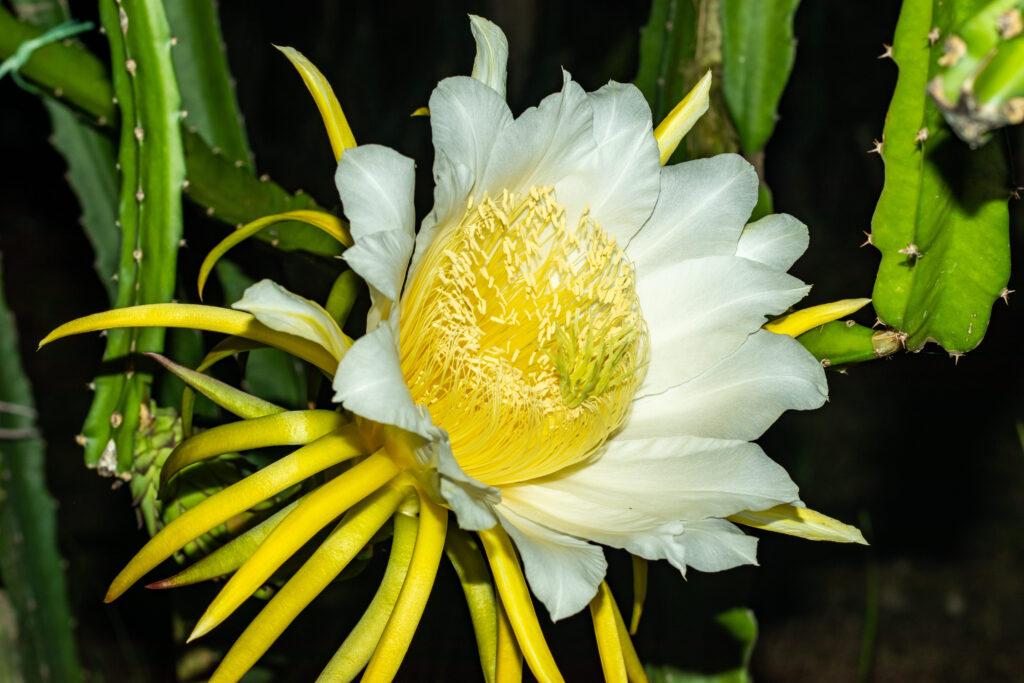
On this list, the night-blooming cereus is the impatient gardener’s compromise. It does not ask for decades, but it still holds its glory in a way that feels theatrical. The University of Arkansas notes that it usually takes 2 to 3 years for the plant to begin producing blooms, and that each flower lasts only until sunlight hits it.
Mead Botanical Garden describes the show as beginning just after dusk, usually finishing by midnight, with the blossoms mostly gone by morning. That means the real difficulty is not a century of waiting but timing. We have to be present at the exact right window, often late in the evening, for a flower that appears luminous, fragrant, and almost unreal against the dark. It is a slower bloomer, not because the plant is ancient, but because the bloom itself is brutally brief.
Silene stenophylla
If we take the phrase “slow to bloom” literally, Silene stenophylla outruns almost every plant on the page. This narrow-leafed campion is a living species, but scientists revived fertile plants from ancient fruit tissue preserved in Siberian permafrost, which was radiocarbon-dated to about 31,800 years old.
The 2012 PNAS study and a contemporaneous science summary describe how researchers regenerated the plant from Late Pleistocene tissue recovered from ground squirrel burrows. In plain terms, the flowering was postponed not by a bad season or slow juvenile growth, but by the length of recorded human civilization many times over.
We do not often get to say that a bloom bridges the Ice Age and the modern greenhouse, yet this species makes that sentence factual. Its story is less about gardening patience and more about the astonishing durability of plant life under frozen suspension.
Kurinji
The kurinji, or Strobilanthes kunthiana, gives us one of the most famous long-interval flowering cycles in the plant world. A 2020 review in the Bulletin of the National Research Center states that the species blooms every 12 years, with mass-flowering records spanning 1838-2018.
The same review explains that the synchronized bloom helped give the Nilgiri Hills their “Blue Mountains” identity, because entire slopes turn blue during peak flowering. WWF India echoes the same timing, noting that Neelakurinji covers hillsides with blue once every 12 years.
This is not just a botanical curiosity. It is a landscape event, a memory marker, and in parts of South India, a cultural calendar in plant form. When we wait for kurinji, we are not waiting for a single shrub to open. We are waiting for a mountain range to change color on schedule.
Agave americana
The name “century plant” oversells the delay, but Agave americana still earns its reputation as a slow bloomer. A University of California Agriculture and Natural Resources master gardener column notes that the plant does not wait 100 years, but it typically sends up its dramatic flower spike after about 10 years.
That same source reminds us of the essential catch: the plant dies after flowering. This is the basic power of many monocarpic plants. They store resources for years, invest everything in one immense reproductive effort, and then exit.
In the case of Agave americana, the bloom rises far above the familiar rosette and transforms a plant many people mistake for a static succulent into something architectural and almost storybook in scale. We get a decade of restraint, then a vertical explosion, then silence. That sequence is exactly why the bloom matters.
Puya raimondii
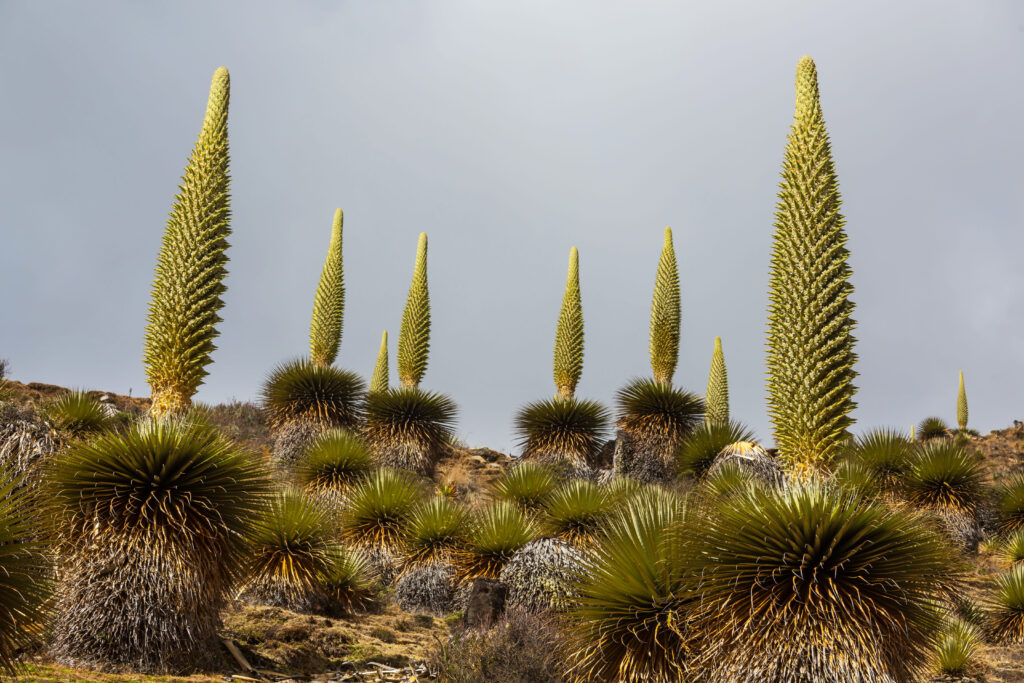
If patience could be measured in height, Puya raimondii would rank near the top of any list. Kew identifies it as the world’s largest bromeliad, native to the high Andes of Peru and Bolivia, and notes that its flower stalk can reach about 10 meters. Plants of the World Online also classifies it as monocarpic, meaning the plant flowers once and then dies. That life strategy gives the species a sense of grandeur.
For years, it builds a huge body in difficult mountain conditions, then finally produces a giant inflorescence that looks less like a flower spike and more like a botanical tower. We do not admire this species because it is delicate. We admire it because it makes delayed blooming feel epic. The Queen of the Andes does not simply open. It stages a climax visible across an alpine landscape.
Melocanna baccifera
Not every slow bloom brings simple beauty. Melocanna baccifera shows how delayed flowering can carry ecological and human consequences. Singapore’s NParks notes that this bamboo flowers synchronously over vast areas once every 44 to 48 years and then dies after flowering and fruiting.
A historical study on bamboo, rats, and famine explains why that matters, describing how the seeds become abundant food for rodents, whose populations surge and then move on to standing crops after the bamboo food pulse is exhausted. That chain of events lies behind the notorious famine associated with bamboo flowering in parts of northeastern India.
So when we talk about slow-blooming plants, we should not imagine only romance and rarity. Sometimes, a long-delayed flowering event can also trigger instability. Melocanna baccifera is memorable precisely because its bloom is both biologically spectacular and socially consequential.
Talipot palm
The talipot palm, Corypha umbraculifera, may be the most extravagant one-time bloomer on the list. NParks states that it can live up to 80 years, produce a terminal inflorescence about 9 meters tall and 12 meters wide, and bear roughly 24 million tiny yellowish-white flowers. It flowers just once in its lifetime and dies afterward.
That is not a bloom in the ordinary garden sense. It is a total liquidation of accumulated energy. We spend decades looking at a large palm, and then suddenly the plant becomes a statement piece of almost absurd scale, holding what NParks describes as the world’s largest inflorescence.
When people call certain plants worth the wait, this is what they mean. The talipot palm makes patience feel less like delay and more like preparation for a record-breaking release.
Giant Himalayan lily
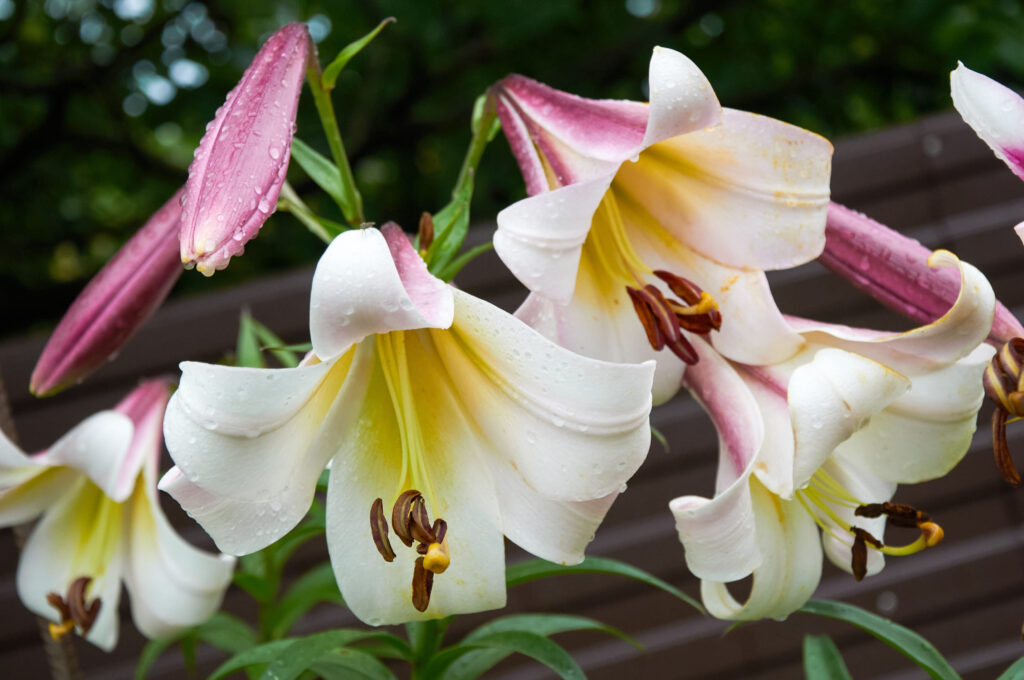
The giant Himalayan lily, Cardiocrinum giganteum, ends the list on a note of elegance rather than severity. Missouri Botanical Garden describes it as a bulbous perennial native to the Himalayas, China, and Myanmar, with fragrant trumpet-shaped flowers borne on stems that can reach about 9 feet.
The same source explains that the bulb dies after flowering, though offsets remain and can take four to five years to reach flowering themselves. That rhythm gives the plant a slower, quieter version of the monocarpic drama we see in agaves and giant bromeliads.
The individual flowering bulb spends years building toward one tall, fragrant display, then hands the future to its offsets. We do not get endless repetition from the same bulb. We get succession, inheritance, and renewal. The plant asks for patience, then rewards it with one of the most stately and theatrical lily blooms in cultivation.