For many, a day at the beach is the ultimate escape, with sand between your toes, the soothing sound of waves, and the warmth of the sun.
But while beaches are a paradise for relaxation, there’s a darker side to the shore. From microscopic parasites to bacteria that could pose serious health risks, the beach is not as innocent as it may seem.
In this article, we dive deep into the top 10 dangerous diseases lurking at the beach and offer practical tips on how to protect yourself while you enjoy the sun and surf.
Hepatitis

Hepatitis is a viral infection that can severely damage the liver. Among the three main types, A, B, and C, Hepatitis A is particularly dangerous for beach activities. This virus is spread through water contaminated by human waste, making popular beach destinations particularly vulnerable. If you accidentally swallow contaminated water or come into direct contact with it, the virus can infect you, causing symptoms like nausea, fatigue, fever, and yellowing of the skin and eyes (jaundice).
What makes Hepatitis A dangerous is its ability to spread rapidly, especially in areas with poor sanitation. Once infected, the virus can lead to chronic liver issues, long-term health problems, and, in extreme cases, liver cancer.
Prevention Tip: Hepatitis A can be prevented through vaccination. Always check local advisories about water quality, especially in areas prone to contamination from sewage or waste. If you’re planning to visit international beaches, ensure your vaccines are up to date, particularly Hepatitis A.
Legionnaires’ Disease
Imagine enjoying a relaxing day at the beach, then stepping into a public shower or hot tub, only to breathe in harmful bacteria. Legionnaires’ disease is caused by Legionella bacteria, which thrive in warm, stagnant water, such as that found in public showers or spa pools. These bacteria are released into the air as tiny droplets that can be inhaled, leading to Legionnaires’ disease, a form of pneumonia.
Symptoms include high fever, chills, chest pain, and shortness of breath. If untreated, this infection can be fatal. People with weakened immune systems, the elderly, and smokers are particularly vulnerable.
Prevention Tip: Avoid using poorly maintained public showers or hot tubs at the beach. If you’re using beach facilities, ensure they are well-maintained, and avoid misty or steamy areas where bacteria may be present. Always check for cleanliness and sanitation reports.
Stomach Bugs

It’s easy to assume that a dip in the ocean will be refreshing, but what if that water hides a stomach bug? Many stomach infections are caused by harmful bacteria, such as E. coli and Salmonella, or viruses, such as norovirus, all of which can be found in contaminated water. Sewage runoff, animal waste, and poor water quality all contribute to the presence of these bacteria.
The symptoms are unpleasant: nausea, vomiting, diarrhea, abdominal cramps, and fever. Stomach bugs are often more common in crowded beach areas or places where proper waste management is not in place.
Prevention Tip: To protect yourself, avoid swallowing water while swimming and stay out of the water if it looks or smells unusual. Wash your hands thoroughly after touching sand or swimming, and avoid eating near the water. If you’re visiting a new beach, check the water quality reports or advisories issued by local health authorities.
Swimmer’s Itch
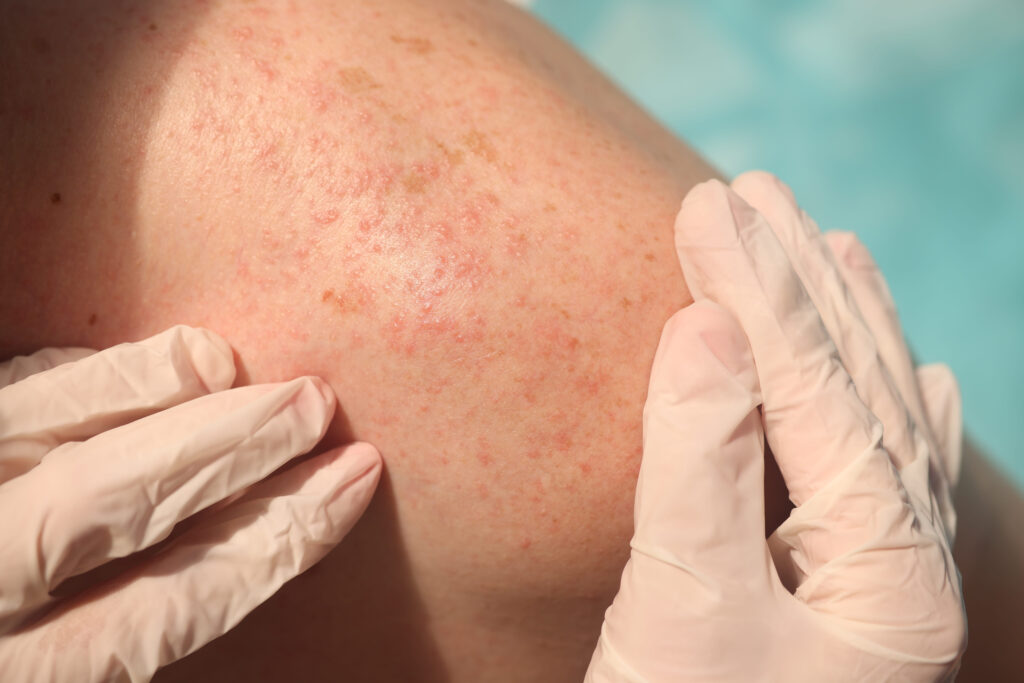
If you’ve ever gotten an itchy, red rash after swimming in a freshwater lake or pond, you might have experienced swimmer’s itch, also known as cercarial dermatitis. This rash is caused by tiny parasites released by snails that live in the water. When these parasites come into contact with human skin, they burrow into the skin, causing an itchy, uncomfortable rash.
Though swimmer’s itch isn’t usually harmful, it can last for a few days and cause significant discomfort. Children and individuals with sensitive skin are particularly prone to the rash.
Prevention Tip: After swimming, shower as soon as possible to remove any parasites. You can also reduce your risk by wearing a full-body suit or covering exposed skin when swimming in freshwater lakes or ponds. If you get the rash, over-the-counter creams or antihistamines can help relieve it.
Flesh-Eating Bacteria
One of the most terrifying beach dangers is flesh-eating bacteria, caused by Vibrio species, which thrive in warm, brackish water. These bacteria can enter your body through open cuts or abrasions, causing severe infections that can destroy tissue within hours. The infection causes symptoms such as fever, swelling, and severe pain at the wound site.
People with weakened immune systems, diabetes, or chronic liver disease are at higher risk of developing severe infections from these bacteria. Though rare, the effects can be devastating, sometimes leading to amputation or even death.
Prevention Tip: If you have open wounds, cuts, or blisters, avoid swimming in warm, salty waters. Keep wounds covered with waterproof bandages. If you suspect an infection after exposure to water, seek medical attention immediately.
Hookworms
You might think walking barefoot on the sand is harmless, but it can expose you to hookworms. These parasitic worms live in the soil or sand of some beaches, particularly in tropical or subtropical regions. The worms enter your body through your skin, often through the soles of your feet, causing symptoms such as abdominal pain, nausea, and diarrhea.
While the infection is usually not severe, it can lead to complications if left untreated. In some cases, hookworm infections can lead to anemia or lung problems.
Prevention Tip: Always wear footwear when walking on the sand, especially in areas with known hookworm risk. After walking barefoot, wash your feet and hands thoroughly to remove any parasites.
MRSA
MRSA (Methicillin-resistant Staphylococcus aureus) is an antibiotic-resistant bacterium that can cause severe skin infections. This bacterium is common at beaches, particularly in areas with heavy foot traffic or poor hygiene. MRSA can infect open wounds, cuts, or even hair follicles, leading to painful boils, abscesses, and other serious skin issues.
Prevention Tip: To avoid MRSA infections, clean any cuts, scrapes, or abrasions with soap and water before entering the water. Don’t share towels, mats, or other personal items, and wash your hands regularly.
Brain-Eating Amoeba (Naegleria fowleri)
Though rare, the brain-eating amoeba Naegleria fowleri poses a serious risk to anyone swimming in warm, freshwater lakes or hot springs. This amoeba enters the body through the nose and travels to the brain, causing a fatal infection called primary amoebic meningoencephalitis (PAM). The symptoms usually appear quickly and can include headache, fever, and vomiting, quickly progressing to seizures, coma, and death.
Prevention Tip: The amoeba doesn’t survive in saltwater, so ocean swimming is generally safe. If you plan to swim in warm freshwater, avoid getting water up your nose, and avoid activities like diving or water sports in hot springs and stagnant lakes.
Harmful Algal Blooms (HABs)
Harmful algal blooms (HABs) occur when algae in the water grow rapidly and produce toxins. These toxins can be harmful to humans, marine life, and other animals, causing symptoms such as nausea, vomiting, dizziness, and respiratory issues. In some cases, people who consume contaminated seafood can develop neurological problems from these toxins.
Prevention Tip: Always check for beach advisories regarding water quality, especially during summer when algal blooms are more common. If you see discolored water, avoid swimming or consuming seafood from that area.
Roundworms

Roundworms are parasitic worms found in sand that’s contaminated with animal feces. When the eggs of these worms come into contact with human skin, they can cause a range of health problems, including abdominal pain, fever, and, in severe cases, respiratory distress.
Prevention Tip: Always wash your hands after playing in the sand, and avoid sitting directly on the sand. Children should be closely supervised, and any open wounds should be properly covered.